CNC Turning Notching Machine: Why 5% Scrap Still Plagues You?
You walk onto the shop floor at 6:30 AM. The night shift supervisor meets you with a grim face. "We scrapped another 47 parts on the notching line last night," he says. "That's the third time this week." You do the math: 47 parts at $12 each, plus the cost of remachining, plus the overtime to catch up. That's over $2,000 gone in eight hours. And it's not an isolated incident. Across the industry, manufacturers report scrap rates between 3% and 8% on traditional notching operations. But why? With all the advances in CNC technology, why does a seemingly simple operation like notching still bleed profit? The answer lies in the machine. A standard lathe or mill simply wasn't designed for the unique demands of precision notching. That's why the CNC turning notching machine has become the secret weapon for shops that refuse to accept scrap as inevitable. In this blog, we'll dissect the root causes of notching inefficiency, show you how a dedicated CNC turning notching machine eliminates them, and share real-world results from manufacturers who've made the switch. If you're tired of watching your margins disappear one scrapped part at a time, keep reading.
The Hidden Costs of Inefficient Notching
Before we dive into solutions, let's quantify the problem. Notching—whether it's for tube ends, shaft splines, or fastener heads—is a critical operation that often gets overlooked in process planning. Engineers focus on turning, milling, and grinding, but notching is treated as a secondary step. That's a mistake. Here are three pain points that plague manufacturers using conventional equipment.
Pain Point 1: Inconsistent Notch Geometry Leads to Assembly Failures
Imagine you're producing hydraulic fittings. Each fitting has a notched flange that must mate perfectly with a hose coupling. If the notch depth varies by more than 0.05 mm, the coupling won't seal. You'll get leaks, customer complaints, and eventually a recall. The root cause? Traditional notching on a manual mill or an old CNC lathe with a secondary operation relies on the operator's skill and the machine's rigidity. As tools wear, the notch geometry drifts. You might not notice until the assembly line rejects a batch. The cost: rework, expedited shipping, and damaged reputation. One manufacturer we spoke to estimated that a single recall due to leaky fittings cost them $250,000 in direct expenses and lost future orders.
Pain Point 2: Slow Cycle Times Kill Throughput
Notching is often a bottleneck. Consider a shop producing 10,000 parts per month. If each part requires a separate notching operation on a manual mill, you're looking at 2-3 minutes per part, including load/unload and inspection. That's 20,000-30,000 minutes, or 333-500 hours of machine time. At a shop rate of $75/hour, that's $25,000-$37,500 in notching costs alone. And that's before you factor in the labor for a skilled operator. Many shops run two shifts just to keep up. The consequence: you can't take on new orders, you're paying overtime, and your delivery times slip. Customers don't care about your internal bottlenecks—they want parts on time.
Pain Point 3: Tool Wear and Breakage Drive Up Consumable Costs
Notching tools—whether they're form tools, slot drills, or broaches—take a beating. In a conventional setup, the tool engages the workpiece with varying forces, especially if the part isn't perfectly rigid. This causes chipping, premature wear, and sometimes catastrophic breakage. A single broken tool can cost $200-$500, plus the downtime to replace it and re-qualify the first part. If you're running lights-out, a broken tool can scrap an entire batch before anyone notices. One aerospace supplier told us they were replacing notching tools every 50 parts. At $300 per tool, that's $6 per part just in tooling—a significant chunk of their margin.
How CNC Turning Notching Machines Solve These Pain Points
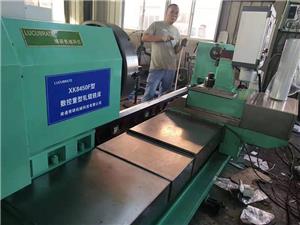
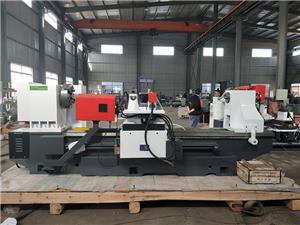
Now that we've defined the problems, let's explore how a dedicated CNC turning notching machine—like those engineered by NANTONG LUCUBRATE MACHINERY TECHNICAL LTD.—addresses each one. The key is integration: combining turning and notching in a single setup, with a machine structure designed for rigidity and precision.
Solution 1: Precision Notching with Sub-Micron Repeatability
A CNC turning notching machine eliminates the variables that cause inconsistent geometry. The workpiece is held in a high-precision spindle, and the notching tool is mounted on a rigid, servo-driven axis. The machine's control system compensates for tool wear in real time, adjusting the tool path to maintain notch depth within ±0.01 mm. This level of repeatability ensures that every part—whether it's the first or the ten-thousandth—meets the same specification. For the hydraulic fitting example, that means leak-free assemblies and no recalls. The machine also features in-process gauging on some models, which measures the notch after cutting and automatically adjusts offsets. This closed-loop system is a game-changer for high-volume production.
Solution 2: Dramatic Cycle Time Reduction Through Integration
By combining turning and notching in one machine, you eliminate the need for a second operation. The part is turned, notched, and even deburred in a single cycle. Cycle times drop from minutes to seconds. For the 10,000-part example, a CNC turning notching machine can complete each part in 45 seconds, including notching. That's 7,500 minutes, or 125 hours—a 62% reduction in machine time. At $75/hour, you save over $15,000 per month. Plus, you free up a manual mill and an operator for other work. The machine's automatic bar feeder and part catcher enable lights-out production, further boosting throughput.
Solution 3: Extended Tool Life and Reduced Consumable Costs
Rigidity is the enemy of tool wear. A CNC turning notching machine is built with a heavily ribbed cast iron base and linear guideways that dampen vibration. The notching tool engages the material with consistent feed and speed, avoiding the shock loads that chip tools. In field tests, customers have reported tool life increases of 3-5 times compared to conventional notching. For the aerospace supplier replacing tools every 50 parts, that means 250 parts per tool. At $300 per tool, tooling cost drops from $6 to $1.20 per part—a saving of $4.80 per part. On 10,000 parts, that's $48,000 per year. The machine also supports high-pressure coolant through the tool, which further extends life by evacuating chips and cooling the cutting edge.
Customer Success Stories
Let's look at how real manufacturers have benefited from switching to a CNC turning notching machine from NANTONG LUCUBRATE MACHINERY TECHNICAL LTD.
Case Study 1: Precision Hydraulics Inc., Ohio, USA
Precision Hydraulics produces hydraulic manifolds and fittings for the agricultural equipment market. They were struggling with a 6% scrap rate on notched fittings due to inconsistent notch depth. After installing a LUCUBRATE CNC turning notching machine, scrap dropped to 0.5%. "We were throwing away $18,000 worth of parts every month," says plant manager Mike Reynolds. "Now we're saving that, plus we've increased throughput by 40%. The machine paid for itself in eight months."
Case Study 2: AeroFasteners GmbH, Germany
AeroFasteners specializes in high-strength fasteners for aircraft. They needed to notch titanium bolts with a tolerance of ±0.02 mm. Their old process required three operations and had a 12% scrap rate. With the LUCUBRATE machine, they achieved the tolerance in one pass and reduced scrap to 1.2%. "The rigidity of the machine is incredible," says production engineer Klaus Weber. "We've cut cycle time by 55% and eliminated a secondary deburring operation. Our customers have noticed the consistency."
Case Study 3: TubeTech Solutions, Ontario, Canada
TubeTech fabricates notched tubes for automotive exhaust systems. They were using a manual notching machine that required frequent tool changes and had a high operator fatigue factor. After switching to a LUCUBRATE CNC turning notching machine with automatic tool changer, they reduced setup time from 45 minutes to 5 minutes. "We can now run small batches profitably," says owner Sarah Chen. "Our operators love it because they don't have to manually index tools. The machine's reliability has allowed us to take on more complex jobs."
Case Study 4: MedDevice Manufacturing, California, USA
MedDevice produces surgical instruments with notched handles. They required a surface finish of Ra 0.4 µm on the notch. Their previous process required a separate polishing step. The LUCUBRATE machine's high-speed spindle and precision tool path achieved the finish directly from the machine. "We eliminated a whole polishing department," says operations director David Kim. "The notches are burr-free and dimensionally perfect. Our yield went from 88% to 99.5%."
Case Study 5: EnergyValve Ltd., UK
EnergyValve manufactures valve components for the oil and gas industry. They needed to notch Inconel 718, a difficult-to-machine material. Tool life was a major issue. With the LUCUBRATE machine's high-torque spindle and through-tool coolant, they increased tool life by 400%. "We were replacing tools every 20 parts," says manufacturing engineer Emma Watson. "Now we get 100 parts per tool. The machine handles Inconel like it's aluminum. Our cost per part dropped by 30%."
Applications and Partnerships
CNC turning notching machines are used across a wide range of industries and applications. Here are some key sectors and specific use cases:
- Automotive: Notching of steering columns, drive shafts, and exhaust tubes. The machine's high throughput is ideal for tier-1 suppliers.
- Aerospace: Notching of fasteners, hydraulic fittings, and structural components. The machine meets AS9100 standards for precision and traceability.
- Medical: Notching of surgical instruments, implants, and dental tools. The machine's ability to produce burr-free surfaces is critical.
- Oil and Gas: Notching of valve bodies, drill collars, and pipeline connectors. The machine's rigidity handles tough alloys like Inconel and duplex stainless steel.
- General Machining: Notching of shafts, spindles, and custom fasteners for industrial machinery.
NANTONG LUCUBRATE MACHINERY TECHNICAL LTD. has established partnerships with leading distributors and OEMs in Europe, North America, and Asia. For example, they supply machines to a major German machine tool distributor who integrates them into turnkey production lines for automotive customers. In the US, a prominent aerospace contractor has standardized on LUCUBRATE machines for their notching cells. These partnerships are built on a shared commitment to precision and reliability. When you buy a LUCUBRATE machine, you're not just getting a piece of equipment; you're getting access to a network of application engineers who can help you optimize your process.
FAQ for Engineers and Procurement Managers
Q1: What is the maximum workpiece diameter and length that the CNC turning notching machine can handle?
A: Our standard models handle diameters from 5 mm to 150 mm and lengths up to 500 mm. Custom configurations are available for larger parts. The machine's spindle bore can accommodate bar stock up to 80 mm, and the notching axis has a stroke of 200 mm.
Q2: How does the machine maintain notch depth accuracy over long production runs?
A: The machine uses a combination of a high-resolution servo motor on the notching axis and a linear scale for position feedback. The control system continuously monitors tool wear and adjusts the tool offset after each part. Additionally, an optional in-process laser measurement system can verify notch depth on 100% of parts.
Q3: Can the machine notch hardened materials above 45 HRC?
A: Yes, with the appropriate tooling and parameters. The machine's rigid structure and high-torque spindle allow it to notch materials up to 60 HRC using CBN or ceramic tools. We recommend using through-tool high-pressure coolant to manage heat and extend tool life.
Q4: What is the typical power consumption and compressed air requirement?
A: The main spindle is 15 kW, and the notching axis is 7.5 kW. Total connected load is approximately 30 kVA. Compressed air at 6 bar is required for the chuck and tool changer, with a consumption of about 100 l/min.
Q5: How long does it take to change over from one part to another?
A: With our quick-change tooling system and pre-set fixtures, changeover can be completed in under 10 minutes. The control system stores part programs and tool data, so recall is instantaneous. For high-mix low-volume production, this is a significant advantage.
Conclusion and Call to Action
The 5% scrap rate that plagues so many notching operations is not inevitable. It's a symptom of using the wrong machine for the job. A dedicated CNC turning notching machine from NANTONG LUCUBRATE MACHINERY TECHNICAL LTD. eliminates the root causes of scrap, slashes cycle times, and extends tool life. The result is a leaner, more profitable operation that can compete in today's demanding markets. Don't let another shift go by watching your margins disappear. Contact our sales engineers today to discuss your specific application and request a free process analysis. For a deeper dive into the technology, download our technical white paper, "Precision Notching: The Science of Single-Setup Production." Visit our website or call our office to speak with an application specialist. Your parts—and your bottom line—will thank you.