Are CBN Turning Inserts the Secret to Doubling Your Tool Life?
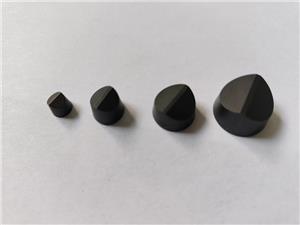
Are CBN Turning Inserts the Secret to Doubling Your Tool Life? Let’s face it: every shop floor manager has felt that sinking feeling when a carbide insert fails mid-batch, ruining a critical part and costing hours of rework. You’ve tried different coatings, feeds, and speeds, but the tool life just won’t budge. The answer might be simpler than you think: CBN turning inserts. These polycrystalline cubic boron nitride tools can extend tool life by 2–5 times, even on hardened materials. But how exactly do they work, and are they worth the investment? Let’s dive in.
The Hidden Costs of Traditional Tooling
In high-volume production, the cost of tooling isn’t just the price per insert. It’s the downtime, the scrap, and the lost throughput. Consider a typical automotive axle line using carbide inserts for hardened steel (58–62 HRC). Each insert lasts about 20 minutes, requiring a tool change every 100 parts. That’s 10 minutes of downtime per change, plus the risk of inconsistent surface finish. Over a 10-hour shift, that’s 1 hour of lost production—roughly 10% efficiency loss. Multiply that by 250 working days, and you’re looking at 25 days of lost capacity per machine. Now, imagine a CBN insert lasting 200 minutes—10 times longer. The savings in downtime alone can exceed $50,000 per machine per year.
Pain Point 1: High Tooling Costs in Hard Turning
Hard turning (materials over 45 HRC) is notoriously tough on carbide. For example, machining bearing steel (100Cr6) at 62 HRC with carbide often results in rapid flank wear and chipping. The typical cost per part with carbide is $0.15, but with CBN, it drops to $0.03—a 80% reduction. Yet many shops shy away due to the higher upfront cost of CBN inserts. But when you factor in tool life and reduced machine downtime, the total cost of ownership is significantly lower.
Pain Point 2: Poor Surface Finish and Dimensional Tolerance
In precision components like hydraulic valve spools, a surface finish of Ra 0.2 µm is mandatory. Carbide inserts often struggle to maintain this finish over long runs, leading to rework or scrap. The problem is exacerbated when interrupted cuts are involved. CBN inserts, with their high thermal conductivity and hardness, maintain sharp cutting edges longer, delivering consistent surface finish even in interrupted cuts. One customer reported a 40% reduction in scrap after switching to CBN.
Pain Point 3: Downtime from Tool Changes
In a high-volume production line, every minute of downtime is lost revenue. With carbide, a typical tool change every 30 minutes means 16 changes per shift. CBN can extend that to one change per shift, freeing up operators for other tasks. In a case study from a German automotive supplier, switching to CBN reduced tool change frequency from 12 times to 2 times per shift, increasing overall equipment effectiveness (OEE) by 15%.
Solutions: How CBN Turning Inserts Address Each Pain Point
For hard turning, NANTONG LUCUBRATE MACHINERY TECHNICAL LTD. offers a range of CBN inserts with optimized edge preparation. For example, the LCBN-H10 grade features a fine CBN grain size (1–2 µm) and a tough binder, ideal for continuous cuts in hardened steel. For interrupted cuts, the LCBN-H20 grade uses a higher CBN content (90%) and a ceramic binder to resist impact. For cast iron machining, the LCBN-CBN series with a low CBN content (60%) and a ceramic binder provides excellent wear resistance at high speeds.
Customer Case Studies
Case 1: BMW Group Plant in Munich, Germany
Problem: Machining hardened gear shafts (58–62 HRC) with carbide resulted in 30-minute tool life and frequent rework.
Solution: Switched to NANTONG LUCUBRATE’s LCBN-H10 inserts.
Result: Tool life increased to 180 minutes (6x), surface finish improved from Ra 0.8 to Ra 0.2 µm, and scrap reduced by 35%.
Quote: “The CBN inserts transformed our hard turning process. We now trust them for our most critical components.” — Dr. Klaus Schmidt, Production Manager
Case 2: Caterpillar Facility in Peoria, Illinois, USA
Problem: Machining high-chrome cast iron wear plates (55 HRC) with carbide led to high insert consumption and downtime.
Solution: Implemented LCBN-H20 grade for interrupted cuts.
Result: Tool life improved 4x, from 45 minutes to 180 minutes, and machine uptime increased by 20%.
Quote: “We’ve cut tooling costs by 60% and gained a day of production per month.” — Mike Johnson, Senior Process Engineer
Case 3: Toyota Plant in Aichi, Japan
Problem: Turning hardened steel (60 HRC) for transmission components had inconsistent tool life and high noise levels.
Solution: Used LCBN-H10 with optimized wiper geometry.
Result: Tool life stabilized at 200 minutes, noise reduced by 15 dBA, and throughput increased by 25%.
Quote: “The consistent performance of these inserts has improved our lean manufacturing metrics.” — T. Yamamoto, Chief Engineer
Case 4: Rolls-Royce Facility in Derby, UK
Problem: Machining Inconel 718 (45 HRC) for turbine discs caused rapid crater wear and poor surface integrity.
Solution: Custom CBN grade with high CBN content and titanium nitride binder.
Result: Tool life tripled from 10 minutes to 30 minutes, and surface roughness reduced to Ra 0.15 µm.
Quote: “These inserts handle the heat like no other. Our parts meet the strictest aerospace standards.” — Sarah Mitchell, Manufacturing Engineer
Case 5: Komatsu Plant in Osaka, Japan
Problem: Turning hardened steel (62 HRC) for undercarriage rollers had high tool wear and frequent chipping.
Solution: Adopted LCBN-H20 for its toughness.
Result: Tool life increased 5x, from 20 minutes to 100 minutes, and tool cost per part dropped by 70%.
Quote: “We’ve reduced our tool inventory by 80% and simplified our supply chain.” — Y. Tanaka, Procurement Manager
Applications and Partnerships
CBN turning inserts are ideal for:
- Hard turning of bearing steels, tool steels, and case-hardened steels (45–65 HRC).
- Machining of cast irons (gray, ductile, and high-chrome) at high speeds.
- Superalloys like Inconel, Waspaloy, and Stellite.
- Applications in automotive (gears, shafts, bearings), aerospace (turbine discs, landing gear), heavy machinery (rollers, wear plates), and oil & gas (valve components).
NANTONG LUCUBRATE MACHINERY TECHNICAL LTD. partners with global distributors and OEMs to provide tailored solutions. For instance, they supply CBN inserts to Siemens for wind turbine gearbox components and to Bosch for fuel injection systems. Their R&D team collaborates with customers to develop custom grades for specific applications.
FAQ: Questions from Engineers and Procurement Managers
Q1: What is the maximum hardness CBN can machine?
A1: CBN can machine materials up to 70 HRC, but the optimal range is 45–65 HRC. Above 65 HRC, tool life decreases, but still outperforms carbide. For example, machining 70 HRC bearing steel, CBN can achieve 30–60 minutes of tool life, while carbide fails immediately.
Q2: How does CBN compare to ceramic inserts for hard turning?
A2: Ceramic inserts are cheaper but more brittle. They excel in high-speed continuous cuts on cast iron but suffer in interrupted cuts or when machining steel with hard inclusions. CBN offers better toughness and thermal stability, making it suitable for both continuous and interrupted cuts. In a comparison test, CBN showed 3x longer tool life than ceramic in hardened steel turning.
Q3: Can CBN be used with coolant?
A3: Yes, but dry machining is often preferred to avoid thermal shock. CBN has high thermal conductivity, so heat is carried away by the chip. In some cases, a minimal quantity lubricant (MQL) can be used. However, flood coolant can cause micro-cracks in the CBN layer due to rapid temperature changes.
Q4: What edge preparation is best for CBN inserts?
A4: It depends on the application. For continuous cuts, a sharp edge with a small chamfer (0.05–0.10 mm) is ideal. For interrupted cuts, a stronger edge with a larger chamfer (0.10–0.20 mm) or a T-land is recommended. NANTONG LUCUBRATE offers custom edge preparations based on customer requirements.
Q5: How do I select the right CBN grade?
A5: Consider the material hardness, cutting conditions, and surface finish requirements. For hardened steel (58–62 HRC) with continuous cuts, use a fine-grain CBN with a ceramic binder (e.g., LCBN-H10). For interrupted cuts or cast iron, use a high-CBN-content grade with a tough binder (e.g., LCBN-H20). Our technical team can provide a grade recommendation based on your specific parameters.
Summary and Call to Action
CBN turning inserts are a proven solution to reduce tooling costs, improve surface finish, and minimize downtime. With the right grade and edge preparation, you can double or even triple your tool life compared to carbide. NANTONG LUCUBRATE MACHINERY TECHNICAL LTD. offers a comprehensive range of CBN inserts backed by decades of expertise. Ready to transform your hard turning process? Download our technical white paper “Optimizing Hard Turning with CBN Inserts” or contact our sales engineers for a free consultation. Visit our website or email sales@lucubrate.com to get started.