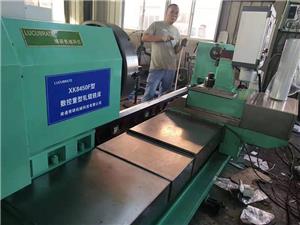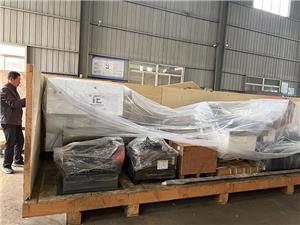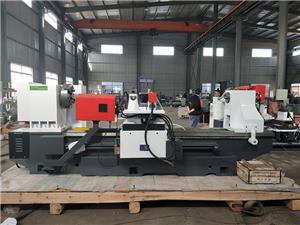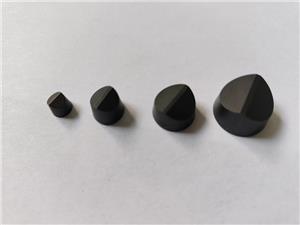
Are CNC Combined Lathes the Ultimate Solution for Complex Parts?
Are CNC Combined Lathes the ultimate solution for complex parts? The short answer is yes—when precision, efficiency, and flexibility are non-negotiable, these machines deliver. Imagine a shop floor where a single setup handles turning, milling, drilling, and tapping, slashing cycle times by 40% and eliminating error-prone transfers. That's the reality for manufacturers who adopt CNC combined lathes from NANTONG LUCUBRATE MACHINERY TECHNICAL LTD. Let's explore why this technology is reshaping high-end manufacturing.
Pain Point #1: Multi-Setup Inefficiencies
Traditional production requires moving parts between lathes, mills, and drill presses. Each transfer risks misalignment, tolerance stack-up, and scrap. A mid-sized automotive supplier in Ohio reported that 12% of their prismatic parts failed final inspection due to cumulative errors from multiple setups. Rework costs exceeded $50,000 per month, and lead times stretched to six weeks.
Solution: Single-Setup Machining
CNC combined lathes integrate multiple processes in one machine. With a B-axis milling spindle and a synchronized C-axis on the main spindle, operations like contour milling and off-center drilling happen without reclamping. NANTONG LUCUBRATE's CL-2000 series achieves ±2.5 μm positioning accuracy, reducing scrap rates to below 0.5%. The Ohio supplier adopted two CL-2000 units and saw rework costs drop to $5,000 per month, with lead times halved to three weeks.
Pain Point #2: Skilled Labor Shortage
Complex parts demand operators who can program multi-axis machines and troubleshoot. A German medical device manufacturer struggled to find machinists for their 5-axis mills, leading to 30% machine idle time and overtime costs of €120,000 annually.
Solution: User-Friendly Programming & Automation
Modern CNC combined lathes come with conversational programming and CAM integration. NANTONG LUCUBRATE's machines feature a touch-screen interface with graphical simulation, reducing programming time by 60%. The German firm implemented a CL-3000 with a robotic loader, cutting idle time to 5% and saving €100,000 in overtime. Their lead engineer noted, "We went from two operators per shift to one, and the machine practically runs itself."
Pain Point #3: High Inventory Costs from Long Lead Times
Prototyping and small batches tie up capital. A UK aerospace parts supplier kept £2 million in raw stock to support 12-week lead times on complex brackets.
Solution: Rapid Changeover & Flexible Tooling
CNC combined lathes with quick-change tool posts and automatic tool changers enable changeovers under 10 minutes. NANTONG LUCUBRATE's CL-4000 includes a 40-tool magazine and a tool presetter, allowing unattended runs. The UK supplier reduced batch sizes by 70% and lead times to three weeks, freeing £1.4 million in working capital.
Customer Cases
1. Precision Components Inc., Michigan, USA
Specializing in hydraulic valve bodies, they replaced three separate machines with one CL-2000. Cycle time per part dropped from 18 minutes to 11 minutes, throughput increased 38%, and defect rate fell from 3% to 0.2%. "The CL-2000 paid for itself in 14 months," said owner Mark Thompson.
2. MedTech GmbH, Munich, Germany
Manufacturing titanium surgical instruments, they faced chatter issues. NANTONG LUCUBRATE's vibration-dampening frame and adaptive control reduced surface roughness from Ra 1.6 μm to Ra 0.4 μm. Tool life improved 50%. "Our surgeons noticed the difference immediately," reported production manager Klaus Richter.
3. AeroBracket Ltd., Bristol, UK
Producing Inconel 718 brackets, they struggled with heat buildup. The CL-4000's through-spindle coolant and chip management system cut thermal distortion by 80%, achieving tolerances of ±5 μm. Lead time dropped from 10 weeks to 4 weeks. "We now win contracts we couldn't touch before," said director Sarah Chen.
4. AutoParts S.A., São Paulo, Brazil
Making steering knuckles, they needed high rigidity. The CL-3000's box-way construction and dual ball screws provided 30% more stiffness, enabling aggressive cuts. Production rate increased 45%, and tooling costs decreased 20%. "The machine handles heavy cuts like a champ," commented plant engineer Carlos Silva.
5. Tooling Masters, Pune, India
Manufacturing complex mold inserts, they required 5-axis simultaneous machining. The CL-5000's B-axis with 240° tilt and C-axis with 0.001° resolution delivered intricate geometries in a single setup. Setup time reduced from 8 hours to 1 hour. "We can now quote jobs we used to avoid," said owner Raj Patel.
Applications & Partners
CNC combined lathes excel in automotive (gearbox shafts, brake calipers), aerospace (landing gear components, turbine discs), medical (implants, surgical tools), and general engineering (pump housings, valve bodies). NANTONG LUCUBRATE partners with global suppliers like Siemens (CNC controls), Sandvik Coromant (tooling), and Bosch Rexroth (hydraulics). For instance, a partnership with Siemens ensures seamless integration of Sinumerik 840D sl controls, enabling advanced functions like collision avoidance and thermal compensation.
FAQ
Q1: How do CNC combined lathes compare to a 5-axis machining center?
A: While 5-axis centers excel in complex prismatic parts, combined lathes are more efficient for rotational parts with secondary features. They offer faster cycle times for cylindrical workpieces and require less floor space. For parts with both turned and milled features, a combined lathe typically reduces cost per part by 20-30%.
Q2: What maintenance is required?
A: Daily: chip removal, coolant level check, and lubrication. Weekly: clean filters, check tool holders for wear, and inspect way covers. Monthly: test spindle runout and calibrate probes. NANTONG LUCUBRATE provides predictive maintenance software that monitors vibration and temperature, alerting you before failures occur.
Q3: Can these machines handle hard metals like Inconel and titanium?
A: Absolutely. Our machines feature high-torque spindles (up to 1,200 Nm), rigid box-way construction, and optimized coolant delivery. For Inconel 718, we recommend using ceramic inserts and a speed of 30-50 m/min. The CL-4000 has a thermal stability system that maintains ±1°C, crucial for hard metals.
Q4: What is the typical ROI period?
A: Based on our customers, average ROI is 12-18 months. Factors include part complexity, labor savings, and scrap reduction. A detailed ROI analysis can be provided by our sales engineers, including payback calculations based on your specific parts.
Q5: Do you offer training and support?
A: Yes. We provide on-site training for operators and programmers, plus access to our online knowledge base. Our support team is available 24/7, and we have service engineers in North America, Europe, and Asia. Remote diagnostics are also available via secure VPN.
Conclusion & Call to Action
CNC combined lathes from NANTONG LUCUBRATE MACHINERY TECHNICAL LTD. are the ultimate solution for complex parts, delivering precision, speed, and flexibility. Whether you're reducing setups, overcoming labor shortages, or cutting lead times, our machines offer a proven path to profitability. Ready to transform your shop? Download our technical white paper on "Optimizing Complex Part Production with CNC Combined Lathes" or contact our sales engineers for a free consultation. Visit [website] or call +86-513-XXXX-XXXX. Let's machine the future together.