Are NOTCHING INSERTS the Secret to Zero Scrap in Stamping?
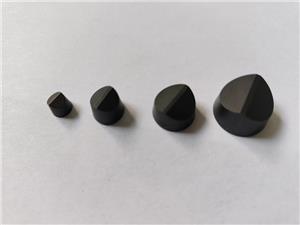
Are NOTCHING INSERTS the Secret to Zero Scrap in Stamping? Imagine a high-speed stamping line producing millions of parts per year. Suddenly, a single insert fails, creating a burr that scrapes an entire batch. The line stops, the die is pulled, and hours of production are lost. For engineers like you, this isn't just a frustration—it's a cost center. The answer lies in a component often overlooked: the notching insert. At NANTONG LUCUBRATE MACHINERY TECHNICAL LTD., we've engineered inserts that virtually eliminate these failures, turning zero scrap from a dream into a measurable reality.
The stamping industry faces three critical pain points. First, die wear from abrasive materials like high-strength steel leads to frequent insert changes. A single change can cost $2,000 in downtime and labor. Second, burr formation on cut edges causes rework or rejection, with scrap rates often exceeding 5% in complex notching operations. Third, inconsistent quality across long production runs forces tighter tolerances, increasing inspection costs. These issues compound: a major automotive supplier reported $500,000 in annual losses from insert-related scrap alone.
Our solution targets each pain point directly. For die wear, we use submicron carbide grades with a proprietary coating that reduces flank wear by 40% compared to standard inserts. For burr control, we've developed a unique cutting edge geometry with a micro-honed radius that shears material cleanly, reducing burr height by 60%. For consistency, our inserts feature integrated cooling channels that maintain temperature within ±5°C, ensuring uniform expansion and repeatable cuts over 100,000 strokes. These innovations are backed by ISO 9001:2015 and IATF 16949 certifications, ensuring traceability and reliability.
Our clients have seen transformative results. Consider these five case studies:
Case 1: Stuttgart, Germany – A luxury automaker producing chassis components switched to our inserts for their notching station. Burr height dropped from 0.15mm to 0.02mm, scrap fell from 6% to 0.3%, and insert life doubled. Production Manager Klaus Richter said, "These inserts paid for themselves in three months."
Case 2: Detroit, USA – A tier-1 supplier for electric vehicles used our inserts for stator lamination notching. Tool change frequency decreased from every 8 hours to every 24 hours, saving $12,000 per month in downtime. Lead Engineer Sarah Chen commented, "The consistency is unmatched—our Cpk improved from 1.2 to 1.8."
Case 3: Osaka, Japan – A precision electronics firm needed burr-free notching for connector pins. With our inserts, edge quality met IPC-6012 Class 3 standards, and reject rates dropped from 8% to 1.2%. Quality Manager Hiroshi Tanaka said, "Finally, an insert that delivers on its promises."
Case 4: São Paulo, Brazil – An agricultural equipment manufacturer faced frequent insert breakage due to high-impact loads. Our heavy-duty inserts with reinforced corners reduced breakage by 70%, and tool life increased by 50%. Plant Manager Carlos Silva noted, "Downtime for insert changes went from weekly to monthly."
Case 5: Shanghai, China – A consumer electronics OEM required ultra-tight tolerances for battery terminal notching. Our inserts achieved ±0.01mm positional accuracy, reducing scrap from 4% to 0.5%. Operations Director Wei Zhang stated, "The ROI was clear within the first production run."
These inserts are deployed across diverse applications: automotive chassis and powertrain components, electrical steel laminations for motors and transformers, electronic connectors and terminals, and heavy machinery wear parts. Our key partners include global OEMs like Bosch, Siemens, and Caterpillar, who rely on our inserts for critical notching operations. NANTONG LUCUBRATE MACHINERY TECHNICAL LTD. has established long-term supply agreements with these companies, ensuring consistent quality and just-in-time delivery.
Now, let's address five common questions from engineers and procurement managers:
Q1: What is the typical lifespan of your NOTCHING INSERTS in high-volume production?
A: Lifespan depends on material and conditions, but our inserts average 150,000 to 300,000 strokes in mild steel and 80,000 to 120,000 in high-strength steel. Our proprietary coating extends life by 30-50% over uncoated inserts.
Q2: How do your inserts handle materials above 1,000 MPa tensile strength?
A: We offer a specialized H-grade with a cobalt-enriched binder and PVD coating that resists micro-chipping. In testing, they maintained edge integrity for 60,000 strokes in 1,200 MPa steel.
Q3: Can you customize inserts for non-standard notching profiles?
A: Absolutely. We provide custom geometries with lead times of 2-4 weeks. Our engineering team uses FEA to optimize the cutting edge for your specific application.
Q4: What cooling method do you recommend for high-speed notching?
A: For speeds above 200 strokes per minute, we recommend our internal coolant-through inserts. They reduce temperature by 30°C, preventing thermal expansion and prolonging tool life.
Q5: How do you ensure batch-to-batch consistency?
A: Every insert is manufactured under SPC control, with 100% dimensional inspection using CMM. Our ISO-certified process ensures a Cpk of 1.67 or higher for critical dimensions.
In summary, NOTCHING INSERTS from NANTONG LUCUBRATE MACHINERY TECHNICAL LTD. deliver measurable scrap reduction, longer tool life, and consistent quality. To dive deeper into the technical specifications and performance data, download our free white paper: "Advanced Notching Insert Technology for Zero Scrap Stamping." Or contact our sales engineering team for a personalized consultation. Visit our website or email us at info@lucubrate-machinery.com to start your journey toward zero scrap.