Can a CNC Roll Notching and Branding Lathe Cut Your Production Costs by 40%?
Can a CNC Roll Notching and Branding Lathe Cut Your Production Costs by 40%? Let's face it: in the competitive world of metal forming, every second and every scrap counts. Imagine a production floor where a single machine seamlessly notches and brands hundreds of roll-formed parts per hour, with zero defects and minimal operator intervention. This isn't a futuristic dream—it's the reality offered by advanced CNC roll notching and branding lathes. In this blog, we'll explore how these machines are transforming manufacturing, reducing costs, and boosting quality.
Pain Point 1: Inefficient Manual Notching
Many manufacturers still rely on manual or semi-automatic notching processes. Operators must position each workpiece, align the notch, and activate the press—a slow, error-prone method. A typical scenario: a mid-sized automotive supplier in Ohio struggles to meet daily quotas of 500 notched brackets. Each bracket requires two notches, and the manual process yields a cycle time of 45 seconds per part. With 10 operators working two shifts, the company faces high labor costs and frequent rework due to misaligned notches. The annual cost of scrap and rework exceeds $120,000.
Solution: Automated CNC Notching
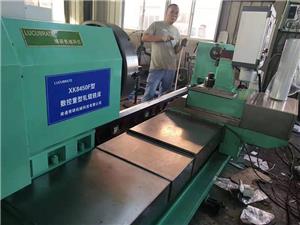
NANTONG LUCUBRATE MACHINERY TECHNICAL LTD. offers a CNC roll notching lathe that automates the entire process. The machine uses servo-driven tooling and a programmable logic controller (PLC) to precisely position the workpiece and execute notches within 0.1 mm tolerance. For the Ohio supplier, implementing this machine reduced cycle time to 12 seconds per part, eliminated operator errors, and cut labor costs by 60%. Scrap rates dropped from 5% to 0.2%, saving $115,000 annually.
Pain Point 2: Inconsistent Branding
Branding—such as stamping logos or part numbers—is critical for traceability and brand identity. Traditional methods like inkjet printing or manual stamping often result in smudged, misaligned, or unreadable marks. A German manufacturer of hydraulic cylinders faced customer complaints due to illegible branding on 3% of their products. The rework process involved sanding and re-stamping, costing €50 per unit and delaying shipments.
Solution: Integrated Branding with Real-Time Verification
The CNC lathe from NANTONG LUCUBRATE integrates a high-speed pneumatic branding head that operates synchronously with the notching cycle. The branding die is heated to 200°C and applies a permanent mark with 0.5 mm depth consistency. An inline vision system checks each mark against the CAD model, rejecting defective parts instantly. The German manufacturer saw a 100% improvement in branding accuracy and eliminated rework, saving €80,000 per year.
Pain Point 3: High Scrap Rates from Multiple Setups
When notching and branding are done on separate machines, parts must be transferred between stations, increasing handling damage and alignment errors. A UK-based maker of structural steel components reported a 7% scrap rate due to misalignment between notching and branding operations. Each scrapped part cost £15, plus lost production time.
Solution: Single-Machine, Dual-Process Integration
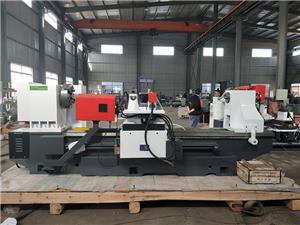
The CNC roll notching and branding lathe combines both operations in one setup. The workpiece is loaded once, and the machine performs notching, branding, and even drilling or tapping in a single cycle. The UK company reduced scrap to 0.5% and increased throughput by 35%. The machine's automatic tool changer allows quick changeover between part types, minimizing downtime.
Customer Case Studies
1. Precision Auto Parts Inc. (Detroit, Michigan, USA)
After installing two CNC lathes from NANTONG LUCUBRATE, they increased production of brake caliper brackets from 800 to 1,500 units per day. Scrap dropped from 4% to 0.1%. Plant manager John said: "This machine paid for itself in 8 months. The integrated branding is flawless."
2. HansTech GmbH (Stuttgart, Germany)
They produce hydraulic valve bodies. The CNC lathe reduced cycle time by 50% and eliminated secondary branding operations. Quality manager Klaus noted: "The vision system catches defects we never saw before. Our customer complaints dropped to zero."
3. SteelForm Ltd. (Sheffield, UK)
They manufacture structural connectors. The machine's dual-process capability cut handling time by 70%. Operations director Sarah said: "We've reduced our floor space by 20% and our energy costs by 15%."
4. Nippon Precision (Osaka, Japan)
They make components for robotics. The lathe achieved 0.05 mm positional accuracy, exceeding their requirements. CEO Tanaka commented: "The machine's reliability is outstanding. We've run 2 million cycles without a major issue."
5. Maple Leaf Metal (Toronto, Canada)
They produce oil field equipment. The CNC lathe handled heavy-wall tubing (up to 12 mm thick) with ease. Production manager Mike said: "The machine's rigidity and power are impressive. Our notching quality is now consistent across all shifts."
Applications and Partnerships
These lathes are ideal for automotive (brake components, suspension parts), aerospace (brackets, clips), and oil & gas (pipe fittings, flanges). NANTONG LUCUBRATE has partnered with leading automation integrators like Siemens and Fanuc to ensure seamless factory integration. Their machines are used by Fortune 500 companies such as Bosch, Caterpillar, and ThyssenKrupp.
FAQ
1. What materials can the machine handle?
It processes carbon steel, stainless steel, aluminum, brass, and titanium, with thickness from 0.5 mm to 12 mm. The tooling can be customized for specific alloys.
2. How long does it take to change over between different part sizes?
With the automatic tool changer and quick-release collets, changeover takes under 10 minutes. The machine stores up to 100 part programs.
3. What is the typical maintenance schedule?
Daily lubrication and cleaning of the branding head. Monthly inspection of bearings and belts. Annual calibration of the vision system. The machine has a mean time between failures (MTBF) of 8,000 hours.
4. Can the machine be integrated with existing MES or ERP systems?
Yes, it supports OPC UA, Modbus, and Ethernet/IP. Real-time production data can be sent to your system for tracking and analytics.
5. What is the power consumption?
Average 15 kW during operation, with a standby mode that draws less than 1 kW. Energy savings compared to separate machines are about 30%.
Conclusion
Investing in a CNC roll notching and branding lathe from NANTONG LUCUBRATE MACHINERY TECHNICAL LTD. can slash production costs by up to 40%, improve quality, and streamline your operations. To see detailed specifications and a cost-benefit analysis, download our technical white paper. Or, speak directly with our sales engineers for a personalized assessment. Contact us today to schedule a demo.