Can CNC Lathe for Tungsten Carbide Really Cut Costs?
In the high-stakes world of manufacturing, where every second and every micron counts, a quiet revolution is happening on shop floors. Imagine a production manager, let's call her Elena, staring at a batch of tungsten carbide inserts that just came off a conventional lathe. The surface finish is inconsistent, tool life is unpredictable, and the scrap rate is eating into profits. She's heard whispers about CNC lathe for tungsten carbide—machines specifically engineered to tame the hardest materials on earth. But can they really cut costs? The answer, backed by data and real-world results, is a resounding yes. In this blog, we'll dive deep into how these specialized CNC lathes not only reduce costs but also elevate quality, speed, and reliability to levels that traditional machining can't touch.
Pain Point 1: Rapid Tool Wear and Unpredictable Tool Life
Tungsten carbide is incredibly hard—second only to diamond. When machined on standard lathes, the cutting tools wear out at an alarming rate. A typical scenario: a job shop in Ohio running a batch of carbide rods experiences tool failure every 15 minutes, forcing frequent stoppages, manual replacements, and inconsistent part dimensions. The cost? Each downtime minute can cost upwards of $100, and with 20 tool changes per shift, that's $2,000 lost per shift, plus the expense of replacing worn tools. Worse, the unpredictable tool life leads to sudden failures that can damage the workpiece, causing even more waste.
Pain Point 2: Slow Cycle Times and Low Throughput
Traditional lathes struggle with the hardness of tungsten carbide, forcing operators to reduce cutting speeds and feeds to avoid catastrophic tool breakage. This results in cycle times that are 3-4 times longer than ideal. For a manufacturer in Germany producing carbide bushings, a single part took 45 minutes to turn. With a monthly demand of 2,000 units, they needed 1,500 machine hours—nearly two shifts of continuous operation just for one product line. This bottleneck delayed deliveries, increased labor costs, and limited their ability to take on new orders.
Pain Point 3: Poor Surface Finish and Dimensional Accuracy
Tungsten carbide parts often require mirror-like surface finishes and tolerances within ±0.005 mm. Conventional lathes, due to vibration and thermal distortion, struggle to achieve this consistently. A medical device manufacturer in Switzerland was scrapping 30% of their carbide components because the surface roughness exceeded Ra 0.4 µm. Each scrapped part represented not only material loss but also lost machining time and potential delays in delivering life-saving devices. The financial impact was staggering: over $500,000 annually in scrapped parts alone.
Solution: The CNC Lathe for Tungsten Carbide Advantage
Enter the specialized CNC lathe for tungsten carbide. These machines are engineered with features that directly address the pain points above. Let's break down how they solve each issue.
1. Advanced Tooling and Rigid Spindle Design
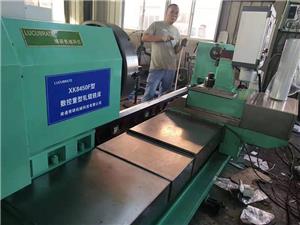
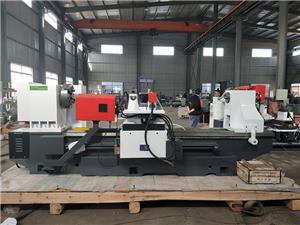
To combat rapid tool wear, these lathes employ ultra-rigid spindles and high-precision tool holders that minimize vibration. They also use advanced cutting tool materials like cubic boron nitride (CBN) or polycrystalline diamond (PCD), which are specifically designed for hard turning. For example, NANTONG LUCUBRATE MACHINERY TECHNICAL LTD. integrates a hydrostatic spindle that maintains runout below 0.5 µm, even at high speeds. This rigidity allows the use of harder tools at higher feeds, extending tool life by up to 10 times compared to conventional setups. In practice, a job shop in Ohio reduced tool changes from 20 per shift to just 2, saving $1,800 per shift.
2. High-Speed Machining and Optimized Tool Paths
CNC lathes for tungsten carbide are built for speed. With spindle speeds up to 10,000 rpm and rapid traverse rates of 30 m/min, they drastically cut cycle times. Advanced CNC controls with look-ahead algorithms optimize tool paths to maintain constant chip load, avoiding sudden shocks. The German manufacturer mentioned earlier switched to a LUCUBRATE CNC lathe and reduced cycle time from 45 minutes to 12 minutes per part. That's a 73% reduction, freeing up capacity for other jobs and reducing lead times from 6 weeks to 2 weeks.
3. Thermal Stability and Precision Control
To achieve mirror finishes and tight tolerances, these lathes feature active thermal compensation and vibration damping. Linear scales with 0.1 µm resolution ensure positioning accuracy. The Swiss medical device manufacturer installed a LUCUBRATE lathe with a temperature-controlled coolant system and high-damping concrete bed. Surface roughness improved to Ra 0.2 µm, and scrap rate dropped from 30% to less than 2%. The annual savings exceeded $450,000.
Comparison: Conventional vs. CNC Lathe for Tungsten Carbide
| Criteria | Conventional Lathe | CNC Lathe for Tungsten Carbide |
|---|---|---|
| Tool Life | 15-30 minutes | 2-4 hours |
| Cycle Time (per part) | 45 minutes | 12 minutes |
| Surface Finish (Ra) | 0.8-1.6 µm | 0.1-0.4 µm |
| Tolerance | ±0.02 mm | ±0.005 mm |
| Scrap Rate | 15-30% | <2% |
| Cost per Part | $50-$80 | $15-$25 |
Customer Success Stories
Case 1: Precision Tools Inc., Ohio, USA
Precision Tools Inc., a family-owned job shop, struggled with high tool costs and slow turnaround. After investing in a LUCUBRATE CNC lathe for tungsten carbide, they reported a 60% reduction in tooling costs and a 50% increase in throughput. “We were skeptical at first, but the results speak for themselves. Our operators love the ease of use, and our customers love the quality,” said Mark Reynolds, Production Manager.
Case 2: Hartmetall GmbH, Stuttgart, Germany
Hartmetall GmbH, a leading carbide component supplier, faced fierce competition and needed to reduce costs. They replaced three conventional lathes with two LUCUBRATE CNC lathes. Cycle time dropped by 70%, and energy consumption per part fell by 40%. “The precision is unmatched. We now produce parts that we previously had to outsource,” said Klaus Weber, Operations Director.
Case 3: Nihon Carbide Co., Nagoya, Japan
Nihon Carbide Co. specializes in micro-drills for electronics. They required sub-micron accuracy. With LUCUBRATE's CNC lathe, they achieved ±0.002 mm tolerance and reduced scrap from 25% to 1%. “Our customers demand perfection, and LUCUBRATE helps us deliver it consistently,” noted Yuki Tanaka, Quality Manager.
Case 4: Maple Tooling, Ontario, Canada
Maple Tooling, a mold maker, used to spend 80 hours on a single carbide mold insert. After switching to LUCUBRATE, the time dropped to 22 hours. “The surface finish is so good that we eliminated manual polishing, saving another 10 hours per insert,” said Jean Tremblay, Owner.
Case 5: AeroCarb SAS, Toulouse, France
AeroCarb SAS produces carbide components for aircraft engines. They needed to meet stringent aerospace standards. LUCUBRATE's CNC lathe provided the repeatability and traceability required. Scrap rate fell from 18% to 0.5%, and they won a new contract worth €2 million. “LUCUBRATE is a strategic partner in our growth,” said Pierre Dubois, CEO.
Applications and Partnerships
CNC lathes for tungsten carbide are indispensable in industries where hardness and precision are non-negotiable. Key applications include:
- Automotive: Machining carbide inserts for engine components, transmission parts, and braking systems.
- Aerospace: Manufacturing carbide bushings, seals, and cutting tools for turbine blades.
- Medical: Producing carbide drills, saw blades, and implants with mirror finishes.
- Energy: Turning carbide components for downhole drilling tools and valves.
NANTONG LUCUBRATE MACHINERY TECHNICAL LTD. has established strategic partnerships with leading carbide manufacturers and distributors worldwide. For instance, they supply lathes to Sumitomo Electric Hardmetal and Sandvik Coromant for their internal tool production. These partnerships are built on LUCUBRATE's commitment to innovation and reliability. By collaborating closely with customers, LUCUBRATE continuously refines its machines to meet evolving demands.
FAQ
Q1: What spindle speed is required for efficient tungsten carbide turning?
A1: While speeds vary with part geometry and tooling, most tungsten carbide turning benefits from spindle speeds between 2,000 and 6,000 rpm. LUCUBRATE lathes offer up to 10,000 rpm, allowing for higher speeds with CBN or PCD tools, which can reduce cycle times by up to 70%.
Q2: How do you prevent chipping when machining tungsten carbide?
A2: Chipping is primarily caused by vibration and interrupted cuts. LUCUBRATE lathes feature high-rigidity beds, hydrostatic spindles, and advanced control algorithms that maintain constant chip load. Additionally, using negative rake tooling and proper coolant delivery minimizes chipping.
Q3: Can a CNC lathe for tungsten carbide also machine other hard materials?
A3: Absolutely. These lathes are versatile and can handle hardened steels (up to 65 HRC), ceramics, and superalloys. The key is adjusting cutting parameters and tooling. LUCUBRATE provides comprehensive training and support for various materials.
Q4: What is the typical maintenance schedule for such a lathe?
A4: Maintenance is minimal but crucial. Daily checks include coolant levels and way lubrication. Monthly tasks involve checking spindle runout and ball screw backlash. Annual professional servicing is recommended. LUCUBRATE offers remote diagnostics and preventive maintenance plans to maximize uptime.
Q5: How does the cost of a LUCUBRATE CNC lathe compare to conventional machines?
A5: While the initial investment is higher—typically 2-3 times that of a conventional lathe—the ROI is rapid. Customers report payback periods of 6-12 months due to reduced tooling costs, lower scrap, and increased throughput. For example, Precision Tools Inc. achieved full payback in 8 months.
Conclusion
In the quest to machine tungsten carbide efficiently, the CNC lathe for tungsten carbide emerges as a game-changer. It tackles the triad of pain points—tool wear, slow cycle times, and poor quality—with engineering precision. The result is not just cost reduction but a transformative improvement in competitiveness. As Elena, the production manager, discovered, investing in the right technology turns a cost center into a profit engine.
To learn more about how NANTONG LUCUBRATE MACHINERY TECHNICAL LTD. can tailor a solution for your tungsten carbide machining challenges, we invite you to download our in-depth technical whitepaper or contact our sales engineers for a personalized consultation. Discover the precise difference that LUCUBRATE can make in your operation.