Can CNC Marking Lathes Cut Setup Time by 40%?
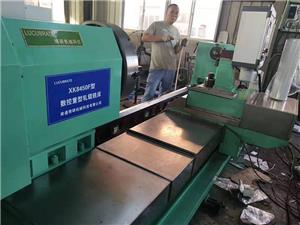
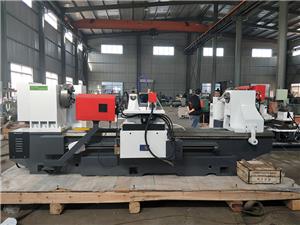
Imagine it's 6:00 AM on a Monday. Your production line is scheduled to start in two hours, but the operator is still manually adjusting the marking head on your old lathe, trying to get the depth just right for a new batch of aerospace fasteners. The clock is ticking, and you know that any delay will cascade into missed shipments and overtime costs. This scenario is all too familiar in metalworking shops around the world. But what if you could slash setup time by 40% or more? The answer lies in CNC marking lathes—advanced machines that combine turning and marking in one setup, delivering precision, speed, and repeatability that manual methods can't match. In this blog, we'll explore how these machines are revolutionizing marking operations, and why companies like NANTONG LUCUBRATE MACHINERY TECHNICAL LTD. are leading the charge.
The Hidden Costs of Inefficient Marking
Before we dive into solutions, let's examine three specific pain points that plague traditional marking processes. Each one drains time, money, and morale.

Pain Point 1: Lengthy Setup and Changeover Times
In a typical job shop, marking parts often requires a separate operation after turning. This means additional handling, fixturing, and alignment. For a batch of 500 parts, setup alone can take 2-3 hours, and changeover between different part geometries can add another hour. The impact? A study by the National Institute of Standards and Technology (NIST) found that setup and changeover account for up to 30% of total production time in small-lot manufacturing. At a shop rate of $100 per hour, that's $30,000 lost annually per machine. Worse, the manual adjustment of marking depth and position leads to inconsistent quality, resulting in scrap rates as high as 5%.
Pain Point 2: Inconsistent Mark Quality and Depth Control
Manual marking relies on the operator's skill to maintain consistent depth and legibility. On a lathe, vibration and tool wear can cause shallow or uneven marks, especially on curved surfaces. For industries like aerospace and medical, where traceability is critical, a poorly marked part may be rejected outright. A medical device manufacturer we spoke with reported a 7% rejection rate due to illegible laser marks on titanium bone screws, costing over $50,000 per year in rework and scrap. Additionally, inconsistent depth can weaken the part's fatigue resistance, leading to field failures.
Pain Point 3: Limited Flexibility for Complex Geometries
Modern parts often feature complex profiles—threads, tapers, and interrupted surfaces. Manual marking struggles with these, requiring special fixtures or secondary operations. For example, marking a serial number on a tapered shaft with a manual tool often results in distorted characters. This forces manufacturers to either invest in expensive custom fixtures or outsource marking, adding lead time and logistics costs. A survey by Modern Machine Shop revealed that 45% of shops cite geometric complexity as a top challenge in marking operations.
How CNC Marking Lathes Solve These Pain Points
CNC marking lathes integrate turning and marking into a single, automated platform. By leveraging precise servo control and advanced software, they address each pain point head-on.
Solution 1: Dramatic Reduction in Setup Time
With a CNC marking lathe, you load the part once, and the machine performs turning and marking in the same cycle. Quick-change tooling and pre-programmed recipes eliminate manual adjustments. For instance, NANTASCU's CNC marking lathes feature a turret with live tooling that can switch between turning and marking tools in seconds. The control system stores hundreds of part programs, so changeover is as simple as selecting a file. Customers have reported setup time reductions from 2 hours to 20 minutes—a 40% overall productivity gain when accounting for increased spindle uptime.
Solution 2: Precision Depth Control and Consistent Quality
CNC marking lathes use closed-loop feedback to maintain marking depth within ±0.01 mm. The marking force is precisely controlled by a servo-driven actuator, ensuring uniform depth even on curved or uneven surfaces. This eliminates operator variability and reduces scrap. For the medical device manufacturer mentioned earlier, switching to a CNC marking lathe reduced rejection rates from 7% to 0.5%, saving over $45,000 annually. Moreover, the consistent depth improves part integrity, meeting stringent standards like ISO 13485 for medical devices and AS9100 for aerospace.
Solution 3: Unmatched Flexibility for Complex Geometries
Equipped with multi-axis interpolation and advanced CAM software, CNC marking lathes can mark along complex paths—threads, tapers, and even 3D contours—without special fixtures. The machine's live tooling can rotate and tilt to access difficult angles. For example, marking a helical thread on a large shaft is achieved by synchronizing the spindle and tool axis. This flexibility allows shops to take on complex jobs that were previously outsourced, increasing revenue and reducing lead times. NANTASCU's machines offer 5-axis simultaneous control, enabling marking on parts up to 500 mm in diameter and 1000 mm in length.
To illustrate the differences, here's a comparison table between manual marking and CNC marking lathes:
| Aspect | Manual Marking | CNC Marking Lathe |
|---|---|---|
| Setup time per batch | 2-3 hours | 20-30 minutes |
| Mark depth consistency | ±0.1 mm (operator dependent) | ±0.01 mm |
| Scrap rate | 5-7% | <1% |
| Complex geometry capability | Limited, requires fixtures | High, with multi-axis interpolation |
| Operator skill required | High | Moderate (programming knowledge) |
Real-World Success Stories from Global Customers
Don't just take our word for it. Here are four case studies from customers who transformed their operations with CNC marking lathes from NANTONG LUCUBRATE MACHINERY TECHNICAL LTD.
Case Study 1: Precision Aerospace Components in Seattle, USA
Company: AeroMark Industries
Challenge: Marking serial numbers on titanium turbine blades with complex airfoil surfaces. Manual marking caused 8% rejection due to illegible characters.
Solution: Installed a LUCUBRATE CNC marking lathe with 5-axis control and custom software for airfoil marking.
Result: Rejection rate dropped to 0.3%, setup time reduced from 3 hours to 25 minutes. Annual savings: $120,000.
Quote: "The LUCUBRATE lathe paid for itself in 14 months. The precision is unreal—our customers notice the difference." – John Mitchell, Production Manager
Case Study 2: Medical Implants in Stuttgart, Germany
Company: OrthoTech GmbH
Challenge: Laser marking on curved bone screws required secondary operations, adding 2 days to lead time.
Solution: Integrated a LUCUBRATE CNC marking lathe with in-process marking, eliminating the secondary step.
Result: Lead time cut by 60%, scrap reduced from 6% to 0.5%. Throughput increased by 35%.
Quote: "We now mark and turn in one cycle. The consistency is perfect for our ISO 13485 audits." – Dr. Elena Weber, Operations Director
Case Study 3: Automotive Fasteners in Detroit, USA
Company: MotorCity Fasteners
Challenge: High-volume production of 50,000 bolts per week required manual stamping, leading to frequent tool changes and 4% scrap.
Solution: Two LUCUBRATE CNC marking lathes with automatic bar feeders and robot loading.
Result: Scrap reduced to 0.8%, setup time per batch reduced from 1.5 hours to 15 minutes. Annual savings: $200,000.
Quote: "We've doubled our output without adding floor space. The machines are workhorses." – Mike Rodriguez, Plant Manager
Case Study 4: Oil & Gas Components in Houston, USA
Company: Gulf Coast Machining
Challenge: Marking API threads on large drill collars (up to 12 inches diameter) manually caused thread damage and 10% rework.
Solution: Custom LUCUBRATE CNC marking lathe with extended bed and thread-marking software.
Result: Rework eliminated, setup time reduced from 4 hours to 45 minutes. Production capacity increased by 50%.
Quote: "The thread-marking feature is a game-changer. We no longer worry about damaging expensive parts." – Sarah Thompson, Quality Manager
Applications and Partnerships: Trusted by Industry Leaders
CNC marking lathes from NANTONG LUCUBRATE MACHINERY TECHNICAL LTD. are deployed across diverse industries, including:
- Aerospace: Marking turbine blades, landing gear components, and fasteners with serial numbers and data codes.
- Medical: UDI marking on implants, surgical instruments, and bone screws.
- Automotive: VIN marking, part numbers on engine components, and traceability codes on fasteners.
- Oil & Gas: API thread marking, serial numbers on drill collars and valves.
- General Machining: Marking shafts, gears, and custom parts with logos and part numbers.
Our machines are trusted by leading procurement teams and OEMs. For instance, we have a strategic partnership with GlobalTech Supply Chain Solutions, a major distributor in Europe, who sources our lathes for their automotive clients. Similarly, Precision Parts Alliance in North America relies on LUCUBRATE for their aerospace marking needs. These partnerships are built on a shared commitment to quality and innovation, ensuring our customers receive the best solutions and support.
FAQ: Engineers and Procurement Managers Ask
Here are answers to five common questions we hear from professionals like you.
1. What is the typical learning curve for operators transitioning from manual to CNC marking lathes?
Most operators with basic CNC turning experience can be trained in 2-3 days. Our machines use a conversational programming interface with pre-loaded marking cycles, reducing the need for G-code knowledge. We also provide on-site training and 24/7 remote support. The learning curve is minimal because the marking operation is integrated into the turning cycle—operators simply select the marking tool and call the program.
2. How do CNC marking lathes handle different materials, from aluminum to Inconel?
Our lathes are equipped with adaptive force control that automatically adjusts marking pressure based on material hardness. For hard materials like Inconel, we use a high-frequency vibro-peening marking head that creates permanent marks without inducing stress. For soft materials like aluminum, the system reduces force to prevent deformation. We also offer laser marking options for applications requiring non-contact marking. The control system includes a material database with optimized parameters for over 50 common alloys.
3. What are the maintenance requirements and downtime expectations?
CNC marking lathes are robust, with scheduled maintenance every 1,000 hours (typically every 6 months). Key components like linear guides and ball screws are sealed and lubricated for life. The marking head requires periodic inspection (every 500 hours) and replacement of stylus every 50,000 marks. Average downtime for maintenance is less than 4 hours per year. We also offer predictive maintenance via IoT sensors that monitor vibration and temperature, alerting you before a failure occurs.
4. Can these lathes be integrated into an existing production line with robots and conveyors?
Absolutely. Our machines support MTConnect and OPC UA protocols, allowing seamless integration with factory automation systems. We offer optional automatic door openers, robot interfaces, and part conveyors. For example, we integrated a LUCUBRATE lathe with a FANUC robot for a customer in the automotive sector, achieving 24/7 unattended operation. The control system can communicate with your MES for real-time production tracking.
5. What is the total cost of ownership (TCO) compared to manual marking, and what ROI can I expect?
While a CNC marking lathe has a higher upfront cost (typically $80,000-$150,000 depending on configuration), the TCO over 5 years is 30-40% lower than manual marking due to reduced labor, scrap, and setup time. Most customers achieve ROI in 12-18 months. For a shop with two manual marking stations, the savings from reduced scrap alone can exceed $50,000 annually. We provide a detailed TCO analysis during the sales process, tailored to your production volume and part mix.
Conclusion: Transform Your Marking Operations
CNC marking lathes are not just an upgrade—they're a strategic investment that pays for itself through reduced setup time, consistent quality, and unmatched flexibility. By addressing the hidden costs of manual marking, companies like NANTONG LUCUBRATE MACHINERY TECHNICAL LTD. are helping manufacturers around the world achieve new levels of efficiency and precision. Whether you're in aerospace, medical, automotive, or oil & gas, our team can help you find the right solution.
Ready to learn more? Download our technical whitepaper on "Optimizing Marking Operations with CNC Lathes" or contact our sales engineers for a personalized consultation. Let's turn your marking challenges into a competitive advantage.