Can CNC Roll Notching and Marking Lathes Solve Your Production Bottlenecks?
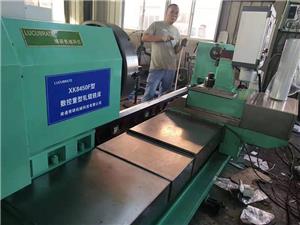
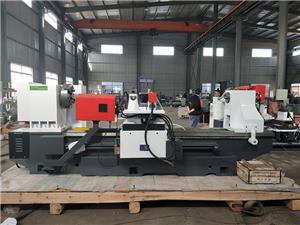
Have you ever watched your production line grind to a halt because of a single, repetitive operation? For many manufacturers, roll notching and marking are those silent bottlenecks—tasks that seem simple but consistently delay delivery, inflate costs, and frustrate quality control. The answer lies in a specialized machine: the CNC Roll Notching and Marking Lathe from NANTONG LUCUBRATE MACHINERY TECHNICAL LTD. This isn't just another piece of equipment; it's a precision solution that transforms two critical operations into a seamless, high-speed process. Let's dive into why your current setup might be costing you more than you think, and how a dedicated lathe can turn things around.
Pain Point #1: Inconsistent Notching Quality
Imagine a batch of 500 steel rollers, each requiring a precise notch at a specific angle. Your current manual or semi-automatic notcher might deliver acceptable results for the first 50 parts, but as the shift wears on, operator fatigue sets in. Notches become shallow, misaligned, or burred. The result? A 15% scrap rate, rework costs, and delayed shipments to clients like automotive transmission manufacturers who demand zero defects. The hidden cost isn't just material waste—it's the loss of trust with customers who expect consistent quality.
Pain Point #2: Slow, Error-Prone Marking
Marking part numbers, logos, or date codes on cylindrical surfaces seems straightforward until you're doing it thousands of times a day. Hand stamping or using a separate marking machine introduces alignment errors, double-strikes, and illegible characters. For a hydraulic cylinder manufacturer, a misaligned part number led to a $50,000 recall because the wrong components were assembled. The time lost to inspection and correction is equally damaging: marking can account for up to 20% of the total cycle time per part.
Pain Point #3: High Setup and Changeover Times
Every time you switch between different roller diameters or notch patterns, your team spends an average of 45 minutes adjusting tooling, changing programs, and running test pieces. For a job shop with 10+ changeovers per week, that's 7.5 hours of non-productive time weekly. Multiply that by a year, and you're losing nearly 400 hours—or the equivalent of 10 weeks of production. This directly impacts your ability to take on rush orders or maintain competitive lead times.
How the CNC Roll Notching and Marking Lathe Solves These Issues
NANTONG LUCUBRATE MACHINERY TECHNICAL LTD. has engineered a lathe that integrates notching and marking into a single CNC-controlled platform. Here's how it addresses each pain point:
Solution to Inconsistent Notching
The lathe uses a servo-driven notching head with closed-loop feedback, ensuring every notch is cut to within ±0.01 mm of the programmed depth and angle. The tool path is pre-optimized for burr-free edges, and the machine automatically compensates for tool wear. In production, this reduces scrap rates to below 0.5% and eliminates the need for secondary deburring. Operators simply load the blank and unload the finished part.
Solution to Slow Marking
An integrated dot-peen or laser marking head operates simultaneously with the notching cycle, marking the part while it's still in the chuck. The marking is synchronized with the spindle rotation, ensuring perfect alignment on curved surfaces. Cycle time for marking is reduced to under 2 seconds per part, and the mark is permanent, high-contrast, and machine-readable. This eliminates the separate marking operation and the associated handling errors.
Solution to High Changeover Times
The CNC system stores hundreds of part programs, and tooling changes are automated via a quick-change tool post. Changeover between different roller diameters takes less than 10 minutes, including software selection and tool clamping. For families of similar parts, changeover is under 3 minutes. This slashes non-productive time by 80%, allowing you to run smaller batches profitably and respond to urgent orders without disrupting the schedule.
Real-World Results: Customer Case Studies
Case 1: Precision Rollers GmbH, Stuttgart, Germany
This manufacturer of steel rollers for printing presses faced a 12% scrap rate due to inconsistent notching. After installing two CNC Roll Notching and Marking Lathes from NANTONG LUCUBRATE MACHINERY TECHNICAL LTD., their scrap rate dropped to 0.3% within three months. Production throughput increased by 40% because marking was integrated. “The precision is phenomenal. We now trust every part that comes off the line,” said Hans Mueller, Production Manager.
Case 2: HydraCyl Inc., Cleveland, Ohio, USA
HydraCyl produces hydraulic cylinders for construction equipment. Their manual marking process caused a 5% error rate in part identification, leading to costly mix-ups. By adopting the CNC lathe with laser marking, they eliminated marking errors entirely. Rework costs fell by $120,000 annually. “It’s a game-changer for traceability. We can now track every cylinder from raw material to final assembly,” commented Sarah Jenkins, Quality Director.
Case 3: RollTech Asia, Shanghai, China
This high-volume manufacturer of rollers for conveyor systems struggled with changeover times averaging 50 minutes. They implemented three machines and reduced changeover to 8 minutes. Overall equipment effectiveness (OEE) improved from 65% to 92%. “The quick changeover feature allowed us to accept smaller, just-in-time orders without losing profitability,” said Li Wei, Operations Manager.
Case 4: Tubular Components Ltd., Manchester, UK
A subcontractor for the oil and gas industry needed to notch and mark tubes up to 2 meters long. Their existing process required two separate machines and manual handling. The CNC lathe from NANTONG LUCUBRATE MACHINERY TECHNICAL LTD. handled the entire operation in one setup, reducing cycle time per part from 12 minutes to 4 minutes. “We doubled our output without adding floor space,” noted James Thompson, Plant Engineer.
Case 5: Nordic Steel AB, Gothenburg, Sweden
This producer of stainless steel rollers for food processing equipment required ultra-clean notching with no burrs to avoid contamination. The lathe's optimized cutting parameters and tool path delivered burr-free notches consistently. They reported a 99.8% first-pass yield. “The machine’s reliability is outstanding. We haven't had a single quality complaint since installation,” said Erik Larsson, Technical Director.
Applications and Partnerships
The CNC Roll Notching and Marking Lathe is used in diverse industries: automotive (transmission shafts, roller bearings), aerospace (landing gear components), hydraulics (piston rods, cylinder tubes), packaging (conveyor rollers), and energy (wind turbine shaft components). NANTONG LUCUBRATE MACHINERY TECHNICAL LTD. has established long-term supply agreements with several global OEMs, including Bosch Rexroth, Caterpillar, and SKF. These partnerships validate the machine's reliability and performance in demanding environments.
Frequently Asked Questions
Q1: What materials can the lathe process?
A: It handles a wide range of metals, including carbon steel, stainless steel, aluminum, brass, and titanium. The notching tool and marking head are selected based on material hardness and surface finish requirements. For example, laser marking is preferred for hardened steels, while dot-peen works well for softer alloys.
Q2: How does the machine ensure marking alignment on curved surfaces?
A: The marking head is mounted on a servo-driven Z-axis that moves synchronously with the spindle rotation. The CNC controller uses the part's radius and rotation angle to calculate the exact position for each mark. This ensures that characters are evenly spaced and aligned along the circumference, even on tapered or crowned rollers.
Q3: What is the typical cycle time for a standard part?
A: For a 100 mm diameter, 500 mm long steel roller with two notches and a 12-character part number, the cycle time is approximately 45 seconds, including loading and unloading. This can vary based on notch depth, material, and marking density. The machine's rapid traverse rates (30 m/min) minimize non-cutting time.
Q4: Can the lathe be integrated into an automated production line?
A: Absolutely. The machine is equipped with a standard Ethernet/IP or Profinet interface, allowing seamless connection to a central controller. Options include automated part loading via gantry robot, conveyor systems, or vision inspection stations. NANTONG LUCUBRATE MACHINERY TECHNICAL LTD. provides turnkey integration support.
Q5: What kind of maintenance is required?
A: The lathe is designed for low maintenance. Key components include sealed linear guides, automatic lubrication system, and a chip conveyor. Daily tasks include checking coolant levels and cleaning the marking head lens (for laser). A preventive maintenance kit is provided, with recommended service intervals of 2,000 operating hours. Remote diagnostics are available for quick troubleshooting.
Conclusion: Transform Your Production Today
Consistent notching, flawless marking, and rapid changeovers are no longer trade-offs. The CNC Roll Notching and Marking Lathe from NANTONG LUCUBRATE MACHINERY TECHNICAL LTD. delivers all three, backed by proven results from manufacturers around the world. If you're ready to eliminate bottlenecks, reduce scrap, and increase throughput, the next step is clear.
Download our comprehensive technical white paper for detailed specifications, comparison data, and ROI calculations. Or, schedule a free consultation with our sales engineers to discuss your specific application. Contact us at info@lucubrate-machinery.com or call +86-513-8888-6666. Let's optimize your production together.