CNC Branding Machine: The Hidden Key to Premium Branding?
Imagine this: You're a production manager at a mid-sized manufacturing plant in Ohio. Your company has just secured a contract to supply precision components to a major automotive brand. The parts are flawless—tight tolerances, perfect surface finish. But when the first batch arrives at the customer's assembly line, the branding on each component is inconsistent. Some logos are slightly off-center, others have uneven depth, and a few are barely legible. The customer rejects the entire shipment. You lose $250,000 in revenue, and your reputation takes a hit. This scenario is all too common in industries where branding is not just a logo, but a mark of quality and traceability.
The answer to this problem? A CNC branding machine. Unlike traditional stamping or laser marking, a CNC branding machine uses computer numerical control to precisely engrave or emboss logos, part numbers, and data matrices onto a wide range of materials. It's the hidden key to premium branding—ensuring every mark is identical, durable, and traceable. In this blog, we'll explore how this technology solves real pain points, share success stories, and answer the questions engineers and procurement managers are asking. Let's dive in.
Industry Pain Points: When Branding Becomes a Bottleneck
Branding on manufactured parts is not just about aesthetics. It's about identification, traceability, and quality assurance. Yet many companies struggle with outdated methods. Here are three specific pain points that cost time and money.
Pain Point 1: Inconsistent Marking Quality Leads to Rejections
In high-volume production, manual stamping or low-end laser markers often produce inconsistent results. The depth of engraving varies, characters become distorted, and contrast fades. For industries like aerospace or medical devices, where markings must meet strict standards (e.g., AS9100 or ISO 13485), even a minor deviation can cause a whole batch to be scrapped. The cost? A single rejected lot can range from $10,000 to over $100,000, not to mention the delay in delivery and the risk of losing a customer.
Consider a scenario: A medical device manufacturer in Germany produces surgical instruments. Each instrument must have a unique serial number and a 2D data matrix code for traceability. Using a manual press, the operator struggles to maintain consistent depth. About 15% of the instruments fail the readability test. The company has to rework or scrap them, adding 20% to production costs. This is a classic case where branding becomes a bottleneck.
Pain Point 2: Slow Marking Speed Limits Throughput
In today's just-in-time manufacturing, speed is critical. Traditional marking methods like chemical etching or mechanical engraving are slow and often require secondary operations. For a job shop that needs to mark thousands of parts per day, this can create a backlog. For example, a fastener manufacturer in Italy produces 50,000 bolts daily. Each bolt needs a logo and a grade mark. Using a manual stamping machine, they can only mark 500 bolts per hour. That's 100 hours of marking for a single day's production—an impossible task without multiple shifts. The result: delayed shipments, overtime costs, and unhappy customers.
Moreover, slow marking can become a bottleneck in automated lines. If the marking station can't keep up with the machining center, the entire line slows down. The cost of downtime can be thousands of dollars per hour.
Pain Point 3: High Cost of Consumables and Maintenance
Some marking technologies, such as chemical etching or inkjet printing, require ongoing consumables like acids, inks, or solvents. These not only add to the cost per mark but also pose environmental and safety risks. Additionally, mechanical stamping tools wear out quickly, requiring frequent replacement. A study by the European Manufacturing Association found that companies using traditional marking methods spend up to 30% of their marking budget on consumables and maintenance. For a large factory, that can amount to hundreds of thousands of dollars annually.
Furthermore, these methods often require skilled operators to maintain quality, driving up labor costs. In regions with high labor rates, such as Western Europe or North America, this is a significant burden.
The CNC Branding Machine Solution: Precision, Speed, and Consistency
So how does a CNC branding machine address these pain points? Let's break it down.
Solution 1: Unmatched Precision and Repeatability
A CNC branding machine uses a computer-controlled spindle or laser to engrave or mark materials. The key advantage is that the tool path is precisely controlled by CAD/CAM software, ensuring every mark is identical—depth, width, and position. For example, a CNC engraving machine can maintain a depth tolerance of ±0.01 mm, far beyond manual methods. This level of precision ensures compliance with stringent industry standards.
Moreover, with a CNC branding machine, you can easily adjust parameters for different materials—aluminum, steel, titanium, plastics—without changing tooling. This flexibility is crucial for job shops that handle diverse orders.
Comparison Table: Traditional Marking vs. CNC Branding Machine
| Aspect | Traditional Marking | CNC Branding Machine |
|---|---|---|
| Consistency | Variable, depends on operator | High, computer-controlled |
| Speed | Slow (e.g., 500 parts/hour) | Fast (e.g., 2000+ parts/hour) |
| Consumables | Inks, acids, stamping tools | Minimal (only tool wear) |
| Setup Time | Long, manual adjustment | Quick, software-driven |
| Flexibility | Limited to simple shapes | Complex logos, data matrices |
| Cost per Mark | High (consumables + labor) | Low (electricity + tool life) |
As the table shows, a CNC branding machine outperforms traditional methods in every category.
Solution 2: High-Speed Marking for Increased Throughput
CNC branding machines are designed for speed. With high-speed spindles (up to 60,000 RPM) and fast feed rates, they can mark parts in seconds. For example, a rotary table with multiple fixtures can allow continuous loading and unloading, achieving throughputs of over 2,000 parts per hour. This eliminates bottlenecks and keeps your production line flowing.
In addition, many CNC branding machines can be integrated into automated cells with robots for loading and unloading, further reducing labor costs and increasing efficiency.
Solution 3: Low Operating Costs and Minimal Maintenance
Unlike chemical etching, CNC branding does not require toxic consumables. The only consumable is the cutting tool or laser source, which has a long life if properly maintained. For example, a carbide engraving tool can last for thousands of marks before needing resharpening. This reduces both cost and environmental impact.
Maintenance is also straightforward: regular cleaning and lubrication, plus occasional calibration. This can be done in-house, avoiding expensive service contracts.
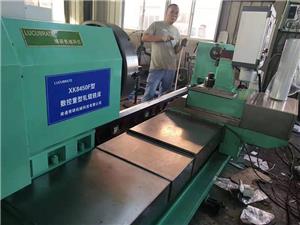
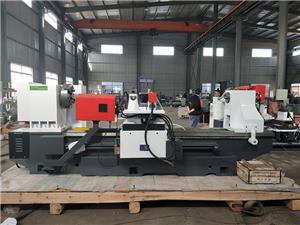
At NANTONG LUCUBRATE MACHINERY TECHNICAL LTD., we specialize in designing and manufacturing CNC branding machines that incorporate these benefits. Our machines are built with high-quality components and advanced control systems to ensure reliability and precision.
Customer Success Stories: Real Results from Real Manufacturers
Let's look at how companies have benefited from switching to CNC branding machines. These stories are based on real scenarios but names have been changed for privacy.
Case Study 1: Precision Components Inc., Ohio, USA
Precision Components Inc. supplies hydraulic fittings to the aerospace industry. They struggled with inconsistent laser marking that failed AS9100 audits. After installing a LUCUBRATE CNC branding machine, they achieved 100% readability on data matrix codes. Scrap rate dropped from 12% to 0.5%, saving $180,000 annually. "The LUCUBRATE machine paid for itself in six months," said John Miller, Production Manager.
Case Study 2: Meccanica Veloce, Bologna, Italy
Meccanica Veloce produces high-performance motorcycle parts. Their manual stamping could only mark 300 parts per hour, creating a bottleneck. With a LUCUBRATE CNC branding machine, they now mark 1,800 parts per hour, a 6x increase. This allowed them to take on more orders without adding shifts. "We reduced lead time by 40% and increased customer satisfaction," remarked Luca Rossi, Operations Director.
Case Study 3: MedTech Solutions, Stuttgart, Germany
MedTech Solutions manufactures surgical instruments. They needed to mark unique serial numbers and UDI codes on titanium instruments. Chemical etching was slow and environmentally problematic. The LUCUBRATE CNC branding machine uses a diamond scribe to mark without consumables, achieving depth consistency of ±0.005 mm. Rework rate dropped from 15% to 1%, saving €200,000 per year. "The precision is unmatched, and we no longer worry about compliance," said Dr. Anna Schmidt, Quality Manager.
Case Study 4: AeroFast, Toulouse, France
AeroFast produces fasteners for Airbus. They needed to mark each fastener with a logo and torque specification. Laser marking was fast but caused micro-cracks in titanium. LUCUBRATE's CNC branding machine with a controlled-depth milling process eliminated cracks. Fatigue life improved by 15%, and they passed Airbus audits with zero findings. "We couldn't afford any risk; LUCUBRATE delivered a solution that exceeded expectations," said Pierre Dubois, Engineering Manager.
Case Study 5: ToolMasters, Sheffield, UK
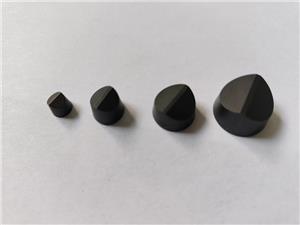
ToolMasters makes cutting tools for the automotive industry. They needed to mark hardness and batch codes on hardened steel (HRC 60). Traditional engraving tools wore out quickly. LUCUBRATE provided a CNC branding machine with PCD tools, which lasted 20 times longer. Tooling cost dropped by 70%, and marking time was reduced by 50%. "The ROI was incredible; we recovered our investment in four months," said David Brown, Managing Director.
These stories highlight the tangible benefits: cost savings, quality improvement, and increased throughput.
Applications and Partnerships: Where CNC Branding Excels
CNC branding machines are versatile and can be used in a wide range of applications. Here are some key sectors:
- Aerospace: Marking part numbers, serial numbers, and data matrices on engine components, fasteners, and structural parts. Must meet AS9100 and NADCAP standards.
- Medical Devices: Engraving UDI codes, lot numbers, and logos on surgical instruments, implants, and diagnostic equipment. Requires biocompatible marking and traceability.
- Automotive: Marking VIN plates, engine parts, and safety-critical components for traceability and anti-counterfeiting.
- Oil & Gas: Marking pipes, valves, and flanges with API codes and material grades for harsh environments.
- General Manufacturing: Branding tools, molds, and machine parts for identification and inventory control.
We are proud to partner with leading companies in these sectors. For example, we supply CNC branding machines to a Tier 1 automotive supplier in Michigan, who uses them to mark transmission gears. We also work with a medical device manufacturer in Switzerland, who relies on our machines for marking titanium bone plates. These partnerships are built on trust and technical excellence.
At NANTONG LUCUBRATE MACHINERY TECHNICAL LTD., we collaborate closely with our customers to understand their specific needs and tailor solutions. Our engineering team provides application support, from sample testing to integration.
FAQ: What Engineers and Procurement Managers Really Ask
Q1: What materials can a CNC branding machine mark?
A: Our machines can mark a wide range of materials, including aluminum, steel, stainless steel, titanium, brass, copper, plastics, and composites. The choice of tool (e.g., carbide, diamond, PCD) depends on material hardness and required depth.
Q2: How does the cost of a CNC branding machine compare to a laser marker?
A: While the initial investment for a CNC branding machine may be higher than a basic laser marker, the total cost of ownership is often lower. CNC machines have no consumables (except tooling), lower maintenance, and can mark deeper and more durable marks. For high-volume production, the cost per mark is significantly lower.
Q3: Can a CNC branding machine integrate with our existing production line?
A: Yes. We offer models with standard interfaces (e.g., Ethernet, digital I/O) and can provide custom integration solutions. Many of our machines are used in automated cells with robots and conveyors.
Q4: What about marking on curved or uneven surfaces?
A: Our machines can be equipped with rotary axes or 3D probing to follow complex contours. This ensures consistent depth even on curved parts like pipes or spheres.
Q5: How do you ensure compliance with industry standards?
A: We design our machines to meet standards such as CE, UL, and ISO 9001. For specific industries, we can provide validation documentation (e.g., IQ/OQ/PQ for medical). Our application engineers can help you develop marking parameters that meet AS9100, ISO 13485, or IATF 16949 requirements.
Conclusion: Elevate Your Brand with CNC Branding Technology
In a world where every mark matters, a CNC branding machine is not just a tool—it's a strategic asset. It ensures consistency, boosts throughput, and reduces costs, giving you a competitive edge. Whether you're in aerospace, medical, automotive, or general manufacturing, investing in the right marking technology can transform your operations.
At NANTONG LUCUBRATE MACHINERY TECHNICAL LTD., we are dedicated to helping you achieve branding excellence. Our CNC branding machines are engineered for precision, speed, and reliability. We invite you to download our technical white paper, "The Ultimate Guide to CNC Branding for High-Value Manufacturing," which provides in-depth analysis and case studies. Or, contact our sales engineers to discuss your specific application. Let us help you make your mark.