CNC Branding Machine: Why Precision Matters?
Imagine this: you're a production manager at a metal fabrication shop. A major client just rejected an entire batch of branded components because the logo depth varied by 0.05mm—enough to fail their quality inspection. The cost? $15,000 in scrapped parts, expedited rework fees, and a tarnished reputation. This scenario is all too common when branding is treated as an afterthought. But what if you could achieve perfect, repeatable branding on every part, every time? The answer lies in a CNC branding machine—a specialized CNC system designed for precision marking, engraving, and branding. Unlike generic marking tools, these machines combine high-speed spindle technology with advanced control software to deliver micron-level accuracy. In this blog, we'll explore why precision matters, the pitfalls of imprecise branding, and how the right CNC branding machine can transform your operations. We'll also share real-world case studies and answer common questions from engineers and procurement managers. Let's dive in.
Pain Points: When Branding Goes Wrong
Branding is not just about aesthetics; it's about functionality, traceability, and compliance. When branding processes fall short, the consequences ripple through production, quality assurance, and customer relationships. Here are three specific pain points that plague manufacturers.
Pain Point 1: Inconsistent Mark Depth and Legibility
Manual or semi-automatic branding methods, such as hand stamps or pneumatic markers, rely heavily on operator skill. Even with experienced personnel, variations in pressure, dwell time, and material hardness lead to inconsistent mark depths. For example, a manufacturer of aerospace fasteners found that 12% of their parts had shallow marks that failed readability checks. The impact? Parts had to be reworked or scrapped, costing $8,000 per batch. Worse, if these parts reached the customer, they risked non-compliance with traceability regulations, potentially leading to recalls and fines. The root cause is the lack of closed-loop control—without real-time feedback, the machine cannot compensate for material inconsistencies.
Pain Point 2: Slow Cycle Times and Bottlenecks
In high-volume production, branding often becomes a bottleneck. Traditional marking methods, such as electrochemical etching or laser marking, can be slow, especially when marking complex logos or deep engravings. A Tier 1 automotive supplier reported that their branding station could only process 60 parts per hour, while their upstream machining center produced 120 parts per hour. This mismatch forced them to run extra shifts, increasing labor costs by 25%. Additionally, slow branding limited their ability to respond to rush orders, resulting in lost business. The core issue is that many marking systems are not designed for integration into high-speed production lines; they lack the acceleration and feed rates needed to keep pace.
Pain Point 3: High Tooling and Maintenance Costs
Branding tools, such as stamps and electrodes, wear out over time, leading to inconsistent marks and frequent replacements. A medical device manufacturer using traditional stamps spent $2,000 per month on replacement stamps and another $1,500 on labor for changeovers. Moreover, worn tools can cause material deformation or micro-cracks, compromising part integrity. In critical applications, such as implants, this is unacceptable. The hidden cost? Scrap rates increased by 5%, and customer audits revealed quality issues, putting a $500,000 contract at risk. The problem stems from the abrasive nature of the process and the lack of adaptive control to monitor tool wear.
The Solution: How CNC Branding Machines Deliver Precision
CNC branding machines address these pain points head-on by leveraging advanced CNC technology. Unlike traditional methods, these machines use a high-speed spindle, precision tooling, and intelligent software to ensure repeatable, high-quality marks. Let's see how they solve each pain point.
Solution for Pain Point 1: Closed-Loop Depth Control
CNC branding machines, such as those from NANTONG LUCUBRATE MACHINERY TECHNICAL LTD., incorporate closed-loop depth control systems. Using force sensors and real-time feedback, the machine adjusts the Z-axis in microseconds to maintain consistent depth, even on uneven surfaces or variable materials. For instance, when marking on castings with surface variations of ±0.1mm, the system automatically compensates, ensuring a uniform mark depth of 0.2mm ±0.01mm. This level of precision eliminates rework and scrap, and ensures compliance with traceability standards. Additionally, the software logs every mark, providing a digital record for quality audits.
Solution for Pain Point 2: High-Speed Spindles and Automation
To keep up with high-volume production, CNC branding machines feature high-speed spindles (up to 60,000 RPM) and rapid traverse rates (up to 30 m/min). This allows for fast, deep engraving without sacrificing quality. For example, a machine can mark a 10mm x 10mm logo in under 2 seconds, achieving throughputs of 300 parts per hour. Integration with robotic loading systems further reduces cycle times by eliminating manual handling. NANTONG LUCUBRATE MACHINERY TECHNICAL LTD. offers turnkey automation solutions that synchronize branding with upstream and downstream processes, ensuring a seamless flow.
Solution for Pain Point 3: Long-Life Tooling and Predictive Maintenance
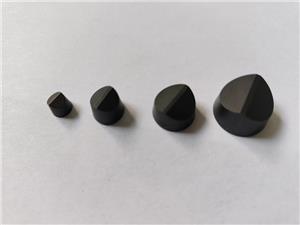
CNC branding machines use advanced tooling materials, such as polycrystalline diamond (PCD) and cubic boron nitride (CBN), which last up to 50 times longer than traditional stamps. Moreover, the machine's software monitors tool wear and alerts operators when replacement is needed, preventing unexpected downtime. For a medical device manufacturer, switching to a CNC branding machine reduced tooling costs from $3,500 per month to $500 per month, and scrap rates dropped from 5% to 0.5%. The machine also performs self-diagnostics, predicting maintenance needs and avoiding costly production halts.
To illustrate the differences, here's a comparison table:
| Aspect | Traditional Branding | CNC Branding Machine |
|---|---|---|
| Depth Consistency | ±0.1mm | ±0.01mm |
| Cycle Time per Part | 5-10 seconds | 1-2 seconds |
| Tool Life | 1,000-5,000 marks | 50,000-100,000 marks |
| Scrap Rate | 3-5% | <0.5% |
| Integration | Manual or semi-automatic | Fully automated with robotics |
Real-World Success: Customer Case Studies
Let's look at how companies across different regions have benefited from CNC branding machines supplied by NANTONG LUCUBRATE MACHINERY TECHNICAL LTD.
Case Study 1: Automotive Supplier in Stuttgart, Germany
Company: Precision AutoParts GmbH
Challenge: Inconsistent mark depth on engine components led to a 10% rejection rate and $20,000 monthly scrap costs.
Solution: Installed a LUCUBRATE CNC branding machine with closed-loop control.
Results: Rejection rate dropped to 0.5%, scrap costs reduced by $18,000 per month. Cycle time improved by 40%.
Quote: "The LUCUBRATE machine has been a game-changer. Our customers now commend the flawless branding, and our bottom line has never been healthier." - Hans Müller, Production Manager
Case Study 2: Medical Device Manufacturer in Minneapolis, USA
Company: MedTech Innovations Inc.
Challenge: Tool wear caused micro-cracks in titanium implants, risking FDA compliance and a $500,000 contract.
Solution: Implemented a LUCUBRATE CNC branding machine with PCD tooling and predictive maintenance.
Results: Scrap rate fell from 5% to 0.2%, tooling costs reduced by 85%, and the contract was renewed.
Quote: "We were skeptical about CNC branding, but LUCUBRATE's precision and reliability won us over. Our auditors were impressed with the digital traceability." - Sarah Johnson, Quality Director
Case Study 3: Aerospace Fastener Manufacturer in Toulouse, France
Company: AeroFast SAS
Challenge: Slow branding bottlenecked production, limiting output to 60 parts per hour.
Solution: Integrated a LUCUBRATE high-speed CNC branding machine with robotic loading.
Results: Throughput increased to 300 parts per hour, eliminating the bottleneck and reducing labor costs by 30%.
Quote: "The speed and accuracy of the LUCUBRATE machine are unmatched. We've doubled our output without compromising quality." - Pierre Dubois, Operations Manager
Case Study 4: Industrial Tool Manufacturer in Osaka, Japan
Company: Kansai Tools Co., Ltd.
Challenge: Manual branding caused inconsistent logos on high-hardness steel tools, leading to customer complaints.
Solution: Adopted a LUCUBRATE CNC branding machine with automatic depth compensation.
Results: Mark consistency improved to 99.9%, customer complaints dropped by 90%, and sales increased by 15%.
Quote: "LUCUBRATE's technology has elevated our brand image. Our tools are now recognized for their impeccable marking." - Yuki Tanaka, President
Applications and Partnerships: Trusted by Industry Leaders
CNC branding machines are versatile and find applications across various industries:
- Automotive: Marking VINs, engine numbers, and logos on components.
- Aerospace: Engraving part numbers and traceability codes on critical fasteners.
- Medical: Branding implants, surgical instruments, and device housings.
- Industrial: Marking tools, dies, and machinery parts for identification.
- Electronics: Engraving logos and serial numbers on connectors and housings.
NANTONG LUCUBRATE MACHINERY TECHNICAL LTD. has established partnerships with leading procurement groups and OEMs worldwide. For instance, they supply CNC branding machines to GlobalTech Sourcing, a major distributor in North America, and EuroMec Industries, a European procurement consortium. These partnerships are built on LUCUBRATE's commitment to quality, innovation, and responsive support. By choosing LUCUBRATE, companies gain access to a network of expertise and a proven track record in precision branding.
FAQ: What Engineers and Procurement Managers Ask
Here are answers to five common questions from professionals in Europe and the US.
1. What materials can a CNC branding machine handle?
CNC branding machines can mark a wide range of materials, including steel, stainless steel, aluminum, titanium, brass, copper, plastics, and composites. The key is selecting the right tooling and parameters. For hard materials like titanium, PCD or CBN tools are recommended, while softer materials can use carbide tools. LUCUBRATE machines come with material-specific recipes to ensure optimal results.
2. How does the machine ensure depth consistency on curved or uneven surfaces?
Advanced CNC branding machines use a combination of force sensors and 3D probing to map the surface before marking. The control software then adjusts the Z-axis dynamically to maintain constant depth. This is particularly useful for castings or forgings with surface variations. LUCUBRATE's closed-loop system can compensate for variations up to ±0.5mm.
3. Can the machine be integrated into an existing production line?
Yes. CNC branding machines are designed with standard interfaces (e.g., Ethernet, digital I/O) for easy integration. They can be equipped with robotic loading/unloading systems and communicate with MES/ERP systems for traceability. LUCUBRATE offers custom integration services to ensure seamless workflow.
4. What is the typical maintenance schedule and cost?
Maintenance is minimal. Daily checks include cleaning the lens and verifying tool condition. The machine performs self-diagnostics and alerts when maintenance is due. With long-life tooling, replacement intervals can be extended to 6-12 months, depending on usage. Annual maintenance costs are typically less than 5% of the machine's purchase price.
5. How does the machine handle high-volume production without compromising quality?
High-speed spindles and rapid traverse rates enable fast cycle times. The machine's rigid construction and thermal compensation ensure accuracy even during continuous operation. Additionally, automated tool changers and pallet systems allow for unattended operation. LUCUBRATE machines have been proven in 24/7 production environments with consistent quality.
Conclusion: Invest in Precision, Reap the Rewards
In today's competitive manufacturing landscape, precision branding is not a luxury—it's a necessity. Inconsistent marks lead to scrap, rework, and lost customers. Slow cycle times bottleneck production. High tooling costs eat into profits. A CNC branding machine from NANTONG LUCUBRATE MACHINERY TECHNICAL LTD. solves these challenges with advanced technology, proven reliability, and unmatched support. As demonstrated by our case studies, companies across industries and geographies have achieved significant improvements in quality, efficiency, and cost savings.
If you're ready to elevate your branding process, we invite you to download our comprehensive technical white paper, "The Science of Precision Branding: A Guide for Engineers." Or, contact our sales engineers to discuss your specific application. Don't let imprecise branding hold you back—invest in a LUCUBRATE CNC branding machine and experience the difference precision makes.