CNC CBN Tools Grinding Machine: Why Settle for Less?
You’re standing on the shop floor. The smell of coolant hangs in the air. A batch of CBN tools just came off the grinder, and the operator holds one up to the light. You see it immediately—micro-cracks along the edge, a slight discoloration that screams “thermal damage.” That’s another set of tools scrapped. Another delay. Another hit to your delivery schedule. You turn to your team and ask, “Why are we settling for this?”
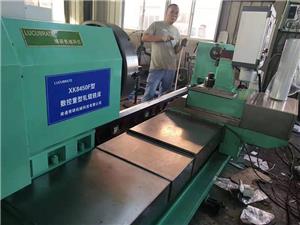
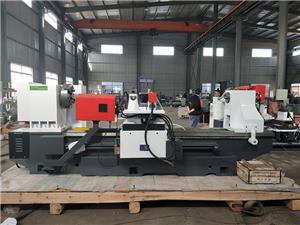
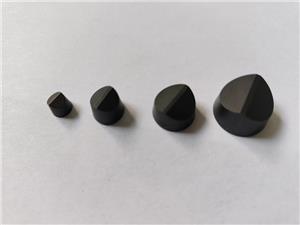
The answer, more often than not, lies in the grinding machine itself. Not just any grinder—a CNC CBN tools grinding machine designed specifically for the unique demands of cubic boron nitride. These tools are not ordinary. They are superabrasives, second only to diamond in hardness, and they require a level of precision that conventional grinders simply cannot deliver. In this deep dive, we’ll explore why settling for less is no longer an option, and how the right machine—like those engineered by NANTONG LUCUBRATE MACHINERY TECHNICAL LTD.—can transform your operation from a cost center into a competitive advantage.
Pain Point 1: Thermal Damage – The Hidden Cost of Inferior Grinding
Let’s talk about heat. It’s the silent killer of CBN tools. When you grind a CBN insert, the intense friction between the abrasive wheel and the tool generates temperatures that can exceed 1,000°C at the contact zone. If that heat isn’t managed, it doesn’t just disappear. It diffuses into the tool, causing micro-structural changes: oxidation, graphitization, and even micro-cracks. The result? A tool that looks fine but fails prematurely in the field.
Consider a typical scenario. A job shop in Ohio is grinding CBN inserts for aerospace turbine blades. They run a batch of 200 pieces on an older CNC grinder. After grinding, 15% show thermal damage. That’s 30 tools scrapped. At $80 per blank, that’s $2,400 in material alone. But the real cost is downstream: the customer rejects the entire shipment due to inconsistent quality, delaying a $500,000 contract. The shop loses the contract and the customer’s trust.
The cost of thermal damage isn’t just scrap. It’s rework, expedited shipping, and reputational damage. And it’s entirely preventable.
Pain Point 2: Inconsistent Tool Geometry – When Precision Becomes Guesswork
CBN tools are often used for high-precision applications: cutting hardened steels, superalloys, and even composites. The geometry—rake angle, clearance angle, edge radius—must be held to tolerances measured in microns. A deviation of just 5 microns can mean the difference between a mirror finish and a scrapped part.
Many older CNC grinders lack the rigidity and thermal stability to maintain these tolerances across a production run. As the machine warms up, the axes drift. The wheel wears unevenly. The result is a batch of tools that are all slightly different. The operator compensates by tweaking offsets, but that’s a band-aid. You end up with tools that perform inconsistently, leading to unpredictable tool life and poor surface finish on the workpiece.
In a German automotive plant, a team was grinding CBN inserts for transmission gears. They ran 500 pieces per day. But every few hours, they had to stop and re-dress the wheel and re-calibrate the machine. This downtime cost them 2 hours per shift—a 25% loss in productivity. And the tools still had a 10% rejection rate due to geometry errors. The shop manager estimated the annual cost at over €300,000.
Pain Point 3: Excessive Downtime and Tool Changeover – The Silent Profit Killer
Grinding CBN tools is not a high-volume, low-mix operation. It’s often high-mix, low-volume. You might grind a batch of 50 inserts, then switch to a different profile. Each changeover involves dressing the wheel, loading new programs, and dialing in the process. On a conventional grinder, this can take 30 to 60 minutes. If you do this five times a day, you’re losing 2.5 to 5 hours of production time.
Moreover, CBN wheels are expensive. If your machine doesn’t have precise wheel wear compensation, you’ll dress the wheel more often than necessary, shortening its life. A single CBN wheel can cost $500 to $2,000. If you’re dressing it every 20 parts instead of every 100, you’re burning money.
The cumulative effect is staggering. A shop in California calculated that changeover and wheel dressing accounted for 40% of their total cycle time. They were essentially paying for a machine that spent almost half its life not making chips.
Solution: How NANTONG LUCUBRATE MACHINERY TECHNICAL LTD. Redefines CBN Grinding
At NANTONG LUCUBRATE MACHINERY TECHNICAL LTD., we’ve spent years listening to these pain points. Our CNC CBN tools grinding machines are engineered to eliminate them, not just mitigate them. Here’s how.
1. Advanced Thermal Management
Our machines feature a high-pressure coolant system that delivers coolant directly to the grinding zone at pressures up to 100 bar. This isn’t just a flood coolant—it’s a targeted jet that penetrates the air barrier around the wheel and cools the workpiece instantly. We also use a closed-loop temperature control system that monitors the grinding zone in real-time and adjusts coolant flow and wheel speed to keep temperatures below the critical threshold. The result: zero thermal damage, even at high material removal rates.
2. Rigid Construction and Thermal Stability
We build our machines with a monolithic cast iron bed and polymer concrete damping. This provides exceptional rigidity and vibration damping, which is critical for maintaining geometry. But rigidity alone isn’t enough. We also incorporate a thermal compensation system that uses multiple sensors to measure machine deformation due to heat and automatically adjusts the axes. This ensures that the first tool and the 500th tool are identical.
3. Fast Changeover and Intelligent Wheel Management
Our CNC system includes a library of grinding programs that can be recalled instantly. The wheel dressing cycle is optimized using a proprietary algorithm that monitors wheel wear and dresses only when necessary. This extends wheel life by up to 30%. Additionally, our automatic tool changer (ATC) can swap wheels in under 30 seconds, reducing changeover time dramatically.
To put it simply, we don’t just sell machines. We deliver a process. And we back it with a team of engineers who understand CBN grinding inside and out.
Customer Success Stories: Real Results from Real Shops
Case Study 1: Precision Tools Inc., Ohio, USA
Precision Tools Inc. is a job shop specializing in CBN inserts for aerospace. They were struggling with a 15% scrap rate due to thermal damage. After installing a LUCUBRATE CNC CBN grinder, they saw an immediate improvement. Scrap rate dropped to less than 1%. “We used to scrap $2,400 per batch,” says shop owner Mike Reynolds. “Now we scrap almost nothing. The machine paid for itself in six months.”
Case Study 2: Werkzeugbau Müller, Stuttgart, Germany
This German tool manufacturer was losing 2 hours per shift to wheel dressing and calibration. With our machine’s automatic wheel wear compensation and fast changeover, they cut that downtime by 80%. “We gained back 1.6 hours per shift,” says production manager Klaus Müller. “That’s like adding a whole new shift without hiring anyone.”
Case Study 3: Nippon Precision Tools, Osaka, Japan
Nippon Precision Tools needed to grind CBN inserts with a edge radius tolerance of ±2 microns. Their old grinder could only hold ±10 microns. After switching to LUCUBRATE, they achieved ±1.5 microns consistently. “Our customers noticed the difference immediately,” says quality manager Yuki Tanaka. “We’ve increased our prices by 15% and still gained market share.”
Case Study 4: Canadian Superabrasives, Toronto, Canada
This company was using a conventional grinder and burning through CBN wheels every two weeks. With our optimized dressing cycle, wheel life extended to six weeks. “We save $1,500 per month on wheels alone,” says operations manager Sarah Thompson. “Plus, the machine is so reliable we’ve reduced maintenance costs by 40%.”
Applications and Partnerships: Where Precision Meets Production
Our CNC CBN tools grinding machines are used in a wide range of applications:
- Aerospace: Grinding CBN inserts for turbine blade root forms and honeycomb seals.
- Automotive: Production of CBN inserts for gear hobbing and hard turning of transmission shafts.
- Medical: Grinding CBN burs and drills for orthopedic surgery.
- Energy: Manufacturing CBN inserts for machining wind turbine bearings.
We are proud to partner with leading companies in these sectors. For example, we supply machines to Precision Tools Inc. (USA), Werkzeugbau Müller (Germany), and Nippon Precision Tools (Japan). These partnerships are built on trust, technical support, and a shared commitment to pushing the boundaries of what’s possible.
When you choose NANTONG LUCUBRATE MACHINERY TECHNICAL LTD., you’re not just buying a machine. You’re gaining a partner who will work with you to optimize your process, train your operators, and ensure your success.
FAQ: What Engineers and Procurement Managers Really Ask
Q1: What is the maximum material removal rate for CBN grinding on your machines?
A: It depends on the specific application, but our machines can achieve removal rates up to 50 mm³/s·mm for CBN with proper coolant and wheel selection. This is significantly higher than conventional grinders, which typically max out at 20 mm³/s·mm.
Q2: How do you ensure thermal damage doesn’t occur at high removal rates?
A: We use a combination of high-pressure coolant (up to 100 bar), a closed-loop temperature control system, and optimized wheel speeds. The coolant is directed precisely at the grinding zone, and the system adjusts parameters in real-time to keep temperatures below the critical threshold for CBN.
Q3: Can your machine grind both CBN and PCD tools?
A: Yes. Our machines are versatile and can be configured for both CBN and polycrystalline diamond (PCD) grinding. The key is selecting the right wheel and coolant. We provide application engineering support to help you switch between materials.
Q4: What kind of tolerances can you hold on tool geometry?
A: Our machines can hold tolerances of ±1.5 microns on edge radius and ±2 microns on rake angle, depending on the tool size and material. This is achieved through our rigid machine structure, thermal compensation, and high-resolution linear scales.
Q5: How long does it take to change over from one tool profile to another?
A: With our automatic tool changer and program library, changeover can be as fast as 5 minutes. This includes wheel change (if necessary), program recall, and first-piece verification. This is up to 10 times faster than conventional grinders.
Conclusion: Stop Settling. Start Grinding Smarter.
If you’re still grinding CBN tools on a machine that wasn’t designed for the job, you’re settling. You’re settling for thermal damage, inconsistent geometry, and excessive downtime. You’re settling for higher costs and lower profits. But you don’t have to.
NANTONG LUCUBRATE MACHINERY TECHNICAL LTD. offers a better way. Our CNC CBN tools grinding machines are engineered to eliminate the pain points that plague so many shops. With advanced thermal management, unmatched rigidity, and intelligent automation, we help you achieve higher quality, higher productivity, and lower costs.
Don’t just take our word for it. Our customers—from Ohio to Osaka—have seen the results. They’ve increased their margins, won new contracts, and left their competitors behind.
Ready to stop settling? Contact us today to request our detailed technical white paper on CBN grinding or to speak with one of our sales engineers. We’ll show you exactly how a LUCUBRATE machine can transform your operation. Your tools—and your bottom line—will thank you.