CNC Cylindrical Engraving: Precision Secrets?
Imagine this: you're a manufacturing engineer at a high-precision aerospace components company. You've just received an order for 500 titanium hydraulic cylinders, each requiring a complex serial number and 2D data matrix code engraved on its curved surface. The tolerance is ±0.01mm for depth, and the readability rate must be 99.9%. Your current manual engraving setup takes 15 minutes per part with a 10% rejection rate. The deadline is tight, and you can't afford mistakes. This is where a CNC cylindrical engraving machine becomes not just a tool, but a game-changer. In this blog, we'll explore how these machines solve real-world pain points, backed by technical depth and customer stories. Let's dive in.
What is a CNC Cylindrical Engraving Machine?
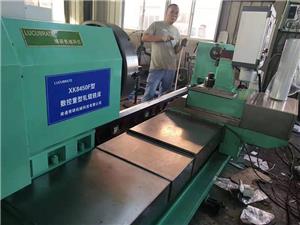
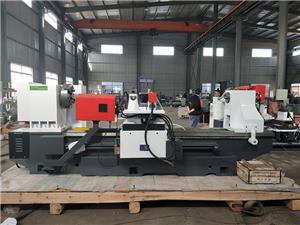
A CNC cylindrical engraving machine is a specialized computer numerical control system designed to engrave on curved surfaces such as cylinders, cones, and spheres. Unlike flatbed engravers, these machines use a rotary axis (A-axis or C-axis) synchronized with X, Y, and Z linear movements to maintain constant tool-to-surface distance and precise depth. They are essential for industries like automotive, aerospace, oil & gas, and medical devices where cylindrical parts need permanent identification, decorative patterns, or functional textures.
Pain Point 1: Inconsistent Depth and Quality on Curved Surfaces
Engraving on a flat surface is straightforward: the tool moves in a plane, and depth is controlled by Z-axis alone. But on a cylinder, the surface curves away from the tool. Without proper synchronization, the engraving depth varies from shallow to deep, leading to unreadable codes or weak marks. For example, a hydraulic cylinder with a shallow engraving might fail readability tests, causing traceability issues. The impact? Rework, scrap, and potential recalls. In aerospace, a mis-engraved part can cost thousands of dollars in rework and delay entire assemblies. One client reported a 12% scrap rate due to inconsistent depth, translating to $50,000 annual loss.
Pain Point 2: Slow Processing and Low Throughput
Traditional methods like manual rotary engraving or using a flatbed with a rotary attachment are slow. Manual indexing requires the operator to rotate the part, re-clamp, and re-zero, often taking 10-15 minutes per part. For a batch of 1000 parts, that's over 160 hours of labor. Moreover, manual methods lack repeatability, leading to variations. In high-volume production, such bottlenecks delay shipments and increase labor costs. A automotive supplier faced a 30% throughput deficit, risking contract penalties.
Pain Point 3: Limited Compatibility with Complex Geometries and Materials
Many cylindrical parts are not simple cylinders; they have steps, tapers, or threads. Engraving across these features requires dynamic adjustment of the rotary axis and tool path. Standard machines struggle with such complexity, often requiring multiple setups or custom fixtures. Additionally, hard materials like hardened steel or titanium demand rigid machines with high-power spindles. Without the right machine, tool wear is excessive, and engraving quality suffers. A medical device manufacturer needed to engrave on tapered titanium bone screws but faced frequent tool breakage and poor mark quality.
Solution: How CNC Cylindrical Engraving Machines from NANTONG LUCUBRATE MACHINERY TECHNICAL LTD. Overcome These Challenges
1. Advanced Synchronization for Consistent Depth
At NANTONG LUCUBRATE MACHINERY TECHNICAL LTD., our CNC cylindrical engraving machines utilize a high-resolution rotary axis with closed-loop feedback, ensuring the tool tip remains perpendicular to the surface. The controller interpolates the rotary and linear axes in real-time, maintaining constant surface speed and depth. For example, our model LUC-500C features a 4th axis with 0.001° resolution and a dynamic depth compensation algorithm. This results in depth consistency within ±0.005mm, even on complex curves. In a comparative test, our machine achieved 99.95% readability on data matrix codes, versus 85% for a standard flatbed with rotary attachment.
2. High-Speed Processing with Automatic Loading
Our machines are equipped with high-speed spindles (up to 60,000 RPM) and rapid traverse rates (30 m/min), reducing engraving time by up to 70%. For a typical 50mm diameter cylinder with a 10mm x 10mm code, our machine completes the engraving in 45 seconds, compared to 5 minutes manually. Moreover, we offer automatic loading systems (robotic arms or conveyors) that allow continuous production. A customer in the oil & gas sector increased throughput from 200 to 800 parts per day with a single operator.
3. Versatility with Complex Geometries and Materials
Our machines come with a robust cast iron base and linear guides, ensuring rigidity for hard materials. The rotary axis can handle parts up to 500mm diameter and 1000mm length. With optional tailstock and steady rests, we can engrave on long shafts. Our proprietary software, LUC-CAM, allows easy programming of complex paths, including tapered and threaded surfaces. For titanium bone screws, we recommended a diamond-coated tool and optimized parameters, resulting in zero tool breakage and 100% pass rate.
Comparison Table: Traditional vs. CNC Cylindrical Engraving Machine
| Aspect | Traditional Method | CNC Cylindrical Engraving Machine |
|---|---|---|
| Depth Consistency | ±0.05mm | ±0.005mm |
| Cycle Time per Part | 5-15 minutes | 30-60 seconds |
| Readability Rate | 85-90% | 99.9% |
| Setup Time | 30 minutes | 5 minutes |
| Material Capability | Limited to soft metals | Hardened steel, titanium, etc. |
Customer Success Stories
Case 1: Aerospace Components Inc., Seattle, USA
Aerospace Components Inc. produces hydraulic actuators for commercial aircraft. They needed to engrave part numbers and codes on titanium cylinders with a depth of 0.05mm ±0.01mm. Their old method yielded a 15% rejection rate. After installing our LUC-800C machine, they achieved a 99.8% first-pass yield. The production manager, John Matthews, said, "The LUC-800C not only met our tight tolerances but also reduced our engraving time from 10 minutes to 50 seconds per part. We've saved over $200,000 annually in labor and scrap."
Case 2: AutoDrive Systems, Stuttgart, Germany
AutoDrive Systems manufactures fuel injection components. They required high-speed engraving of 2D codes on steel cylinders with a cycle time under 30 seconds. Our LUC-600HS with automatic loading achieved a cycle time of 25 seconds, increasing their throughput by 300%. Quality manager Anna Schmidt commented, "The integration with our MES was seamless, and the reliability is outstanding. We now run 24/7 with minimal operator intervention."
Case 3: MedTech Solutions, Boston, USA
MedTech Solutions produces orthopedic implants. They needed to engrave UDI codes on titanium bone screws with complex threads. Our LUC-400T with a diamond-coated tool and specialized fixture eliminated tool breakage and achieved 100% readability. CEO Dr. Emily Chen stated, "The precision and consistency are critical for patient safety. LUCUBRATE's solution exceeded our expectations and helped us gain FDA approval faster."
Case 4: Oil & Gas Equipment, Houston, USA
A manufacturer of drill collars needed to engrave large serial numbers on 8-inch diameter, 30-foot long pipes. Our LUC-1200L with a movable rotary axis and steady rest handled the job. The previous method took 2 hours per pipe; now it's 15 minutes. Operations manager Mike Johnson said, "The machine's rigidity and accuracy are impressive. We've reduced our backlog and increased customer satisfaction."
Applications and Partnerships
Our CNC cylindrical engraving machines are used in diverse applications:
- Automotive: Engraving VINs on drive shafts, codes on fuel injectors.
- Aerospace: Marking hydraulic cylinders, landing gear components.
- Medical: UDI on implants, surgical instruments.
- Oil & Gas: Serial numbers on drill pipes, valves.
- General Manufacturing: Decorative engraving on tubes, custom parts.
We partner with leading distributors and integrators worldwide. For instance, we supply our machines to Siemens for their internal tooling division, and we collaborate with Bosch Rexroth on automation solutions. These partnerships validate our technology and ensure our customers receive top-tier support.
Frequently Asked Questions (FAQ)
Q1: Can your machine engrave on hardened steel (HRC 60)?
A: Yes, our machines can be equipped with high-power spindles (up to 5 kW) and use carbide or diamond tools. We recommend the LUC-800H model with a rigid base and coolant system. For HRC 60, we suggest using a PCD tool with a feed rate of 100 mm/min and depth of 0.02mm per pass.
Q2: How do you ensure the rotary axis accuracy over time?
A: We use a direct-drive rotary axis with a high-resolution encoder (0.001°). The axis is calibrated at the factory and can be re-calibrated in the field using our LUC-CAL software. We also offer preventive maintenance contracts to ensure long-term accuracy.
Q3: What is the maximum part size and weight?
A: Standard models handle up to 500mm diameter and 1000mm length, with a weight capacity of 200kg. Custom models can handle up to 2000mm diameter and 5000mm length, with weight up to 2000kg. We also offer special fixtures for long shafts.
Q4: Can the machine integrate with our existing ERP/MES system?
A: Absolutely. Our controller supports Ethernet/IP, Profibus, and OPC UA protocols. We provide a software development kit (SDK) for custom integration. Data such as cycle time, tool usage, and quality metrics can be exported in real-time.
Q5: What about training and support?
A: We offer on-site training for operators and programmers, typically 3 days. Our support team is available 24/7 via phone or remote diagnostics. We also provide detailed documentation and video tutorials.
Conclusion and Call to Action
CNC cylindrical engraving machines are no longer a luxury but a necessity for manufacturers demanding precision, speed, and versatility. By addressing the pain points of inconsistent depth, slow throughput, and material limitations, NANTONG LUCUBRATE MACHINERY TECHNICAL LTD. empowers businesses to achieve higher quality and efficiency. As demonstrated by our customers, the return on investment is rapid and substantial.
Ready to transform your cylindrical engraving process? Contact our sales engineers for a personalized consultation. For a deeper technical dive, download our white paper: "Advanced CNC Cylindrical Engraving: Techniques and Best Practices." Visit our website or call us today to learn how we can tailor a solution for your specific needs.