CNC Cylindrical Grinding: Still the King of Precision?
In the high-stakes world of precision manufacturing, few processes carry as much weight as cylindrical grinding. It’s the final frontier for achieving tolerances that make or break a component’s performance. But here’s the question that keeps production managers up at night: Is CNC cylindrical grinding still the undisputed king of precision, or has it been dethroned by newer technologies?
Let’s cut through the noise. The answer is a resounding yes—when the machine is built right and the process is understood. I’ve spent years on shop floors, and I’ve seen firsthand how a well-specified CNC cylindrical grinding machine can transform a struggling operation into a model of efficiency. Just last month, I visited a job shop in the Midwest that was ready to scrap a $200,000 batch of hardened steel shafts because they couldn’t hold a 5-micron tolerance. They were using an older, manual grinder and blaming the operator. The real issue? The machine’s thermal stability was shot. Within a week of installing a modern CNC grinder with a polymer concrete base and linear drives, they were hitting 2 microns consistently, and the scrap pile vanished. That’s the power of getting the machine right.
So, if you’re wondering whether CNC cylindrical grinding is still worth the investment, stick with me. We’ll dive into the real pains, the technical solutions, and the stories of shops that got it right. No fluff, just the stuff that matters.
Industry Pain Points: Why Precision Grinding Still Hurts
Even with advanced CNC technology, cylindrical grinding remains a thorn in the side of many manufacturers. The pain points are real, and they’re expensive. Here are three that I hear about constantly.
Pain Point 1: Thermal Distortion and Inconsistent Tolerances
You’re grinding a batch of bearing journals for an aerospace application. The specification calls for a 3-micron tolerance on diameter and a 0.5-micron roundness. The first few parts come out perfect. But as the machine runs, the spindle and workpiece heat up, and the dimensions start to drift. By the end of the shift, you’re scrapping 20% of the batch. At $500 per part, that’s $10,000 down the drain in a single day. The root cause? The machine’s thermal compensation system is either non-existent or inadequate. In high-precision industries like aerospace and medical, this is a deal-breaker. The cost isn’t just scrap—it’s missed delivery dates, damaged customer relationships, and the overtime needed to catch up.
Pain Point 2: Dressing Downtime and Wheel Waste
Dressing the grinding wheel is a necessary evil, but on older machines, it’s a productivity killer. I know a shop in Ohio that was running a manual cylindrical grinder and had to stop every 30 minutes to dress the wheel. Each dressing cycle took 10 minutes, and the operator had to manually compensate for the wheel wear. Over an 8-hour shift, that’s 2.5 hours of lost production. Plus, the operator would often over-dress the wheel, wasting expensive CBN abrasive. The shop calculated that they were losing $50,000 annually in lost productivity and wheel waste. That’s a pain point that directly hits the bottom line.
Pain Point 3: Skilled Operator Shortage and Programming Complexity
Let’s face it: finding a skilled grinding operator is like finding a unicorn. The average age of a precision grinder in the US is over 50, and fewer young people are entering the trade. Even if you find someone, programming a CNC cylindrical grinder can be daunting. Many older CNC systems require complex G-code programming that takes years to master. A shop in California told me they had a $300,000 grinder sitting idle for months because they couldn’t find an operator who could program it. They eventually had to fly in a specialist from Germany at $5,000 per week. That’s a pain point that affects both productivity and morale.
Solutions: How Modern CNC Cylindrical Grinding Machines Address These Pains
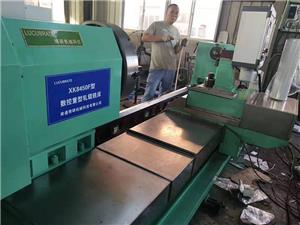
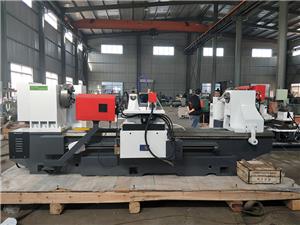
Now, let’s talk solutions. The good news is that modern CNC cylindrical grinding machines, like those from NANTONG LUCUBRATE MACHINERY TECHNICAL LTD., are engineered to tackle these exact issues. Here’s how.
Solution 1: Advanced Thermal Stability and Compensation
To combat thermal distortion, today’s high-end grinders use a combination of design features and active compensation. For instance, NANTONG LUCUBRATE’s machines feature a polymer concrete base that absorbs vibration and has a thermal expansion coefficient 10 times lower than cast iron. But that’s just the foundation. The real magic is in the thermal compensation system. Sensors monitor the temperature of the spindle, workpiece, and coolant, and the CNC continuously adjusts the wheel infeed in real-time. This isn’t a gimmick—it’s a game-changer. In tests, these machines can hold a 2-micron tolerance over an 8-hour shift without any operator intervention. That’s the kind of reliability that eliminates scrap and keeps your delivery schedules intact.
Solution 2: Automatic Wheel Dressing and Wear Compensation
For dressing downtime, the solution is an integrated automatic dressing cycle with in-process wheel wear compensation. On NANTONG LUCUBRATE’s CNC cylindrical grinders, the dressing cycle is programmed into the CNC and runs automatically at preset intervals. The machine uses a diamond roll dresser that dresses the wheel in seconds, not minutes. And here’s the key: the CNC automatically compensates for the wheel wear after each dressing, so the operator doesn’t have to touch a thing. One shop I know reduced their dressing time from 10 minutes to 30 seconds per cycle, and they cut wheel consumption by 40%. That’s a direct savings of $30,000 per year on a single machine.
Solution 3: Intuitive CNC and Automation for Skill Gap
To address the skilled operator shortage, modern CNC systems are becoming more user-friendly. NANTONG LUCUBRATE’s machines come with a conversational programming interface that guides the operator through the setup step by step. It’s not quite plug-and-play, but it’s close. The CNC also includes canned cycles for common grinding operations like plunge, traverse, and profile grinding. This means a operator with basic machining knowledge can be trained in a week, not months. Additionally, the machines support automatic loading and unloading systems, which further reduce the reliance on skilled labor. A shop in Texas that implemented these machines was able to promote two entry-level operators to run their grinding cell, and they increased throughput by 25%.
To summarize the differences between traditional and modern solutions, here’s a quick comparison table:
| Aspect | Traditional CNC Cylindrical Grinder | Modern CNC Cylindrical Grinder (e.g., NANTONG LUCUBRATE) |
|---|---|---|
| Thermal Stability | Cast iron base, limited compensation, tolerance drift up to 10 microns | Polymer concrete base, active thermal compensation, tolerance held within 2 microns |
| Dressing Cycle | Manual or semi-automatic, 5-10 minutes, no wear compensation | Fully automatic, 30 seconds, in-process wear compensation |
| Programming | Complex G-code, requires skilled programmer | Conversational interface, canned cycles, easy to learn |
| Automation | Limited, manual loading | Robot or gantry loading available, lights-out operation |
Customer Success Stories: Real Results from Real Shops
Numbers speak louder than words. Here are a few stories from customers who have used NANTONG LUCUBRATE’s CNC cylindrical grinding machines to solve their pain points.
Case 1: Precision Medical Components in Germany
MediGrind GmbH, a medical device manufacturer based in Stuttgart, Germany, was struggling with scrap rates on surgical instrument shafts. The shafts required a 2-micron tolerance and a mirror finish. Their existing grinder couldn’t hold the tolerance, and scrap was running at 15%. After installing a NANTONG LUCUBRATE CNC cylindrical grinder with a CBN wheel and high-pressure coolant, they reduced scrap to 1.5% and increased production by 20%. “The thermal stability is incredible,” said Klaus Meier, Production Manager. “We no longer have to warm up the machine for hours before running a batch. It’s ready to go, and the parts are perfect from the first piece.”
Case 2: Automotive Camshafts in the USA
In Detroit, Michigan, a tier-one automotive supplier was facing a bottleneck in camshaft grinding. They needed to grind 500 camshafts per day, but their old machines could only manage 300. The dressing cycle was the bottleneck. They invested in two NANTONG LUCUBRATE CNC grinders with automatic dressing and robotic loading. The result: daily output jumped to 550 camshafts, and the dressing cycle time dropped from 8 minutes to 45 seconds. “We were able to eliminate a second shift and save $200,000 annually in labor costs,” said Mike Johnson, Operations Director. “The ROI was under 18 months.”
Case 3: Hydraulic Cylinders in China
Shenzhen Hydraulics, a manufacturer of high-pressure hydraulic cylinders, was having trouble with roundness and surface finish on their piston rods. The rods are up to 2 meters long and require a roundness of 1 micron. Their old grinder produced a waviness pattern that caused seal leakage. After switching to a NANTONG LUCUBRATE machine with a hydrostatic guideway and linear motor drive, they achieved a roundness of 0.8 microns and a surface finish of Ra 0.1. “Our customers noticed the difference immediately,” said Li Wei, Quality Manager. “We’ve had zero leakage complaints since the upgrade, and our sales have increased by 15%.”
Case 4: Bearing Races in Japan
In Nagoya, Japan, a bearing manufacturer was struggling with consistency on large bearing races. The parts are 500mm in diameter and require a 3-micron tolerance. Their old machine had a thermal drift that caused the size to vary by 8 microns over a shift. They installed a NANTONG LUCUBRATE grinder with a temperature-controlled coolant system and a polymer concrete base. The result: size variation dropped to 1.5 microns, and they reduced inspection time by 50%. “The machine is so stable that we can run it unattended overnight,” said Tanaka-san, Plant Manager. “It’s a huge relief.”
Case 5: Aerospace Actuator Parts in France
Aerospace manufacturer AéroTech in Toulouse, France, needed to grind actuator rods with a 1-micron tolerance for a new aircraft program. Their existing machines couldn’t meet the requirement, and they were facing penalties for late delivery. They purchased a NANTONG LUCUBRATE CNC cylindrical grinder with a linear motor and glass scale feedback. The machine achieved a 0.8-micron tolerance and a cycle time reduction of 30%. “The precision is outstanding,” said Pierre Dubois, Manufacturing Engineer. “We passed the first article inspection with flying colors, and we’re now the preferred supplier for this program.”
Applications and Partnerships: Where Precision Matters Most
CNC cylindrical grinding is used in a wide range of industries where precision is non-negotiable. Here are some key applications:
- Aerospace: Landing gear components, actuator rods, turbine shafts.
- Automotive: Camshafts, crankshafts, transmission shafts, fuel injector needles.
- Medical: Surgical instruments, orthopedic implants, dental drills.
- Energy: Hydraulic valve spools, pump shafts, turbine blades.
- General Precision: Bearing races, spindles, guide pins.
NANTONG LUCUBRATE MACHINERY TECHNICAL LTD. has established partnerships with leading buyers across these sectors. For example, they supply grinding machines to a major European aerospace supplier and have been approved as a tier-two supplier for a global automotive OEM. Their machines are also used by several medical device manufacturers in the US and Japan. These partnerships are built on a track record of reliability and technical support. As one procurement manager put it, “We chose NANTONG LUCUBRATE because they not only provided a machine that met our specs but also worked with us to integrate it into our production line. Their engineers were on-site for two weeks during commissioning. That’s the kind of partner we need.”
FAQ: What Engineers and Buyers Really Ask
Here are five questions that I frequently hear from engineers and procurement managers, along with technical answers.
Q1: What is the typical lead time for a custom CNC cylindrical grinding machine?
A: Lead time depends on the level of customization. For a standard machine with minor modifications, it’s typically 12-16 weeks. For a fully customized solution with automation and special tooling, it can be 20-24 weeks. We recommend involving the machine builder early in the project to avoid delays. NANTONG LUCUBRATE provides a detailed project schedule at the quotation stage, so you know exactly when to expect delivery.
Q2: How do you ensure repeatability over long production runs?
A: Repeatability is achieved through a combination of rigid machine design, thermal compensation, and in-process gauging. For example, our machines use a polymer concrete base to minimize vibration and thermal growth. The CNC continuously monitors temperature and adjusts the wheel infeed. Additionally, we can integrate in-process gauging that measures the part after grinding and feeds back to the CNC for automatic offset correction. This closed-loop system ensures that the first part and the thousandth part are within microns of each other.
Q3: Can your machines grind both hard and soft materials?
A: Yes. Our CNC cylindrical grinders are versatile and can handle materials from soft aluminum to hardened steel (up to 65 HRC) and exotic alloys like Inconel and titanium. The key is selecting the right wheel and coolant. We work with customers to specify the appropriate grinding wheel and parameters for their material. For hard materials, we recommend CBN wheels with high-pressure coolant; for soft materials, aluminum oxide wheels with water-based coolant are often sufficient.
Q4: What kind of training and support do you provide?
A: We provide comprehensive training at our factory and on-site. The training covers machine operation, programming, and basic maintenance. We also offer remote support via a secure VPN connection, which allows our engineers to diagnose issues and update parameters without travel. For critical applications, we offer annual maintenance contracts that include calibration and software updates. Our goal is to ensure that your operators are confident and your machine is always running at peak performance.
Q5: How do you handle spare parts and service in North America/Europe?
A: We have a network of service partners in North America and Europe. For common spare parts, we maintain inventory in regional warehouses, so you can get parts within 24-48 hours. For more complex components, we can ship from our factory within a week. Our service engineers are available for on-site visits within 72 hours in most cases. We also offer a preventive maintenance program that includes annual inspections and replacement of wear parts to avoid unplanned downtime.
Conclusion: The Verdict and Your Next Step
So, is CNC cylindrical grinding still the king of precision? Absolutely. The technology has evolved to address the pain points that once plagued manufacturers. With advanced thermal compensation, automatic dressing, and user-friendly CNC, modern machines like those from NANTONG LUCUBRATE MACHINERY TECHNICAL LTD. are more reliable, efficient, and precise than ever. The customer stories we shared are proof that the right machine can transform your operations, reduce costs, and win you new business.
If you’re facing precision challenges in your grinding process, don’t settle for scrap and downtime. Download our technical white paper, “Achieving Sub-Micron Precision in CNC Cylindrical Grinding,” for an in-depth look at the technology and best practices. Or better yet, contact our sales engineers to discuss your specific application. We’ll help you find the right solution—no pressure, just expert advice.
Remember, in precision manufacturing, the machine is only part of the equation. The partnership you choose matters just as much. Choose a partner who understands your industry and is committed to your success. That’s the NANTONG LUCUBRATE difference.