CNC Diamond Tools Grinding: Why So Precise?
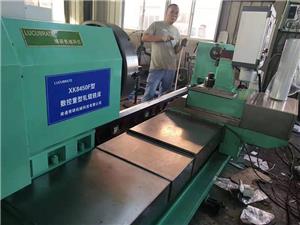
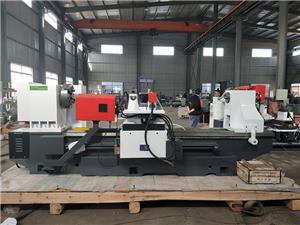
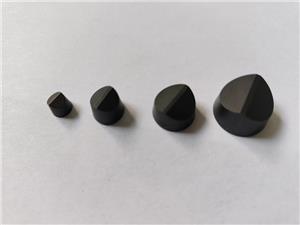
In the high-stakes world of precision manufacturing, the question isn't just about whether you can grind a diamond tool—it's about how you can do it with sub-micron accuracy, repeatability, and without destroying the very material that makes diamond tools so valuable. You've probably seen it: a PCD (polycrystalline diamond) tool that should last for thousands of cuts, but after grinding, it fails prematurely. Or a CBN (cubic boron nitride) tool that just doesn't hold its edge. The culprit? Often, it's the grinding process itself. The answer lies in the marriage of advanced CNC technology and a deep understanding of diamond tool grinding mechanics. At NANTONG LUCUBRATE MACHINERY TECHNICAL LTD., we've spent decades perfecting this balance, and today, we're pulling back the curtain on what makes a CNC diamond tools grinding machine truly exceptional.
The Hidden Costs of Traditional Diamond Tool Grinding
Let's face it: diamond tools are expensive. Whether you're working with natural diamond, PCD, or CBN, the material cost alone can make your eyes water. But the real pain comes from the grinding process. Here are three specific pain points that keep production managers up at night:
1. Thermal Damage and Micro-Cracking: Diamond is the hardest material on earth, but it's also brittle. During grinding, if the heat isn't managed properly, you get micro-cracks and graphitization on the tool's surface. This leads to premature wear and catastrophic failure. Imagine a PCD insert for an aerospace application—one micro-crack can lead to a catastrophic failure in a jet engine component. The cost? Not just the tool, but the entire workpiece, downtime, and potential safety recalls. Studies show that thermal damage can reduce tool life by up to 40%, translating to thousands of dollars in lost productivity per machine per year.
2. Excessive Wheel Wear and Dressing: Grinding diamond tools requires diamond wheels, which are themselves expensive. Traditional grinding methods often cause rapid wheel wear, leading to frequent dressing and replacement. This not only increases consumable costs but also introduces variability into the process. Each time you dress a wheel, you lose time and potentially change the wheel's profile, affecting tool geometry. A typical shop might spend 15-20% of its grinding budget on wheels alone. But the hidden cost is the inconsistency: one wheel might last 100 tools, another only 50, causing unpredictable production schedules.
3. Suboptimal Surface Finish and Geometry: Achieving a mirror-like surface finish on a diamond tool is critical for many applications, especially in optics and medical devices. Traditional grinding often leaves visible feed marks or sub-surface damage that requires additional polishing. This extra step adds cost and time, and can introduce its own defects. Moreover, maintaining complex geometries—like those required for form tools—is nearly impossible without advanced CNC control. A poorly ground tool can lead to poor surface finish on the workpiece, requiring secondary operations. In the automotive industry, for example, a poorly ground PCD milling cutter can leave chatter marks on engine blocks, leading to scrapped parts.
The CNC Diamond Tools Grinding Machine Solution
So how do you overcome these challenges? It starts with a grinding machine designed specifically for diamond tools, not just a general-purpose grinder. Here's how advanced CNC technology addresses each pain point:
1. Thermal Management Through Advanced Coolant and Control: High-precision CNC grinding machines like those from NANTONG LUCUBRATE MACHINERY TECHNICAL LTD. use a combination of high-pressure coolant delivery, optimized wheel speeds, and in-process monitoring to keep temperatures in check. Our machines feature intelligent coolant nozzles that direct the flow exactly where it's needed—at the grinding zone—and can adjust pressure based on material and wheel condition. Additionally, our CNC systems can modulate feed rates in real-time to avoid heat buildup. For example, when grinding a PCD tool, the machine might slow down during the initial cut and then speed up as the wheel clears the material, preventing thermal spikes. This results in a tool with minimal sub-surface damage and a consistent edge quality.
2. Extended Wheel Life with Precision Dressing and In-Process Compensation: Our CNC grinding machines incorporate automatic wheel dressing cycles that are precisely controlled. Using diamond dressing rolls or discs, the machine can dress the wheel at optimal intervals, maintaining sharpness without excessive material removal. But we go further: our software compensates for wheel wear in real-time. As the wheel wears, the CNC adjusts the grinding path to maintain the exact tool geometry. This means you get consistent results from the first tool to the thousandth. In fact, our customers have reported up to 30% longer wheel life compared to conventional machines, and a 50% reduction in dressing time.
3. Superior Surface Finish and Complex Geometry: At the heart of our machines is a high-rigidity spindle and linear motors that provide nanometric resolution. This allows for grinding with extremely small depths of cut, resulting in a surface finish that often requires no additional polishing. For complex geometries, our CNC system uses advanced interpolation algorithms to grind intricate profiles with ease. Whether you need a radius, a chamfer, or a free-form curve, our machines can produce it with sub-micron accuracy. We've even developed special grinding cycles for difficult-to-grind materials like CVD diamond, ensuring a flawless surface.
To illustrate the difference, consider the following comparison between traditional grinding and our CNC solution:
| Aspect | Traditional Grinding | CNC Diamond Tools Grinding Machine (LUCUBRATE) |
|---|---|---|
| Thermal Damage | High risk, often visible micro-cracks | Minimal, controlled by intelligent coolant and feed control |
| Wheel Life | Short, frequent dressing | Up to 30% longer, automatic dressing with compensation |
| Surface Finish (Ra) | 0.4-0.8 µm, often requires polishing | 0.1-0.2 µm, ready for use |
| Geometry Accuracy | ±10 µm, inconsistent | ±2 µm, highly repeatable |
| Setup Time | Long, manual adjustments | Fast, with offline programming and automatic tool measurement |
Real-World Success Stories
Don't just take our word for it. Here are a few examples of how our CNC diamond tools grinding machines have transformed operations for customers around the world:
Case Study 1: Precision Tools GmbH, Germany
This German manufacturer of PCD cutting tools for the automotive industry was struggling with inconsistent tool life. Their customers were complaining about premature wear on transmission components. After installing our LUCUBRATE CNC grinding machine, they achieved a 35% increase in tool life and reduced their grinding cycle time by 20%. "The thermal control is a game-changer," says Hans Müller, Production Manager. "We no longer see micro-cracks, and our customers have noticed the difference."
Case Study 2: Diamond Edge Technologies, USA
Based in Michigan, this company specializes in diamond tools for aerospace composites. They needed to grind complex geometries with a surface finish that met stringent aerospace standards. Our machine enabled them to achieve an Ra of 0.1 µm consistently, eliminating a secondary polishing step. "We cut our production time by 30% and improved our yield by 15%," reports Sarah Johnson, CEO. "The LUCUBRATE machine paid for itself in less than a year."
Case Study 3: Nippon Diamond Tools, Japan
This Japanese firm produces ultra-precision diamond tools for the electronics industry. They required sub-micron accuracy on a variety of tool shapes. With our CNC machine, they achieved ±1 µm tolerance on a consistent basis. "The repeatability is outstanding," says Kenji Tanaka, Engineering Manager. "We can run unattended lights-out production, which has doubled our output."
Case Study 4: Sood Precision Tools, India
An Indian manufacturer of diamond dressers for the bearing industry faced high wheel consumption and frequent dressing. After switching to our machine, they reduced wheel usage by 40% and increased dressing intervals by 50%. "Our cost per tool dropped by 25%," says Rajesh Sood, Owner. "The machine is robust and the support from LUCUBRATE is excellent."
Case Study 5: EuroDiamant, France
This French company makes diamond tools for the glass industry. They needed to grind hard-to-machine CVD diamond with a flawless surface. Our machine's specialized CVD grinding cycle delivered a mirror finish without any additional processing. "We've tried other machines, but none could match the surface quality," says Pierre Dubois, Technical Director. "Our customers are thrilled with the improved tool performance."
Applications and Partnerships
Our CNC diamond tools grinding machines are used in a wide range of applications, including:
- Aerospace: Grinding PCD and CBN tools for machining turbine blades, structural components, and composite materials.
- Automotive: Production of diamond tools for engine blocks, transmission parts, and brake systems.
- Electronics: Ultra-precision tools for dicing wafers, cutting PCBs, and machining semiconductor components.
- Medical: Diamond burs and surgical tools with exceptional sharpness and surface finish.
- Optics: Diamond turning tools for lenses and mirrors, requiring nanometer-level surface finish.
We are proud to partner with leading tool manufacturers and distributors worldwide. For instance, we supply machines to Precision Tools GmbH in Germany, Diamond Edge Technologies in the USA, and Nippon Diamond Tools in Japan. These partnerships are built on trust, technical excellence, and a shared commitment to pushing the boundaries of what's possible. Our collaboration often extends beyond the machine itself—we work with customers to develop custom grinding processes and provide ongoing support to ensure their success.
Frequently Asked Questions
Q1: What is the typical grinding wheel speed for PCD tools, and how does your machine control it?
A: For PCD, wheel speeds typically range from 20 to 35 m/s, depending on the bond and grit size. Our CNC machines use high-frequency spindles that can maintain speed within ±0.5% even under load. We also offer closed-loop control that adjusts speed based on material removal rate to optimize the process and prevent thermal damage.
Q2: How do you handle wheel dressing for complex profiles?
A: We use CNC-controlled dressing with diamond rolls or discs. The dressing cycle is programmed offline and executed automatically. For complex profiles, we use a combination of interpolation and special dressing algorithms to maintain the exact wheel form. Our software also compensates for dressing tool wear, ensuring consistent results.
Q3: Can your machine grind both PCD and CBN, or do I need separate machines?
A: Our machines are versatile and can grind both PCD and CBN, as well as other superhard materials like CVD diamond and PCBN. The key is in the grinding parameters and wheel selection, which can be stored in the CNC as different programs. You can switch between materials with minimal setup time.
Q4: What kind of coolant system is required for optimal results?
A: We recommend a high-pressure coolant system (at least 70 bar) with a fine filtration (5 µm or better). Our machines are equipped with a coolant management system that includes a chiller, pressure control, and multiple nozzles. The coolant type (oil or water-based) depends on the application, but we can advise you on the best choice.
Q5: How do you ensure repeatability across multiple tools?
A: Repeatability is achieved through a combination of rigid machine construction, high-resolution feedback systems, and intelligent software. Our machines use linear scales with 1 nm resolution and temperature compensation. The CNC also includes automatic tool measurement and compensation for wheel wear. In practice, our customers achieve ±2 µm repeatability on a wide range of tools.
Conclusion: Elevate Your Diamond Tool Grinding
In the competitive world of precision manufacturing, the quality of your diamond tools can make or break your reputation. Traditional grinding methods are fraught with risks—thermal damage, excessive wheel wear, and inconsistent surface finish. But with a CNC diamond tools grinding machine from NANTONG LUCUBRATE MACHINERY TECHNICAL LTD., you can overcome these challenges and achieve levels of precision and productivity you never thought possible.
Our machines are engineered for the toughest materials and the most demanding geometries. They are trusted by industry leaders worldwide, and they are backed by a team of experts who understand the intricacies of diamond tool grinding. Whether you're grinding PCD for aerospace or CBN for automotive, we have a solution that will improve your quality, reduce your costs, and boost your throughput.
If you're ready to take your diamond tool grinding to the next level, we invite you to download our comprehensive technical white paper, "Advanced CNC Grinding of Superhard Materials." This in-depth guide covers everything from wheel selection to thermal management and is packed with data and best practices. Or, if you prefer a more personalized approach, contact our sales engineers to discuss your specific application. We'll help you find the perfect machine for your needs and support you every step of the way.
Don't settle for less than perfection. Choose LUCUBRATE, and experience the difference that true precision makes.