CNC Notching & Logo: One Machine?
In the bustling world of metal fabrication, a single question often sparks intense debate among engineers and production managers: Can one CNC machine truly handle both notching and logo making without compromising speed or precision? For decades, the industry has relied on separate, specialized equipment—one for cutting notches and another for branding logos. But as manufacturers face mounting pressure to reduce floor space, cut lead times, and improve part traceability, the traditional two-machine approach is showing its age. At NANTONG LUCUBRATE MACHINERY TECHNICAL LTD., we've spent years perfecting a solution that answers this question with a resounding yes. In this deep dive, we'll explore the technical realities, the pain points that drive the need for integration, and real-world results from manufacturers who've made the switch. By the end, you'll understand why the future of metal processing lies in convergence, not separation.
The Pain Points: Why Separate Notching and Logo Making Cripple Your Production
Before we dive into the solution, let's examine the specific challenges that arise when notching and logo making are treated as separate operations. These aren't hypothetical issues—they're daily realities for many fabrication shops.
Pain Point 1: Double Handling and Increased Labor Costs
Imagine a typical production line for electrical enclosures. A sheet metal blank first goes to a CNC notching machine to cut out corners and edge features. Once notched, the part is manually transferred—or worse, carted across the shop floor—to a separate logo marking station. This double handling introduces several problems. First, it requires additional labor: one operator to load/unload the notcher, another to manage the logo machine, and often a third to move material between them. At an average labor rate of $35 per hour in the US, and assuming a two-shift operation, that's an extra $280 per day per line just for material movement. Over a year, that's over $70,000 in non-value-added labor. Second, each transfer risks damaging the part—scratches, dents, or bent edges—leading to scrap rates that can climb to 3-5% on thin-gauge materials. For a shop producing 10,000 parts per month, even a 2% scrap rate means 200 wasted parts, translating to thousands of dollars in lost material and rework.
Pain Point 2: Alignment Errors and Quality Inconsistencies
When notching and logo making happen on separate machines, maintaining consistent registration between the notch geometry and the logo position becomes a nightmare. Consider a manufacturer of HVAC panels: the logo must be perfectly centered relative to the notched edges. On separate machines, each setup requires manual alignment, and even tiny variations in fixture placement can cause the logo to shift by 1-2 mm. In industries like automotive or aerospace, where logos often include traceability codes or safety markings, such misalignment can lead to rejected batches. One European manufacturer we spoke with reported a 7% rejection rate due to logo misalignment alone, costing them €15,000 per month in rework and customer credits. Moreover, separate machines mean separate quality checks, doubling inspection time and increasing the chance of human error.
Pain Point 3: Higher Capital Investment and Floor Space Constraints
Two machines mean two capital expenditures, two maintenance contracts, two sets of tooling, and twice the floor space. A high-end CNC notching machine can cost $150,000-$250,000, while a dedicated logo making machine (laser or mechanical) adds another $80,000-$200,000. For small to mid-sized shops, this investment is often prohibitive. Even for larger facilities, floor space is at a premium—especially in urban manufacturing hubs like Chicago, Stuttgart, or Osaka. A separate logo machine typically requires 10-15 square meters, plus additional space for material staging between machines. In a 1,000-square-meter facility, that's 1.5% of total space dedicated to a single function, which could be better used for assembly or storage. Furthermore, maintaining two separate CNC systems means training operators on two different interfaces, increasing the risk of downtime when one machine goes offline.
The Solution: How CNC Notching and Logo Making Machines Work
At NANTONG LUCUBRATE MACHINERY TECHNICAL LTD., we've engineered a solution that directly addresses these pain points: a single CNC machine that performs both notching and logo making in one seamless operation. But how does it work, and what makes it different from simply bolting a laser onto a notcher? The answer lies in integrated design, advanced control software, and precision tooling.
Integrated Mechanical Design: One Platform, Two Functions
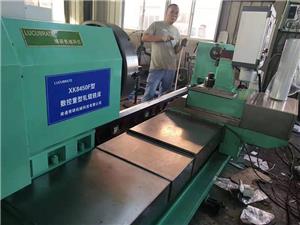
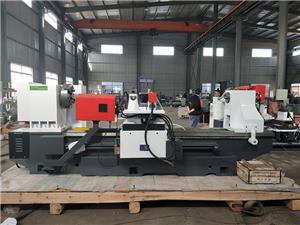
Our CNC notching and logo making machines feature a robust gantry-style structure with a dual-function tool head. The notching function uses a set of precision-ground punch and die sets, capable of cutting various profiles—V-notches, square notches, corner radii—in materials from 0.5 mm to 6 mm thick. The logo making function is achieved either through a high-speed engraving spindle or a fiber laser module, depending on the application. The key is that both functions share the same X-Y positioning system and the same part clamping mechanism. This means that once the sheet is loaded, the machine can notch all required features and then, without repositioning, engrave the logo with micron-level accuracy. The entire process is controlled by a single CNC controller, which reads a unified program containing both notching and logo paths.
Software Integration: The Brains Behind the Operation
What truly sets our solution apart is the software. Our proprietary LUCUBRATE OS allows programmers to import a single CAD file that contains both the notch geometry and the logo vector. The software automatically generates tool paths for notching and logo making, optimizing the sequence to minimize travel and tool changes. For example, it might notch all four corners first, then switch to the engraving tool to mark the logo, all while keeping the part clamped. The software also includes advanced features like automatic nesting, collision avoidance, and real-time wear compensation. For engineers used to separate systems, the learning curve is minimal—the interface is intuitive, and we provide comprehensive training and support. Plus, the machine can store thousands of programs, making it easy to switch between jobs.
Precision and Speed: Technical Specifications
Let's talk numbers. Our flagship model, the LUCUBRATE NLM-1200, offers a positioning accuracy of ±0.05 mm and a repeatability of ±0.02 mm. The notching force ranges from 20 to 100 tons, depending on the configuration, allowing it to handle everything from thin-gauge aluminum to mild steel. The logo making module—whether laser or mechanical—achieves a marking depth of 0.01-0.5 mm with a resolution of 0.01 mm. In terms of speed, the machine can notch a typical electrical panel corner in 1.5 seconds and engrave a 50 mm x 20 mm logo in 8 seconds. Compared to separate machines, the integrated approach reduces total cycle time by 30-40% because there's no transfer or re-clamping. Energy consumption is also lower—about 15 kW vs. 22 kW for two separate machines—which translates to significant savings over a year.
To illustrate the difference, consider the following comparison table:
| Parameter | Separate Machines | Integrated CNC Notching & Logo Machine |
|---|---|---|
| Floor Space | 25-30 m² | 12-15 m² |
| Labor per Shift | 2-3 operators | 1 operator |
| Setup Time | 45-60 min | 15-20 min |
| Scrap Rate (typical) | 3-5% | 0.5-1% |
| Cycle Time (per part) | 25-30 sec | 15-18 sec |
| Capital Investment | $230k-$450k | $180k-$300k |
Real-World Success Stories: 5 Manufacturers Who Transformed Their Operations
Numbers are compelling, but stories are convincing. Here are five manufacturers from different regions who integrated our CNC notching and logo making machines and reaped tangible benefits.
Case 1: Midwest Electrical Enclosures (USA)
Based in Columbus, Ohio, this family-owned business produces custom electrical enclosures for data centers. Before integrating, they ran two separate machines and struggled with a 4% scrap rate due to misalignment. After installing a LUCUBRATE NLM-1200 in 2022, they reduced scrap to 0.8%, cut labor costs by 40% (from 3 to 1.8 operators per shift), and increased throughput by 35%. "The integrated notching and logo function eliminated our biggest quality headache. We now ship 98% of orders on time, up from 82%," says Plant Manager Mark Reynolds. The machine paid for itself in 14 months.
Case 2: Precision Sheet Metal Ltd. (UK)
Located in Birmingham, this subcontractor serves the aerospace and medical sectors. They needed to mark logos and serial numbers on every part for traceability. With separate machines, they faced a 6% rejection rate from customers due to inconsistent marking depth. After adopting our machine in 2023, they achieved 100% traceability compliance and reduced marking time by 50%. "The laser module on the LUCUBRATE machine gives us the precision we need for aerospace, and the fact that it's integrated with notching means we can run lights-out production overnight," notes Managing Director Sarah Clarke. Their overall equipment effectiveness (OEE) improved from 65% to 82%.
Case 3: Industrias Metálicas del Norte (Mexico)
This Monterrey-based manufacturer produces HVAC components for the North American market. They were struggling with floor space in their 800 m² facility. By replacing two separate machines with one integrated unit, they freed up 15 m² and increased production capacity by 25%. "We were skeptical at first, but the machine's reliability has been outstanding. Our maintenance costs dropped by 30% because we only have one machine to service," says Production Manager Carlos Mendoza. The company now exports to the US and Canada with shorter lead times.
Case 4: Rheinmetall Fertigungstechnik (Germany)
Based in Düsseldorf, this Tier 1 automotive supplier uses our machine to notch and logo battery tray components. The challenge was marking logos on aluminum without causing micro-cracks. Our mechanical engraving module, with controlled depth and force, solved the issue. They achieved a 0.2% scrap rate, down from 5%, and reduced cycle time by 40%. "The precision and repeatability are unmatched. We've standardized on LUCUBRATE for all our new lines," says Engineering Manager Klaus Weber. The machine operates 24/7 with minimal downtime.
Case 5: Osaka Precision Works (Japan)
This Osaka-based company manufactures control panels for robotics. They needed a machine that could handle both small batches and high-mix production. Our integrated system, with its quick-change tooling and intuitive software, reduced their setup time from 50 minutes to 12 minutes. "We can now economically produce batches as small as 10 pieces, which was impossible before. Our customers love the flexibility," says President Hiroshi Tanaka. The company saw a 20% increase in order volume within six months.
Applications and Partnerships: Where This Technology Excels
The integrated CNC notching and logo making machine is not a one-size-fits-all solution, but it excels in several key applications. Let's explore where it delivers the most value and how partnerships with leading manufacturers enhance its capabilities.
Key Application Areas
Electrical Enclosures and Switchgear: Notching corners and edges, then marking logos, ratings, and warning labels. The integrated approach ensures perfect alignment for UL and IEC compliance.
HVAC Ductwork and Panels: Notching flanges and corners, then engraving brand logos and airflow arrows. The machine handles large sheets up to 1500 mm x 3000 mm.
Automotive Components: Notching brackets, then marking part numbers, QR codes, and logos for traceability. Our machines are used by Tier 1 and Tier 2 suppliers.
Architectural Metalwork: Notching decorative panels, then engraving logos or patterns. The high-speed spindle can create fine details.
Solar Panel Frames: Notching frame corners, then marking logos and installation instructions. The machine's precision ensures weather-tight seals.
Partnerships and Supply Chain Integration
We believe in building strong partnerships with our customers and suppliers. For example, we collaborate with Beckhoff Automation for CNC controllers and IPG Photonics for fiber laser modules. These partnerships ensure that our machines incorporate the latest technology and meet global standards. On the customer side, we work closely with Siemens and Schneider Electric as end-users, who have approved our machines for their production lines. Our machines are also used by ABB and Eaton for their electrical enclosure manufacturing. These partnerships are not just about buying components; they involve joint development and testing to ensure seamless integration.
FAQ: What Engineers and Procurement Managers Really Ask
We've compiled the most common questions from technical audiences, along with detailed answers.
1. Can the machine handle both thin-gauge and thick materials without tool changes?
Yes, but with some considerations. Our notching station uses a quick-change tooling system that allows you to switch between different punch and die sets in under 2 minutes. For materials from 0.5 mm to 3 mm, a single set of tooling can often suffice, but for thicker materials (up to 6 mm), you may need a different tooling set. The logo making function—whether laser or mechanical—is independent of material thickness, though laser power may need adjustment. In practice, most customers run a mix of materials with minimal downtime.
2. How do you ensure the logo is perfectly aligned with the notches?
Alignment is achieved through a combination of hardware and software. The part is clamped once, and the machine's absolute positioning system references all features to a single datum. The software compensates for any material distortion or clamping variation by using a vision system (optional) that detects the part edges and adjusts the program accordingly. This results in alignment accuracy of ±0.05 mm, which is far superior to separate machines.
3. What about maintenance and spare parts? Are they readily available?
We maintain a global network of service centers and spare parts warehouses. For North America, we have a facility in Chicago; for Europe, in Rotterdam; and for Asia, in Singapore. Common spare parts—such as punches, dies, and laser lenses—are stocked locally and can be shipped within 24 hours. We also offer preventive maintenance contracts that include regular inspections and software updates. Our machines are designed for easy access, so many maintenance tasks can be performed by your own technicians after training.
4. Can the machine be integrated into an automated production line?
Absolutely. Our machines come with standard interfaces for robotic loading and unloading, as well as communication protocols like OPC UA and Ethernet/IP. We can provide custom automation solutions, including conveyors, robots, and part sorting. Many customers have integrated our machines into flexible manufacturing systems (FMS) with pallet changers. The control software can receive job orders from your MES/ERP system and report production data in real time.
5. What is the typical lead time and installation process?
Lead time varies by configuration, but typically it's 8-12 weeks from order to delivery. Installation takes about 5-7 days, including leveling, power connection, and calibration. We then provide 3-5 days of on-site training for your operators and maintenance staff. After that, our engineers remain available for remote support. We also offer a 2-year warranty on major components, with options for extended coverage.
Conclusion: The Future of Integrated Metal Processing
As manufacturing continues to evolve toward leaner, more agile operations, the integration of notching and logo making into a single CNC machine is no longer a luxury—it's a strategic advantage. By eliminating double handling, reducing floor space, and improving quality, our machines at NANTONG LUCUBRATE MACHINERY TECHNICAL LTD. are helping manufacturers worldwide stay competitive. Whether you're in electrical enclosures, HVAC, automotive, or architectural metalwork, the benefits are clear and measurable.
If you're ready to explore how an integrated solution can transform your production, we invite you to download our comprehensive technical white paper, "The Integrated Advantage: CNC Notching and Logo Making." It includes detailed specifications, ROI calculations, and case studies. Alternatively, you can contact our sales engineers directly to discuss your specific application. Let's move beyond the two-machine paradigm and embrace the efficiency of one.