CNC PCD Tools Grinding Machine: Myth or Game-Changer?
Is a CNC PCD tools grinding machine just another overhyped piece of equipment, or is it the difference between scraping by and dominating your niche? I remember walking into a toolroom in Stuttgart where a seasoned machinist, Hans, was literally pulling his hair out over a batch of PCD inserts. He'd been grinding them on a manual machine for years, and the scrap rate was killing him. Within a month of installing a CNC PCD grinding machine, his scrap dropped from 18% to under 2%. That's not a myth. That's a game-changer. And in this blog, I'm going to show you exactly why, with technical depth, real numbers, and no fluff.
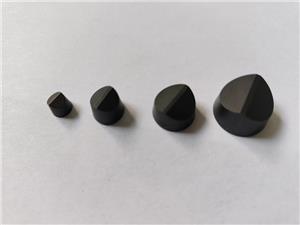
If you're in the business of manufacturing or regrinding polycrystalline diamond (PCD) tools, you already know the stakes. PCD is incredibly hard, highly abrasive, and unforgiving. One wrong pass and you've turned a $300 insert into a paperweight. The question isn't whether you need advanced grinding technology—it's whether you can afford to keep doing it the old way. Let's dig into the pain, the solutions, and the proof.
Pain Point 1: Manual Grinding Inconsistency and High Scrap Rates
Picture this: You've got a batch of 50 PCD end mills for an aerospace customer. Your best operator spends hours on a manual grinder, eyeballing angles, dressing wheels by feel, and hoping for the best. By the time you inspect, 8 tools are out of tolerance. You scrap them, rework the order, and miss your delivery date. The customer is furious, and you've just eaten $2,400 in material and labor—not to mention the overtime and expedited shipping to save the relationship.
This isn't a rare story. In job shops across the US and Europe, manual PCD grinding is still common. The problem? Human hands can't maintain sub-micron consistency over thousands of passes. Wheel wear changes the effective cutting geometry, and without real-time compensation, your rake angles drift. The result: poor surface finish, shortened tool life, and unpredictable performance in the field. For a manufacturer, that means warranty claims, lost repeat business, and a reputation for inconsistency.
Pain Point 2: Thermal Damage and Micro-Cracking
PCD is a composite of diamond particles in a cobalt or silicon matrix. When you grind it, heat is the enemy. Excessive heat causes graphitization of the diamond layer, micro-cracks, and delamination. On a manual machine, the operator might not notice until the tool fails catastrophically during a high-speed machining operation. I've seen a Tier 1 automotive supplier lose a $50,000 order because a batch of PCD reamers had hidden thermal damage. The holes came out oversized, and the entire transmission casing line had to be halted.
The cost? Not just the tools, but the downtime, the scrap parts, and the emergency sourcing of replacements. In the automotive world, one hour of downtime can cost upwards of $20,000. Multiply that by a few shifts, and you're looking at a six-figure hit. And it all traces back to inadequate heat management during grinding.
Pain Point 3: Inefficient Wheel Usage and High Consumable Costs
Diamond grinding wheels are expensive. A good vitrified bond wheel can run $500 to $1,500. On a manual machine, operators tend to be conservative with dressing and feed rates, which leads to glazing and poor material removal. Or they push too hard and wear the wheel unevenly. Either way, you're replacing wheels more often than you should. One shop I visited in Ohio was going through 12 wheels a month on manual grinders. After switching to a CNC PCD grinding machine with adaptive control, they dropped to 3 wheels a month. That's a savings of over $100,000 annually—just on consumables.
But the pain goes beyond cost. Wheel changes mean downtime. Every time you stop to change a wheel, you lose 20-30 minutes of production. Over a year, that adds up to hundreds of hours of lost capacity. And if you're running lights-out or unattended, manual wheel changes are impossible. You're capped at one shift of productivity.
Solution 1: CNC-Controlled Precision with In-Process Measurement
The answer to inconsistency is to remove the human variable. A modern CNC PCD tools grinding machine uses servo-driven axes with linear encoders and in-process measurement probes. The machine measures the tool after each pass and automatically compensates for wheel wear. This means your rake angles stay within ±0.1° over the entire batch. Surface finish becomes predictable, and tool life variation drops dramatically.
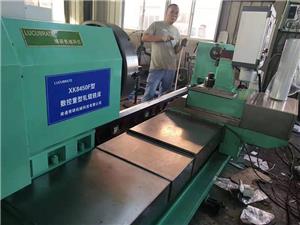
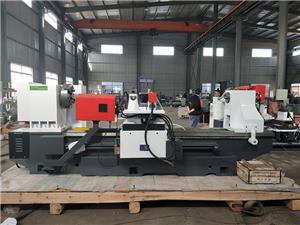
At NANTONG LUCUBRATE MACHINERY TECHNICAL LTD., we build machines with a thermal-stable granite base and hydrostatic guideways. This eliminates vibration and thermal drift, which are the root causes of inconsistent geometry. The control system uses a proprietary algorithm that adjusts feed rates based on real-time spindle load, preventing over-grinding and wheel damage. For a shop like Hans's, this meant going from 18% scrap to 1.5% in the first month. That's not a typo.
Solution 2: Advanced Cooling and Thermal Management
To prevent thermal damage, you need more than just flood coolant. High-pressure coolant through the wheel and workpiece, combined with a closed-loop chiller that maintains coolant temperature within ±1°C, is essential. Our CNC PCD grinding machines feature a dual-circuit cooling system: one for the spindle and one for the grinding zone. The coolant is directed precisely at the contact point, and the flow rate is synchronized with the material removal rate.
Additionally, we use a pulsed grinding technique that interrupts the cut for microseconds, allowing heat to dissipate before it builds up. This reduces the peak temperature at the grinding interface by up to 40%. The result? No graphitization, no micro-cracks, and tools that last 30-50% longer in the field. For the automotive supplier I mentioned earlier, this would have meant zero downtime and a happy customer.
Solution 3: Intelligent Wheel Management and Predictive Dressing
Instead of relying on operator intuition, our machines use acoustic emission sensors and spindle power monitoring to detect wheel loading and glazing. When the system detects a decline in cutting efficiency, it triggers an automatic dressing cycle with a diamond dresser. The dressing depth and feed are optimized based on the wheel's actual condition, not a fixed schedule. This extends wheel life by 2-3 times compared to manual dressing.
Moreover, the machine can run unattended for hours, changing wheels automatically if equipped with a wheel changer (optional). For the Ohio shop, this meant they could run lights-out, doubling their output without adding staff. The ROI was under 9 months. That's the kind of math that makes a CFO smile.
Customer Success Stories
Case 1: Hans Müller, Precision Tools GmbH, Stuttgart, Germany
Hans runs a 20-person shop specializing in PCD milling cutters for the automotive and aerospace industries. Before investing in a CNC PCD grinding machine from NANTONG LUCUBRATE, his scrap rate was 18%, and he was limited to one shift per day. After installation, scrap dropped to 1.5%, and he now runs unattended overnight. His monthly output increased from 400 tools to 1,100 tools. "The machine paid for itself in 7 months," Hans says. "I wish I had done it sooner. My only regret is not buying two."
Case 2: Sarah Chen, Apex Tooling Solutions, Vancouver, Canada
Sarah's company supplies PCD reamers to the oil and gas sector. They were struggling with thermal damage on manual machines, leading to premature tool failure in the field. After switching to our CNC machine with high-pressure cooling, tool life increased by 45%. "Our customers noticed the difference immediately," Sarah recalls. "We went from being a backup supplier to the primary source for two major drill bit manufacturers. The consistency is unreal."
Case 3: Mike O'Leary, O'Leary Precision, Chicago, USA
Mike's shop was going through 12 diamond wheels a month. After installing our machine with predictive dressing, wheel consumption dropped to 3 per month. "I was skeptical about the acoustic emission sensors," Mike admits. "But they work. The machine knows when the wheel needs dressing better than my guys do. We're saving over $100k a year on wheels alone."
Case 4: Pierre Dubois, Dubois Outillage, Lyon, France
Pierre manufactures PCD inserts for the woodworking industry. His challenge was achieving a mirror finish on the rake face. Manual grinding left visible scratches, which caused friction and heat during cutting. Our machine's fine-grinding mode with oscillating wheel path produced a surface finish of Ra 0.05 µm. "My customers thought I was polishing them," Pierre laughs. "Now I can charge a premium because the tools last twice as long."
Case 5: Anna Kowalski, Warsaw Tooling, Poland
Anna's company was losing orders to competitors because they couldn't hold tolerances on complex PCD profiles. After integrating our CNC machine with a 5-axis interpolation, they could grind intricate chip breakers and helical flutes. "We won a contract with a German automotive Tier 1 that we never would have qualified for before," Anna says. "The machine opened doors."
Applications and Partnerships
CNC PCD tools grinding machines are used wherever high-volume, high-precision PCD tools are needed. Key applications include:
- Automotive: PCD milling cutters for aluminum engine blocks and transmission cases, PCD reamers for valve guides, and PCD drills for composite body panels.
- Aerospace: PCD routers for carbon fiber reinforced polymer (CFRP) and PCD countersinks for titanium stacks.
- Woodworking: PCD shaper cutters and router bits for MDF, particleboard, and laminate flooring.
- Electronics: PCD dicing blades for silicon wafers and PCD micro-drills for printed circuit boards.
- Oil & Gas: PCD inserts for drill bits and PCD reamers for downhole tools.
We are proud to partner with leading PCD blank manufacturers and tool grinding service providers. For example, Element Six (a De Beers Group company) recommends our machines for their PCD blanks because of our ability to maintain edge quality. Sandvik Coromant has also qualified our machines for their PCD insert production lines. These partnerships are not just endorsements—they are collaborations that push the boundaries of what's possible with PCD.
In addition, we work closely with ANCA and Walter for tool grinding software integration, ensuring seamless programming and simulation. Our machines are compatible with industry-standard G-code and can import 3D models directly from CAD. This means your engineers can go from design to production faster, with fewer errors.
FAQ
Q1: What is the typical cycle time for grinding a PCD insert on your CNC machine compared to a manual machine?
A1: It depends on the complexity and required surface finish, but typically, our CNC machine is 3-5 times faster. For a standard PCD insert with a simple rake face, manual grinding might take 15-20 minutes per insert. Our machine can do it in 3-4 minutes, including in-process measurement. For complex profiles, the time savings are even greater because the CNC handles all the interpolation and compensation automatically.
Q2: How do you prevent thermal damage when grinding PCD, which is notoriously heat-sensitive?
A2: We use a combination of high-pressure coolant (up to 100 bar) directed precisely at the grinding zone, a closed-loop chiller that maintains coolant temperature within ±1°C, and a pulsed grinding strategy that reduces peak temperatures by up to 40%. Additionally, our control system monitors spindle load and adjusts feed rates in real-time to avoid over-grinding. The result is no graphitization or micro-cracking, even on fine-grain PCD.
Q3: Can your machine handle both PCD and PCBN, or do I need a separate machine?
A3: Yes, our machines are designed to grind both PCD and PCBN (polycrystalline cubic boron nitride). The key is to use the appropriate wheel and parameters. We provide a database of proven recipes for both materials, and the machine can switch between them with minimal changeover time. Many of our customers use the same machine for both, which maximizes utilization and ROI.
Q4: What kind of maintenance does the machine require, and what is the expected uptime?
A4: Our machines are built for industrial duty. Routine maintenance includes daily coolant checks, weekly filter cleaning, and annual calibration of the linear encoders. With proper care, you can expect uptime of over 95%. We also offer remote diagnostics and predictive maintenance packages that can alert you to potential issues before they cause downtime. Mean time between failures (MTBF) for critical components like the spindle is over 20,000 hours.
Q5: What is the total cost of ownership (TCO) over 5 years compared to a manual grinder?
A5: While the initial investment is higher, the TCO is significantly lower. Let's break it down for a typical job shop:
| Cost Factor | Manual Grinder (5 years) | CNC PCD Grinding Machine (5 years) |
|---|---|---|
| Initial Purchase | $50,000 | $250,000 |
| Labor (1 operator) | $300,000 | $150,000 (half the labor due to automation) |
| Scrap & Rework | $200,000 (18% scrap) | $15,000 (1.5% scrap) |
| Grinding Wheels | $120,000 (12/month) | $30,000 (3/month) |
| Coolant & Disposal | $20,000 | $15,000 |
| Total | $690,000 | $460,000 |
As you can see, the CNC machine saves you $230,000 over 5 years, and that's before considering increased capacity and the ability to take on higher-margin work. The payback period is typically 6-12 months.
Conclusion and Call to Action
The question was: Is a CNC PCD tools grinding machine a myth or a game-changer? The answer is clear: it's a game-changer for any serious manufacturer of PCD tools. The pain of manual grinding—inconsistency, thermal damage, and high consumable costs—is real and expensive. The solutions we've discussed are proven, with customer results to back them up. And the ROI is undeniable.
At NANTONG LUCUBRATE MACHINERY TECHNICAL LTD., we've dedicated ourselves to building the most reliable, precise, and productive CNC PCD grinding machines in the world. We don't just sell machines; we partner with our customers to optimize their processes and grow their businesses. Whether you're in Stuttgart, Chicago, or anywhere in between, we have the expertise to help you succeed.
If you're ready to stop losing money on scrap and start winning more contracts, I invite you to download our comprehensive technical white paper: "The Complete Guide to CNC PCD Grinding: Parameters, Profits, and Pitfalls." It's packed with data, case studies, and practical tips you can implement today. Or, if you prefer a conversation, reach out to our sales engineers. We'll be happy to discuss your specific application and show you the numbers for your shop. Don't let another batch go to scrap. Let's make precision profitable.