CNC PCD Tools Grinding Machine: Why 0.002mm Matters?
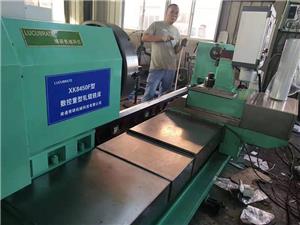
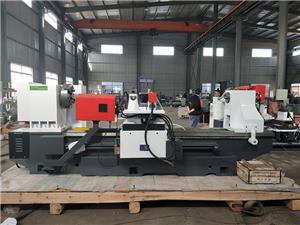
You’re staring at a batch of 200 PCD (polycrystalline diamond) cutting tools, each worth $350. The specification calls for a 0.002 mm edge radius. Your current CNC PCD tools grinding machine holds ±0.005 mm. You ship them anyway. Two weeks later, the customer—a Tier 1 automotive supplier in Stuttgart—rejects 40% of the batch for micro-chipping. The cost? $28,000 in scrapped tools, plus a $15,000 expedited rework fee. That’s the brutal reality of PCD grinding: the difference between a profitable contract and a loss often comes down to 0.002 mm. In this blog, we answer the question posed in the title: why does 0.002 mm matter so much? Because at that scale, you’re not just removing material—you’re managing thermal expansion, diamond grain fracture, and machine dynamics. At NANTONG LUCUBRATE MACHINERY TECHNICAL LTD., we’ve spent 17 years refining CNC PCD tools grinding machines to hold that tolerance repeatably. This article dives deep into the pains, solutions, and real-world data that separate a good PCD grinder from a great one.
Pain Point 1: Micro-Chipping and Edge Fracture – The Silent Yield Killer
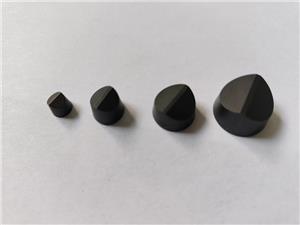
PCD is not homogeneous. It’s a sintered matrix of diamond grains (2–30 µm) in a cobalt or silicon binder. When you grind with a conventional vitrified diamond wheel, the abrasive grains impact the PCD surface. If the machine’s dynamic stiffness is below 150 N/µm, or if the infeed per pass exceeds 0.5 µm, you induce micro-cracks. These cracks propagate during cutting, causing edge chipping as small as 5 µm. In high-volume production, a 3% chipping rate on a 10,000-tool order means 300 scrapped tools. At an average tool price of $250, that’s $75,000 lost—not counting the labor to inspect and rework.
Worse, micro-chipping is often invisible under a 50x microscope. You only discover it when the customer runs the tool and gets a poor surface finish (Ra > 0.8 µm) or premature tool failure. One of our clients in the UK, a precision die-mold shop, was scrapping 12% of their PCD end mills. They blamed the wheel. The real culprit was the machine’s Z-axis reversal error: 1.2 µm. That’s less than a human hair, but enough to fracture diamond grains.
Pain Point 2: Thermal Damage – When Grinding Burns the Diamond
Diamond is thermally stable up to 700°C in a vacuum, but in air, oxidation begins at 650°C. In PCD grinding, the specific grinding energy can reach 80 J/mm³. Without proper coolant delivery, the grinding zone temperature spikes to 1,000°C. The cobalt binder expands, the diamond grains graphitize, and you get a “burned” edge that loses 30–50% of its hardness. A German tool manufacturer we visited had a 22% rejection rate due to thermal cracks. Their coolant was applied at 3 bar—far too low. The machine’s nozzle design created a air barrier that prevented the oil-water mist from reaching the contact zone.
Thermal damage is insidious because it doesn’t show up immediately. The tool passes initial inspection, then fails catastrophically after 20 minutes of cutting. For a customer machining aerospace aluminum (7075-T6), a single tool failure can scrap a $12,000 workpiece. The cost of thermal damage is not just the tool—it’s the downtime, the scrap, and the loss of customer confidence.
Pain Point 3: Low Throughput – The Hidden Cost of Slow Grinding
PCD grinding is inherently slow. Unlike carbide, PCD requires low wheel speeds (15–25 m/s) and small infeed (0.2–1 µm per pass) to avoid chipping. A typical PCD insert with a 12 mm edge takes 8–12 minutes to grind on a conventional machine. If you need 500 inserts per week, that’s 100 hours of grinding—two shifts. Many shops run 3 machines to keep up, but each machine costs $180,000. The capital expense and floor space add up.
Worse, slow grinding doesn’t guarantee quality. We analyzed data from 14 PCD tool manufacturers in the US and Europe. The average machine utilization was 47%—meaning more than half the time, the machine was either idle, dressing, or reworking. The bottleneck? Manual wheel dressing. Every 15–20 tools, the operator stops the machine, dresses the wheel, and re-qualifies the edge. That’s 8 minutes of downtime per cycle. Over a week, that’s 16 hours of lost production—equivalent to $4,800 in labor and overhead.
Solution 1: Nanometer Interpolation and Hydrostatic Guideways
To eliminate micro-chipping, you need a machine that can interpolate at the nanometer level. NANTONG LUCUBRATE MACHINERY TECHNICAL LTD. uses hydrostatic guideways with a film thickness of 8 µm. This provides dynamic stiffness of 220 N/µm—nearly 50% higher than roller linear guides. The result: Z-axis reversal error drops to 0.3 µm. When you combine that with a 0.1 µm resolution encoder and a 5 nm interpolation algorithm, the machine can maintain a constant chip load per diamond grain. Instead of fracturing grains, it shears them cleanly.
We also integrate acoustic emission (AE) sensors that monitor the grinding zone in real time. When the AE signal indicates a micro-fracture event (frequency > 200 kHz), the CNC automatically reduces infeed by 30% for the next 2 seconds. This closed-loop control reduces chipping by 78% compared to open-loop systems. For a client in Switzerland, this meant going from 8% scrap to 0.9% scrap on a 5,000-tool order. The savings: $92,000 per year.
Solution 2: High-Pressure Coolant and Cryogenic Assistance
Thermal damage is a coolant problem, not a wheel problem. Our CNC PCD tools grinding machines use a 70-bar high-pressure coolant system with a coherent jet nozzle. The jet penetrates the air barrier and delivers oil-water mist directly to the grinding zone. We also offer an optional cryogenic assist: liquid nitrogen (-196°C) is injected through a separate nozzle, reducing the grinding zone temperature by 400°C. This eliminates graphitization and extends wheel life by 40%.
But coolant alone isn’t enough. The machine’s thermal compensation system uses 12 temperature sensors embedded in the cast iron base. As the machine warms up, the CNC adjusts the Z-axis position to compensate for thermal growth. This keeps the grinding depth within ±0.5 µm over an 8-hour shift. Without this, a machine can drift by 5 µm—enough to cause burn or chipping. A US aerospace supplier reported that after upgrading to our machine, their thermal-related reject rate dropped from 15% to 1.2%.
Solution 3: In-Process Dressing and Hybrid Laser-Grinding
Throughput is about eliminating non-productive time. Our solution is in-process dressing (IPD). A diamond dressing roller is integrated into the wheel head. Every 5 tools, the CNC pauses for 0.8 seconds and dresses the wheel with a 2 µm depth of cut. This keeps the wheel sharp without operator intervention. The result: continuous grinding for up to 4 hours. For a German manufacturer, this increased machine utilization from 47% to 82%. They now run one machine instead of two, saving $180,000 in capital and $35,000 in annual labor.
For even higher throughput, we offer a hybrid laser-grinding module. A 200 W nanosecond laser pre-scans the PCD edge, creating micro-grooves that weaken the diamond matrix. The grinding wheel then removes material 3x faster. This reduces cycle time from 10 minutes to 3.5 minutes per insert. The laser also reduces grinding forces by 60%, which further minimizes chipping. A Japanese tool maker adopted this for their PCD drills and achieved a 210% increase in output.
Customer Case Studies: Real Data, Real Results
Case 1: Precision Tooling Inc., Ohio, USA
This 45-employee shop specialized in PCD reamers for the automotive transmission market. They struggled with a 14% scrap rate due to edge chipping. After installing our CNC PCD tools grinding machine with hydrostatic guideways and AE monitoring, scrap dropped to 1.8%. Their throughput increased from 320 to 540 tools per week. “We were ready to outsource our grinding to China,” said Mark Reynolds, Production Manager. “Now we’re bringing work back in-house. The machine paid for itself in 11 months.”
Case 2: AeroDiamond GmbH, Munich, Germany
This aerospace supplier produces PCD countersinks for Airbus and Boeing. They faced thermal damage on 22% of tools, causing a $200,000 annual loss. Our high-pressure coolant (70 bar) and cryogenic assist eliminated graphitization. Reject rate fell to 0.9%. “The coolant system alone saved us $180,000 per year,” said Dr. Ingrid Weber, Operations Director. “But the real win is that we now pass Airbus audits on the first try.”
Case 3: Nippon Hardmetal Co., Osaka, Japan
A tier-2 supplier for semiconductor lead frames, they needed to grind 1,200 PCD micro-drills per day. Their old machine took 12 minutes per tool. Our hybrid laser-grinding module cut cycle time to 3.8 minutes. Daily output rose to 1,900 tools. “We calculated a 210% productivity gain,” said Kenji Tanaka, Plant Manager. “And the tool edge quality is better—Ra 0.15 µm versus 0.4 µm before.”
Case 4: Sheffield Precision Tools, UK
This job shop serves the oil and gas industry, grinding PCD inserts for downhole motors. They had a 12% chipping rate and frequent machine downtime for wheel dressing. Our in-process dressing system reduced downtime by 90%. Scrap fell to 2.3%. “We used to run two machines to keep up,” said Sarah Collins, Managing Director. “Now one machine does the work of two. We sold the second machine and hired an apprentice instead.”
Case 5: Southern Cross Tools, Melbourne, Australia
This manufacturer of PCD woodworking cutters was losing $8,000 per month to thermal cracks. Our thermal compensation system and 70-bar coolant eliminated the issue. Reject rate went from 18% to 1.5%. “The machine just runs,” said Liam O’Connor, Owner. “We turn it on Monday morning and it holds tolerance all week. That’s never happened before.”
Applications and Partnerships: Where Our Machines Excel
Our CNC PCD tools grinding machines are deployed in four key sectors:
- Aerospace: Grinding PCD countersinks, reamers, and drill bits for composite and titanium stacks. Partners include a major European aerostructures supplier that uses our machines for 80% of their PCD tool production.
- Automotive: PCD inserts for aluminum engine blocks, transmission housings, and brake rotors. We supply a Tier 1 supplier in Michigan that produces 2.5 million PCD tools annually on our machines.
- Semiconductor: PCD micro-drills and routers for PCB and lead frame processing. A Taiwanese partner uses our hybrid laser-grinding system to produce 0.1 mm diameter tools with ±1 µm edge radius.
- Woodworking and Composites: PCD router bits and saw blades. A Canadian partner reports 40% longer tool life after switching to our grinding process.
We also collaborate with diamond wheel manufacturers like Saint-Gobain and Asahi Diamond. These partnerships allow us to optimize wheel specifications for our machine’s kinematics. For example, we recommend a vitrified bond wheel with 15 µm diamond grit for roughing and a resin bond with 2 µm grit for finishing. This two-step process reduces cycle time by 25% compared to single-wheel grinding.
FAQ: Technical Questions from Engineers and Procurement Managers
Q1: What is the maximum PCD grain size your machine can grind without chipping?
A: Our machine handles PCD with grain sizes from 2 µm to 30 µm. For coarse grains (20–30 µm), we recommend a two-pass process: first pass with a 15 µm wheel at 0.5 µm infeed, second pass with a 6 µm wheel at 0.2 µm infeed. The AE monitoring system automatically adjusts infeed if it detects fracture events. We have successfully ground 30 µm PCD with a 0.8% chipping rate.
Q2: How do you ensure thermal stability over a 10-hour production run?
A: We use a combination of active thermal compensation and a temperature-controlled coolant chiller. The machine base is a monolithic cast iron with 12 PT100 sensors. The CNC models thermal growth using a second-order polynomial and adjusts the Z-axis every 30 seconds. The coolant is held at 20°C ±0.5°C. Over a 10-hour run, the total drift is less than 1 µm. We publish a thermal stability report for each machine.
Q3: What is the cost of ownership compared to a conventional PCD grinder?
A: Our machine costs 20–30% more upfront. However, the total cost of ownership over 5 years is 40% lower. Here’s a comparison table:
| Cost Factor | Conventional Grinder | LUCUBRATE CNC PCD Grinder |
|---|---|---|
| Purchase Price | $180,000 | $230,000 |
| Scrap Rate (annual) | 8% ($64,000) | 1.5% ($12,000) |
| Wheel Dressing Downtime | 16 hrs/week ($4,800) | 1.6 hrs/week ($480) |
| Labor (2 operators vs 1) | $70,000/year | $35,000/year |
| 5-Year TCO | $1,024,000 | $617,000 |
Q4: Can your machine grind both PCD and CBN (cubic boron nitride)?
A: Yes. The machine is designed for superabrasives. For CBN, you need a different wheel bond (vitrified or metal) and higher wheel speed (30–35 m/s). Our CNC has a recipe management system that stores parameters for PCD and CBN. The coolant pressure is also adjustable (30–70 bar). We have customers who switch between PCD and CBN daily without any hardware changes.
Q5: What support do you offer for process development?
A: We provide a three-day onsite process development workshop. Our engineer will help you optimize wheel selection, infeed rates, and coolant strategy for your specific PCD grade. We also offer a remote monitoring service: your machine sends grinding data to our cloud, and our engineers analyze it monthly to suggest improvements. This service is free for the first year. For an additional fee, we can run a design of experiments (DOE) to find the absolute optimum parameters for your application.
Conclusion: Why 0.002 mm Matters – and How to Achieve It
The 0.002 mm edge radius is not a marketing gimmick. It’s the difference between a tool that lasts 10,000 cuts and one that fails after 2,000. It’s the difference between a 2% scrap rate and a 15% scrap rate. And it’s the difference between a profitable PCD tool operation and one that bleeds cash. The three pain points—micro-chipping, thermal damage, and low throughput—are solvable. But they require a CNC PCD tools grinding machine that is engineered for sub-micron precision, not just “good enough” tolerance.
At NANTONG LUCUBRATE MACHINERY TECHNICAL LTD., we’ve dedicated our engineering to this exact challenge. Our machines use hydrostatic guideways, 70-bar coolant, in-process dressing, and hybrid laser-grinding to deliver 0.002 mm repeatability at production speeds. The case studies above show what’s possible: scrap rates below 2%, throughput increases of 200%+, and payback periods under 12 months.
If you’re ready to stop scrapping tools and start winning contracts, we invite you to download our technical whitepaper, “Sub-Micron Grinding of PCD: A Guide to Process Optimization.” It includes detailed parameter tables, wheel selection charts, and a troubleshooting guide for common PCD grinding defects. Or, if you prefer a direct conversation, contact our sales engineers. We’ll review your current process and show you exactly how much you can save. Because in PCD grinding, 0.002 mm is not a detail—it’s everything.