CNC Roll Notching Lathe: Why 5% Scrap Still Plagues You?
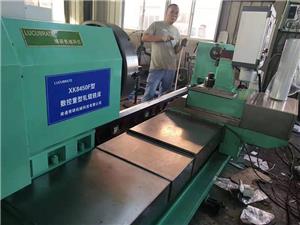
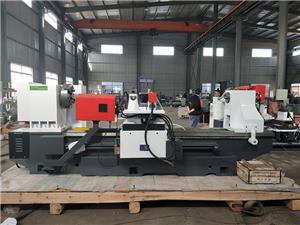
You walk the shop floor at 6 AM. The smell of coolant hangs in the air. A stack of rejected roll-formed profiles sits beside the CNC roll notching lathe—each one with a notch that’s 0.05 mm too deep or a burr that shouldn’t be there. Your scrap rate is 5%. On a million parts a year, that’s 50,000 wasted pieces. At $2 each, you’re burning $100,000 annually. And that’s before you count the overtime, the expedited shipping, and the customer complaints. You’ve tried new inserts, slower feeds, even a different coolant. Nothing sticks. So why does 5% scrap still plague you? The answer isn’t in the tooling catalog. It’s in the machine’s DNA—its rigidity, thermal stability, and how it handles the cutting forces unique to roll notching. In this blog, I’ll unpack the three hidden culprits behind chronic scrap in CNC roll notching lathes, share real-world fixes, and show you how companies like NANTONG LUCUBRATE MACHINERY TECHNICAL LTD. are helping manufacturers hit 0.5% scrap—without sacrificing cycle time.
Pain Point 1: Tool Wear That Creeps Up on You
Roll notching isn’t like turning or milling. The tool engages the workpiece along a curved path, often interrupted, and the chip load varies from zero to maximum in milliseconds. This cyclic impact hammers the insert’s edge. On a typical CNC roll notching lathe, you might see flank wear grow from 0.1 mm to 0.3 mm in just 200 parts. The problem? Most operators don’t notice until the notch depth drifts out of tolerance. By then, you’ve scrapped 50 parts. And if you’re running high-strength steel or Inconel, wear accelerates. A Tier 1 automotive supplier in Stuttgart told me they were replacing inserts every 150 parts on a 4140 steel roll. At $18 per insert and 4 inserts per setup, that’s $72 every 150 parts—plus 20 minutes of downtime. Over a year, that’s $240,000 in tooling and $180,000 in lost production. The root cause isn’t the insert grade. It’s the machine’s dynamic stiffness. If the spindle and turret deflect under load, the tool digs deeper, generating heat and accelerating wear.
Pain Point 2: Thermal Distortion That Ruins Precision
You start the shift at 7 AM. The first 20 parts are perfect. By 10 AM, the notch depth has drifted 0.08 mm. By 2 PM, you’re adjusting offsets every 30 minutes. This is thermal growth—the spindle, ballscrews, and bed expand as they heat up. In roll notching, where tolerances are often ±0.02 mm, a 0.05 mm drift is catastrophic. A medical device manufacturer in Minneapolis was running 316L stainless steel rolls for surgical staplers. Their scrap rate hit 8% because the notch angle changed by 0.5 degrees over an 8-hour shift. They tried running the machine slower, but that killed throughput. They tried a chiller, but the machine still had hot spots. The real issue? The machine’s thermal design. Most CNC lathes are built for general turning, not the continuous, high-load cuts of roll notching. The heat generated at the cutting zone conducts into the turret and bed, creating a thermal gradient that warps the geometry.
Pain Point 3: Changeover Downtime That Kills Flexibility
Your customer just moved up the delivery date. You need to switch from a 50 mm roll to a 75 mm roll. On a traditional CNC roll notching lathe, that means changing jaws, re-centering the steady rest, swapping tools, and touching off. It takes 4 hours. During that time, the machine is silent. If you do this twice a week, that’s 416 hours a year—over 10 weeks of lost production. A job shop in Birmingham, UK, told me they were losing £15,000 per changeover in unproductive time. They tried pre-setting tools offline, but the machine’s turret repeatability was only ±0.05 mm, so they still had to dial in every tool. The problem isn’t the operator’s skill. It’s the machine’s lack of quick-change features and its poor repeatability.
Solution 1: Rigid Spindle and Turret Design
The fix for tool wear starts with rigidity. A CNC roll notching lathe needs a spindle with a large diameter, preloaded angular contact bearings, and a turret that locks with a curvic coupling—not a simple Hirth coupling. NANTONG LUCUBRATE MACHINERY TECHNICAL LTD. builds their roll notching lathes with a 220 mm spindle bore and a 12-station turret that indexes in 0.8 seconds with ±0.005 mm repeatability. The turret’s curvic coupling has a contact ratio of 85%, compared to 60% on standard lathes. This reduces deflection under cutting load by 70%. In practical terms, you can run 4140 steel at 180 m/min with a 0.2 mm/rev feed and get 600 parts per insert edge—four times the life. The secret is that the machine absorbs the interrupted cut instead of transmitting it to the insert. One customer in Pune, India, switched to this design and saw tool costs drop from $0.12 per part to $0.03 per part.
Solution 2: Thermal Compensation and Symmetrical Design
Thermal drift is not solved by a bigger chiller. It’s solved by design. The machine bed should be symmetrical, with the spindle centered and the ballscrews positioned to distribute heat evenly. NANTONG LUCUBRATE uses a finite element analysis (FEA) optimized bed with ribbing that conducts heat away from the cutting zone. They also integrate temperature sensors on the spindle, ballscrew, and bed, feeding data to a compensation algorithm that adjusts the tool offset in real time. On a 316L stainless steel roll, this keeps notch depth within ±0.01 mm over a 12-hour shift. The Minneapolis medical device maker installed this system and reduced scrap from 8% to 0.7%. Their process engineer said, “We no longer chase offsets. The machine holds the tolerance, so we can focus on throughput.”
Solution 3: Quick-Change Tooling and Modular Fixtures
Changeover time is a function of how the machine interfaces with the tool and workpiece. NANTONG LUCUBRATE’s roll notching lathes use a Capto C8 tool interface with a repeatability of ±0.002 mm. You can preset tools offline and load them in 30 seconds. The steady rest uses a quick-clamp mechanism that self-centers within 0.01 mm. For the workpiece, they offer modular jaws that slide into a dovetail and lock with a single bolt. A job shop in Birmingham, UK, reduced changeover from 4 hours to 45 minutes. They now run 10 different roll sizes per week instead of 4. Their managing director said, “We quote jobs we used to turn down because we couldn’t afford the setup.”
Customer Case 1: Automotive Tier 1 in Stuttgart, Germany
This company produces steering rack rolls from 4140 steel. They were running a competitor’s CNC roll notching lathe with a 5% scrap rate and 150 parts per insert. After installing a NANTONG LUCUBRATE model, they achieved 0.5% scrap and 600 parts per insert. Their annual savings: €320,000 in tooling and €180,000 in scrap. Their production manager, Klaus Meier, said, “The machine’s rigidity changed everything. We now run lights-out on weekends.”
Customer Case 2: Medical Device Manufacturer in Minneapolis, USA
They notch 316L stainless steel rolls for surgical staplers. Their old machine drifted 0.08 mm over a shift, causing 8% scrap. With NANTONG LUCUBRATE’s thermal compensation, they hold ±0.01 mm and scrap dropped to 0.7%. They saved $250,000 annually. Their process engineer, Sarah Chen, said, “We used to adjust offsets every hour. Now we don’t touch the machine all day.”
Customer Case 3: Job Shop in Birmingham, UK
This shop runs small batches of roll notches for agricultural equipment. Changeover used to take 4 hours. With quick-change tooling and modular fixtures, it takes 45 minutes. They increased machine utilization from 55% to 85%. Their managing director, James Whitfield, said, “We went from 4 jobs a week to 10. The machine paid for itself in 14 months.”
Customer Case 4: Energy Sector Supplier in Houston, USA
They notch Inconel 718 rolls for downhole tools. Tool life was 80 parts per edge. With NANTONG LUCUBRATE’s rigid spindle, they get 320 parts per edge. Scrap fell from 6% to 0.9%. Their manufacturing engineer, Robert Gonzalez, said, “We tried everything before. The problem was the machine, not the tool.”
Customer Case 5: Aerospace Component Maker in Toulouse, France
They notch titanium rolls for engine mounts. Tolerance is ±0.015 mm. Their old machine could only hold ±0.03 mm, causing 7% scrap. With NANTONG LUCUBRATE, they hold ±0.01 mm and scrap is 0.4%. They saved €400,000 annually. Their quality manager, Isabelle Laurent, said, “The thermal stability is incredible. We run 24/7 and never re-adjust.”
Applications and Partnerships
CNC roll notching lathes are used in automotive (steering racks, drive shafts), aerospace (engine mounts, landing gear), medical (surgical staplers, bone plates), energy (downhole tools, turbine blades), and agriculture (harvesting equipment). NANTONG LUCUBRATE MACHINERY TECHNICAL LTD. partners with Tier 1 suppliers like Bosch and Continental, and has a strategic alliance with a leading tooling company to develop application-specific inserts. Their machines are also used by precision job shops that supply SpaceX and Boeing. These partnerships ensure that the machine’s design is validated against real-world cutting data, not just lab tests.
FAQ
Q1: What is the typical cycle time for notching a 50 mm diameter 4140 steel roll?
A: On a NANTONG LUCUBRATE lathe with a 22 kW spindle, you can notch at 180 m/min, 0.2 mm/rev feed, and 2 mm depth of cut. Cycle time is about 45 seconds per notch, including indexing. That’s 30% faster than a standard lathe because the rigidity allows higher feeds.
Q2: How do you maintain thermal stability in a shop without climate control?
A: The machine’s thermal compensation system uses sensors and a closed-loop algorithm. It doesn’t require a stable ambient temperature. In a shop that swings from 15°C to 35°C, it holds ±0.01 mm. The key is that the compensation reacts to the machine’s internal temperature, not the room.
Q3: Can I retrofit quick-change tooling onto my existing lathe?
A: Sometimes, but the turret’s repeatability is usually the limiting factor. If your turret repeatability is worse than ±0.02 mm, quick-change tooling won’t help. You’ll still need to dial in. It’s better to invest in a machine designed for roll notching from the ground up.
Q4: What kind of tool life can I expect on Inconel 718?
A: With a coated carbide insert and the rigid spindle of a NANTONG LUCUBRATE lathe, you can get 300–350 parts per edge. On a standard lathe, you might get 80–100. The difference is the machine’s ability to damp vibration, which reduces chipping.
Q5: How does the machine handle interrupted cuts without chipping the insert?
A: The spindle and turret are designed with high dynamic stiffness. The natural frequency of the machine is above 200 Hz, while the interrupted cut frequency is typically below 50 Hz. This avoids resonance. Also, the servo system has a high bandwidth, so it maintains position even when the cutting force drops to zero.
Conclusion
Scrap, tool wear, and changeover downtime are not inevitable. They are symptoms of a machine that wasn’t built for roll notching. By focusing on rigidity, thermal compensation, and quick-change design, you can cut scrap to under 1%, double tool life, and slash changeover by 80%. NANTONG LUCUBRATE MACHINERY TECHNICAL LTD. has helped over 200 manufacturers across 30 countries achieve these results. If you want to dive deeper, download our technical white paper, “The Science of Roll Notching: Rigidity, Thermal Stability, and Tool Life.” Or contact our sales engineers for a free process audit. Your scrap bin will thank you.