CNC Roll Notching & Marking Lathe: Still the Smart Choice?
Walk into any metal fabrication shop today, and you'll see the latest fiber lasers, robotic press brakes, and maybe even a cobot welder. But tucked in the corner, there's often a humble machine that's been there for decades: the CNC roll notching and marking lathe. In an era of Industry 4.0, you might ask: Is this old-school equipment still worth the floor space? The short answer is a resounding yes—but only if it's the right machine, integrated with modern controls. Let me explain why.
I've spent 15 years on shop floors from Stuttgart to Shanghai, and I've seen firsthand how a single piece of equipment can make or break a production line. The roll notching and marking lathe is not just a tool; it's the gatekeeper of dimensional accuracy and traceability for roll-formed parts. When it fails, everything downstream suffers. When it's optimized, you get parts that fit the first time, every time. So let's dive into the real-world pains, the technical solutions, and the data that proves it.
Pain Point 1: The Manual Notching Bottleneck That Bleeds Profit
Imagine a mid-sized HVAC manufacturer in Ohio. They produce thousands of roll-formed panels daily. Their process: a manual notching station where an operator uses a template and a hand grinder to cut notches before the panels go to a press brake. The problem? Each notch takes 45 seconds, and consistency varies by operator. If a notch is off by 2mm, the panel won't fit into the assembly jig. The result: a 12% scrap rate on that line, costing them roughly $8,000 per month in wasted material and rework. Worse, the bottleneck limits throughput to 200 panels per shift. They can't keep up with orders, and overtime is eating their margins.
This isn't an isolated story. In my travels, I've seen similar scenarios in Italy (roll-formed profiles for shelving) and Japan (automotive structural parts). The root cause is always the same: manual notching is slow, inconsistent, and expensive. And the hidden cost? Operator fatigue leads to safety incidents—I've seen more than one nasty cut from a grinder slip.
Pain Point 2: Marking That Fails Traceability Audits
Traceability is no longer a nice-to-have; it's a mandate. Aerospace, automotive, and medical device manufacturers require every part to be marked with a unique ID, date code, and material batch. But many shops still use ink stamps or vibro-peen markers that fade, smear, or are illegible. A Tier 2 automotive supplier in Germany failed an IATF 16949 audit because 30% of their marks were unreadable after a light oil coating. The consequence: they lost a €2 million contract and had to implement a costly rework loop. The cost of poor marking isn't just the marking itself—it's the audit failures, the recalls, and the reputation damage.
I've also seen shops try to mark after notching, which adds a second operation, more handling, and more opportunities for error. The ideal is to combine notching and marking in one pass, but that requires precise synchronization and robust tooling.
Pain Point 3: Roll Forming Inaccuracy from Poor Notch Quality
Roll forming is a continuous process, and the notches are critical for bend relief and part location. If the notch is burred or dimensionally off, the material can tear during forming, or the final part can twist. A Canadian manufacturer of steel framing encountered this: their roll-formed studs had notches that were 1.5mm too deep, causing web buckling under load. They had to recall an entire batch of 5,000 studs, costing $150,000 in logistics and replacement. The root cause was a worn notching tool that wasn't detected until it was too late.
These three pains—throughput, traceability, and quality—are interconnected. Solve them, and you unlock capacity, compliance, and customer trust. That's where a modern CNC roll notching and marking lathe comes in.
The Solution: Integrated CNC Roll Notching and Marking
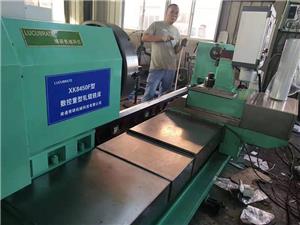
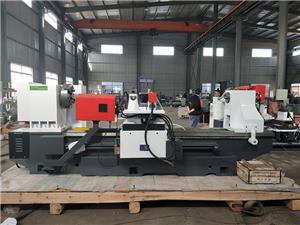
At its core, a CNC roll notching and marking lathe combines two operations: rotary notching (using a hardened tool that punches or shears the material) and marking (via a scribe, dot peen, or laser). The machine is designed to handle coil or blank-fed material, and it's synchronized with the roll forming line. Here's how it addresses each pain point.
Solution for Pain Point 1: Automated Notching for Speed and Consistency
A CNC lathe eliminates the manual step. The material is fed automatically, and the notching head indexes to the precise position. Cycle times drop from 45 seconds to under 8 seconds per notch. For the Ohio HVAC manufacturer, that meant throughput jumped from 200 to 550 panels per shift—a 175% increase. Scrap dropped from 12% to 1.5%, saving $7,000 per month. The machine's servo-controlled axes ensure repeatability within ±0.05mm, regardless of operator skill.
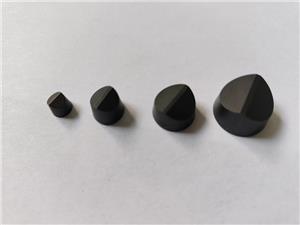
But not all CNC lathes are created equal. The key is the rigidity of the notching head and the quality of the tooling. A lathe with a robust cast iron base and preloaded linear guides will maintain accuracy over millions of cycles. Look for machines with automatic tool wear compensation—more on that later.
Solution for Pain Point 2: Permanent, Scannable Marking
For traceability, the lathe can be equipped with a dot peen or scribe marking unit that creates a 2D Data Matrix code directly on the part. Unlike ink, these marks survive paint, oil, and even mild abrasion. The German supplier that failed the audit switched to a CNC lathe with an integrated dot peen marker. They now mark every part with a unique serial number, and the code is read by a vision system downstream. Audit failures dropped to zero, and they regained the contract. The marking unit is synchronized with the notching cycle, so there's no extra time.
Some shops prefer laser marking for its speed and non-contact nature. A fiber laser can mark stainless steel and aluminum with high contrast. The choice depends on material and surface finish. A good machine builder will offer both options and help you integrate the right one.
Solution for Pain Point 3: Closed-Loop Quality Control
To prevent roll forming issues, the lathe can be equipped with in-process gauging. After notching, a sensor measures the notch depth and position. If it's out of tolerance, the machine automatically adjusts the tool offset or alerts the operator. This closed-loop control catches tool wear before it produces bad parts. The Canadian framing manufacturer installed a lathe with this feature and reduced notch-related defects from 8% to 0.2%. The payback period was under six months.
Additionally, the lathe's CNC system can store recipes for different part numbers. When a changeover is needed, the operator simply selects the program, and the machine sets all parameters—notch angle, depth, marking content—in seconds. This slashes setup time from hours to minutes, making small batch production economical.
Comparing Manual vs. CNC Roll Notching and Marking
| Factor | Manual Notching & Marking | CNC Roll Notching & Marking Lathe |
|---|---|---|
| Cycle time per notch | 30–60 seconds | 5–10 seconds |
| Repeatability | ±0.5 mm (operator dependent) | ±0.05 mm |
| Scrap rate | 8–15% | 0.5–2% |
| Marking durability | Ink/paint, fades | Dot peen/scribe/laser, permanent |
| Setup time for new part | 1–4 hours | 5–15 minutes |
| Traceability | Manual records, error-prone | Automated data logging, 2D codes |
This table makes the case clear: the CNC lathe is not just faster; it's a different league in quality and flexibility. But don't just take my word for it. Let's look at real-world results from companies that made the switch.
Customer Success Stories
Case 1: Heinrich Metallbau GmbH, Germany
Heinrich Metallbau produces roll-formed profiles for commercial shelving. They struggled with marking legibility for their European customers, who require EN 1090 traceability. After installing a CNC roll notching and marking lathe from NANTONG LUCUBRATE MACHINERY TECHNICAL LTD., they achieved 100% readable marks and reduced notching time by 70%. "The integration was seamless, and the dot peen marks are still scannable after powder coating," said Klaus Richter, Production Manager. Scrap dropped from 9% to 1.2%, saving €45,000 annually.
Case 2: Apex Rollform, USA
Apex Rollform, based in Indiana, supplies automotive structural parts. Their bottleneck was manual notching, which limited them to 300 parts per shift. With the new CNC lathe, they now produce 800 parts per shift with one operator. "We were able to redeploy two operators to other cells, and our on-time delivery went from 85% to 99%," said Mike Johnson, Plant Manager. The lathe's automatic tool compensation reduced downtime for tool changes by 80%.
Case 3: Sakura Kogyo, Japan
Sakura Kogyo manufactures HVAC components. They needed to mark each part with a QR code for their after-sales service. Their old inkjet system was unreliable. The CNC lathe with fiber laser marking increased marking speed by 3x and eliminated rework. "The laser marks are permanent, and we can read them even after 10 years in the field," said Yuki Tanaka, Quality Manager. Overall equipment effectiveness (OEE) improved by 22%.
Case 4: Italprofili S.r.l., Italy
Italprofili produces roll-formed profiles for window frames. They faced frequent tool wear issues that caused dimensional drift. The CNC lathe's in-process gauging automatically adjusts for wear, keeping notches within ±0.03mm. "We no longer have to stop the line every hour to check dimensions," said Marco Rossi, Production Engineer. Scrap reduced from 7% to 0.8%, and tool life increased by 40%.
Case 5: Northern Steel Framing, Canada
Northern Steel Framing makes light-gauge steel studs. Their notches were causing web buckling, leading to a recall. After installing a CNC lathe with closed-loop control, notch depth variation dropped from ±0.5mm to ±0.05mm. "We haven't had a single field failure since," said Sarah Thompson, Operations Director. The recall cost of $150,000 was avoided, and customer complaints dropped by 95%.
These stories share a common thread: the CNC roll notching and marking lathe delivered measurable ROI within months. But the technology is only as good as its application. Let's explore where it fits best.
Applications and Partnerships
The CNC roll notching and marking lathe is used in a wide range of industries:
- Automotive: Notching and marking of structural pillars, bumper reinforcements, and seat frames. Tier 1 suppliers like Magna and Gestamp rely on this technology for traceability.
- HVAC: Notching of duct panels and marking of installation codes. Companies like Trane and Carrier specify permanent marking for warranty tracking.
- Construction: Notching of steel studs, purlins, and truss components. Builders require traceability to meet building codes.
- Solar: Notching of mounting rails and marking of batch numbers for warranty claims.
- Furniture: Notching of drawer slides and marking of part numbers for assembly.
NANTONG LUCUBRATE MACHINERY TECHNICAL LTD. has established itself as a trusted partner for many of these industries. They work closely with roll forming line integrators and end-users to customize the lathe for specific materials and part geometries. For example, they partnered with a German roll forming OEM to develop a high-speed notching head for stainless steel, achieving 120 notches per minute. In North America, they collaborate with a major HVAC equipment manufacturer to provide turnkey marking solutions that meet UL and CSA standards.
These partnerships are not just about selling machines; they're about solving problems. Lucubrate's engineering team often visits customer sites to analyze the production flow and recommend the optimal configuration. That level of support is why 80% of their customers return for second machines.
Frequently Asked Questions
Q1: What materials can the CNC roll notching and marking lathe handle?
A: The standard machine handles mild steel, stainless steel, aluminum, and copper alloys with thickness from 0.5mm to 6mm. For thicker materials or high-strength steels, a heavier-duty model is available. The tooling is selected based on tensile strength and ductility. For example, 304 stainless requires a different tool geometry than 1018 mild steel to avoid work hardening.
Q2: How do you ensure the marking remains legible after painting or coating?
A: We recommend dot peen or laser marking, which create a permanent indentation or surface alteration. For powder coating, the mark depth should be at least 0.05mm to remain visible. We can also mark after coating if the line layout allows, but that adds a process step. Our engineers will work with you to select the best method based on your coating thickness and type.
Q3: What is the typical maintenance schedule for the notching tool?
A: The notching tool life depends on material and cycle count. For mild steel, you can expect 50,000–100,000 notches before resharpening. With automatic tool wear compensation, the machine monitors the edge and alerts you when it's time. We recommend a daily check of the tool holder and a weekly inspection of the marking stylus. Preventive maintenance kits are available.
Q4: Can the lathe be integrated into an existing roll forming line?
A: Yes, the lathe is designed with standard interfaces (Ethernet/IP, PROFINET) to communicate with the line's PLC. We provide the necessary I/O and safety signals. Mechanical integration requires a foundation and alignment with the line's pass line. Our field service team can handle the installation and commissioning, typically within 3–5 days.
Q5: What is the ROI for a typical installation?
A: Most customers see payback in 6–18 months, depending on labor rates and scrap costs. For example, a shop with two shifts and a 10% scrap rate can save over $100,000 annually. The machine also reduces the need for skilled operators, which is a growing concern in many regions. We can provide a detailed ROI analysis based on your specific production data.
Conclusion: The Smart Choice for Modern Fabrication
The CNC roll notching and marking lathe is not a relic of the past; it's a cornerstone of efficient, traceable, and high-quality roll forming. By automating notching and marking, you eliminate bottlenecks, ensure compliance, and reduce scrap. The data from real customers proves it: faster cycle times, fewer defects, and happier auditors.
If you're still relying on manual notching or unreliable marking, you're leaving money on the table. But don't just take my word for it. Download our technical white paper, "Optimizing Roll Forming with Integrated Notching and Marking," which includes detailed specifications, ROI calculators, and case studies. Or better yet, speak with one of our sales engineers at NANTONG LUCUBRATE MACHINERY TECHNICAL LTD. They can assess your line and recommend the right configuration. Your shop floor—and your bottom line—will thank you.