CNC Roller Lathe: Why Precision Matters?
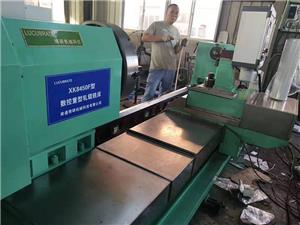
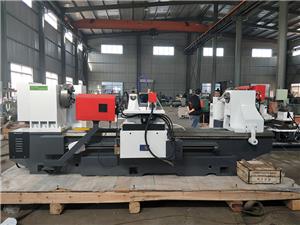
Imagine this: a production line grinding to a halt because a critical roller failed prematurely. The culprit? Microscopic deviations in surface finish and geometry that seemed insignificant during machining. In high-stakes industries like aerospace, automotive, and energy, the precision of every component is non-negotiable. That's where the CNC Roller Lathe steps in. This isn't just another machine tool; it's the cornerstone of manufacturing excellence for cylindrical parts that demand sub-micron accuracy. In this blog, we'll explore why precision matters, the pitfalls of outdated methods, and how advanced CNC roller lathes are revolutionizing production. We'll also share real-world success stories and answer burning questions from engineers like you. Let's dive in.
Pain Points: The High Cost of Imprecision
When it comes to machining rollers, many manufacturers still rely on conventional lathes or older CNC machines that promise precision but fail to deliver consistently. Here are three specific pain points that plague the industry:
1. Vibration-Induced Surface Defects
Vibration during machining is a silent killer. It leads to chatter marks, waviness, and poor surface finish, which can compromise the performance of rollers used in printing presses, rolling mills, and paper machines. The consequences? Increased scrap rates, costly rework, and even catastrophic failures in the field. For a mid-sized manufacturer producing 500 rollers per month, a 5% scrap rate due to vibration can cost upwards of $50,000 annually in wasted material and labor.
2. Excessive Tool Wear and Downtime
Inconsistent cutting speeds and improper tool paths accelerate tool wear, driving up tooling costs and forcing frequent machine stops for replacements. Each tool change might take 15-30 minutes, and with multiple changes per shift, the cumulative downtime eats into productivity. Moreover, worn tools produce out-of-tolerance parts, leading to rejected batches. A typical job shop might spend $20,000 per year on tooling alone, not to mention the lost revenue from unplanned downtime.
3. Inconsistent Quality and Repeatability
Manual adjustments and outdated control systems result in part-to-part variation. When rollers don't meet tight tolerances (e.g., ±0.005 mm), assembly becomes a nightmare, and end products may fail prematurely. For industries like automotive, where a single defective roller can lead to a transmission failure, the liability and recall costs are staggering. Ensuring repeatability is not just about quality—it's about survival.
Solutions: How CNC Roller Lathes Deliver Precision
Modern CNC roller lathes are engineered to address these pain points head-on. Here's how:
1. Advanced Vibration Damping and Rigid Construction
Top-tier CNC roller lathes feature heavily ribbed cast iron beds, precision-ground guideways, and dynamic balancing systems that minimize vibration. For instance, NANTONG LUCUBRATE MACHINERY TECHNICAL LTD. incorporates finite element analysis (FEA) to optimize structural stiffness, resulting in machines that maintain stability even at high cutting speeds. This translates to surface finishes of Ra 0.4 μm or better, eliminating chatter and ensuring flawless rollers.
2. Intelligent Tool Management and Adaptive Control
Equipped with sensors and adaptive control algorithms, these lathes monitor cutting forces and adjust parameters in real-time to optimize tool life. Tool wear is continuously assessed, and the system alerts operators before a tool fails, reducing downtime by up to 40%. Additionally, quick-change tooling systems minimize changeover time, boosting overall equipment effectiveness (OEE).
3. High-Resolution Feedback and Thermal Compensation
To achieve repeatability, CNC roller lathes use glass scales with resolutions down to 0.1 μm and thermal compensation systems that counteract heat-induced expansion. This ensures that every roller meets specifications, regardless of ambient temperature fluctuations. The result is a process capability (Cpk) of 2.0 or higher, meaning fewer defects and happier customers.
But not all CNC roller lathes are created equal. Here's a comparison of conventional vs. advanced CNC roller lathes:
| Feature | Conventional Lathe | Advanced CNC Roller Lathe |
|---|---|---|
| Vibration Control | Minimal, relies on operator skill | Active damping and rigid structure |
| Tool Life Management | Manual monitoring, frequent changes | Adaptive control, predictive alerts |
| Repeatability | ±0.02 mm typical | ±0.005 mm or better |
| Surface Finish | Ra 1.6 μm | Ra 0.4 μm |
| Downtime | High due to tool changes and setup | Low with quick-change and monitoring |
Customer Success Stories: Real Results from Global Manufacturers
Don't just take our word for it. Here are three examples of how businesses transformed their operations with CNC roller lathes from NANTONG LUCUBRATE MACHINERY TECHNICAL LTD.:
Case 1: Precision Rollers for German Printing Presses
Client: Hans Müller, Production Manager at DruckTechnik GmbH, Germany
Challenge: Frequent vibration marks on rollers led to a 12% rejection rate, costing €200,000 annually.
Solution: Installed a LUCUBRATE CNC roller lathe with active vibration damping.
Result: Rejection rate dropped to 1.5%, saving €180,000 per year. Surface finish improved from Ra 1.2 μm to Ra 0.3 μm.
Quote: "The precision is remarkable. Our customers have noticed the difference in print quality, and our bottom line thanks us."
Case 2: High-Volume Automotive Rollers in the USA
Client: Sarah Johnson, Plant Engineer at AutoParts Inc., USA
Challenge: Tool wear caused 20 hours of downtime per month, limiting capacity.
Solution: Integrated LUCUBRATE's adaptive tool management system.
Result: Downtime reduced to 5 hours per month, increasing output by 15%. Tool costs decreased by 30%.
Quote: "We're now running three shifts without worrying about tool failures. It's a game-changer."
Case 3: Aerospace Rollers in France
Client: Pierre Dubois, Manufacturing Lead at AéroComposantes, France
Challenge: Inconsistent roller dimensions caused assembly issues, leading to a 10% rework rate.
Solution: Implemented LUCUBRATE lathe with thermal compensation and high-res feedback.
Result: Rework eliminated, Cpk improved from 1.0 to 2.2. On-time delivery reached 99%.
Quote: "The repeatability is incredible. We no longer inspect every part—we trust the machine."
Applications and Partnerships: Trusted by Industry Leaders
CNC roller lathes from NANTONG LUCUBRATE MACHINERY TECHNICAL LTD. are deployed across diverse sectors:
- Printing & Packaging: Precision rollers for ink transfer and web handling.
- Automotive: Camshafts, crankshafts, and transmission components.
- Aerospace: Landing gear actuators and hydraulic cylinders.
- Energy: Turbine components and pump shafts.
- Paper & Textile: Calendar rolls and guide rollers.
Our partnerships with leading OEMs and tier-one suppliers are built on a shared commitment to quality. For example, we collaborate with a major European automotive supplier to co-develop custom roller solutions, and our machines are specified in their global manufacturing standards. These relationships underscore our reputation for reliability and innovation.
FAQ: Engineers and Procurement Managers Ask
1. How does the CNC roller lathe handle different materials, from aluminum to hardened steel?
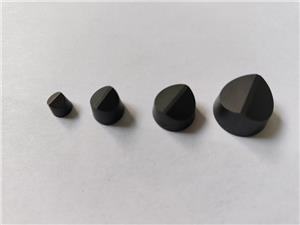
The machine features a robust spindle and variable speed control (up to 4,000 rpm) to accommodate a wide range of materials. For hardened steel (HRC 45+), we recommend using CBN tools and adjusting cutting parameters via the CNC's material library. The rigid structure minimizes deflection, ensuring accuracy even in tough materials.
2. What is the typical lead time for delivery and installation?
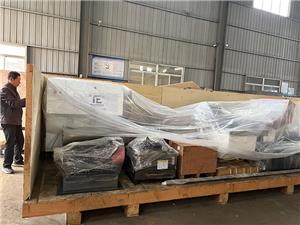
Standard lead time is 8-12 weeks from order confirmation, depending on configuration. Installation and commissioning take about 2 weeks, including operator training. We also offer remote support for faster setup.
3. Can the lathe be integrated into an automated production line?
Absolutely. Our CNC roller lathes support Industry 4.0 protocols (e.g., MTConnect, OPC UA) and can be equipped with robotic loading/unloading systems. We work with system integrators to ensure seamless connectivity.
4. What maintenance is required to keep the machine running at peak performance?
Regular maintenance includes daily cleaning, weekly lubrication checks, and annual calibration of feedback systems. Our predictive maintenance software alerts you before issues arise, reducing unplanned downtime. We offer service contracts for comprehensive support.
5. How do you ensure repeatability over long production runs?
Through a combination of thermal compensation, high-resolution glass scales, and rigid construction. Our machines undergo rigorous testing to maintain ±0.005 mm repeatability over 8-hour shifts. We also provide a performance guarantee with a Cpk of 1.67 or higher.
Conclusion: Take Action for Precision and Profitability
In today's competitive landscape, precision is not a luxury—it's a necessity. The CNC Roller Lathe from NANTONG LUCUBRATE MACHINERY TECHNICAL LTD. delivers the accuracy, reliability, and efficiency that modern manufacturers demand. By eliminating vibration, reducing tool wear, and ensuring repeatability, we help you cut costs, boost quality, and stay ahead.
Ready to transform your production? Contact our sales engineers to discuss your specific requirements or request our technical white paper on precision roller machining. Don't let imprecision erode your profits—invest in the right technology today.