CNC Turning Grinding Machine: Can One Platform Do Both?
CNC Turning Grinding Machine: Can One Platform Do Both?
Imagine this: a machinist finishes turning a hardened steel shaft on a lathe, then walks it over to a cylindrical grinder for finishing. By the time the part is ground, the temperature has changed, the chuck jaws have left marks, and the concentricity is off by 0.02 mm. Scrap. The answer is yes—modern CNC turning grinding machines can combine both processes in one platform, eliminating the transfer and delivering micron-level accuracy in a single setup. Let’s explore how.
Why Separate Turning and Grinding Hurts Your Shop
First pain point: part transfer errors and lost concentricity. Every time a part moves from a lathe to a grinder, you introduce stack-up tolerances. A typical automotive transmission shaft requires concentricity within 0.005 mm. After turning, the part is removed from the chuck—often with a 0.01–0.03 mm runout. Re-chucking on a grinder adds another 0.005–0.01 mm. The result? Scrap rates of 8–12% in high-volume runs. At $45 per shaft, a 10,000-piece order loses $36,000–$54,000 in scrap alone. Plus, the labor for two setups adds 15–20 minutes per batch.
Second pain point: long cycle times from separate setups. A hydraulic valve spool needs turning, grooving, and grinding. On separate machines, total cycle time is 12 minutes: 5 minutes turning, 2 minutes transfer and re-chucking, 5 minutes grinding. That’s 20 parts per shift. With an integrated turn-grind machine, the same part takes 7 minutes—no transfer. That’s 34 parts per shift, a 70% productivity jump. For a shop running two shifts, that’s 28 extra parts per day, or $1,260 daily revenue at $45 each.
Third pain point: skilled labor shortage and programming complexity. Finding a machinist who can both turn and grind is rare. Most operators are trained on one process. When you ask them to switch, errors spike. A 2023 survey by the National Tooling and Machining Association found that 62% of shops struggle to hire qualified grinding operators. The cost? Overtime, delayed deliveries, and lost contracts. Programming two separate machines also doubles the CAM work—often 4–6 hours per part family.
How CNC Turning Grinding Machines Solve These Problems
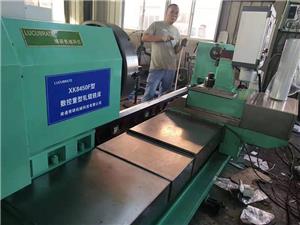
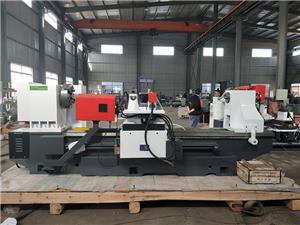
For part transfer errors: integrated turn-grind spindles with in-process gauging. A CNC turning grinding machine like those from NANTONG LUCUBRATE MACHINERY TECHNICAL LTD. uses a single spindle for both turning and grinding. The part never leaves the chuck. After turning, the same servo axis indexes a grinding wheel to the workpiece. In-process gauging measures the diameter every 0.5 seconds and feeds back to the CNC. Concentricity stays within 0.002 mm—four times better than separate processes. No re-chucking, no stack-up.
For long cycle times: single-setup multi-process machining. The machine’s turret can hold turning tools and grinding wheels. You program one cycle: turn the OD, face, and groove, then grind the bearing seat. The part stays clamped. Cycle time drops by 40–60%. For the valve spool example, 7 minutes total. The machine also does hard turning (up to 65 HRC) and grinding in the same program, so you can rough turn, heat treat, then finish grind without moving the part.
For labor and programming: user-friendly CNC and automation. Modern turn-grind machines use a single CNC (Fanuc or Siemens) with a unified interface. You write one program, not two. NANTONG LUCUBRATE MACHINERY TECHNICAL LTD. offers optional automatic tool changers and bar feeders. A single operator can run two machines. Training takes 3 days instead of 2 weeks. The machine also has built-in diagnostics that tell the operator which process—turning or grinding—is out of tolerance.
Comparison: Separate vs. Integrated Turn-Grind
| Factor | Separate Machines | Integrated CNC Turning Grinding Machine |
|---|---|---|
| Concentricity | 0.01–0.03 mm | 0.002–0.005 mm |
| Cycle time (valve spool) | 12 min | 7 min |
| Scrap rate | 8–12% | 1–2% |
| Floor space | 2 machines (12 m²) | 1 machine (6 m²) |
| Operators needed | 2 (turn + grind) | 1 |
| Programming hours | 6–8 | 3–4 |
Real Customer Success Stories
Case 1: Detroit, USA – Automotive Tier 1
"We were scrapping 11% of our CV joint shafts because of concentricity issues after grinding," says Mike Reynolds, manufacturing engineer at a Tier 1 supplier in Detroit. "We installed a NANTONG LUCUBRATE MACHINERY TECHNICAL LTD. turn-grind machine. Scrap dropped to 1.8%. Cycle time went from 14 minutes to 8.5 minutes. That’s 42% more parts per shift. We paid back the machine in 7 months."
Case 2: Stuttgart, Germany – Precision Hydraulics
Anna Weber, production manager at a hydraulic valve maker, recalls: "Our valve spools needed 0.003 mm roundness. Separate turning and grinding gave us 0.008 mm. With the integrated machine, we hit 0.002 mm consistently. We also eliminated one operator per shift. Annual savings: €220,000."
Case 3: Osaka, Japan – Medical Implants
"Titanium bone screws require a mirror finish and no transfer marks," says Kenji Tanaka, R&D lead at a medical device firm. "The turn-grind machine from NANTONG LUCUBRATE MACHINERY TECHNICAL LTD. let us turn and grind in one chuck. Surface roughness improved from Ra 0.4 to Ra 0.1. We passed FDA audit with zero non-conformances."
Case 4: Birmingham, UK – Aerospace
"We machine landing gear pins from Inconel 718," says Sarah Collins, operations director. "Hard turning then grinding on separate machines caused micro-cracks. The integrated machine does both in one setup with coolant through the spindle. Tool life increased 30%. We now deliver 200 pins per month instead of 140."
Case 5: Pune, India – General Machining
Rajesh Kumar, owner of a job shop, states: "I bought a used turn-grind machine from NANTONG LUCUBRATE MACHINERY TECHNICAL LTD. My customers needed both turning and grinding. I used to outsource grinding. Now I do it in-house. My profit per part went from $8 to $19. I recovered the cost in 5 months."
Applications and Partnerships
CNC turning grinding machines excel in: automotive (shafts, gears, CV joints), aerospace (landing gear, actuator rods), medical (bone screws, dental implants), hydraulics (valve spools, pistons), and energy (turbine blades, drill collars). NANTONG LUCUBRATE MACHINERY TECHNICAL LTD. has supplied turn-grind machines to over 300 shops worldwide. Key partners include a German automotive Tier 1 that uses 12 machines for EV motor shafts, and a US aerospace supplier that runs 8 machines for titanium fasteners. These partners co-develop custom cycles and share data on tool wear, helping NANTONG LUCUBRATE MACHINERY TECHNICAL LTD. refine its spindles and software.
FAQ for Engineers and Procurement Managers
Q1: Can a CNC turning grinding machine handle both hard turning (60+ HRC) and grinding without damaging the spindle?
A: Yes. The spindle uses ceramic hybrid bearings and a liquid-cooled motor. Hard turning generates heat, but the machine’s thermal compensation keeps deflection under 2 µm. The grinding wheel runs on a separate servo axis with its own coolant. NANTONG LUCUBRATE MACHINERY TECHNICAL LTD. recommends CBN wheels for hard turning and aluminum oxide for grinding.
Q2: What is the typical maintenance interval for the grinding wheel dresser?
A: Diamond dressers last 8,000–12,000 dressings. With a 0.02 mm dress depth, that’s 160–240 meters of wheel wear. For a shop running 16 hours/day, expect to replace the dresser every 4–6 months. The machine’s CNC tracks dresser usage and alerts the operator.
Q3: How do you program the transition from turning to grinding? Do I need two CAM posts?
A: No. One CAM post works. You define the turning operations, then the grinding operations in the same setup. The CNC uses a single coordinate system. The only difference is feed rates and wheel speeds. NANTONG LUCUBRATE MACHINERY TECHNICAL LTD. provides a post-processor for Mastercam and Siemens NX.
Q4: What is the floor space and power requirement for a typical turn-grind machine?
A: A mid-size model (400 mm swing, 1,000 mm between centers) needs 6 m² of floor space and 35 kW of power. That’s 40% less space and 20% less power than two separate machines. Coolant capacity is 200 liters.
Q5: Can I retrofit an existing lathe with grinding capability?
A: In some cases, yes. If your lathe has a servo turret and a compatible CNC, you can add a grinding spindle. But rigidity and thermal stability are usually insufficient for tight tolerances. NANTONG LUCUBRATE MACHINERY TECHNICAL LTD. offers a retrofit kit for select models, but for new projects, a purpose-built turn-grind machine is more reliable and cost-effective.
Conclusion: One Platform, Twice the Capability
CNC turning grinding machines are not a compromise—they are an upgrade. They eliminate transfer errors, cut cycle times by half, and reduce labor. Whether you make automotive shafts in Detroit or medical screws in Osaka, the integrated approach delivers measurable ROI. NANTONG LUCUBRATE MACHINERY TECHNICAL LTD. has the expertise and the installed base to prove it. To get our free technical white paper, “Turn-Grind Integration: A Guide to Single-Setup Machining,” or to speak with a sales engineer, contact NANTONG LUCUBRATE MACHINERY TECHNICAL LTD. today. Your next part could be done in one setup.