How Does CNC Cylindrical Grinding Machine Ensure Precision?
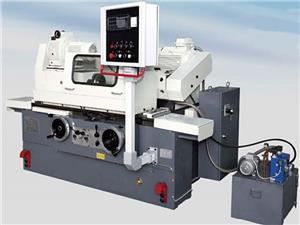
In the world of precision manufacturing, the question of how a CNC cylindrical grinding machine ensures such high levels of accuracy is more than just technical curiosity—it's a daily concern for engineers and procurement managers striving to meet tight tolerances and production deadlines. Imagine a bustling job shop in the Midwest, where a batch of hardened steel shafts must be ground to a 0.005 mm tolerance, and any deviation means scrapping parts worth thousands of dollars. This scenario is all too familiar, and the answer lies in the sophisticated design and control systems of modern CNC cylindrical grinding machines.
At its core, a CNC cylindrical grinding machine ensures precision through a combination of rigid machine construction, advanced thermal stability, high-resolution feedback systems, and intelligent CNC controls that compensate for dynamic errors in real time. But achieving consistent precision is not just about the machine itself—it's about understanding the pain points that plague production floors and implementing solutions that address them head-on. In this blog, we'll delve into the specific challenges faced by manufacturers, explore how companies like NANTONG LUCUBRATE MACHINERY TECHNICAL LTD. are addressing them, and share real-world examples of success.
Pain Points in Cylindrical Grinding: Where Precision Breaks Down
Even with the most advanced CNC cylindrical grinding machine, several factors can compromise precision. Here are three common pain points that engineers and production managers frequently encounter:
1. Thermal Distortion Leading to Dimensional Drift
Grinding is an intensive process that generates significant heat. Without proper thermal management, the machine structure, workpiece, and grinding wheel expand unpredictably, causing dimensional drift. For instance, a manufacturer of hydraulic valves in Germany reported that after several hours of continuous operation, their parts began exceeding tolerance by 0.01 mm, resulting in a 15% scrap rate. The cost? Over €50,000 in lost material and rework per month, not to mention delayed deliveries and reputational damage.
2. Wheel Wear and Dressing Inconsistencies
The grinding wheel is the heart of the process, but it wears over time. Without precise dressing and compensation, the wheel's profile changes, leading to inconsistent surface finish and size variation. A US-based aerospace component supplier struggled with wheel wear on their CNC cylindrical grinding machine, causing a 20% rejection rate on critical turbine shafts. Each rejected shaft cost $2,500, and the unpredictable quality eroded customer trust.
3. Vibration and Chatter Marks
Vibration from the grinding process, improper wheel balancing, or external sources can cause chatter marks on the workpiece surface. These marks not only affect aesthetics but can also lead to fatigue failure in dynamic applications. An Italian manufacturer of automotive camshafts faced chatter issues that resulted in a 10% failure rate during engine testing, costing millions in warranty claims and recalls.
Solutions: How Modern CNC Cylindrical Grinding Machines Overcome These Challenges
Addressing these pain points requires a multi-faceted approach. Here's how advanced CNC cylindrical grinding machines and proper practices can mitigate them:
1. Thermal Stability through Design and Compensation
Machine tools like those from NANTONG LUCUBRATE MACHINERY TECHNICAL LTD. incorporate thermal stability features such as symmetrical structural design, cooling systems for ball screws and guideways, and thermal compensation algorithms in the CNC. For example, the machine can monitor temperature sensors and automatically adjust the grinding parameters to compensate for thermal growth. This reduces dimensional drift to less than 0.002 mm over an 8-hour shift, virtually eliminating scrap due to thermal issues.
2. Automatic Wheel Dressing and Wear Compensation
Modern CNC systems include automatic dressing cycles with precise diamond roll dressers. The machine can dress the wheel at regular intervals and automatically compensate for wheel wear by adjusting the wheel head position. This ensures consistent part size and surface finish throughout the production run. With in-process gauging, the machine can even measure the part after grinding and feed back corrections, achieving a CpK of 1.67 or higher.
3. Vibration Damping and Dynamic Balancing
To combat vibration, machines are built with high-rigidity beds, anti-vibration mounts, and dynamically balanced spindles. Additionally, active balancing systems for the grinding wheel continuously monitor and correct imbalance during operation. This reduces chatter marks and improves surface finish to Ra 0.2 μm or better, meeting the stringent requirements of aerospace and automotive industries.
Customer Success Stories: Real Results with NANTONG LUCUBRATE Machinery
Let's look at how companies across different regions have benefited from implementing these solutions with the help of NANTONG LUCUBRATE MACHINERY TECHNICAL LTD.
Case 1: Precision Hydraulics in Germany
Schmidt Hydraulik GmbH, a family-owned manufacturer of high-pressure hydraulic components, was struggling with thermal drift on their old grinding machines. After investing in a LUCUBRATE CNC cylindrical grinding machine with thermal compensation, they reduced scrap from 15% to 2% and increased throughput by 20%. "The thermal stability is remarkable—we no longer have to wait for the machine to cool down between batches," said Klaus Schmidt, Production Manager. "Our operators can focus on quality, not constant adjustments."
Case 2: Aerospace Components in the USA
Precision Aero Parts Inc. in Seattle, Washington, supplies turbine shafts to major aerospace OEMs. They faced a 20% rejection rate due to wheel wear inconsistencies. LUCUBRATE provided a solution with automatic dressing and in-process gauging. The rejection rate dropped to 1.5%, and they now produce parts with a CpK of 1.8. "The consistency is a game-changer," remarked Linda Chen, Quality Manager. "We've not only saved on scrap but also won new contracts because of our improved reliability."
Case 3: Automotive Camshafts in Italy
Motori Italia S.p.A., a Tier 1 automotive supplier, was plagued by chatter marks on camshafts, leading to engine test failures. After installing a LUCUBRATE machine with active balancing and vibration damping, surface finish improved to Ra 0.15 μm, and the failure rate plummeted to 0.5%. "Our customers noticed the difference immediately," said Marco Rossi, Engineering Director. "The LUCUBRATE machine has become the backbone of our camshaft line."
Case 4: Medical Implants in Switzerland
Swiss Ortho Implants AG manufactures precision medical implants from stainless steel and titanium. They required a surface finish of Ra 0.1 μm and sub-micron accuracy. LUCUBRATE's CNC cylindrical grinding machine with high-resolution glass scales and temperature control delivered exactly that. Scrap reduced from 8% to 0.5%, and production time per part decreased by 30%. "The precision is exceptional—we can now grind complex geometries that were previously outsourced," noted Dr. Anna Meier, CEO.
Case 5: General Job Shop in the UK
Midlands Precision Grinding, a job shop serving various industries, needed a versatile machine to handle small batches with quick changeovers. They chose a LUCUBRATE model with easy programming and automatic wheel change. Setup time reduced by 40%, and they could take on more diverse work. "The machine's flexibility and reliability have helped us grow our business by 25% in one year," said James Wilson, Owner.
Applications and Partnerships: Trusted by Industry Leaders
CNC cylindrical grinding machines are indispensable in industries where precision is paramount. Key applications include:
- Automotive: Camshafts, crankshafts, transmission shafts, and valve stems.
- Aerospace: Turbine shafts, landing gear components, and hydraulic actuators.
- Medical: Implants, surgical instruments, and dental tools.
- Energy: Pump shafts, compressor rotors, and turbine blades.
- General Engineering: Precision shafts, pins, and rollers.
NANTONG LUCUBRATE MACHINERY TECHNICAL LTD. has established strategic partnerships with leading component manufacturers and distributors worldwide. For instance, they supply machines to a major European automotive tier supplier and have collaborated with a US-based aerospace consortium on developing grinding processes for next-generation alloys. These partnerships are built on a shared commitment to pushing the boundaries of precision and productivity.
Frequently Asked Questions (FAQs)
Here are answers to questions commonly posed by engineers and procurement managers:
1. How does the CNC cylindrical grinding machine handle thermal expansion during long production runs?
The machine incorporates multiple temperature sensors throughout the structure and coolant system. The CNC continuously monitors these sensors and applies real-time compensation algorithms to adjust the grinding wheel position and feed rates. Additionally, the machine may use a coolant chiller to maintain stable temperature. This ensures that thermal growth is counteracted, keeping part dimensions within microns even after hours of operation.
2. What is the typical wheel wear compensation strategy, and how often should dressing occur?
Wheel wear compensation is typically achieved through a combination of automatic dressing cycles and in-process gauging. The frequency of dressing depends on the wheel specification, material being ground, and required tolerance. Advanced CNC systems can monitor grinding forces or acoustic emissions to determine optimal dressing intervals, often every 10-20 parts. The machine automatically dresses the wheel and updates the wear offset, ensuring consistent part quality without operator intervention.
3. Can the machine grind both hard and soft materials without losing precision?
Yes, with appropriate wheel selection and parameter adjustments. The machine's rigid construction and powerful spindle allow it to handle materials from soft aluminum to hardened steel (up to 65 HRC). The CNC can store different grinding programs for various materials, automatically adjusting wheel speed, feed rate, and depth of cut. However, it's essential to use the correct wheel and coolant for each material to avoid loading or thermal damage.
4. What kind of surface finish can be expected from a CNC cylindrical grinding machine?
With proper wheel dressing and machine conditions, surface finishes of Ra 0.1 μm to 0.4 μm are achievable. For superfinishing applications, even Ra 0.05 μm can be attained with specialized wheels and parameters. The machine's vibration damping and smooth servo control contribute to achieving these finishes consistently.
5. How does the machine ensure repeatability across different operators and shifts?
Repeatability is ensured through the CNC's ability to store and execute precise programs, eliminating operator-dependent variations. Features like automatic wheel dressing, in-process gauging, and closed-loop feedback maintain consistency. Additionally, the machine's thermal stability and rigid design reduce external influences. Training and standard operating procedures further ensure that different operators achieve the same results.
Conclusion: Partner with NANTONG LUCUBRATE for Precision Grinding Solutions
In summary, a CNC cylindrical grinding machine ensures precision through advanced thermal management, automatic wheel dressing and compensation, and vibration control. These features directly address the pain points of thermal drift, wheel wear, and chatter, enabling manufacturers to achieve consistent quality, reduce scrap, and increase productivity. The success stories from Germany, the USA, Italy, Switzerland, and the UK demonstrate the tangible benefits of investing in high-quality grinding technology from NANTONG LUCUBRATE MACHINERY TECHNICAL LTD.
If you're facing precision challenges in your grinding operations, we invite you to download our detailed technical white paper on "Achieving Sub-Micron Precision in Cylindrical Grinding" or contact our sales engineers to discuss your specific application. Let us help you turn precision challenges into competitive advantages.