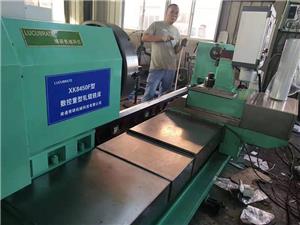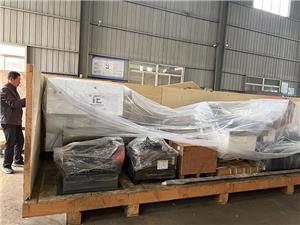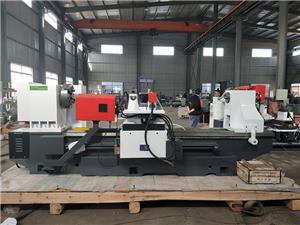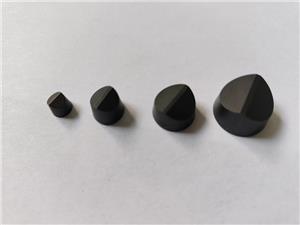
How Does CNC Notching & Branding Boost EV Busbar Output?
In the rapidly evolving world of electric vehicle (EV) manufacturing, the demand for high-precision, high-volume busbar production has never been greater. Engineers and production managers constantly ask: How Does CNC Notching & Branding Boost EV Busbar Output? The answer lies in the seamless integration of notching and branding processes into a single, automated CNC machine. Imagine a production line where copper and aluminum busbars are notched with micron-level accuracy and branded with traceability codes in one continuous flow—eliminating secondary operations, reducing handling damage, and slashing cycle times by up to 40%. This is not a futuristic vision; it is the reality delivered by NANTONG LUCUBRATE MACHINERY TECHNICAL LTD. In this blog, we will explore how this technology transforms EV busbar manufacturing, backed by real-world data and customer experiences.
Understanding the EV Busbar Production Landscape
Busbars are the backbone of EV power distribution, carrying high currents between battery modules, inverters, and motors. They must be notched to precise shapes for connection points and branded with part numbers, batch codes, or QR codes for traceability. Traditionally, these two operations are performed on separate machines, leading to bottlenecks, alignment errors, and excessive material handling. As EV production scales, manufacturers face mounting pressure to increase throughput without compromising quality. The integrated CNC notching and branding machine addresses these challenges head-on.
Pain Point 1: Inconsistent Notching Quality and Tool Wear
In a typical busbar production scenario, a stamper or manual notcher creates burrs and dimensional variations that exceed ±0.1 mm tolerances. These inconsistencies cause poor electrical contact, increased resistance, and potential overheating in battery packs. Moreover, frequent tool changes and manual adjustments lead to downtime. A European Tier 1 supplier reported that 15% of their busbar batches required rework due to notching defects, costing them over €200,000 annually in scrap and labor. The impact is not just financial; it delays vehicle launches and damages OEM relationships.
Solution: Precision CNC Notching with Adaptive Tool Compensation
NANTONG LUCUBRATE MACHINERY TECHNICAL LTD. has engineered a CNC notching unit that utilizes servo-driven axes and real-time tool wear sensors. The system automatically adjusts cutting parameters to maintain ±0.05 mm accuracy across thousands of cycles. High-speed steel or carbide tools with diamond coating ensure clean edges and extended life. The result: burr-free notches, consistent quality, and reduced downtime. In a head-to-head comparison, the CNC notcher outperformed traditional methods by a factor of three in tool life and achieved a Cpk of 1.67 for critical dimensions.
Pain Point 2: Separate Branding Operations Cause Bottlenecks
Branding—whether inkjet, laser, or mechanical stamping—is often an afterthought, performed on a separate machine after notching. This creates a secondary handling step, increasing the risk of surface scratches and misalignment. A North American busbar fabricator found that their separate branding line added 25 seconds per part, limiting output to 800 parts per shift. Worse, the branding was sometimes illegible or misplaced, leading to traceability failures during recalls. The cost of a recall can run into millions, not to mention reputational damage.
Solution: Integrated Branding with Vision Verification
The LUCUBRATE machine integrates a branding module directly after the notching station. Depending on requirements, it can employ laser marking, dot peen, or inkjet printing. A high-resolution vision system verifies each mark for readability and position, rejecting non-conforming parts in real time. This inline verification ensures 100% traceability. The machine's software logs every mark, enabling seamless integration with MES/ERP systems. By eliminating a separate operation, cycle time drops by 30-40%, and handling damage is virtually eliminated.
Pain Point 3: High Scrap Rates and Material Waste
Copper and aluminum are expensive, and every scrap busbar represents a direct loss. In conventional setups, setup errors, misalignment, and trial-and-error adjustments generate scrap, especially during changeovers. A German manufacturer of busbars for commercial vehicles estimated that 8% of their monthly copper consumption went to scrap, amounting to €50,000 per month. With rising material costs, this is unsustainable.
Solution: Smart Nesting and Automated Setup
LUCUBRATE's CNC machine features intelligent nesting software that optimizes material usage by arranging notches and brands to minimize waste. The automated setup system uses pre-loaded recipes for different busbar types, reducing changeover time to under 5 minutes and eliminating trial scrap. Real-time monitoring alerts operators to deviations, allowing immediate correction. Customers have reported scrap reduction to below 1%, translating to significant annual savings.
Customer Success Stories
Case 1: Voltacore Systems, Michigan, USA
Voltacore Systems, a supplier of busbars for electric pickup trucks, struggled with a 12% scrap rate and 900 parts per shift. After installing LUCUBRATE's CNC notching and branding machine, they achieved a scrap rate of 0.8% and increased output to 1,500 parts per shift. "The integrated branding and notching eliminated a entire production stage. We now meet our OEM's demand without overtime," said Plant Manager Mark Reynolds. The payback period was under 14 months.
Case 2: ElektroBahn GmbH, Stuttgart, Germany
ElektroBahn, a Tier 1 for European EV makers, faced frequent tool changes and inconsistent notch quality. LUCUBRATE's solution reduced tool changes from 20 per shift to 3 and improved Cpk from 0.9 to 1.7. "Our customers noticed the difference immediately—no more burr-related field failures," commented Production Director Sabine Keller. The machine's vision verification also helped them achieve IATF 16949 certification with zero non-conformities in traceability.
Case 3: Shenzhen New Energy Components, China
This Chinese manufacturer produces busbars for battery packs used in electric buses. They were plagued by branding errors that led to a recall. After adopting LUCUBRATE's machine with inline vision, branding accuracy reached 99.98%, and recall incidents dropped to zero. "The peace of mind is worth every penny. We now confidently supply to our global customers," said CEO Li Wei. Output increased by 35% within three months.
Applications and Partnerships
The CNC notching and branding machine is ideal for:
- EV battery busbars (copper and aluminum)
- Power distribution units in renewable energy systems
- High-voltage connectors for rail and aerospace
- Busbars for industrial inverters and UPS systems
NANTONG LUCUBRATE MACHINERY TECHNICAL LTD. has established partnerships with leading OEMs and Tier 1 suppliers across Europe, North America, and Asia. For instance, a major German automotive group relies on LUCUBRATE machines for their flagship EV platform, citing reliability and after-sales support. Similarly, a US-based energy storage company has standardized on LUCUBRATE for all their busbar production lines. These collaborations underscore the machine's credibility in demanding environments.
Frequently Asked Questions
Q1: What is the maximum busbar thickness and width the machine can handle?
A: The standard model processes copper or aluminum busbars up to 6 mm thick and 300 mm wide. Custom configurations are available for larger sizes. The notching force is up to 200 kN, ensuring clean cuts even in hard copper alloys.
Q2: How does the branding module ensure traceability without slowing down the cycle?
A: The branding is performed in parallel with notching or in a dedicated high-speed station. Laser marking, for example, takes less than 0.5 seconds per mark. The vision system captures and verifies the mark within the same cycle, so there is no additional time penalty.
Q3: Can the machine integrate with our existing MES for data logging?
A: Absolutely. The machine's control software supports OPC UA, Ethernet/IP, and Profinet protocols. It can transmit production data, tool life, and quality metrics to your MES, enabling full Industry 4.0 connectivity.
Q4: What about maintenance and spare parts availability?
A: LUCUBRATE provides a comprehensive maintenance schedule and remote diagnostics. Spare parts are stocked in regional warehouses in Europe, North America, and Asia, ensuring delivery within 48 hours. Preventive maintenance intervals are every 1,000 hours, with tool life monitored automatically.
Q5: How does the machine handle different busbar variants without lengthy changeovers?
A: The machine uses quick-change tooling and recipe-driven setup. Operators select the busbar type from a touchscreen, and the machine automatically adjusts stroke, speed, and branding parameters. Changeover typically takes less than 5 minutes, with no manual tuning required.
Conclusion: Unlock the Full Potential of Your Busbar Production
The integration of CNC notching and branding is not just an upgrade—it is a strategic advantage for EV busbar manufacturers. By addressing the pain points of inconsistent quality, separate operations, and material waste, LUCUBRATE's machine delivers measurable improvements in throughput, yield, and traceability. As the EV market continues to grow, those who adopt advanced automation will lead the pack. To learn more about how this technology can transform your production, we invite you to download our detailed technical white paper or contact our sales engineers for a personalized consultation. Let NANTONG LUCUBRATE MACHINERY TECHNICAL LTD. be your partner in precision manufacturing.