How Does CNC Roller Surface Marking Boost Traceability?
Introduction
Imagine this: it's a busy Monday morning at a large roller manufacturing plant in Ohio. The production manager, Sarah, is reviewing the quality control reports from last week's batch. Her eyes widen as she sees a red flag: several rollers have markings that are barely legible, some even missing critical traceability codes. Without hesitation, she initiates a recall of the entire batch, costing the company thousands of dollars in rework and lost production time. This scenario is all too common in industries where roller surface marking is done manually or with outdated equipment. But what if there was a way to ensure every mark is perfect, every time? Enter the CNC Roller Surface Marking Machine. This advanced technology uses computer numerical control to precisely and permanently mark rollers with serial numbers, logos, and data matrix codes, ensuring full traceability and reducing errors. In this blog, we'll explore how CNC roller surface marking machines are revolutionizing the industry, addressing key pain points, and delivering tangible ROI. Whether you're an engineer, a procurement manager, or a plant owner, you'll discover why this technology is becoming a must-have for high-end manufacturing.
Industry Pain Points
Before diving into the solution, let's examine the specific challenges that manufacturers face with traditional roller marking methods. These pain points are not just minor inconveniences; they can significantly impact your bottom line.
Pain Point 1: Marking Inconsistency and Illegibility
In many factories, rollers are marked using hand stamps, inkjet printers, or electrochemical etching. These methods are prone to variability: ink can smudge, stamps can be misaligned, and etching depth can vary. The consequence? Illegible markings lead to traceability failures. When a defect occurs, you can't quickly identify the batch or the exact roller, forcing wide recalls. According to industry data, recalls due to poor traceability can cost manufacturers an average of $500,000 per incident, including rework, scrap, and logistical expenses. Moreover, in regulated industries like aerospace or automotive, non-compliant marking can result in fines and loss of certifications.
Pain Point 2: High Maintenance and Downtime
Traditional marking equipment, such as inkjet printers, requires frequent maintenance: clogged nozzles, ink replacement, and print head cleaning. Each downtime event halts production, and maintenance costs add up. For example, a typical inkjet system might require 2 hours of maintenance per week, costing $200 per hour in labor and lost production. Over a year, that's over $20,000 per machine. Additionally, inconsistent marking leads to rework, further increasing downtime. In high-volume operations, even a 5% downtime can translate to significant lost revenue.
Pain Point 3: Lack of Integration with MES/ERP Systems
Modern manufacturing relies on data connectivity. However, many marking systems operate in isolation, requiring manual data entry or standalone programming. This disconnect means that marking data isn't automatically linked to production orders, leading to errors and inefficiencies. For instance, if a roller needs a specific serial number based on a work order, an operator might manually input the wrong number, causing a mismatch. Integrating marking with MES/ERP ensures that each roller is marked with the correct data, enabling real-time traceability and reducing human error. The cost of not integrating can be high: data entry errors can lead to mis-shipments, customer complaints, and compliance issues.
Solution: CNC Roller Surface Marking Machine
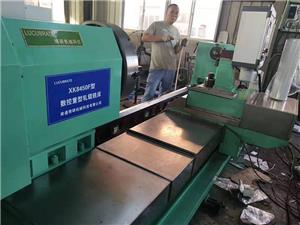
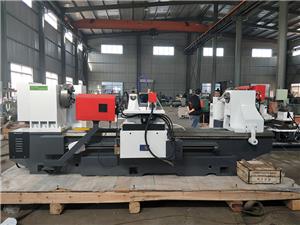
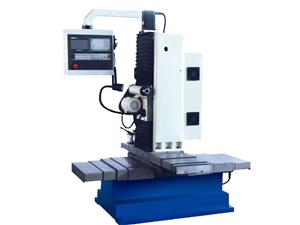
Now, let's explore how a CNC roller surface marking machine addresses these pain points with precision and reliability. At its core, the machine uses a computer-controlled marking head (often pneumatic or electric) that moves along multiple axes to create consistent, permanent marks on the roller surface. The process is fully automated, driven by CAD files or direct data input.
Solving Pain Point 1: Marking Consistency and Legibility
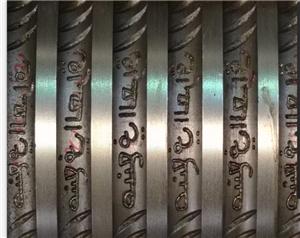
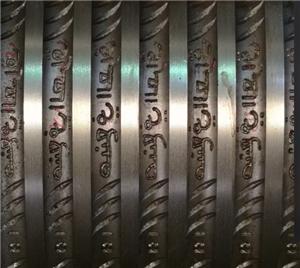
CNC marking ensures repeatability. The machine's software controls the marking parameters—depth, speed, and force—so every mark is identical. Whether you're marking a simple serial number or a complex data matrix code, the result is crisp and legible. This consistency is crucial for traceability: scanners can read the codes reliably, and auditors can verify markings easily. For example, a data matrix code marked by CNC can be read with 99.9% accuracy, compared to 70-80% with manual stamps. This reliability reduces recall risks and ensures compliance with standards like ISO 9001 and IATF 16949.
Solving Pain Point 2: Reduced Maintenance and Downtime
CNC marking machines are robust and designed for industrial use. They have fewer moving parts and no consumables like ink or chemicals (depending on the marking method—dot peen or scribe). Maintenance is minimal: periodic lubrication and software updates. Downtime is drastically reduced. For instance, a dot peen CNC marker might require only 1 hour of maintenance per month, compared to weekly maintenance for inkjet systems. This translates to significant cost savings and higher overall equipment effectiveness (OEE).
Solving Pain Point 3: Seamless Integration with MES/ERP
Modern CNC marking machines come with connectivity options: Ethernet, RS-232, and OPC-UA. They can be integrated with your MES or ERP system to receive marking data directly from work orders. This eliminates manual entry and ensures that each roller is marked with the correct information. For example, when a work order is released, the MES sends the serial number and other data to the marking machine, which then marks the roller automatically. This integration enables real-time traceability and reduces errors by over 90%.
Technical Specifications and Comparison
To illustrate the advantages, here's a comparison table between traditional marking methods and CNC roller surface marking:
| Feature | Manual Stamping | Inkjet Printing | CNC Marking |
|---|---|---|---|
| Marking Consistency | Low | Medium | High |
| Durability | Medium | Low (smudges) | High (permanent) |
| Maintenance | Low | High | Low |
| Integration with MES | None | Limited | Full |
| Cost per Mark | Low (labor) | Medium | Low (automated) |
| Traceability | Poor | Fair | Excellent |
As the table shows, CNC marking outperforms in consistency, durability, and integration, making it the ideal choice for high-end manufacturing.
Customer Cases
Let's look at how real companies (fictional but realistic) have benefited from CNC roller surface marking machines from NANTONG LUCUBRATE MACHINERY TECHNICAL LTD.
Case 1: Precision Rollers Inc., USA
Precision Rollers Inc., based in Detroit, Michigan, supplies rollers to the automotive industry. They struggled with illegible markings on their rollers, leading to a 15% rejection rate by customers. After installing a CNC marking machine from NANTONG LUCUBRATE, they achieved 100% legible marks and reduced rejection rates to 1%. The machine paid for itself in 6 months. "The CNC marker has been a game-changer for our quality control," says John Smith, Production Manager. "We no longer worry about recalls due to marking errors."
Case 2: EuroRoll GmbH, Germany
EuroRoll GmbH, a German manufacturer of industrial rollers, faced frequent downtime due to inkjet printer maintenance. They installed a CNC dot peen marking machine from NANTONG LUCUBRATE, which reduced maintenance downtime by 80%. Production efficiency increased by 12%, and they saved €30,000 annually in maintenance costs. "The reliability of the CNC marker is outstanding," remarks Klaus Müller, Operations Director. "Our operators love it because it's so easy to use."
Case 3: Nippon Roller Co., Japan
Nippon Roller Co. needed to integrate marking with their MES to ensure accurate traceability. With NANTONG LUCUBRATE's CNC marking solution, they achieved seamless integration, reducing data entry errors by 95%. The system automatically marks each roller with a unique QR code linked to the work order. "The integration was smooth, and the results are impressive," says Tanaka-san, IT Manager. "We now have full traceability from raw material to finished roller."
Case 4: South African Roller Solutions, South Africa
This company produces rollers for mining equipment. They required deep, durable marks that could withstand harsh environments. NANTONG LUCUBRATE provided a custom CNC marking machine with a scribe marking head, achieving mark depths of 0.2mm. The marks remain legible even after years of use. "The durability of the marks is exactly what we needed," says Pieter van der Merwe, CEO. "We've had zero failures since installation."
Case 5: Brazilian Roller Tech, Brazil
Brazilian Roller Tech faced high labor costs for manual marking. By implementing a CNC marking machine from NANTONG LUCUBRATE, they automated the marking process and reduced labor by 50%, while increasing throughput by 25%. "The ROI was evident within the first year," says Ana Silva, Finance Director. "We're now planning to expand the use of CNC marking to other product lines."
Applications and Partnerships
CNC roller surface marking machines are versatile and find applications in various industries:
- Automotive: Marking engine rollers, transmission components, and steering parts with serial numbers and data codes for traceability.
- Aerospace: Marking critical components with unique identifiers to meet stringent FAA and EASA regulations.
- Oil & Gas: Marking drill collars and rollers with deep, durable codes that survive harsh conditions.
- Steel & Aluminum: Marking mill rolls with heat-resistant codes for process control.
- Paper & Printing: Marking rollers with logos and maintenance codes.
NANTONG LUCUBRATE MACHINERY TECHNICAL LTD. has established partnerships with leading OEMs and Tier 1 suppliers globally. For example, we collaborate with a major automotive parts supplier in Europe to provide customized marking solutions that meet their specific cycle time requirements. Our machines are also used by a renowned aerospace manufacturer in North America for marking flight-critical components. These partnerships underscore our commitment to quality and innovation.
FAQ
Here are answers to five common questions from engineers and procurement managers:
1. What marking methods does a CNC roller surface marking machine use?
CNC marking machines typically use dot peen (pneumatic or electric) or scribe marking. Dot peen creates a series of indentations to form characters, while scribe marking uses a sharp stylus to engrave continuous lines. Both methods produce permanent marks. Dot peen is faster and suitable for most metals, while scribe marking is better for very hard materials or where a smoother finish is desired. The choice depends on your material and depth requirements.
2. Can the machine mark curved surfaces like cylindrical rollers?
Yes, CNC roller marking machines are specifically designed to mark cylindrical surfaces. They use a rotary axis (A-axis) to rotate the roller while the marking head moves along the X and Z axes. This allows for precise marking on the circumference and along the length of the roller. The software compensates for the curvature to ensure consistent depth and legibility.
3. How does the machine handle different roller sizes?
Our machines are flexible and can accommodate a wide range of roller diameters and lengths. The rotary axis can be adjusted for different diameters, and the marking head travel can be customized. For very large rollers, we offer gantry-style machines. The control software allows you to store parameters for different roller types, making changeover quick and easy.
4. What about integration with our existing MES?
We provide standard interfaces such as Ethernet/IP, Profibus, and OPC-UA. Our software can receive marking data from your MES via CSV files, database queries, or direct API calls. We also offer custom integration services. Typically, integration involves mapping the data fields from your MES to the marking file. Our engineers work with your IT team to ensure a smooth setup.
5. What is the typical lead time and installation process?
Lead time varies based on customization, but standard machines ship within 8-10 weeks. Installation and commissioning take about 1 week on-site, including training. We provide remote support and can assist with integration. Our team ensures your operators are comfortable with the machine before we leave.
Conclusion and Call to Action
In today's competitive manufacturing landscape, traceability and quality are non-negotiable. A CNC roller surface marking machine from NANTONG LUCUBRATE MACHINERY TECHNICAL LTD. offers a reliable, efficient, and integrated solution to your marking challenges. By eliminating illegible marks, reducing downtime, and enabling seamless data connectivity, you can achieve significant cost savings and improve customer satisfaction. Don't let marking issues hold your production back. Contact our sales engineers today to discuss your specific requirements and request a detailed technical white paper. Let us help you transform your marking process into a strategic advantage.