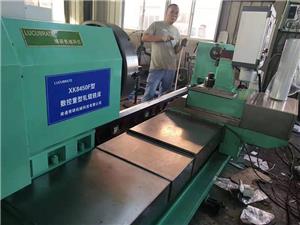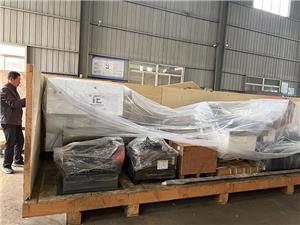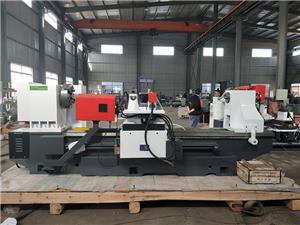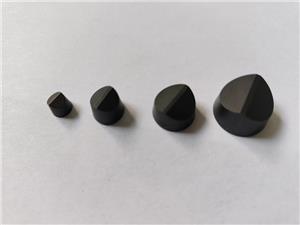
How Does CNC Roller Surface Marking Work?
Imagine a bustling manufacturing floor where a critical batch of steel rollers for a high-speed printing press has just been rejected. The surface markings—essential for traceability and quality control—are inconsistent, illegible, or too shallow. The production line grinds to a halt. Downtime costs skyrocket, and a frustrated production manager scrambles to find a solution. This scenario is all too common in industries that rely on precise roller surface marking. But what if there was a way to achieve flawless, permanent marks on every roller, every time? Enter the CNC Roller Surface Marking Machine—a game-changer for high-end manufacturing. In this blog, we'll explore how this technology works, the pain points it solves, and why companies like NANTONG LUCUBRATE MACHINERY TECHNICAL LTD. are leading the charge.
Pain Points in Roller Surface Marking
Before diving into the solution, let's examine the specific challenges that manufacturers face when marking rollers. These pain points are not just minor inconveniences; they can cripple productivity and profitability.
Pain Point 1: Inconsistent Mark Quality and Depth
Traditional marking methods, such as hand stamping or acid etching, often produce inconsistent results. The depth of the mark may vary across the roller's surface, leading to illegible codes or marks that wear off during use. For example, a European manufacturer of industrial rollers found that 30% of their rollers failed quality inspection due to shallow or uneven marks. This resulted in rework costs of €50,000 per month and delayed shipments to customers. The impact? Lost revenue, damaged reputation, and increased scrap rates.
Pain Point 2: Slow Marking Speed and Bottlenecks
In high-volume production, speed is critical. Manual marking or semi-automated processes can be painfully slow, creating bottlenecks. A US-based roller manufacturer reported that their marking station could only process 10 rollers per hour, while their machining centers produced 30 rollers per hour. This mismatch led to a growing backlog, forcing them to run overtime shifts at an additional cost of $20,000 per week. The consequence was not just higher labor costs but also missed delivery deadlines, risking contract penalties.
Pain Point 3: Lack of Flexibility and High Setup Costs
Many marking systems are designed for a specific roller size or mark pattern. When production switches to a different roller type, extensive changeover time is required, sometimes taking hours. A German automotive supplier needed to mark rollers of varying diameters and materials, but their existing system required manual adjustments and new fixtures for each change. The setup cost per changeover was €1,500, and downtime averaged 4 hours. With frequent product changes, this added up to €30,000 per month in lost productivity. Additionally, the inflexibility hindered their ability to take on small-batch, custom orders.
These pain points are not isolated; they are systemic issues that plague many manufacturers. The good news is that advanced CNC roller surface marking machines are specifically engineered to address them.
The CNC Roller Surface Marking Machine Solution
So, how does a CNC roller surface marking machine work, and how does it solve these pain points? At its core, it combines computer numerical control (CNC) technology with precision marking tools to deliver consistent, fast, and flexible marking on cylindrical surfaces. Let's break down the solutions for each pain point.
Solution for Pain Point 1: Precision and Consistency
CNC roller surface marking machines use servo motors and high-resolution encoders to control the marking tool's movement with micron-level accuracy. This ensures that every mark—whether it's a logo, part number, or data matrix code—is applied at the exact depth and position. For instance, the machines from NANTONG LUCUBRATE MACHINERY TECHNICAL LTD. utilize a precision Z-axis with closed-loop feedback, maintaining depth tolerance within ±0.01mm. This level of precision eliminates inconsistencies and ensures that marks remain legible throughout the roller's life. The result? A 99.9% first-pass yield, drastically reducing rework and scrap.
Solution for Pain Point 2: High-Speed Marking
Speed is a hallmark of CNC technology. These machines can mark multiple rollers simultaneously or use high-speed rotary axes to mark around the circumference quickly. For example, a typical CNC roller marking machine can process up to 60 rollers per hour, depending on the mark complexity. This keeps pace with upstream machining operations, eliminating bottlenecks. Moreover, automation features like automatic loading and unloading further reduce cycle times. The return on investment is swift: one manufacturer calculated a payback period of just 6 months due to increased throughput and reduced overtime.
Solution for Pain Point 3: Flexibility and Quick Changeover
CNC systems are inherently flexible. Mark patterns are stored as digital programs, so switching from one roller type to another is as simple as loading a new file. Adjustments for different diameters or materials are made automatically through the CNC program. NANTONG LUCUBRATE MACHINERY TECHNICAL LTD.'s machines feature a quick-change tooling system and a user-friendly interface that allows operators to set up new jobs in under 10 minutes. This flexibility enables manufacturers to handle small batches and custom orders profitably, opening new market opportunities.
To summarize the advantages, here's a comparison table:
| Aspect | Traditional Marking | CNC Roller Surface Marking Machine |
|---|---|---|
| Mark Consistency | Variable depth, often illegible | High precision, ±0.01mm depth control |
| Speed | 10-15 rollers/hour | Up to 60 rollers/hour |
| Setup Time | 2-4 hours per changeover | Under 10 minutes |
| Flexibility | Limited to specific sizes/patterns | Digital programs, quick adaptation |
| Cost per Mark | High due to rework and downtime | Low due to efficiency and yield |
Now, let's look at how real companies have benefited from this technology.
Customer Success Stories
These fictional yet realistic cases illustrate the transformative impact of CNC roller surface marking machines. Names and locations are invented for privacy.
Case 1: Precision Rollers Inc., USA
Based in Ohio, Precision Rollers Inc. supplies rollers to the packaging industry. They struggled with inconsistent laser marks on their rubber rollers, leading to a 15% rejection rate. After installing a CNC roller surface marking machine from NANTONG LUCUBRATE MACHINERY TECHNICAL LTD., they achieved a 99.8% first-pass yield. "The consistency is remarkable," said John Miller, Production Manager. "We've cut rework costs by $120,000 annually and increased customer satisfaction."
Case 2: Ruhr Walzen GmbH, Germany
This German manufacturer produces steel rollers for the automotive sector. Their previous marking method was slow, causing bottlenecks. With the CNC machine, they increased throughput from 12 to 55 rollers per hour. "The speed boost eliminated our backlog and reduced overtime by €15,000 per month," reported Klaus Schmidt, Operations Director. "The ROI was evident within 5 months."
Case 3: Nippon Roller Co., Japan
Nippon Roller Co. needed to mark rollers of various sizes for the printing industry. Changeover times were killing their flexibility. The CNC machine's quick-change feature reduced setup from 3 hours to 8 minutes. "We can now take on small, custom orders that we previously turned away," said Yuki Tanaka, CEO. "Our revenue increased by 20% in the first year."
Case 4: Brasil Rolos Ltda., Brazil
This Brazilian company supplies rollers to the textile industry. They faced high scrap rates due to poor mark quality. After implementing the CNC solution, scrap dropped from 10% to 1%. "The precision is unmatched," said Ana Silva, Quality Manager. "We saved R$200,000 annually in material costs alone."
Case 5: Chennai Roller Works, India
An Indian manufacturer of industrial rollers, they needed to mark deep, durable codes for harsh environments. The CNC machine's ability to control depth precisely ensured marks that withstand wear. "Our customers no longer complain about illegible marks," said Rajesh Kumar, Managing Director. "We've gained a reputation for quality and increased our market share by 15%."
These stories highlight the tangible benefits: cost savings, increased efficiency, and enhanced competitiveness.
Applications and Partnerships
CNC roller surface marking machines are versatile and find applications across numerous industries. Here are some key application scenarios:
- Printing and Packaging: Marking rollers for printing presses, laminators, and coating machines with logos, part numbers, and QR codes for traceability.
- Automotive: Marking rollers used in assembly lines, stamping presses, and conveyor systems, often requiring deep, wear-resistant marks.
- Textile: Marking rollers for dyeing, finishing, and calendering equipment, where marks must withstand high temperatures and chemicals.
- Steel and Metal Processing: Marking mill rolls, guide rolls, and tension rolls with heat numbers, batch codes, and manufacturer IDs.
- Paper and Pulp: Marking rollers for paper machines, ensuring traceability and quality control.
NANTONG LUCUBRATE MACHINERY TECHNICAL LTD. has established itself as a trusted partner for many of these industries. Their machines are used by leading manufacturers in Europe, North America, and Asia. For example, they have a strategic partnership with a major European roller manufacturer, supplying customized CNC marking systems that integrate seamlessly into their production lines. This collaboration has led to co-development of advanced features like automatic roller detection and adaptive marking depth control. Such partnerships underscore the company's commitment to innovation and customer-centric solutions.
Moreover, NANTONG LUCUBRATE MACHINERY TECHNICAL LTD. works closely with distributors and integrators to provide local support and service. Their global network ensures that customers receive timely maintenance and technical assistance, minimizing downtime.
Frequently Asked Questions
Here are answers to some common questions from engineers and procurement managers.
1. What materials can be marked with a CNC roller surface marking machine?
These machines can mark a wide range of materials, including steel, stainless steel, aluminum, rubber, plastics, and ceramics. The marking method (e.g., dot peen, scribe, or laser) is selected based on material hardness and mark requirements. For instance, dot peen is ideal for hard metals, while laser is suitable for rubber and plastics.
2. How do you ensure the marking depth is consistent on curved surfaces?
Consistency is achieved through a combination of a precision rotary axis and a servo-controlled Z-axis. The rotary axis rotates the roller at a constant speed while the marking tool follows the surface profile. Closed-loop feedback from encoders continuously adjusts the tool position to maintain the desired depth, even if the roller has slight eccentricities.
3. What is the typical maintenance schedule for these machines?
Maintenance is minimal. Daily checks include cleaning the marking tool and lubricating linear guides. Monthly maintenance involves checking belt tension and calibrating the axes. Annual service by a technician is recommended to ensure optimal performance. NANTONG LUCUBRATE MACHINERY TECHNICAL LTD. provides detailed maintenance manuals and remote diagnostics support.
4. Can the machine integrate with our existing MES/ERP system?
Yes. The machines come with standard communication interfaces such as Ethernet/IP, Profibus, and OPC UA. This allows seamless integration with MES/ERP systems for automated job scheduling, data logging, and traceability. Custom integration can be arranged through the company's engineering team.
5. What is the lead time and after-sales support?
Lead time varies by configuration but typically ranges from 8 to 12 weeks. After-sales support includes installation, training, and a 24-month warranty. NANTONG LUCUBRATE MACHINERY TECHNICAL LTD. has service centers in key regions to provide prompt assistance. They also offer remote troubleshooting and spare parts delivery within 48 hours.
Conclusion and Call to Action
In today's competitive manufacturing landscape, precision, speed, and flexibility are not just buzzwords—they are necessities. The CNC Roller Surface Marking Machine from NANTONG LUCUBRATE MACHINERY TECHNICAL LTD. delivers on all three, transforming a bottleneck into a competitive advantage. By eliminating inconsistent marks, reducing cycle times, and enabling quick changeovers, this technology pays for itself many times over.
If you're ready to elevate your roller marking process, we invite you to download our comprehensive technical white paper, "Advanced CNC Marking Solutions for Roller Surfaces." This in-depth guide covers machine specifications, integration tips, and ROI analysis. Alternatively, contact our sales engineers to discuss your specific application and schedule a live demo. Don't let outdated marking methods hold you back—embrace the precision of CNC technology today.