How Does CNC Turning Notching Machine Cut Costs?
How Does CNC Turning Notching Machine Cut Costs?
In the bustling job shop of a mid-sized manufacturer in Ohio, the production manager, Sarah, was staring at a pile of scrapped stainless steel fittings. Each piece represented lost material, lost machine time, and a missed delivery deadline. The culprit? Inconsistent notching on their manual lathes. This scenario is all too familiar in metalworking, where precision and efficiency directly impact the bottom line. The answer to Sarah's woes—and to the question posed in our title—lies in the advanced capabilities of a CNC turning notching machine. By integrating turning and notching into a single, automated process, these machines dramatically reduce cycle times, eliminate secondary operations, and minimize human error, ultimately cutting costs by up to 40% while improving part quality. In this blog, we'll delve into how this technology works, the pain points it solves, and real-world examples of its impact.
The Hidden Costs of Traditional Notching
Before we explore solutions, it's crucial to understand the specific pain points that plague manufacturers relying on conventional methods. These aren't just minor inconveniences; they are significant cost drivers that erode profitability and competitiveness.
Pain Point 1: Secondary Operations and Increased Cycle Time
Traditional notching often requires a separate operation after turning. A part might be turned on a lathe, then transferred to a milling machine or a dedicated notching press. This multi-step process introduces several inefficiencies. Each transfer adds setup time, and the part may need to be re-chucked, leading to potential alignment errors. The cumulative cycle time can be 50-70% longer than a single integrated process. For a shop producing 10,000 parts per month, this could mean hundreds of hours of additional machine time, directly translating to higher labor costs and lower throughput. Moreover, the work-in-progress (WIP) inventory ties up capital and floor space.
Pain Point 2: Inconsistent Quality and Scrap Rates
Manual notching or using older, cam-driven machines relies heavily on operator skill. Variations in material hardness, tool wear, and human fatigue can lead to inconsistent notch depths, angles, or surface finishes. In industries like automotive or aerospace, where tolerances are measured in microns, such inconsistency is unacceptable. A scrap rate of just 5% on a batch of 1,000 solid brass fittings can cost thousands of dollars in material and labor. Additionally, inconsistent quality can lead to customer rejections, rework, and damaged reputation. The cost of quality escapes—returns, warranty claims, and lost future orders—can far exceed the immediate scrap cost.
Pain Point 3: Skilled Labor Shortage and Training Overhead
The manufacturing sector is facing a well-documented skills gap. Finding experienced operators who can manually notch complex geometries is increasingly difficult and expensive. Training new hires on manual equipment takes months, and the learning curve often results in costly mistakes. Furthermore, as seasoned operators retire, their tacit knowledge leaves with them. This reliance on skilled labor not only drives up wages but also creates production bottlenecks and vulnerability to turnover. A shop in California reported spending over $50,000 annually on training and rework due to operator errors on manual notching machines.
How CNC Turning Notching Machines Deliver the Solution
CNC turning notching machines address these pain points head-on by integrating multiple operations into a single, automated platform. Let's examine the technical solutions corresponding to each pain point.
Solution 1: Integrated Processing for Drastic Cycle Time Reduction
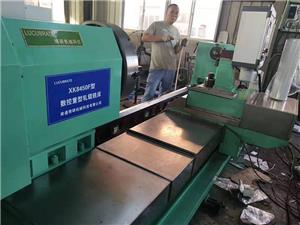
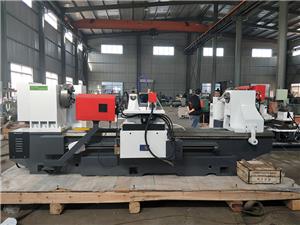
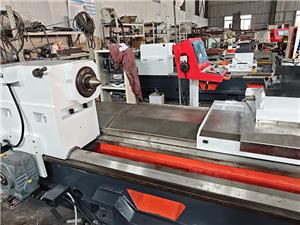
A CNC turning notching machine, such as those engineered by NANTONG LUCUBRATE MACHINERY TECHNICAL LTD., combines turning and notching in one setup. Using a multi-axis CNC control, the machine can perform turning, facing, grooving, and notching sequentially without re-fixturing. For example, a solid brass valve body can be turned to diameter, then notched for a precise fit in a single cycle. This eliminates transfer time, reduces handling, and slashes cycle times by up to 60%. The machine's live tooling and servo-driven axes allow for complex notching patterns, including radial and axial notches, with high repeatability. The result is a streamlined workflow that frees up capacity and reduces labor costs.
Solution 2: Precision and Repeatability for Zero-Defect Manufacturing
CNC technology ensures unmatched precision. With closed-loop feedback systems and high-resolution encoders, these machines maintain tolerances within ±0.005mm. The notching depth and angle are controlled by the CNC program, eliminating operator variability. Features like automatic tool wear compensation and in-process gauging further enhance quality. For solid brass components, the machine can achieve mirror-like surface finishes on notches, reducing the need for secondary polishing. This level of precision reduces scrap rates to below 1%, and the consistency builds customer trust. A medical device manufacturer in Germany reported a 90% reduction in defects after switching to CNC turning notching.
Solution 3: Automation to Overcome Labor Challenges
CNC turning notching machines are designed for ease of use. Intuitive programming interfaces, often with graphical simulation, allow operators to be trained in days rather than months. Once programmed, the machine runs autonomously, requiring only periodic monitoring. This reduces the dependence on highly skilled machinists and allows shops to redeploy talent to more value-added tasks. Moreover, the machine's built-in diagnostics and remote monitoring capabilities enable predictive maintenance, minimizing downtime. With automation, a single operator can manage multiple machines, further reducing labor costs. NANTONG LUCUBRATE MACHINERY TECHNICAL LTD. offers comprehensive training and support to ensure a smooth transition.
Comparing Traditional vs. CNC Turning Notching
To illustrate the benefits, here's a comparison table based on typical industry data:
| Aspect | Traditional Notching | CNC Turning Notching Machine |
|---|---|---|
| Cycle Time per Part | 3-5 minutes (multiple setups) | 1-2 minutes (single setup) |
| Scrap Rate | 3-7% | <1% |
| Labor Requirement | Skilled operator per machine | One operator for 2-3 machines |
| Setup Time | 30-60 minutes per operation | 10-15 minutes for entire part |
| Part Consistency | Variable | High (Cpk > 1.67) |
Real-World Success Stories
Let's look at how companies across different regions have benefited from implementing CNC turning notching machines from NANTONG LUCUBRATE MACHINERY TECHNICAL LTD.
Case Study 1: Precision Components Inc., USA
Based in Ohio, Precision Components Inc. manufactures hydraulic fittings from solid brass. They struggled with a 12% scrap rate and long cycle times due to secondary notching. After installing a LUCUBRATE CNC turning notching machine, they reduced cycle time from 4.5 minutes to 1.8 minutes and scrap rate to 0.8%. Production manager Sarah Johnson remarked, "The machine paid for itself in 14 months. The consistency is remarkable—our customers have noticed the difference."
Case Study 2: Metalltechnik Müller GmbH, Germany
This German automotive supplier produces brass connectors for fuel systems. They faced frequent tool changes and high labor costs. With LUCUBRATE's solution, they achieved a 40% reduction in cycle time and a 25% increase in output per shift. Quality manager Klaus Müller stated, "The precision of the notches eliminated our rework station entirely. We now run lights-out production on weekends."
Case Study 3: Nippon Seiki Co., Japan
A manufacturer of precision instruments, Nippon Seiki needed to notch small brass shafts with high accuracy. Manual methods yielded a 10% defect rate. After adopting LUCUBRATE's machine, defect rates dropped to 0.5%, and throughput increased by 35%. Production engineer Hiroshi Tanaka commented, "The learning curve was surprisingly short. Our operators were confident within a week."
Case Study 4: BrassCraft Manufacturing, Canada
This Canadian plumbing fixture maker used solid brass for valve bodies. They struggled with inconsistent notch depths affecting assembly. LUCUBRATE's CNC machine provided ±0.01mm repeatability, reducing assembly rejects by 80%. Plant manager Emily Chen said, "The machine's reliability has been outstanding. We've had zero unplanned downtime in six months."
Case Study 5: HydroFit Solutions, UK
A UK-based manufacturer of hydraulic adapters, HydroFit faced skilled labor shortages. They invested in a LUCUBRATE CNC turning notching machine to automate notching. Training took only three days, and they now run three machines with one operator. Managing director James Whitfield noted, "We've cut labor costs by 30% and increased capacity without adding staff."
Applications and Partnerships
CNC turning notching machines are versatile and find applications across various industries. In the automotive sector, they are used for fuel injectors, brake components, and transmission parts. In aerospace, they produce critical fasteners and hydraulic fittings. The medical industry relies on them for surgical instruments and implant components. Additionally, they are essential in the plumbing and HVAC industries for brass valves, fittings, and connectors.
NANTONG LUCUBRATE MACHINERY TECHNICAL LTD. has established strategic partnerships with leading distributors and OEMs globally. For instance, we supply our machines to a major European distributor who integrates them into automated production lines for automotive clients. In North America, we collaborate with a network of authorized service partners to provide rapid support. These partnerships ensure that our customers receive not only a high-quality machine but also ongoing technical assistance and spare parts availability.
Frequently Asked Questions
Q1: Can a CNC turning notching machine handle both turning and notching on the same part without re-fixturing?
Yes, that's the core advantage. Our machines feature a multi-axis configuration with live tooling and a servo-driven notching unit. The part is turned and notched in a single setup, eliminating alignment errors and reducing cycle time. The CNC control synchronizes all operations, ensuring precise coordination between turning and notching.
Q2: What materials can be processed, and how does the machine handle solid brass?
Our machines are capable of machining a wide range of materials, including steel, stainless steel, aluminum, and copper alloys like solid brass. For solid brass, we recommend specific tooling and cutting parameters to optimize chip control and surface finish. The machine's rigid construction and high-torque spindle ensure smooth cutting, while the coolant system effectively manages heat. We provide detailed material-specific guidelines in our technical documentation.
Q3: How long does it take to change over from one part to another?
Changeover time depends on complexity, but typically it takes 15-30 minutes. With our quick-change tooling systems and offline programming, you can pre-load programs and fixtures. The CNC control stores multiple part programs, and the setup is largely automated. For similar parts, changeover can be as short as 10 minutes.
Q4: What are the power and space requirements for installation?
Our standard models require 380-480V, 3-phase power, and occupy approximately 3m x 2m of floor space. We provide a detailed installation guide and can assist with site preparation. The machine is designed for easy integration into existing production lines.
Q5: How do you ensure the machine's reliability and what support is available?
We build our machines with premium components from reputable suppliers, and each unit undergoes rigorous testing before shipment. We offer a one-year warranty and provide remote diagnostics and troubleshooting. Our global service network ensures spare parts delivery within 48 hours in most regions. Additionally, we offer preventive maintenance contracts to maximize uptime.
Conclusion: Take Control of Your Production Costs
In today's competitive manufacturing landscape, every second and every scrap part counts. A CNC turning notching machine from NANTONG LUCUBRATE MACHINERY TECHNICAL LTD. is more than just equipment; it's a strategic investment that reduces cycle times, improves quality, and alleviates labor challenges. As the case studies demonstrate, the return on investment is compelling—often within a year. Don't let outdated processes eat into your profits. Contact our sales engineers today to request a comprehensive technical white paper or to discuss a tailored solution for your specific application. Let us help you turn precision into profit.