How to Choose a CNC Diamond Grinding Machine?
Imagine standing on a bustling factory floor, the air thick with the scent of coolant and the rhythmic hum of machinery. You’re overseeing the production of precision components—perhaps for aerospace, automotive, or medical devices—and every micron matters. Your team relies on a CNC diamond grinding machine to deliver flawless surface finishes and tight tolerances. But lately, you’ve noticed inconsistent results, rising costs, and operator frustration. If this sounds familiar, you’re not alone. The question “How to choose a CNC diamond grinding machine?” is one that many engineers and procurement managers grapple with. In this blog, we’ll cut through the noise and give you a clear, actionable roadmap to selecting the right machine for your operation. We’ll explore common pain points, present proven solutions, share real customer stories, and answer technical FAQs. By the end, you’ll have the confidence to make an informed decision that boosts productivity and profitability.
Pain Points: Where CNC Diamond Grinding Machines Fall Short
Before diving into solutions, let’s examine the specific challenges that plague many production floors. These are not abstract issues—they translate directly into lost time, higher costs, and compromised quality.

1. Inconsistent Surface Finish and Dimensional Accuracy
You’re machining a batch of carbide inserts or ceramic seals. The first few parts come out perfect, but as the grinding wheel wears, the surface finish deteriorates, and dimensions drift out of tolerance. Operators compensate by slowing down the feed rate or dressing the wheel more frequently, but this kills cycle times and increases labor costs. Scrap rates climb, and rework becomes a daily headache. For a mid-sized shop producing 10,000 parts per month, even a 2% scrap rate due to inconsistent grinding can cost upwards of $50,000 annually in material and labor. Worse, late deliveries erode customer trust.
2. Thermal Damage and Wheel Loading
Diamond grinding generates intense heat, especially when machining hard materials like tungsten carbide or advanced ceramics. Without proper coolant delivery and thermal management, you risk burning the workpiece surface, causing micro-cracks and residual stresses that lead to premature failure in service. Wheel loading—where chips clog the diamond grit—further exacerbates the problem, leading to poor cutting action and increased forces. The result: frequent wheel dressing, reduced wheel life, and potential damage to expensive workpieces. In a medical implant application, thermal damage can render a batch of titanium components unusable, costing tens of thousands of dollars and delaying critical patient care.
3. Skill Shortage and Programming Complexity
Modern CNC diamond grinding machines are powerful, but they require skilled programmers and operators to unlock their potential. With an aging workforce and a shortage of trained machinists, many shops struggle to find personnel who can optimize grinding parameters, troubleshoot issues, and maintain consistent quality. The learning curve for advanced controls and CAM software can be steep, leading to idle machine time and reduced overall equipment effectiveness (OEE). A typical job shop might lose 15-20% of available machine hours due to programming bottlenecks and operator errors, directly impacting throughput and profitability.
Solutions: How to Overcome These Challenges
Now that we’ve identified the pain points, let’s explore how the right CNC diamond grinding machine, combined with smart practices, can address them head-on.
1. Achieving Consistent Surface Finish and Accuracy
The key lies in machine rigidity, thermal stability, and advanced control systems. Look for machines with a monolithic base and high-damping materials (e.g., polymer concrete) to minimize vibrations. Linear motors and direct-drive rotary axes eliminate backlash and wear, ensuring precise positioning over millions of cycles. In-process gauging and adaptive control systems continuously monitor wheel wear and adjust parameters in real time, maintaining consistent finish and dimensions without operator intervention. For example, a machine equipped with an acoustic emission sensor can detect wheel loading and trigger automatic dressing, keeping the grinding process stable. When specifying a CNC diamond grinding machine, insist on thermal compensation for the spindle and axes, as even minor temperature fluctuations can cause micron-level errors.
2. Managing Heat and Wheel Loading
Effective coolant delivery is non-negotiable. High-pressure coolant (70-100 bar) directed precisely at the grinding zone evacuates chips and dissipates heat. Some advanced machines offer through-spindle coolant and optimized nozzle designs that follow the wheel contour. Additionally, consider hybrid grinding processes that combine diamond grinding with ELID (Electrolytic In-Process Dressing) to maintain wheel sharpness and reduce thermal damage. Proper wheel selection—matching diamond grit size, bond type, and concentration to the workpiece material—also plays a critical role. For instance, a vitrified bond wheel with fine grit is ideal for achieving mirror finishes on ceramics, while a metal bond wheel with coarser grit excels in high-material-removal-rate applications. Regular dressing with a diamond dresser keeps the wheel sharp and prevents loading.
3. Simplifying Programming and Reducing Skill Dependence
Modern CNC controls with intuitive interfaces and offline programming software can dramatically reduce the learning curve. Look for machines that support parametric programming and feature canned cycles for common grinding operations (e.g., surface, cylindrical, and profile grinding). Simulation software allows programmers to verify toolpaths and avoid collisions before running the machine. Some systems offer adaptive control that automatically adjusts feed rates based on spindle load, preventing wheel breakage and reducing reliance on operator experience. Additionally, remote diagnostics and predictive maintenance features enable expert support from the machine builder, minimizing downtime. Investing in training and partnering with a supplier that offers comprehensive support can turn even novice operators into proficient users.
Customer Success Stories: Real Results from Real Shops
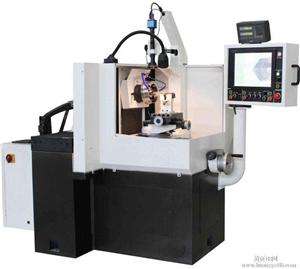
Let’s look at how businesses across different regions have benefited from choosing the right CNC diamond grinding machine and partnering with a knowledgeable supplier like NANTONG LUCUBRATE MACHINERY TECHNICAL LTD.
Case 1: Precision Tools Inc., Detroit, USA
This automotive tooling manufacturer struggled with inconsistent surface finish on carbide inserts, leading to a 5% scrap rate. After installing a LUCUBRATE CNC diamond grinding machine with in-process gauging and adaptive control, they reduced scrap to 0.5% and increased wheel life by 30%. “The machine’s thermal stability and automatic dressing have transformed our production,” says John Miller, Production Manager. “We now run lights-out operations with confidence.”
Case 2: CeramTech GmbH, Stuttgart, Germany
Specializing in advanced ceramic components for medical devices, CeramTech faced thermal damage and frequent wheel loading. LUCUBRATE provided a solution with high-pressure coolant and ELID technology, resulting in a 40% reduction in cycle time and elimination of thermal cracks. “Our yield improved from 85% to 98%,” notes Dr. Anna Schmidt, Technical Director. “The LUCUBRATE team’s expertise was invaluable.”
Case 3: Aero Precision Ltd., Bristol, UK
This aerospace supplier needed to grind nickel-based superalloy turbine blades with tight tolerances. The skill shortage made it difficult to maintain quality. LUCUBRATE’s machine with offline programming and simulation reduced programming time by 50% and enabled less experienced operators to achieve consistent results. “We’ve cut ramp-up time for new parts from days to hours,” says Sarah Collins, Manufacturing Engineer. “The intuitive control and remote support are game-changers.”
Case 4: ToolCraft Solutions, Toronto, Canada
A job shop serving the mold and die industry, ToolCraft was losing 20% of machine hours due to programming bottlenecks. After switching to a LUCUBRATE CNC diamond grinding machine with parametric programming and canned cycles, they increased machine utilization to 85% and reduced programming time by 60%. “Our operators love the simplicity, and our bottom line loves the results,” remarks Mike Johnson, Owner.
Case 5: Precision Ceramics SA, Barcelona, Spain
This manufacturer of ceramic seals for pumps struggled with wheel loading and frequent dressing. LUCUBRATE recommended a metal bond wheel with optimized coolant delivery, which extended wheel life by 50% and reduced dressing frequency by 70%. “We’ve slashed consumable costs and increased throughput,” says Carlos Mendoza, Operations Manager. “LUCUBRATE’s technical support is top-notch.”
Applications and Partnerships: Trusted by Industry Leaders
CNC diamond grinding machines from LUCUBRATE are deployed across a wide range of industries, including:
- Aerospace: Grinding turbine blades, fuel nozzles, and structural components made of superalloys and ceramics.
- Automotive: Precision grinding of carbide inserts, valve seats, and transmission parts.
- Medical: Manufacturing of ceramic implants, surgical instruments, and dental tools.
- Electronics: Dicing and grinding of semiconductor wafers and ceramic substrates.
- Energy: Grinding of seals and components for pumps and turbines.
Our partnerships with leading material suppliers and research institutions ensure that our machines are always at the forefront of technology. For instance, we collaborate with a major diamond wheel manufacturer to develop custom grinding solutions for demanding applications. Many of our customers, including Fortune 500 companies, rely on LUCUBRATE for their critical grinding needs. By choosing LUCUBRATE, you gain access to a network of expertise and a commitment to your success.
Frequently Asked Questions (FAQs)
Here are answers to questions we frequently hear from engineers and procurement managers.
1. What are the key specifications to consider when selecting a CNC diamond grinding machine for grinding tungsten carbide?
For tungsten carbide, focus on machine rigidity and thermal stability. A polymer concrete base and linear motors are ideal. Ensure the spindle offers high stiffness and sufficient power (typically 10-20 kW). Look for precise coolant delivery (high-pressure, through-spindle) and advanced dressing capabilities. Control systems with in-process gauging and adaptive control help maintain tolerances. Also, consider wheel bond type—resin bond wheels are common for carbide, but metal bond may be better for high-volume production.
2. How do I prevent thermal damage when grinding advanced ceramics?
Thermal damage can be mitigated by effective coolant application, low-stress grinding parameters, and continuous dressing. Use high-pressure coolant (70+ bar) directed at the grinding zone. Employ ELID or pulse dressing to keep the wheel sharp. Reduce depth of cut and increase table speed to minimize heat generation. In-process monitoring with acoustic emission or temperature sensors can provide early warning. Additionally, choose a machine with excellent thermal compensation to avoid dimensional drift.
3. What is the typical maintenance schedule for a CNC diamond grinding machine?
Daily: check coolant levels and concentration, clean filters, inspect wheel for damage. Weekly: check spindle runout, clean way covers, inspect seals. Monthly: change coolant if needed, check hydraulic system, calibrate probes. Annually: professional service including spindle inspection, ball screw lubrication, and control system backup. Always follow the manufacturer’s recommendations. LUCUBRATE machines feature remote diagnostics to alert you to potential issues before they cause downtime.
4. Can I retrofit an older grinding machine with modern CNC controls and features?
Yes, but it’s often more cost-effective to invest in a new machine with integrated features. Retrofitting can be complex and may not deliver the same performance due to mechanical limitations. However, for budget-conscious shops, a retrofit with a modern CNC and in-process gauging can improve accuracy and reduce skill dependence. Consult with the original manufacturer or a reputable retrofitter to assess feasibility. LUCUBRATE offers trade-in programs for old machines.
5. How does LUCUBRATE ensure spare parts availability and technical support?
LUCUBRATE maintains a global network of spare parts warehouses and service centers. We guarantee availability of critical parts for at least 10 years after machine delivery. Our technical support team is available 24/7 via phone or remote access. We also offer on-site training and preventive maintenance contracts. For urgent issues, we can often ship parts within 24 hours. Our commitment to customer success is reflected in our 98% customer satisfaction rating.
Conclusion: Your Path to Grinding Excellence
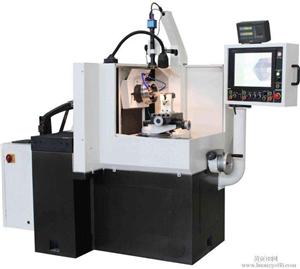
Choosing the right CNC diamond grinding machine is a critical decision that impacts quality, cost, and competitiveness. By understanding the pain points, leveraging advanced solutions, and learning from real-world success stories, you can make an informed choice. Remember, the machine is only part of the equation—partnering with a supplier who understands your application and provides ongoing support is equally important. NANTONG LUCUBRATE MACHINERY TECHNICAL LTD. stands ready to assist you. For a deeper dive into the technical aspects of CNC diamond grinding, download our comprehensive white paper, “Optimizing Diamond Grinding for Advanced Materials.” Or contact our sales engineers to discuss your specific requirements. Let us help you turn grinding challenges into a competitive advantage.