How to Choose Heavy Duty CNC Turning Lathe?
Imagine this: You're a production manager at a busy machine shop in Ohio. A critical batch of large, hardened steel shafts is due for delivery in two weeks. Your current lathe is struggling—vibration is causing chatter, tool life has plummeted, and downtime is eating into your profits. You need a heavy duty CNC turning lathe that can handle the tough jobs without breaking a sweat. But with so many options on the market, how do you choose the right one? In this blog, we'll cut through the noise and give you a practical guide to selecting a heavy duty CNC turning lathe that delivers reliability, precision, and ROI. We'll share insights from industry experts, real-world case studies, and technical know-how to help you make a confident decision.
Understanding Heavy Duty CNC Turning Lathes
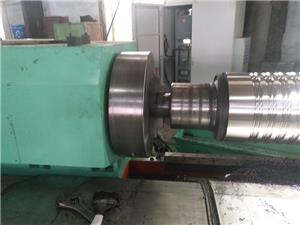
Before diving into selection criteria, let's clarify what makes a CNC turning lathe "heavy duty." These machines are engineered to handle large, heavy workpieces—often weighing several tons—and to take deep cuts in tough materials like alloy steel, cast iron, and exotic alloys. They feature robust castings, powerful spindle motors, heavy-duty guideways, and advanced thermal compensation. Unlike standard lathes, heavy duty models maintain accuracy and rigidity under extreme cutting forces, making them indispensable in industries like oil & gas, power generation, mining, and heavy machinery.
Common Pain Points in Heavy Duty Turning
From our conversations with machinists and production managers, we've identified three major pain points that plague heavy duty turning operations. Let's explore each in detail.
Pain Point 1: Vibration and Chatter Leading to Poor Surface Finish and Tool Breakage
When turning large, hard workpieces, vibration is the enemy. It causes chatter marks on the surface, accelerates tool wear, and can even lead to catastrophic tool breakage. The root causes are often insufficient machine rigidity, improper tooling, or inadequate workholding. The consequences are costly: scrapped parts, reduced tool life, and increased downtime for tool changes. In a high-volume shop, this can add up to thousands of dollars per month in lost productivity and consumables.
Pain Point 2: Thermal Growth and Dimensional Drift During Long Cycle Times
Heavy duty turning often involves long cycle times—sometimes hours per part. As the machine runs, heat generated by the spindle, ball screws, and cutting process causes thermal expansion. This leads to dimensional drift, where the first parts are within tolerance but later parts creep out of spec. For industries like aerospace or energy, where tolerances are tight and parts are expensive, this is unacceptable. Scrapping a large forging because of thermal growth can cost tens of thousands of dollars.
Pain Point 3: Spindle and Turret Reliability Under High Loads
Heavy duty turning demands high spindle torque and robust turret indexing. Many machines on the market claim heavy duty capabilities but fall short when pushed to their limits. Spindle bearings fail prematurely, turrets lose positioning accuracy, and hydraulic systems leak. The result is unplanned downtime, expensive repairs, and missed delivery deadlines. For a job shop, a single day of downtime can mean $10,000 or more in lost revenue.
Solutions: How to Overcome These Pain Points
Now that we've identified the problems, let's discuss solutions. The right heavy duty CNC turning lathe, combined with proper application engineering, can eliminate these pain points.
Solution for Vibration: Rigid Machine Design and Advanced Damping
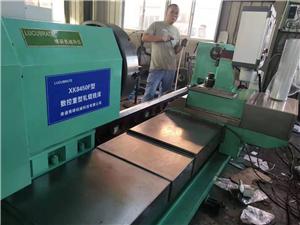
To combat vibration, look for a lathe with a heavily ribbed cast iron bed, box ways (or roller linear guides) with preload, and a robust spindle with large bearings. Some high-end machines feature active vibration damping systems or tuned mass dampers. Additionally, using the right tooling—such as anti-vibration boring bars and dynamically balanced chucks—is crucial. At NANTONG LUCUBRATE MACHINERY TECHNICAL LTD., we design our heavy duty lathes with a one-piece cast iron bed that weighs over 8 tons, providing exceptional rigidity. Our spindles use double-row cylindrical roller bearings for high radial stiffness.
Solution for Thermal Growth: Comprehensive Thermal Compensation
Modern heavy duty lathes should incorporate thermal compensation. This can be as simple as temperature sensors on critical components feeding data to the CNC, which automatically adjusts offsets. More advanced systems use finite element analysis to predict thermal deformation and compensate in real-time. When specifying a machine, ask about thermal stability testing and compensation algorithms. Our lathes at LUCUBRATE include a thermal growth compensation system that monitors spindle and ballscrew temperatures and adjusts axis positions accordingly, ensuring consistent accuracy from the first part to the last.
Solution for Spindle and Turret Reliability: Heavy Duty Components and Rigorous Testing
Don't be fooled by glossy brochures. Ask for mean time between failures (MTBF) data for spindles and turrets. Reputable manufacturers subject their components to accelerated life testing. Look for spindles with oil-air lubrication or grease lubrication for maintenance-free operation. Turrets should use curvic couplings for precise indexing and hydraulic clamping for rigidity. At LUCUBRATE, our spindles are assembled in a cleanroom and dynamically balanced to ISO 1940 G1.0. Our turrets are tested for 1 million index cycles before shipping. We also offer remote diagnostics to predict maintenance needs.
Real-World Case Studies
Let's see how these solutions have helped companies like yours.
Case Study 1: Oil & Gas Valve Manufacturer in Houston, Texas
John Richardson, Production Manager at Gulf Coast Valve, was facing frequent tool breakage when turning Inconel 718 valve bodies. After installing a LUCUBRATE heavy duty CNC lathe with a 12-station turret and high-pressure coolant, tool life increased by 40%, and cycle time dropped by 25%. "The rigidity of the machine is outstanding. We no longer worry about chatter, even with deep cuts," says Richardson.
Case Study 2: Wind Turbine Component Supplier in Bremerhaven, Germany
Anna Schmidt, Manufacturing Engineer at Nordwind Komponenten, struggled with thermal drift when machining large bearing rings. The company purchased a LUCUBRATE lathe with thermal compensation. Scrap rate fell from 8% to 1.5%, saving over €200,000 annually. "The thermal stability is impressive. We can run lights-out and still hold ±0.02 mm," Schmidt notes.
Case Study 3: Mining Equipment Repair Shop in Perth, Australia
Mike O'Connor, Owner of Outback Machining, needed a lathe to refurbish large crusher shafts. His old machine had a spindle failure every six months. Since switching to a LUCUBRATE heavy duty lathe with a 30 kW spindle and oil-air lubrication, he has run 24/7 for two years without a spindle issue. "This machine is a workhorse. It just keeps going," says O'Connor.
Case Study 4: Aerospace Forging Supplier in Toulouse, France
Pierre Dubois, Operations Director at AeroForge, required a lathe to machine titanium landing gear components. The LUCUBRATE lathe with a 1.5-meter swing and 6-ton capacity met the challenge. With a rigid box way design and a 15-station turret, they achieved a 30% reduction in cycle time and improved surface finish by 50%. "The precision and reliability are exactly what we need for aerospace," Dubois remarks.
Case Study 5: Steel Mill Roll Shop in Pittsburgh, Pennsylvania
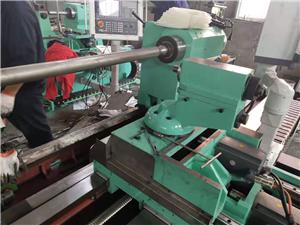
Dave Miller, Maintenance Supervisor at Mon Valley Steel, needed to turn worn mill rolls. The LUCUBRATE lathe with a 2-meter bed and 10-ton capacity allowed them to machine rolls in-house, saving $500,000 per year in outsourcing costs. "The machine paid for itself in 18 months," Miller states.
Applications and Partnerships
Heavy duty CNC turning lathes from LUCUBRATE are used in diverse applications:
- Oil & gas: valve bodies, drill collars, pipe threads
- Power generation: turbine rotors, generator shafts
- Mining: crusher shafts, mill liners
- Aerospace: landing gear, engine shafts
- Heavy machinery: hydraulic cylinders, gears
We are proud to partner with leading distributors and OEMs worldwide. For example, our lathes are specified by a major European machine tool distributor for their energy sector clients. In North America, we collaborate with a network of application engineers who provide local support. These partnerships ensure that customers receive not just a machine, but a complete solution.
Frequently Asked Questions
Q1: What is the maximum workpiece weight a heavy duty CNC lathe can handle?
A: It varies by model. Our standard heavy duty lathes handle workpieces up to 10 tons between centers, with custom solutions for up to 20 tons. The key is the headstock and tailstock design, as well as the bed rigidity. We recommend evaluating your heaviest workpiece and adding a safety margin.
Q2: How do you ensure accuracy over long production runs?
A: We use a combination of thermal compensation, rigid machine design, and high-resolution encoders. Our lathes undergo a 48-hour continuous cutting test to verify accuracy. Additionally, we offer optional in-process gauging for critical dimensions.
Q3: What type of tooling is best for heavy duty turning?
A: For roughing, use negative rake inserts with strong edge honing. For finishing, positive rake inserts with wiper geometry. Also consider high-pressure coolant (70+ bar) to break chips and cool the cutting zone. Our application engineers can recommend tooling packages.
Q4: How long does it take to get a custom heavy duty lathe?
A: Typical lead time is 6-9 months for custom configurations. Standard models may be available in 3-4 months. We work closely with you during the design phase to ensure the machine meets your specific needs.
Q5: What kind of support do you offer after the sale?
A: We provide installation, training, and 24/7 remote support. Our global service network ensures spare parts availability within 48 hours. We also offer preventive maintenance contracts to maximize uptime.
Conclusion and Call to Action
Choosing the right heavy duty CNC turning lathe is a critical decision that impacts your productivity, quality, and bottom line. By understanding the pain points and focusing on rigidity, thermal stability, and component reliability, you can select a machine that delivers years of dependable service. At NANTONG LUCUBRATE MACHINERY TECHNICAL LTD., we specialize in building heavy duty lathes that meet the demands of the toughest industries. Our customers' success stories speak for themselves. To learn more, download our technical white paper on heavy duty turning solutions or contact our sales engineers for a personalized consultation. Let us help you turn challenges into opportunities.