How to Choose the Right Diamond Grinding Wheel?
Imagine you're on a factory floor, the hum of machinery around you, and you've just received a batch of precision components that need to be ground to tolerances of ±0.005 mm. You reach for your diamond grinding wheel, confident in its ability to deliver. But after a few passes, you notice burn marks on the workpiece, and the wheel's edge is already glazing. The deadline is looming, and you're facing rework, scrap, and a frustrated team. This scenario is all too common in industries relying on diamond grinding wheels. The question 'How to choose the right diamond grinding wheel?' isn't just academic—it's a make-or-break decision that impacts quality, cost, and productivity. In this blog, we'll cut through the noise and give you a practical, expert-backed guide to selecting the optimal diamond grinding wheel for your application. We'll explore the pain points, solutions, real-world cases, and answer your burning questions. Let's dive in.
Why Choosing the Wrong Diamond Grinding Wheel Hurts
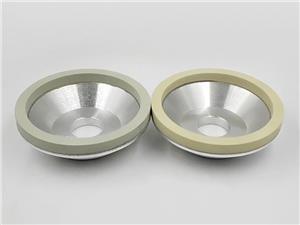
Diamond grinding wheels are not one-size-fits-all. They consist of diamond abrasives held in a bond matrix, and the choice of diamond, bond, concentration, and wheel design dramatically affects performance. Selecting incorrectly leads to several costly pain points. Here are three common scenarios:
Pain Point 1: Wheel Glazing and Loading on Ductile Materials
When grinding ductile materials like stainless steel or certain superalloys, the wrong wheel can quickly glaze over—the diamond grits become dull and the bond doesn't wear away to expose fresh diamonds. The wheel then rubs instead of cuts, generating excessive heat. This leads to workpiece burn, microcracks, and poor surface finish. The cost? Scrapped parts can run into thousands of dollars per batch, not to mention the downtime for wheel dressing and machine resetting. In high-volume operations, this can slash throughput by up to 30%.
Pain Point 2: Rapid Wheel Wear and Poor Form Retention
In precision form grinding, such as on carbide inserts or ceramic components, using a wheel with inadequate bond strength or improper concentration results in rapid wear. The wheel loses its profile quickly, leading to out-of-tolerance parts. Frequent wheel changes and dressing cycles increase labor costs and reduce machine utilization. A typical case: a manufacturer of automotive fuel injectors found that their wheels lasted only 200 parts instead of the expected 1,000, driving up cost per part by 40%.
Pain Point 3: Thermal Damage and Subsurface Integrity
For heat-sensitive materials like titanium alloys used in aerospace, the wrong diamond wheel can cause thermal damage, leading to fatigue failure. The wheel's bond and grit size influence heat generation. If not optimized, you risk violating aerospace standards like AMS 5882, resulting in rejected batches and potential safety recalls. The financial impact can be catastrophic, with rework and liability costs far exceeding the wheel's price.
Solutions: How to Select the Right Diamond Grinding Wheel
Addressing these pain points requires a systematic approach. Here's how to match wheel specifications to your application.
Solution for Glazing and Loading: Choose the Right Bond and Concentration
For ductile materials, a softer bond (e.g., resin or vitrified) allows the wheel to self-sharpen, preventing glazing. Higher diamond concentration (e.g., 100-125) provides more cutting points. Additionally, using coated diamonds (e.g., nickel-coated) improves retention and heat dissipation. For stainless steel, a resin-bonded wheel with 100 concentration and 120 grit often works well. Regular dressing with a silicon carbide stick maintains sharpness.
Solution for Rapid Wear: Optimize Bond Strength and Diamond Quality
For form grinding, a harder bond (e.g., metal bond) with high-quality, blocky diamonds ensures form retention. Concentration should be balanced—too high can cause loading, too low reduces life. For carbide, a metal-bonded wheel with 125 concentration and 150 grit is typical. Also, consider hybrid bonds that offer both wear resistance and free-cutting ability. NANTONG LUCUBRATE MACHINERY TECHNICAL LTD. offers custom bond formulations to match specific wear patterns.
Solution for Thermal Damage: Control Heat with Grit Size and Speed
For heat-sensitive alloys, use finer grit sizes (e.g., 220-400) and lower wheel speeds to reduce heat generation. A resin bond with good thermal conductivity or a vitrified bond with porous structure helps. Also, ensure adequate coolant delivery. In titanium grinding, a wheel with 220 grit, 75 concentration, and resin bond, operated at 20 m/s, can minimize thermal damage.
To summarize, here's a comparison table for quick reference:
| Application | Material | Recommended Bond | Diamond Concentration | Grit Size | Key Benefit |
|---|---|---|---|---|---|
| Ductile materials | Stainless steel | Resin | 100 | 120 | Prevents glazing |
| Form grinding | Carbide | Metal | 125 | 150 | Form retention |
| Heat-sensitive | Titanium | Resin/Vitrified | 75 | 220 | Reduces thermal damage |
Real-World Success Stories
Let's look at how companies have benefited from proper wheel selection with NANTONG LUCUBRATE MACHINERY TECHNICAL LTD.
Case 1: Precision Medical Components in Germany
Müller Medizintechnik, a manufacturer of surgical instruments in Tuttlingen, Germany, struggled with burrs and thermal damage when grinding stainless steel. They switched to a resin-bonded diamond wheel with 100 concentration and 120 grit from LUCUBRATE. Result: scrap rate dropped from 8% to 1.5%, and surface finish improved to Ra 0.2 µm. "The technical support from LUCUBRATE helped us fine-tune the wheel, and our production efficiency increased by 25%," said Dr. Hans Müller, Production Manager.
Case 2: Automotive Fuel Injectors in the USA
MotorTech Components in Detroit, USA, faced rapid wheel wear when grinding carbide fuel injector bodies. LUCUBRATE recommended a metal-bonded wheel with 125 concentration and 150 grit. Wheel life increased from 200 to 1,200 parts per wheel, reducing cost per part by 35%. "We've cut downtime significantly and our operators are thrilled," commented Sarah Johnson, Plant Manager.
Case 3: Aerospace Turbine Blades in France
Safran Aero Engines in Paris used diamond wheels for grinding nickel-based superalloy turbine blades. Thermal damage was causing rejections. LUCUBRATE supplied a vitrified-bonded wheel with 75 concentration and 220 grit, along with optimized coolant. Rejection rate fell from 12% to 2%, and cycle time reduced by 15%. "Their expertise in bond selection was invaluable," said Pierre Dubois, Manufacturing Engineer.
Case 4: Ceramic Tiles in Italy
Sassuolo Ceramics in Modena, Italy, needed to improve edge quality on ceramic tiles. Using a resin-bonded wheel with 100 concentration and 180 grit, they achieved sharper edges and 20% faster grinding. "LUCUBRATE's wheel outperformed our previous supplier by a wide margin," noted Marco Rossi, Operations Director.
Case 5: Cutting Tools in Japan
Kyoto Tooling Co. in Kyoto, Japan, manufactures carbide end mills. They required wheels that maintain form for complex flutes. LUCUBRATE provided a metal-bonded wheel with 125 concentration and 200 grit, resulting in 30% longer wheel life and improved tool consistency. "We rely on LUCUBRATE for their consistent quality," said Takashi Yamamoto, CEO.
Applications and Partnerships
Diamond grinding wheels from NANTONG LUCUBRATE MACHINERY TECHNICAL LTD. are used across diverse industries:
- Aerospace: Grinding turbine blades, landing gear components, and precision bearings.
- Automotive: Fuel injectors, transmission parts, and engine valves.
- Medical: Surgical instruments, implants, and dental tools.
- Electronics: Semiconductor wafers, ceramic substrates, and magnetic heads.
- Tooling: Carbide inserts, drills, and end mills.
We are proud to partner with leading distributors and OEMs globally. For instance, our wheels are specified by a major European machine tool builder for their precision grinding centers. In North America, we supply through a network of authorized distributors who value our technical support. These partnerships are built on consistent quality and innovation, ensuring that our customers receive the right wheel for their needs.
Frequently Asked Questions
1. How do I determine the right diamond concentration for my application?
Concentration affects wheel life and cutting efficiency. For general purpose, 100-125 is common. For form grinding, higher concentration (125-150) improves form retention. For heat-sensitive materials, lower concentration (75) reduces heat. However, it's best to consult with a technical expert who can consider your specific material, machine, and quality requirements. LUCUBRATE offers free application analysis.
2. Can diamond grinding wheels be used on stainless steel?
Yes, but with caution. Diamond wheels can grind stainless steel, but they tend to load and glaze due to the material's ductility. Using a softer bond (resin) and proper coolant is essential. Also, regular dressing is needed. For high-volume stainless steel grinding, cubic boron nitride (CBN) wheels might be more economical, but diamond wheels can be effective with the right specifications.
3. What is the difference between resin and metal bond diamond wheels?
Resin bonds are softer, offer better self-sharpening, and are ideal for ductile materials and fine finishes. Metal bonds are harder, provide better form retention, and are suitable for hard materials like carbide and ceramics. Metal bonds also handle higher temperatures but require more frequent dressing. The choice depends on your material and precision needs.
4. How often should I dress a diamond grinding wheel?
Dressing frequency depends on the wheel bond, material, and grinding parameters. Resin-bonded wheels may need dressing every few cycles, while metal-bonded wheels can go longer. Monitor for signs of glazing, loading, or increased grinding forces. A good practice is to dress when surface finish deteriorates or when wheel profile deviates beyond tolerance. Using a proper dressing tool and parameters is crucial.
5. Can you customize diamond wheels for specific applications?
Absolutely. NANTONG LUCUBRATE MACHINERY TECHNICAL LTD. specializes in custom-engineered diamond grinding wheels. We can adjust diamond type, grit size, concentration, bond, and wheel geometry to meet your exact requirements. Our engineers work closely with you to analyze your process and recommend the optimal solution. Contact us for a consultation.
Conclusion and Call to Action
Choosing the right diamond grinding wheel is critical to achieving precision, efficiency, and cost-effectiveness. By understanding your material, application, and the trade-offs between bond, concentration, and grit, you can avoid common pitfalls. NANTONG LUCUBRATE MACHINERY TECHNICAL LTD. is your trusted partner in this journey, offering not just products but also technical expertise and customized solutions. We invite you to download our comprehensive technical white paper on diamond wheel selection or contact our sales engineers for a personalized consultation. Don't let wheel selection be a gamble—make it a science. Reach out today and let's optimize your grinding process together.