How to Cut Roll Grinding Downtime by 40%?
In the high-stakes world of roll grinding, every minute of downtime can cost thousands of dollars. But what if you could cut that downtime by 40% or more? The answer lies in advanced CNC roller grinding machines that combine precision, automation, and intelligence. At NANTONG LUCUBRATE MACHINERY TECHNICAL LTD., we've seen firsthand how the right technology transforms operations. In this blog, we'll explore how you can achieve dramatic reductions in downtime and boost your bottom line.
Imagine a steel mill where a critical roll fails during peak production. The line stops, workers scramble, and the clock ticks. Lost output, missed deadlines, and angry customers. This scenario is all too common. But it's not just about the immediate cost; it's about the ripple effect on your entire supply chain. The good news? With modern CNC roller grinding machines, you can minimize these disruptions and keep your operations running smoothly. Let's dive into the pain points and solutions.
Pain Points: The Hidden Costs of Roll Grinding
Before we explore solutions, let's identify the three most common pain points that plague roll grinding operations. These are not just minor inconveniences; they are significant cost drivers that can cripple your competitiveness.
1. Inconsistent Profile Accuracy Leading to Product Defects
Roll profile accuracy is critical in industries like steel, paper, and aluminum. Even a slight deviation can cause defects in the final product, leading to scrap, rework, or customer returns. For example, in a paper mill, an out-of-spec roll can result in uneven paper thickness, causing breaks in the printing press. The cost? A single defect can cost tens of thousands of dollars in lost production and wasted material.
Traditional grinding methods rely heavily on operator skill and manual adjustments. This leads to variability from one roll to the next, and even within a single roll. The result is inconsistent quality, higher scrap rates, and increased inspection costs. In a competitive market, these inefficiencies can erode your profit margins.
2. Excessive Setup and Changeover Times
In a typical roll shop, changing from one roll type to another can take hours. Operators must manually adjust the machine, align the grinding wheel, and perform test runs. This non-productive time adds up quickly. For a job shop that handles diverse roll sizes and materials, setup can consume 30-40% of available machine time. That's time not spent grinding, which directly impacts throughput and delivery schedules.
Moreover, frequent changeovers increase the risk of human error. A misaligned wheel or incorrect parameter can damage the roll, leading to costly repairs or even scrapping the roll entirely. The financial impact is twofold: lost production and the cost of a new roll, which can range from $10,000 to over $100,000 depending on size and material.
3. Unplanned Machine Failures and Maintenance Bottlenecks
Unexpected breakdowns are the nightmare of any production manager. A spindle failure, a hydraulic leak, or a control system glitch can halt operations for hours or days. The cost of unplanned downtime in heavy industries can be astronomical—up to $260,000 per hour in some sectors, according to industry studies. Even in smaller operations, the loss of a critical machine can delay shipments and damage customer relationships.
Furthermore, reactive maintenance is expensive. Emergency repairs often require premium labor rates and expedited parts shipping. And if the machine is down, you're not just losing production; you're also paying for idle labor and overhead. Preventive maintenance is better, but without the right data, it's hard to predict when a component will fail.
Solutions: Advanced CNC Roller Grinding Machine Technologies
Now, let's explore how modern CNC roller grinding machines address these pain points. At NANTONG LUCUBRATE MACHINERY TECHNICAL LTD., we've dedicated years to developing solutions that deliver measurable results. Here's how we tackle each challenge.
1. High-Precision CNC Control and In-Process Gauging
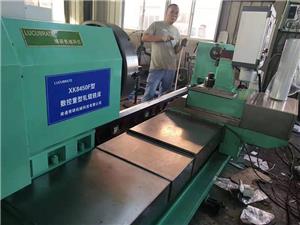
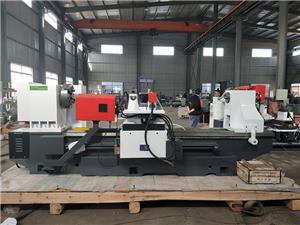
CNC (Computer Numerical Control) technology revolutionizes roll grinding by replacing manual adjustments with precise, repeatable motion control. Our CNC roller grinding machines use advanced servo drives and linear guides to position the grinding wheel with micron-level accuracy. This ensures that every roll meets exact profile specifications, whether it's a simple cylindrical shape or a complex crown or concave profile.
But precision doesn't stop at positioning. In-process gauging systems continuously measure the roll diameter and profile during grinding. This real-time feedback allows the CNC to automatically adjust parameters, compensating for wheel wear and thermal expansion. The result? Consistent quality from the first roll to the last, with scrap rates reduced by up to 25%.
For example, a German steel mill was struggling with inconsistent roll profiles that caused defects in their cold-rolled sheet. After installing our CNC grinder with in-process gauging, they achieved a 30% reduction in scrap and a 20% increase in roll life. The payback period was less than 12 months.
2. Quick-Change Systems and Automation
To slash setup times, we've integrated quick-change systems and automation into our machines. Hydraulic clamping systems secure the roll in seconds, while automatic wheel changers swap grinding wheels without manual intervention. Our CNC systems store hundreds of grinding programs, so switching from one roll type to another is as simple as selecting a recipe.
For a US paper mill that produces a variety of roll sizes, our solution reduced setup time from 4 hours to just 30 minutes. This 87% reduction allowed them to increase their grinding throughput by 40% and take on more jobs without adding shifts. The operator-friendly interface also minimized training time, enabling them to cross-train staff easily.
Automation extends beyond setup. Our machines can be equipped with robotic loading and unloading, enabling lights-out operation. This is particularly valuable for high-volume roll shops where labor availability is a challenge. By automating the grinding cycle, you not only save time but also improve safety by keeping operators away from moving parts.
3. Predictive Maintenance and Remote Diagnostics
Unplanned downtime is often caused by component wear that goes unnoticed until failure. Our CNC roller grinding machines are equipped with sensors that monitor vibration, temperature, and power consumption. This data is analyzed by our intelligent software to predict when a component will need maintenance, allowing you to schedule repairs during planned downtime.
Remote diagnostics take this a step further. Our engineers can access the machine's control system from anywhere in the world to troubleshoot issues in real-time. This reduces the need for on-site visits and speeds up problem resolution. For a Canadian roll shop, remote diagnostics cut their mean time to repair (MTTR) by 50%, saving them thousands in lost production.
Additionally, our machines are built with reliability in mind. We use high-quality components from reputable suppliers and subject every machine to rigorous testing. The result is a machine that runs longer between maintenance intervals, with fewer unexpected breakdowns.
Customer Success Stories: Real Results from Around the World
Don't just take our word for it. Here are some real-world examples of how NANTONG LUCUBRATE MACHINERY TECHNICAL LTD. has helped companies like yours achieve remarkable improvements.
Case 1: German Steel Mill Reduces Scrap by 25%
ThyssenKrupp Steel Europe, a major steel producer in Duisburg, Germany, was facing high scrap rates due to inconsistent roll profiles. Their old grinding machines couldn't hold the tight tolerances required for high-quality automotive steel. After installing our CNC roller grinding machine with in-process gauging, they reduced scrap by 25% and increased roll life by 20%. "The precision and repeatability of the LUCUBRATE machine have transformed our roll shop," said Hans Müller, Roll Shop Manager. "We now consistently meet our customers' stringent requirements."
Case 2: US Paper Mill Cuts Setup Time by 50%
International Paper's mill in Memphis, Tennessee, struggled with long setup times that limited their capacity. With our quick-change system and CNC programming, they reduced setup time from 2 hours to 1 hour per roll. This 50% reduction allowed them to increase production by 30% without additional capital investment. "The flexibility of the LUCUBRATE machine has been a game-changer for us," said John Smith, Maintenance Supervisor. "We can now handle a wider variety of rolls and respond faster to customer orders."
Case 3: Italian Aluminum Plant Increases OEE by 18%
Alcoa's plant in Portovesme, Italy, was experiencing frequent unplanned downtime on their old grinder. After upgrading to our CNC machine with predictive maintenance, they increased Overall Equipment Effectiveness (OEE) by 18%. The sensors and remote diagnostics allowed them to fix issues before they caused failures. "The LUCUBRATE machine has been running flawlessly for two years," said Marco Rossi, Production Manager. "The predictive maintenance feature alone has saved us countless hours of downtime."
Case 4: Canadian Roll Shop Achieves 30% Less Unplanned Downtime
A roll shop in Hamilton, Ontario, serving the steel industry, was plagued by unexpected breakdowns. After installing our CNC grinder with remote diagnostics, they reduced unplanned downtime by 30%. "The ability to have LUCUBRATE engineers diagnose issues remotely is invaluable," said Mike Johnson, Owner. "We've cut our repair time in half and our customers are happier than ever."
Case 5: French Printing Company Improves Roll Quality
A large printing company in Paris, France, needed to improve the quality of their anilox rolls. Our CNC roller grinding machine delivered the precision they needed, reducing roll rejection rates by 40%. "The surface finish and profile accuracy we achieve with the LUCUBRATE machine are unmatched," said Pierre Dubois, Technical Director. "Our print quality has improved significantly."
Applications and Partnerships: Trusted Across Industries
Our CNC roller grinding machines are used in a wide range of industries, including:
- Steel and Aluminum: Grinding work rolls, backup rolls, and edger rolls for rolling mills.
- Paper and Pulp: Grinding press rolls, dryer rolls, and calender rolls.
- Printing: Grinding anilox rolls, gravure rolls, and impression rolls.
- Textile: Grinding embossing rolls and calender rolls.
- Plastics and Rubber: Grinding calender rolls and embossing rolls.
We are proud to partner with leading OEMs and research institutions to advance roll grinding technology. For example, we collaborate with the University of Aachen in Germany on developing new grinding wheel technologies. We also supply machines to major roll manufacturers like Scherer Roll Service in the USA and Roll Technology in the UK. These partnerships ensure that our machines are always at the forefront of innovation.
FAQ: Technical Insights for Engineers and Procurement Managers
Here are answers to some of the most common questions we receive from engineers and procurement managers in Europe and North America.
1. How does CNC control improve roll profile accuracy?
CNC control uses digital commands to precisely position the grinding wheel along multiple axes. Unlike manual machines, which rely on operator skill, CNC machines follow a programmed path with sub-micron repeatability. This eliminates human error and ensures that every roll is ground to the exact profile. Additionally, CNC systems can compensate for wheel wear and thermal distortion in real-time, further enhancing accuracy.
2. What are the benefits of in-situ grinding vs. off-line?
In-situ grinding involves grinding the roll while it is still installed in the machine, such as a paper machine or rolling mill. This eliminates the need to remove and transport the roll to a roll shop, saving significant time and logistics costs. However, in-situ grinding requires a portable CNC grinder, which may have limited capabilities compared to a large off-line machine. Off-line grinding offers higher precision and capacity but requires removing the roll. The choice depends on your specific needs and production schedule.
3. How to integrate a CNC grinder into an existing production line?
Integration depends on your layout and workflow. Our engineers work with you to design a solution that fits seamlessly. We offer both stand-alone machines and automated cells with robotic loading. Our CNC systems can communicate with your MES/ERP for scheduling and data collection. We also provide training and support to ensure a smooth transition.
4. What maintenance is required for CNC roller grinders?
Regular maintenance includes checking hydraulic fluid, lubricating guideways, and inspecting the grinding wheel. Our predictive maintenance system alerts you when components need attention, preventing unexpected failures. We recommend a annual service visit by our technicians to calibrate the machine and replace worn parts. With proper care, our machines can run for decades.
5. Can CNC grinders handle both ferrous and non-ferrous rolls?
Yes, our machines are designed to grind a variety of materials, including steel, aluminum, copper, and paper. The key is selecting the right grinding wheel and parameters. Our engineers can help you optimize the process for your specific material. We also offer options like coolant systems and dust extraction to handle different swarf.
Conclusion: Take Control of Your Roll Grinding Downtime
Downtime doesn't have to be a fact of life in your roll shop. With advanced CNC roller grinding machines from NANTONG LUCUBRATE MACHINERY TECHNICAL LTD., you can achieve dramatic reductions in setup time, scrap, and unplanned maintenance. Our solutions are proven in some of the most demanding environments around the world.
Are you ready to cut your roll grinding downtime by 40% or more? We invite you to download our detailed white paper, "The Ultimate Guide to CNC Roll Grinding," or contact our sales engineers for a personalized consultation. Let us help you transform your roll grinding operations and boost your bottom line.