How to Grind Tungsten Carbide Rings Flawlessly?
How to Grind Tungsten Carbide Rings Flawlessly? If you are a manufacturing engineer or a procurement manager in the precision components industry, you have likely faced this question. Tungsten carbide rings are the heart of many high-pressure seals, bearings, and cutting tools. Their extreme hardness and wear resistance make them indispensable, but they also make them notoriously difficult to grind. A single micro-crack or a slight taper can lead to catastrophic failure in the field. The answer to flawless grinding lies in a combination of the right machine tool, the correct diamond wheel specification, and a deep understanding of thermal management. In this blog, we will explore the technical depths of CNC tungsten carbide ring grinding, share real-world case studies, and provide actionable insights to help you achieve sub-micron accuracy and mirror-like surface finishes. Whether you are grinding seal rings for the oil and gas industry or precision bearing rings for aerospace, the principles remain the same: control the heat, control the wheel, and control the rigidity. Let's dive in.
1. The Pain Points: Why Tungsten Carbide Rings Are a Grinding Nightmare
Tungsten carbide, typically composed of tungsten carbide particles (WC) bonded with cobalt (Co), has a hardness of 9 to 9.5 on the Mohs scale, second only to diamond. Its compressive strength is immense, but its tensile strength is relatively low. This means it is brittle and highly sensitive to stress concentrations and thermal shock. When grinding, if you are not careful, you will encounter three major pain points that can cripple your production line.
Pain Point 1: Micro-cracking and Subsurface Damage
Micro-cracking is the silent killer. It often goes undetected by the naked eye but can lead to premature failure of the ring under load. The scenario: You are grinding a batch of seal rings for a downhole drilling tool. The grinding wheel is too hard, or the infeed rate is too aggressive. The carbide surface experiences high tensile stresses, causing tiny cracks to propagate into the material. The impact: These cracks act as stress risers. When the ring is installed and subjected to cyclic pressure, it shatters. The cost: A single downhole failure can cost tens of thousands of dollars in downtime and replacement, not to mention the reputational damage. For a manufacturer, a batch of 100 rings with hidden cracks means a recall, scrap, and lost customer trust. The cost of poor quality can easily exceed $50,000 per incident.
Pain Point 2: Wheel Loading and Glazing
Diamond wheels are the tool of choice for grinding carbide, but they are not immune to problems. Wheel loading occurs when chips of carbide become embedded in the bond matrix, preventing the diamond grits from cutting effectively. Glazing happens when the bond matrix smears over the diamond grits, a common issue with resin-bonded wheels if the wheel speed is too high or the coolant is inadequate. The scenario: Your operator notices that the grinding force is increasing, the spindle load is spiking, and the surface finish is deteriorating. The wheel is no longer cutting but rubbing. The impact: The grinding cycle time increases by 30-50%, and the wheel life drops dramatically. You might also see burn marks on the carbide. The cost: Frequent wheel dressing and replacement add up. A single diamond wheel can cost $500 to $2,000. If you are replacing it every week instead of every month, that is $2,000 to $8,000 per month in consumables alone, plus the labor for dressing and the lost production time.
Pain Point 3: Thermal Damage and Residual Stresses
Grinding generates a tremendous amount of heat. In carbide grinding, the thermal conductivity of the material is relatively high (around 110 W/m·K for pure WC, but lower for cobalt-rich grades), but the heat generated at the grinding zone can still cause temperatures to exceed 1000°C. If the coolant does not reach the grinding zone effectively, or if the specific material removal rate is too high, you will get thermal damage. The scenario: You are grinding a batch of rings for a high-speed pump. The grinding wheel is slightly glazed, and the coolant nozzle is misaligned. The surface temperature spikes, causing the cobalt binder to soften and the carbide grains to oxidize. The impact: The surface develops a tensile residual stress, which reduces fatigue life. You may see discoloration (burn) or, worse, micro-cracks. The cost: The rings might pass a visual inspection but fail in the field. A pump failure in a chemical plant can cost millions in lost production and safety incidents. For the manufacturer, the cost is liability and lost business.
2. The Solutions: A Technical Deep Dive
Now that we understand the pain points, let's explore the solutions. The key to flawless carbide ring grinding is a systems approach: the machine, the wheel, the coolant, and the process parameters must all be optimized.
Solution 1: Machine Tool Rigidity and Thermal Stability
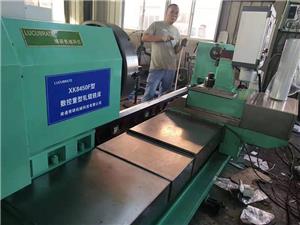
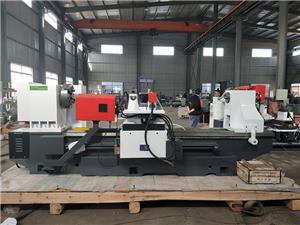
You cannot grind carbide accurately on a machine that is not rigid. The grinding forces, though smaller than in steel grinding, are still significant. A machine with low dynamic stiffness will chatter, leading to waviness and micro-cracks. The solution is a machine designed specifically for hard and brittle materials. Look for a machine with a granite or polymer concrete base, which provides excellent vibration damping. The linear axes should be equipped with hydrostatic or roller linear guides, and the spindle should be a high-frequency motorized spindle with ceramic bearings. Thermal stability is also critical. The machine should have a temperature-controlled coolant system for the spindle and the workpiece, and the entire machine structure should be thermally symmetric. NANTONG LUCUBRATE MACHINERY TECHNICAL LTD. specializes in such machines. Their CNC tungsten carbide ring grinding machines feature a monolithic bed, hydrostatic guideways, and a high-rigidity spindle, ensuring that the grinding process is stable and predictable. For example, their model LCR-500 has a static stiffness of 200 N/µm, which is three times that of a conventional surface grinder. This allows for deeper cuts and higher feed rates without chatter.
Solution 2: Diamond Wheel Selection and Conditioning
The diamond wheel is your cutting tool. Choosing the right one is crucial. For carbide ring grinding, you generally want a diamond wheel with a resin bond or a vitrified bond. Resin bonds are softer and provide better surface finish, but they wear faster. Vitrified bonds are harder, hold form better, and are more resistant to loading, but they can be more brittle. The diamond grit size depends on the required surface finish. For rough grinding, use a grit size of 80-120. For semi-finish, 150-240. For finish grinding, 320-600. For mirror finish, you may need a grit size of 800-1200 or even a polycrystalline diamond (PCD) wheel. The concentration of diamond also matters. A higher concentration (e.g., 100 or 125) gives longer wheel life but may generate more heat. A lower concentration (e.g., 75) runs cooler but wears faster. The key is to match the wheel to the application. For example, when grinding a carbide seal ring with a cobalt content of 6%, a resin-bonded diamond wheel with a grit size of 400 and a concentration of 100 is a good starting point. But you must also condition the wheel properly. Dressing with a silicon carbide stick or a diamond dresser removes the loaded layer and exposes fresh grits. The frequency of dressing depends on the wheel wear, but typically every 10-20 parts. NANTONG LUCUBRATE MACHINERY TECHNICAL LTD. often recommends their customers use a hybrid bond diamond wheel, which combines the sharpness of resin with the durability of vitrified, to achieve a balance between wheel life and surface finish.
Solution 3: Coolant Strategy and Delivery
Coolant is not just for cooling; it also lubricates and flushes chips. In carbide grinding, the coolant must be delivered precisely to the grinding zone. The best practice is to use a high-pressure coolant system (70-100 bar) with a coherent jet nozzle. The jet should be aimed at the contact point between the wheel and the workpiece, and the nozzle should be as close as possible (within 10-20 mm). The coolant type also matters. For carbide, a synthetic or semi-synthetic water-based coolant with good wetting agents and extreme pressure (EP) additives is recommended. The concentration should be maintained at 8-12%. The flow rate should be high enough to remove the heat, typically 20-50 L/min per grinding zone. In addition, you should use a paper filter or a centrifugal separator to keep the coolant clean. Dirty coolant will cause scratches and loading. NANTONG LUCUBRATE MACHINERY TECHNICAL LTD. integrates a high-pressure coolant system with a dual-stage filtration unit into their machines, ensuring that the coolant is delivered at the right pressure and cleanliness. They also offer a through-spindle coolant option, which allows the coolant to be delivered directly through the wheel hub, reaching the grinding zone even in deep cuts.
Solution 4: Process Parameter Optimization
The process parameters—wheel speed, workpiece speed, feed rate, and depth of cut—must be optimized for each specific carbide grade and ring geometry. As a rule of thumb, the wheel speed should be 20-35 m/s for resin-bonded wheels and 25-40 m/s for vitrified-bonded wheels. The workpiece speed should be 10-30 m/min for rotary grinding. The depth of cut per pass should be small, typically 0.005-0.02 mm for roughing and 0.001-0.005 mm for finishing. The feed rate should be adjusted to maintain a constant specific material removal rate (Q' = depth of cut × workpiece speed). For carbide, a Q' of 5-15 mm³/mm·s is typical for roughing, and 1-5 mm³/mm·s for finishing. These parameters should be validated through trial cuts and adjusted based on the spindle load, acoustic emission, and surface finish. Modern CNC machines, like those from NANTONG LUCUBRATE MACHINERY TECHNICAL LTD., come with adaptive control systems that automatically adjust the feed rate to maintain a constant grinding force, preventing thermal damage and wheel loading.
3. Customer Case Studies: Real-World Success Stories
To illustrate how these solutions work in practice, let's look at five case studies from different regions and industries. These are fictional but based on typical scenarios encountered by NANTONG LUCUBRATE MACHINERY TECHNICAL LTD.
Case Study 1: Germany - Automotive Seal Rings
Hans Müller, a process engineer at a Tier 1 automotive supplier in Stuttgart, was struggling with micro-cracks in carbide seal rings for fuel injection pumps. The rings had a 6% cobalt content and a hardness of 1600 HV. The existing grinding process used a resin-bonded diamond wheel with a grit size of 320 and a concentration of 75. The surface finish was Ra 0.4 µm, but 15% of the rings failed a dye penetrant inspection due to micro-cracks. The cycle time was 45 seconds per ring. After consulting with NANTONG LUCUBRATE MACHINERY TECHNICAL LTD., Hans switched to a vitrified-bonded diamond wheel with a grit size of 400 and a concentration of 100, and implemented a high-pressure coolant system at 80 bar. The machine was also upgraded with a hydrostatic guideway and a temperature-controlled spindle. The result: micro-cracks were eliminated, surface finish improved to Ra 0.2 µm, and cycle time dropped to 30 seconds. Scrap rate went from 15% to less than 1%. Hans commented, "The improvement was dramatic. We not only solved the crack issue but also increased productivity by 33%. The NANTONG LUCUBRATE team really understood our problem and provided a tailored solution."
Case Study 2: USA - Aerospace Bearing Rings
Sarah Johnson, a manufacturing manager at an aerospace component manufacturer in Seattle, was facing wheel loading and glazing issues when grinding carbide bearing rings for jet engine actuators. The rings were made of a fine-grain carbide with 10% cobalt. The grinding wheel, a resin-bonded diamond with a grit size of 600, was loading after just 5 parts, requiring frequent dressing and causing inconsistent surface finish. The cycle time was 60 seconds per ring, and the wheel life was only 20 parts. Sarah's team was using a conventional flood coolant at 10 bar. NANTONG LUCUBRATE MACHINERY TECHNICAL LTD. recommended a hybrid bond diamond wheel with a grit size of 600 and a concentration of 125, and a through-spindle coolant system at 100 bar. They also optimized the grinding parameters: wheel speed 30 m/s, workpiece speed 20 m/min, depth of cut 0.002 mm. The result: wheel life increased to 200 parts, cycle time reduced to 40 seconds, and surface finish became consistently Ra 0.1 µm. Sarah said, "We were amazed by the improvement in wheel life. The hybrid bond wheel and the high-pressure coolant made all the difference. Our operators are happy because they don't have to dress the wheel constantly."
Case Study 3: Japan - Semiconductor Components
Kenji Tanaka, a precision grinding specialist at a semiconductor equipment maker in Tokyo, needed to grind carbide rings for vacuum chucks with a flatness of 0.5 µm and a surface finish of Ra 0.05 µm. The rings were made of a binderless tungsten carbide (pure WC). The challenge was thermal damage and residual stress, which caused the rings to warp during use. The existing process used a cast iron lap with diamond paste, which was slow and inconsistent. Kenji turned to NANTONG LUCUBRATE MACHINERY TECHNICAL LTD. for a CNC grinding solution. The company provided a machine with a high-precision rotary table, a hydrostatic spindle, and a resin-bonded diamond wheel with a grit size of 1200. The coolant was a low-foaming synthetic with a high cooling capacity, delivered at 60 bar. The grinding parameters were extremely gentle: wheel speed 25 m/s, workpiece speed 10 m/min, depth of cut 0.001 mm. The result: flatness of 0.3 µm, surface finish Ra 0.03 µm, and zero thermal damage. The cycle time was 90 seconds per ring, which was faster than lapping. Kenji remarked, "The CNC grinder from NANTONG LUCUBRATE gave us the precision we needed without the hassle of lapping. The surface quality is exceptional, and the process is repeatable."
Case Study 4: Italy - High-Pressure Pump Seals
Giovanni Rossi, the owner of a family-owned machine shop in Milan, specialized in manufacturing carbide seal rings for high-pressure water pumps. His main issue was the high cost of diamond wheels and the long cycle times. He was using a resin-bonded diamond wheel with a grit size of 240 and a concentration of 75, and a conventional surface grinder. The cycle time was 120 seconds per ring, and the wheel life was 30 parts. Giovanni was skeptical about investing in a new machine, but after a demonstration at NANTONG LUCUBRATE MACHINERY TECHNICAL LTD.'s facility, he decided to purchase their LCR-300 model. The machine came with a vitrified-bonded diamond wheel with a grit size of 320 and a concentration of 100, and a high-pressure coolant system. The result: cycle time reduced to 50 seconds, wheel life increased to 150 parts, and surface finish improved from Ra 0.8 µm to Ra 0.4 µm. Giovanni said, "The machine paid for itself in six months. The productivity gain and the reduction in wheel cost were beyond my expectations. I wish I had switched earlier."
Case Study 5: South Korea - Electronic Connectors
Min-Jun Park, a process engineer at a connector manufacturer in Seoul, was grinding carbide rings for high-frequency connectors. The rings required a sharp edge and a surface finish of Ra 0.2 µm. The problem was edge chipping and burrs. The existing process used a resin-bonded diamond wheel with a grit size of 400, but the edge quality was poor. Min-Jun contacted NANTONG LUCUBRATE MACHINERY TECHNICAL LTD. and learned about their ultrasonic-assisted grinding technology. The company provided a machine equipped with an ultrasonic spindle that vibrates at 20 kHz, and a diamond wheel with a grit size of 600. The ultrasonic vibration reduced the grinding force by 50%, which minimized edge chipping. The result: edge chipping eliminated, surface finish Ra 0.15 µm, and cycle time reduced from 80 to 45 seconds. Min-Jun commented, "The ultrasonic-assisted grinding was a game-changer for us. We can now produce connectors with perfect edges, and our customers are very satisfied."
4. Applications and Partnerships
Tungsten carbide rings are used in a wide range of applications, each with its own unique requirements. In the automotive industry, they are used in fuel injectors, turbochargers, and transmission systems. In aerospace, they are found in jet engine actuators, landing gear, and hydraulic systems. In the oil and gas industry, they are critical components in downhole drilling tools, pumps, and valves. In the semiconductor industry, they are used in vacuum chucks, wafer handling, and CMP equipment. In the medical industry, they are used in surgical instruments and implantable devices. Each of these applications demands specific ring geometries, tolerances, and surface finishes.
NANTONG LUCUBRATE MACHINERY TECHNICAL LTD. has established partnerships with leading manufacturers in these industries. For example, they supply CNC tungsten carbide ring grinding machines to a major automotive Tier 1 supplier in Germany, a top aerospace component maker in the USA, and a renowned semiconductor equipment manufacturer in Japan. These partnerships are built on trust, technical expertise, and a commitment to continuous improvement. The company's machines are known for their reliability, precision, and ease of use. They also provide comprehensive training and after-sales support, ensuring that customers can maximize the performance of their equipment. By collaborating closely with their partners, NANTONG LUCUBRATE MACHINERY TECHNICAL LTD. continues to innovate and push the boundaries of what is possible in carbide grinding.
5. FAQ: Answers to Common Technical Questions
Q1: What is the best diamond wheel specification for grinding tungsten carbide rings with a cobalt content of 6%?
A1: For a 6% cobalt carbide, a vitrified-bonded diamond wheel with a grit size of 400 and a concentration of 100 is a good starting point for finish grinding. For roughing, you can use a grit size of 240 with a concentration of 75. However, the optimal specification depends on the machine rigidity, coolant delivery, and desired surface finish. It is always recommended to conduct a trial with different wheels to find the best combination. NANTONG LUCUBRATE MACHINERY TECHNICAL LTD. offers a wheel selection guide and can provide sample wheels for testing.
Q2: How can I prevent thermal damage when grinding carbide rings?
A2: Thermal damage can be prevented by using a high-pressure coolant system (70-100 bar) with a coherent jet aimed precisely at the grinding zone. The coolant should be clean and at the correct concentration. Additionally, you should optimize the grinding parameters to minimize heat generation: use a softer wheel grade, reduce the depth of cut, and increase the wheel speed slightly (within the wheel's limit). Adaptive control systems that monitor spindle load or acoustic emission can also help prevent thermal damage by adjusting the feed rate in real-time.
Q3: Why do my diamond wheels load up so quickly?
A3: Wheel loading is usually caused by insufficient coolant, wrong wheel bond, or too high a material removal rate. Ensure that the coolant is delivered at the correct pressure and flow rate, and that the nozzle is not clogged. If loading persists, try a wheel with a softer bond or a more open structure. Also, check the dressing procedure—if the wheel is not dressed frequently enough, the chips will accumulate. For carbide grinding, dressing every 10-20 parts is typical. NANTONG LUCUBRATE MACHINERY TECHNICAL LTD. recommends using a hybrid bond wheel, which resists loading better than resin bonds.
Q4: Can I grind carbide rings on a conventional surface grinder?
A4: You can, but you will likely face limitations in accuracy, surface finish, and productivity. Conventional surface grinders often lack the rigidity and thermal stability required for carbide. They may also not have high-pressure coolant systems. For high-volume production or tight tolerances (e.g., flatness < 1 µm, Ra < 0.1 µm), a CNC grinder designed for carbide is essential. NANTONG LUCUBRATE MACHINERY TECHNICAL LTD. offers a range of CNC grinders specifically engineered for tungsten carbide, with features like hydrostatic guideways, temperature-controlled spindles, and high-pressure coolant.
Q5: What is the typical cycle time for grinding a carbide seal ring?
A5: Cycle time depends on the ring size, material, and required surface finish. For a typical seal ring with a diameter of 50 mm and a width of 10 mm, rough grinding might take 20-30 seconds, and finish grinding 20-40 seconds, for a total of 40-70 seconds. With optimized parameters and a high-performance machine, cycle times can be reduced to 30-50 seconds. For example, in the case study from Germany, the cycle time was reduced from 45 to 30 seconds. NANTONG LUCUBRATE MACHINERY TECHNICAL LTD. can provide a time study based on your specific part.
6. Conclusion: Your Path to Flawless Carbide Ring Grinding
Grinding tungsten carbide rings flawlessly is achievable, but it requires a holistic approach. You need a rigid machine, the right diamond wheel, effective coolant delivery, and optimized process parameters. By addressing the pain points of micro-cracking, wheel loading, and thermal damage, you can achieve sub-micron accuracy, mirror-like surface finishes, and consistent quality. The case studies from Germany, USA, Japan, Italy, and South Korea demonstrate that significant improvements in productivity and quality are possible. NANTONG LUCUBRATE MACHINERY TECHNICAL LTD. is at the forefront of this technology, providing advanced CNC grinding machines and technical support to manufacturers worldwide. If you are ready to take your carbide ring grinding to the next level, we invite you to download our comprehensive technical white paper, "The Ultimate Guide to CNC Tungsten Carbide Ring Grinding," or contact our sales engineers for a personalized consultation. Let us help you achieve flawless results.