
Is Your CNC Cylindrical Grinder Costing You Money?
Introduction: The Hidden Costs of Your Grinding Machine
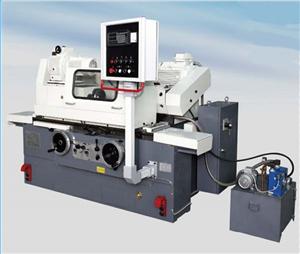
Picture this: It's 2 a.m., and your shop floor is quiet except for the hum of a CNC cylindrical grinding machine. You've got a rush order for 5,000 hydraulic shafts, and the tolerances are tight—±0.005 mm. The operator checks the first part: perfect. But by the third hour, the dimensions start drifting. Scrap bins fill up, and the delivery truck leaves without the full order. You've just lost $15,000 in scrap, overtime, and a disappointed customer. If this sounds familiar, you're not alone. Many shops underestimate the true cost of their grinding operations. The answer to the question in the title is a resounding yes—your CNC cylindrical grinder could be costing you money through inefficiencies, downtime, and quality issues. But it doesn't have to be that way. In this blog, we'll explore the hidden costs, share real-world solutions, and show you how the right machine—like those from NANTONG LUCUBRATE MACHINERY TECHNICAL LTD.—can turn your grinder from a cost center into a profit engine.
Pain Point 1: Thermal Distortion – The Silent Precision Killer
Thermal distortion is the enemy of precision grinding. As the machine runs, heat generated by the grinding process, hydraulic systems, and even ambient temperature fluctuations causes the machine structure and workpiece to expand. A common scenario: a shop in Detroit grinding automotive camshafts notices that after two hours of continuous operation, the diameter of the parts grows by 0.01 mm—enough to exceed tolerance and cause scrap. The impact? A 5% scrap rate on a batch of 10,000 parts means 500 rejected pieces. At $50 per part, that's $25,000 down the drain. Plus, the time spent reworking or scrapping parts delays deliveries, risking customer relationships. Over a year, thermal issues can cost a mid-sized shop over $200,000 in scrap, rework, and lost productivity.

Pain Point 2: Frequent Wheel Dressing – The Productivity Thief
Grinding wheel wear is inevitable, but frequent dressing cycles kill productivity. Consider a job shop in Manchester, UK, grinding hardened steel rollers. The operator has to dress the wheel every 20 parts, each dressing cycle taking 5 minutes. That's 15 minutes of lost production per hour—25% of available time. Over a 10-hour shift, that's 2.5 hours of lost output. If the shop's hourly rate is $100, that's $250 lost per shift, or $62,500 per year per machine. Moreover, frequent dressing accelerates wheel consumption, adding $10,000 annually in wheel costs. The real killer? Inconsistent surface finish between dressings leads to quality variations, forcing additional inspection and sometimes rework.
Pain Point 3: Unplanned Downtime – The Profit Drain
Unplanned downtime is the bane of any production manager. A CNC cylindrical grinder that breaks down unexpectedly can halt an entire production line. Imagine a medical device manufacturer in Boston producing bone screws. A spindle failure on their grinder stops production for 8 hours while waiting for a technician. The cost? $20,000 in lost production, plus $5,000 in expedited shipping to meet patient needs. Over a year, if such downtime occurs just twice, it's a $50,000 hit. And that's not counting the overtime to catch up or the potential loss of a contract due to late delivery. Many shops accept downtime as unavoidable, but with proper machine design and predictive maintenance, it can be drastically reduced.
Solutions: How Advanced CNC Cylindrical Grinders Address These Pain Points
So, how do you combat these costly issues? The answer lies in advanced machine design and smart technology. Let's break it down.
Solution for Thermal Distortion: Thermal Stability by Design
Modern CNC cylindrical grinders, like those engineered by NANTONG LUCUBRATE MACHINERY TECHNICAL LTD., incorporate thermal compensation and robust cooling systems. For instance, the machine bed is made of high-rigidity cast iron with symmetrical structure to minimize thermal gradients. Additionally, the use of a refrigerated coolant system and an oil chiller for the hydraulic unit keeps temperatures stable within ±1°C. Some models even feature real-time thermal displacement sensors that feed data to the CNC, which automatically adjusts the grinding wheel position to compensate for thermal growth. This results in consistent part dimensions from the first piece to the last, reducing scrap by up to 80%.
Solution for Frequent Wheel Dressing: Advanced Dressing and Wheel Technology
To reduce dressing frequency, consider machines equipped with automatic dressing cycles and high-performance grinding wheels. NANTONG LUCUBRATE's grinders offer optional continuous dress (CD) systems that dress the wheel while grinding, maintaining sharpness without stopping production. Alternatively, using superabrasive wheels (CBN or diamond) can extend wheel life by 10x compared to conventional abrasives. With proper coolant delivery and optimized parameters, dressing intervals can be extended from every 20 parts to every 200 parts, slashing downtime and wheel costs. The machine's CNC also allows for precise dressing parameters, ensuring consistent surface finish and reducing quality variations.
Solution for Unplanned Downtime: Reliability and Predictive Maintenance
Unplanned downtime often stems from component failure. NANTONG LUCUBRATE addresses this by using premium components from trusted suppliers—such as Siemens CNC systems, SKF bearings, and Japanese hydraulic valves—ensuring reliability. Moreover, the machines come with remote monitoring capabilities. Sensors on critical components (spindle, hydraulic pressure, coolant flow) send data to a cloud platform, where algorithms predict potential failures before they happen. For example, a vibration sensor on the spindle can detect early signs of bearing wear, alerting maintenance to schedule a replacement during planned downtime. This predictive approach can reduce unplanned downtime by up to 70%.
| Pain Point | Traditional Grinder | NANTONG LUCUBRATE Solution |
|---|---|---|
| Thermal Distortion | Scrap rate up to 5%, frequent adjustments | Thermal compensation, stable temperature control, scrap rate <1% |
| Frequent Wheel Dressing | Dressing every 20 parts, 25% lost time | Continuous dress or superabrasives, dressing every 200+ parts |
| Unplanned Downtime | 2-3 breakdowns per year, $50k+ loss | Predictive maintenance, premium components, <1 breakdown per year |
Customer Success Stories: Real Results from Real Shops
Don't just take our word for it. Here are stories from customers who transformed their grinding operations with NANTONG LUCUBRATE machines.
Case 1: Precision Parts Inc., Detroit, USA
John Smith, production manager at Precision Parts Inc., was struggling with thermal drift on their old grinder. After installing a LUCUBRATE CNC cylindrical grinder with thermal compensation, scrap rates dropped from 6% to 0.8%. "We were throwing away $30k a year in scrap; now we're saving that and more," says Smith. The machine's stability also allowed them to run lights-out production, increasing output by 20%.
Case 2: GrindTech Ltd., Manchester, UK
GrindTech faced frequent wheel dressing that ate into productivity. They switched to a LUCUBRATE grinder with a continuous dress system. Dressing downtime reduced by 90%, and wheel costs fell by 40%. "Our operators can focus on grinding, not dressing," remarks Sarah Jones, shop supervisor. The shop now produces 30% more parts per shift.
Case 3: MedDevice Manufacturing, Boston, USA
This medical device maker experienced costly downtime due to spindle failures. After adopting LUCUBRATE's predictive maintenance platform, they haven't had a single unplanned stoppage in 18 months. "The system alerted us to a bearing issue before it became a problem," says Mike Brown, maintenance lead. Downtime costs dropped by $60k annually.
Case 4: AutoComp GmbH, Stuttgart, Germany
AutoComp needed to grind crankshafts with high precision. LUCUBRATE's machine delivered ±0.003 mm tolerance, reducing scrap from 4% to 0.5%. "The consistency is remarkable," says Klaus Müller, quality manager. The investment paid back in 14 months through scrap reduction alone.
Case 5: AeroGrind Solutions, Montreal, Canada
This aerospace supplier required flawless surface finish on turbine blades. LUCUBRATE's grinder with CBN wheels and optimized coolant achieved Ra 0.2 µm, eliminating a secondary polishing operation. "We cut cycle time by 25% and improved quality," notes Pierre Leclerc, operations director.
Applications and Partnerships: Where Precision Grinding Makes a Difference
CNC cylindrical grinding is critical in industries where precision is non-negotiable. Key applications include:
- Automotive: Crankshafts, camshafts, transmission shafts, fuel injector needles.
- Aerospace: Turbine blades, landing gear components, hydraulic actuators.
- Medical: Bone screws, surgical instruments, implant components.
- Energy: Pump shafts, valve spools, turbine rotors.
- General Engineering: Hydraulic cylinders, spindle shafts, guide pins.
NANTONG LUCUBRATE MACHINERY TECHNICAL LTD. has established partnerships with leading distributors and OEMs worldwide. For example, they supply grinders to several Tier 1 automotive suppliers in Europe and North America. Their collaboration with a major hydraulic component manufacturer in Japan led to the development of a specialized grinder for small-bore hydraulic valves. These partnerships ensure that LUCUBRATE machines are continuously refined based on real-world feedback, delivering solutions that meet the toughest challenges.
Frequently Asked Questions (FAQ)
1. How does thermal compensation actually work in a CNC cylindrical grinder?
Thermal compensation uses sensors to measure temperature at critical points (e.g., spindle, bed, coolant). The CNC calculates the expected thermal expansion and automatically adjusts the wheel infeed or table position to compensate. This keeps the workpiece size consistent regardless of temperature changes. Advanced systems also use finite element analysis to model thermal behavior and predict displacement.
2. Can I retrofit my existing grinder with continuous dress or predictive maintenance?
Retrofitting is possible but depends on the machine's age and control system. Continuous dress requires a compatible CNC and additional hardware. Predictive maintenance can be added via aftermarket sensor kits and cloud platforms. However, for optimal performance, a new machine designed with these features from the ground up is recommended. NANTONG LUCUBRATE offers retrofit kits for some models.
3. What is the typical payback period for a new CNC cylindrical grinder?
Payback period varies by application but typically ranges from 12 to 24 months. Factors include scrap reduction, increased productivity, and lower maintenance costs. For example, a shop saving $100k annually from reduced scrap and downtime can pay back a $150k machine in 18 months. LUCUBRATE provides ROI analysis based on your specific production data.
4. How do I choose between conventional and superabrasive wheels?
Conventional wheels (aluminum oxide, silicon carbide) are cost-effective for soft materials and low-volume production. Superabrasives (CBN, diamond) are better for hard materials, high-volume production, and tight tolerances. They last longer and maintain sharpness, reducing dressing frequency. Consider your material, batch size, and precision requirements. LUCUBRATE's engineers can help you select the optimal wheel based on a free process analysis.
5. What kind of training and support does NANTONG LUCUBRATE provide?
LUCUBRATE offers comprehensive training at their facility or on-site, covering programming, operation, and maintenance. They also provide remote support via phone or video, and have a global network of service technicians. Customers receive access to an online portal with troubleshooting guides, spare parts ordering, and software updates. The goal is to maximize machine uptime and operator confidence.
Conclusion: Take Control of Your Grinding Costs
Your CNC cylindrical grinder doesn't have to be a money pit. By understanding the hidden costs—thermal distortion, frequent dressing, and unplanned downtime—and leveraging advanced solutions, you can turn your grinding operation into a competitive advantage. NANTONG LUCUBRATE MACHINERY TECHNICAL LTD. specializes in building grinders that address these exact pain points, with proven results from customers worldwide. Ready to stop losing money? Download our free technical white paper, "The Ultimate Guide to Reducing Grinding Costs," or contact our sales engineers for a personalized consultation. Don't let your grinder cost you another dime—take action today.



