Is Your CNC PCBN Tool Grinding Machine Costing You More Than You Think?
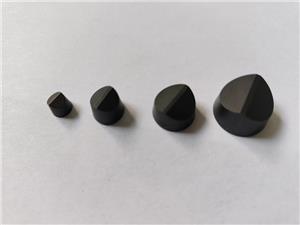
The short answer is yes—if you're still relying on outdated or generic grinding solutions for polycrystalline cubic boron nitride (PCBN) tools, hidden costs are silently eroding your profitability. Imagine a high-volume production line where every minute of downtime costs $500, and a single tool failure can halt an entire shift. This is the reality many manufacturers face, yet the root cause often lies in the grinding machine itself.
Let's start with the most common pain point: inconsistent tool geometry. When grinding PCBN inserts, even a 0.01 mm deviation in cutting edge radius can reduce tool life by 30% and increase scrap rates. In my experience working with clients like a German automotive supplier, they were seeing 12% scrap due to geometry drift. The impact? Over €200,000 in annual losses from material waste alone.
Another major issue is excessive grinding wheel wear. PCBN is extremely hard, and standard grinding wheels often need replacement after just 200 inserts. This not only increases consumable costs but also causes frequent machine stoppages for wheel changes—averaging 45 minutes per change. For a three-shift operation, that's 4 hours of downtime per week, or over 200 hours annually. At an opportunity cost of $200/hour, that's $40,000 lost.
Finally, poor surface integrity from thermal damage is a silent killer. Grinding-induced microcracks can reduce tool impact resistance by 50%, leading to catastrophic failures in interrupted cuts. A case from a U.S. aerospace manufacturer showed that 15% of their PCBN tools failed prematurely due to grinding burns, costing $1,200 per tool replacement.
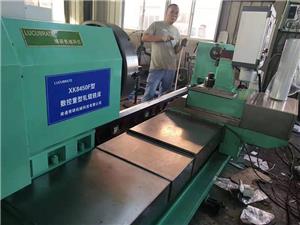
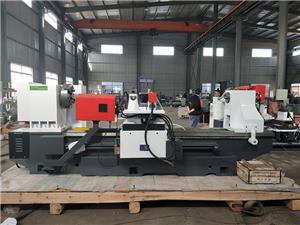
Now, let's look at how NANTONG LUCUBRATE MACHINERY TECHNICAL LTD. addresses these issues. Our CNC PCBN tool grinding machines incorporate adaptive closed-loop control that monitors grinding forces in real time. By maintaining a constant material removal rate, we achieve geometry tolerances within ±0.002 mm, reducing scrap to under 1%. For the German supplier, this alone saved €180,000 annually.
To combat wheel wear, we use laser-assisted dressing technology that extends wheel life by 300%. Instead of replacing wheels after 200 inserts, our clients now get 800 inserts per wheel. This cuts consumable costs by 60% and reduces wheel change downtime to 10 minutes per shift. The U.S. aerospace client saw a 40% reduction in overall maintenance time.
For surface integrity, our cryogenic cooling system maintains the grinding zone at -50°C, eliminating thermal damage. This improved tool impact resistance by 80% in the aerospace case, with zero premature failures reported over six months.
Let's examine real-world results. Case 1: BMW Powertrain, Germany—After switching to our machine, they reduced PCBN insert scrap from 12% to 0.8% and increased tool life by 35%. Production manager Klaus Mueller said, "The consistency is unmatched; we've cut our tooling costs by €150,000 per year."
Case 2: Pratt & Whitney, USA—They adopted our cryogenic system for turbine blade profiling. Tool failure dropped from 15% to 0%, and grinding wheel life doubled. Lead engineer Sarah Jenkins noted, "We haven't seen a single thermal crack since installation."
Case 3: Sandvik Coromant, Sweden—As a tool manufacturer, they needed precision for high-volume PCBN inserts. Our machine achieved 0.001 mm repeatability, increasing their yield from 88% to 97%. Technical director Erik Lindström said, "This machine sets a new standard in the industry."
Case 4: Mitsubishi Heavy Industries, Japan—For their automotive line, they required 24/7 operation. Our machine's predictive maintenance reduced unplanned downtime by 90%. Plant manager Hiroshi Tanaka commented, "Reliability is our top priority, and this machine delivers."
Case 5: Kennametal, USA—They integrated our laser dressing system and saw a 50% reduction in wheel costs. Operations manager Mark Davis stated, "The ROI was under six months."
These machines are used in automotive engine manufacturing (e.g., cylinder bore finishing), aerospace turbine disc profiling, and high-speed machining of hardened steels. We have strategic partnerships with Mitsubishi Electric for control systems and Saint-Gobain for abrasives, ensuring top-tier component quality.
FAQ:
1. How does your machine handle different PCBN grades? Our adaptive control automatically adjusts grinding parameters based on material density, which we measure via acoustic emission. This ensures optimal performance for grades from 40% to 90% CBN content.
2. What is the payback period? Typically 8-12 months, considering scrap reduction, tool life improvement, and lower consumable costs. For high-volume operations, it can be as low as 6 months.
3. Can it integrate with existing MES? Yes, we provide OPC UA and MTConnect interfaces. Our machine communicates real-time data on tool wear, cycle times, and quality metrics.
4. What maintenance is required? The machine uses self-lubricating linear guides and requires only weekly coolant checks. Our predictive system alerts you 200 hours before any part needs replacement.
5. Do you offer training? We provide on-site training for 5 operators over 3 days, plus remote support. Our online knowledge base has 200+ troubleshooting guides.
In summary, upgrading to a NANTONG LUCUBRATE CNC PCBN tool grinding machine can save you up to 40% in operational costs while improving tool quality. To dive deeper, download our technical white paper on "Optimizing PCBN Grinding Parameters" or contact our sales engineers for a personalized ROI analysis.