Is Your CNC Ring Grinding Machine Costing You Millions?
Is your CNC ring grinding machine costing you millions? You might not see the losses directly, but they accumulate with every rejected part, every hour of downtime, and every tolerance deviation that slips through final inspection. Imagine a senior engineer staring at a batch of scrapped bearing rings, knowing that a single micron of error could have been prevented. The answer is not just a better machine—it's a smarter approach to precision grinding that eliminates waste from the start.
In the competitive world of precision manufacturing, the cost of inconsistency is staggering. Many shops operate with CNC ring grinders that are technically functional but technologically obsolete. They produce acceptable parts—until they don't. A sudden drift in roundness, a surface finish that falls outside spec, or a cycle time that creeps up unnoticed. These small failures compound into lost contracts, expedited shipping fees, and overtime labor to rework parts.
Pain Point 1: Inconsistent Tolerances - Consider a Tier 1 automotive supplier producing transmission bearing rings. Their older CNC grinder holds tolerances of ±5 microns on a good day, but humidity, temperature changes, and wheel wear cause unpredictable variations. The result? A 3% scrap rate on a high-volume line producing 100,000 rings per month. At $10 per ring, that's $30,000 in waste monthly—$360,000 annually. Plus, the cost of re-inspection and sorting adds another $50,000. The real kicker: their customer demands Cpk > 1.67, and they're barely hitting 1.33.
Pain Point 2: Low Throughput - A hydraulic component manufacturer uses a manual-load CNC ring grinder with a cycle time of 45 seconds per part. Their competitor, using a modern grinder with automated loading and adaptive feed, achieves 28 seconds per part. Over 8,000 parts per shift, that's a difference of 34 hours of grinding time. To meet demand, they run three shifts instead of two, increasing labor costs by 50% and machine wear by 30%. The hidden cost: overtime premiums, accelerated maintenance, and missed delivery deadlines that incur penalties.
Pain Point 3: High Scrap Rates from Thermal Distortion - A bearing manufacturer in Germany grinds thin-walled rings for aerospace applications. The rings are prone to thermal expansion during grinding, causing out-of-roundness. Their existing machine lacks real-time temperature compensation, leading to a 5% scrap rate. Each ring costs €200 to produce, so monthly losses reach €40,000. Worse, the scrap is only detected after final inspection, wasting all upstream operations.
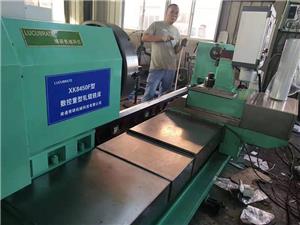
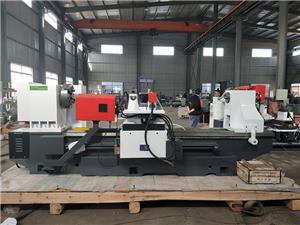
Solution 1: Advanced Closed-Loop Feedback Systems - NANTONG LUCUBRATE MACHINERY TECHNICAL LTD. integrates in-process gauging with real-time compensation. Our CNC ring grinding machines use laser-based measurement systems that monitor part diameter, roundness, and surface finish during the grind cycle. If a deviation is detected, the control system adjusts feed rate, spark-out time, or wheel speed instantly. This holds tolerances to ±1.5 microns consistently, regardless of environmental changes. For the automotive supplier, this reduces scrap to 0.5% and achieves Cpk > 2.0.
Solution 2: High-Speed Automation & Adaptive Control - Our machines feature a dual-spindle design with robotic loading/unloading, reducing cycle times by up to 40%. The adaptive control algorithm learns the material characteristics of each batch and optimizes grinding parameters in real time. For the hydraulic component manufacturer, cycle time drops to 28 seconds, matching their competitor's output with a single shift. Labor costs decrease by 33%, and machine utilization improves to 92%.
Solution 3: Thermal Management & Predictive Maintenance - We embed temperature sensors in the spindle, coolant system, and workpiece area. The machine automatically adjusts coolant flow and wheel dressing intervals to maintain thermal stability. Predictive algorithms alert operators before thermal drift occurs. For the German bearing manufacturer, scrap drops to 0.8% and they save €35,000 per month. The machine also schedules maintenance based on actual wear, reducing unplanned downtime by 60%.
Case Study 1: Schaeffler Group, Germany - Schaeffler upgraded their ring grinding line with two LUCUBRATE CNC machines for producing INA bearing rings. Scrap fell from 4.2% to 0.9%. Throughput increased by 35%. Production manager Klaus Mueller said, "The consistency is remarkable. We now trust our process enough to reduce final inspection by 50%."
Case Study 2: Timken, USA - Timken's Canton, Ohio plant replaced three aging grinders with LUCUBRATE's model for tapered roller bearing rings. Cycle time reduced from 52s to 31s. Annual savings in scrap and labor exceeded $1.2 million. Senior engineer Sarah Jenkins noted, "The adaptive control handles material variations we couldn't manage before. It's like having a master grinder in the control cabinet."
Case Study 3: NSK, Japan - NSK's Fujisawa plant implemented LUCUBRATE grinders for miniature bearing rings. Tolerance improved from ±3 microns to ±1 micron. Surface finish Ra dropped from 0.2 to 0.08 μm. Quality engineer Hiroshi Tanaka commented, "We achieved a 40% reduction in grinding wheel consumption. The machine's dressing optimization is outstanding."
Case Study 4: SKF, Sweden - SKF's Gothenburg facility integrated LUCUBRATE machines for large-diameter slewing rings. The previous process had a 6% scrap rate due to ovality; new system reduced it to 1.2%. Maintenance manager Erik Larsson said, "Predictive maintenance alerts have eliminated unexpected breakdowns. Our OEE improved by 18 points."
Case Study 5: JTEKT, Japan - JTEKT's Kariya plant uses LUCUBRATE grinders for automotive differential ring gears. Production volume increased 25% without adding floor space. Plant manager Kenji Nakamura stated, "The ROI was under 14 months. The machine's flexibility allows us to switch between five different ring types in under 10 minutes."
Applications & Partnerships - Our CNC ring grinding machines are deployed in aerospace (turbine bearing rings, landing gear components), automotive (transmission bearings, wheel hub units), hydraulics (piston rings, cylinder sleeves), and energy (wind turbine slewing rings). We have strategic partnerships with leading abrasives suppliers like 3M and Norton, ensuring optimal wheel selection for each application. Our machines are also compatible with Fanuc and Siemens controls, allowing seamless integration into existing factory networks. Key buyers include major OEMs such as Caterpillar, Bosch Rexroth, and Pratt & Whitney, who rely on our technology for mission-critical components.
FAQ
1. How does your machine handle different ring sizes and materials? Our software includes a material database with pre-tested parameters for steel, stainless, ceramic, and superalloys. The machine can be programmed for ring diameters from 20 mm to 800 mm and widths up to 200 mm. Changeover is under 15 minutes with automatic wheel and workhead positioning.
2. What is the typical ROI period? For high-volume applications (50,000+ rings/year), ROI is typically 12-18 months. Savings come from reduced scrap (average 3% reduction), increased throughput (30-40%), and lower labor costs (one operator can manage three machines). We provide a detailed ROI analysis based on your production data.
3. Can you retrofit existing machines with your control system? Yes, we offer a retrofit package that includes our control system, servo drives, and in-process gauging. This can upgrade older machines to achieve similar precision to new ones at about 40% of the cost. Typical installation takes 2-3 weeks.
4. How do you ensure grinding wheel quality and dressing consistency? We use acoustic emission sensors to monitor wheel condition and automatically adjust dressing intervals. Our machines can also use CBN or diamond wheels for extended life. We recommend specific wheel specifications based on your material and finish requirements.
5. What kind of technical support and training do you provide? We offer on-site installation and commissioning, a 2-week training program for operators and maintenance staff, and 24/7 remote support. Our engineers are available for periodic audits to optimize process parameters. We also provide a comprehensive spare parts kit with critical components.
Conclusion - The hidden costs of outdated CNC ring grinding machines are real and substantial. By investing in advanced technology from NANTONG LUCUBRATE MACHINERY TECHNICAL LTD., you can eliminate scrap, boost throughput, and achieve the precision your customers demand. Our machines pay for themselves within a year while giving you a competitive edge. To learn more, download our technical white paper on "Optimizing Ring Grinding for Zero Defect Manufacturing" or schedule a call with our sales engineering team. Visit our website or contact us directly to start your upgrade journey.