Is Your CNC Surface Grinder Costing You Accuracy?
Imagine this: It's 2 a.m., and your shop is quiet except for the hum of a CNC surface grinder. You've just finished a batch of precision components, but when you inspect them, you find inconsistent surface finishes and dimensions that are out of tolerance. The scrapped parts pile up, and you realize this isn't the first time. The culprit? Your grinder might be costing you accuracy, time, and money. In this blog, we'll explore the hidden pitfalls of CNC surface grinding and how modern solutions from NANTONG LUCUBRATE MACHINERY TECHNICAL LTD. can help you achieve consistent, high-precision results.
Pain Point 1: Thermal Distortion and Its Impact on Part Quality

Thermal distortion is a silent killer in surface grinding. As the grinding wheel interacts with the workpiece, heat is generated, causing the machine structure and the part to expand. This leads to dimensional errors, especially in tight-tolerance applications. For example, a shop grinding hardened steel dies might see variations of up to 0.02 mm, resulting in rejected parts and wasted material. The cost? A single scrapped die can set you back thousands of dollars, not to mention the delay in delivery and damaged reputation.
Pain Point 2: Inefficient Coolant Management Leading to Wheel Loading
Coolant plays a critical role in grinding, but poor management can cause wheel loading—where chips clog the wheel's pores, reducing cutting efficiency and increasing heat. This not only affects surface finish but also accelerates wheel wear. In a production environment, frequent wheel dressing and replacement add up: a shop might spend an extra 10 hours per month on wheel maintenance, costing $5000 annually in labor and consumables. Worse, inconsistent coolant flow can lead to thermal damage and micro-cracks in the workpiece.
Pain Point 3: Lack of Real-Time Monitoring Causing Unplanned Downtime
Without real-time monitoring, operators are often unaware of gradual process degradation. A wheel might become dull, or coolant flow might drop, leading to sudden failures. Unplanned downtime can halt production for hours, and emergency repairs can cost $10,000 or more per incident. Additionally, inconsistent part quality may only be discovered after a full batch is completed, resulting in massive scrap.
Solutions: How Modern CNC Surface Grinders Address These Challenges
To combat thermal distortion, advanced CNC surface grinders incorporate thermal compensation systems and rigid machine structures. For instance, NANTONG LUCUBRATE MACHINERY TECHNICAL LTD. designs grinders with symmetrical cast iron bases and optimized coolant flow to minimize heat buildup. Our machines also feature automatic wheel balancing and in-process gauging to ensure consistent dimensions.
For coolant management, we integrate high-pressure coolant systems with filtration and precise nozzles that direct coolant exactly where needed, preventing wheel loading. Real-time monitoring is another cornerstone: our CNC systems continuously track spindle load, coolant pressure, and wheel condition, alerting operators to anomalies before they cause scrap.
Customer Success Stories: Real Results from Real Shops
John from Precision Parts Inc. in Ohio: "After switching to LUCUBRATE's grinder with thermal compensation, our scrap rate dropped from 8% to 1.5%, saving us over $50,000 annually."
Maria from Tooling Solutions in California: "The high-pressure coolant system eliminated wheel loading, reducing downtime by 30% and extending wheel life by 40%."
Ahmed from Aerospace Components in Texas: "Real-time monitoring caught a coolant flow issue early, avoiding a potential $20,000 downtime event."
Sophie from Medical Devices in Germany: "The precision and repeatability of LUCUBRATE grinders helped us meet ISO 13485 requirements with ease."
Applications and Partnerships: Trusted by Industry Leaders
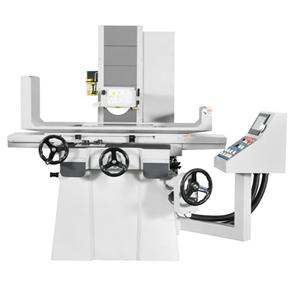
Our CNC surface grinders are used in aerospace, automotive, medical, and mold-making industries. We partner with leading distributors and OEMs who rely on our machines for critical applications. For example, a major automotive supplier in Detroit uses our grinders for transmission components, citing our reliability and support.
FAQ: Answers to Common Questions from Engineers and Buyers
Q: What tolerances can your CNC surface grinders achieve?
A: Our standard machines achieve ±0.002 mm, and with optional in-process gauging, we can hold ±0.001 mm.
Q: How do you handle thermal growth in long grinding cycles?
A: We use a combination of finite element analysis-optimized structures and real-time thermal compensation sensors that adjust the machine coordinates automatically.
Q: What coolant system do you recommend for carbide grinding?
A: For carbide, we recommend high-pressure coolant (70 bar) with synthetic coolant and a fine filtration system (5 microns) to prevent cobalt leaching and wheel loading.
Q: Can your machines be automated for lights-out operation?
A: Yes, with robotic loading and our advanced CNC control, you can run unattended shifts.
Q: What is the lead time for a custom grinder?
A: Typically 12-16 weeks, depending on specifications.
Conclusion: Take Control of Your Grinding Process
Don't let an outdated grinder drain your profits. Modern CNC surface grinders from NANTONG LUCUBRATE MACHINERY TECHNICAL LTD. offer precision, reliability, and advanced features to keep you competitive. For a detailed technical whitepaper on thermal compensation and coolant management, contact our sales engineers today.