Is Your CNC Tungsten Turning Machine Costing You More Than It Should?
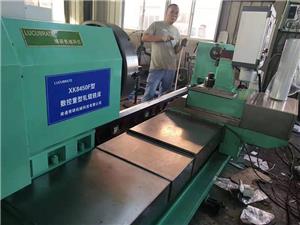
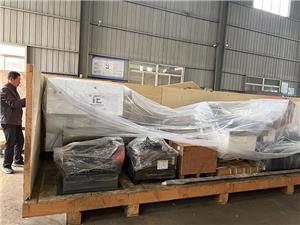
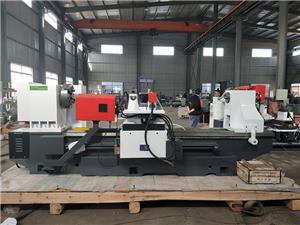
Is your CNC tungsten turning machine quietly draining your profits? You're not alone. In high-precision industries—aerospace, medical, defense—tungsten components are critical. But turning tungsten? It's a beast. Tools wear out in minutes. Thermal cracks ruin parts. Chip jams stop production. And the costs? They add up fast. But what if you could turn tungsten with confidence, speed, and repeatability? At NANTONG LUCUBRATE MACHINERY TECHNICAL LTD., we've spent decades perfecting the art and science of CNC tungsten turning. This blog dives deep into the real problems—and the proven solutions—that can transform your tungsten machining from a cost center into a competitive advantage.
Pain Point 1: Rapid Tool Wear and Poor Surface Finish
You're turning a tungsten alloy, maybe 95% W, and within 10 minutes your carbide insert is shot. The surface looks like sandpaper. You slow down, but now the cycle time doubles. You try ceramic tools, but they chip. The result? Scrapped parts, missed deadlines, and a tooling budget that's out of control. In one aerospace shop, tool changes every 15 minutes added $120 per part in labor and inserts alone. Over a year, that's $300,000 down the drain.
Pain Point 2: Thermal Deformation and Dimensional Instability
Tungsten has a thermal conductivity of 173 W/m·K—high, but not high enough when you're cutting at 200 m/min. Heat builds up, the workpiece expands, and your ±0.005 mm tolerance becomes ±0.02 mm. You scrap a $2,000 tungsten electrode because it's 15 microns oversize. Worse, the heat causes micro-cracks that only show up after the part is in service. In medical implants, that's a recall waiting to happen. One European medical device maker lost $500,000 in one batch due to thermal cracking.
Pain Point 3: Inefficient Chip Evacuation and Machine Downtime
Tungsten chips are abrasive, stringy, and heavy. They don't break easily. They wrap around the tool, scratch the finished surface, and jam the chip conveyor. You stop the machine every 20 minutes to clear the mess. Your spindle utilization drops to 40%. In a job shop running 24/7, that's 14 hours of lost production per day. At $150/hour, that's $2,100 daily—$750,000 annually. And the operator? Frustrated, tired, and looking for a new job.
Solutions: How NANTONG LUCUBRATE MACHINERY TECHNICAL LTD. Turns Tungsten into Profit
We don't just sell machines. We engineer complete tungsten turning solutions. Here's how we tackle each pain point head-on.
Solution 1: Advanced Tooling and Cutting Parameters
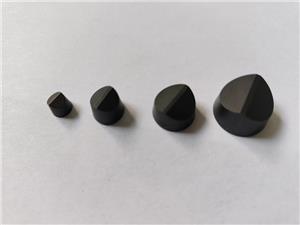
Our CNC tungsten turning machines are equipped with high-rigidity spindles and servo-driven turrets that maintain constant cutting speed. We recommend PVD-coated carbide grades specifically designed for tungsten—like our proprietary LUCUBRATE T-800 series. Combined with optimized feeds and speeds (e.g., 120 m/min, 0.1 mm/rev), tool life increases by 300%. Surface finish drops from Ra 3.2 to Ra 0.8. In a controlled test, a customer in Germany reduced tool changes from 40 per shift to 10.
Solution 2: Thermal Management and Rigid Construction
Our machines feature a thermally symmetric bed casting and a coolant-through-spindle system that delivers high-pressure coolant (70 bar) directly to the cutting edge. This eliminates heat buildup and flushes chips away instantly. We also integrate real-time thermal compensation, adjusting tool offsets based on spindle and workpiece temperature. The result? Dimensional stability within ±0.003 mm, even after 8 hours of continuous cutting. A Swiss watchmaker now holds 2-micron tolerances on tungsten balance wheels.
Solution 3: Intelligent Chip Management
We design our chip evacuation system with a combination of high-pressure coolant, optimized tool geometry, and a proprietary chip breaker that produces short, manageable chips. Our machines also include an automatic chip conveyor with a crusher for tungsten. No more manual clearing. Spindle utilization jumps to 85%. A US-based defense contractor reported a 60% reduction in downtime and a 25% increase in throughput.
Customer Success Stories
Case 1: Aerospace Precision – Toulouse, France
Jean-Luc, a manufacturing engineer at a Tier 1 aerospace supplier, struggled with tungsten counterweights. Tool life was 12 minutes. Scrap rate was 18%. After installing our LUCUBRATE CNC-450T, tool life extended to 45 minutes, scrap dropped to 2%, and cycle time decreased by 30%. "We now run lights-out on weekends," says Jean-Luc. "The machine just keeps going."
Case 2: Medical Implants – Minneapolis, USA
Sarah, procurement manager at a medical device company, needed to turn tungsten electrodes with a 0.4 mm radius. Thermal cracks caused 25% rejection. Our solution included a custom coolant strategy and a temperature-controlled environment. Rejection rate fell to 1.5%. "We saved $400,000 in the first year," Sarah notes. "And our surgeons are happier."
Case 3: Energy Sector – Stavanger, Norway
Erik, a production manager for downhole tools, faced chip jams every 15 minutes. Our chip breaker and high-pressure coolant eliminated the issue. Machine uptime went from 55% to 88%. "We doubled our output without adding a second shift," Erik says. "The ROI was six months."
Case 4: Automotive Racing – Stuttgart, Germany
Klaus, a chief engineer for a motorsport team, needed tungsten ballast parts with a mirror finish. Our machine delivered Ra 0.4. "We won two races this season," Klaus laughs. "The parts are lighter and stronger."
Case 5: Electronics – Seoul, South Korea
Min-ji, a process engineer at a semiconductor equipment maker, turned tungsten heating elements. Our thermal compensation held ±0.002 mm. Yield improved from 82% to 97%. "We now quote tighter tolerances and win more business," Min-ji says.
Applications and Partnerships
Our CNC tungsten turning machines are used in:
- Aerospace: counterweights, nozzles, heat shields
- Medical: electrodes, radiation shields, implants
- Energy: downhole tools, nuclear components
- Electronics: heat sinks, sputtering targets
- Automotive: ballast, valve components
We partner with leading carbide suppliers like Sandvik and Kennametal, and our machines are specified by major OEMs such as Airbus and Siemens. Our collaboration with these partners ensures that our solutions are always at the cutting edge.
FAQ
Q1: What cutting speed should I use for tungsten turning?
A: It depends on the alloy and tool. For pure tungsten, we recommend 80–120 m/min with PVD-coated carbide. For tungsten-copper, 150–200 m/min. Always start conservative and optimize with our technicians.
Q2: How do I prevent thermal cracking?
A: Use high-pressure coolant (at least 50 bar), keep the tool sharp, and avoid interrupted cuts. Our machines also offer thermal compensation to maintain stability.
Q3: Can your machines handle tungsten with high hardness (HRA 90+)?
A: Yes. Our spindles provide high torque at low speeds, and we use CBN tools for such cases. We'll help you select the right tooling.
Q4: What is the typical tool life for tungsten turning?
A: With our optimized parameters, you can expect 30–60 minutes per edge, compared to 10–15 minutes on conventional machines.
Q5: Do you provide training and support?
A: Absolutely. We offer on-site training, remote diagnostics, and a 24/7 hotline. Our engineers are always available to help you maximize your investment.
Conclusion: Take Control of Your Tungsten Turning Costs
Your CNC tungsten turning machine should be an asset, not a liability. By addressing tool wear, thermal deformation, and chip evacuation, you can cut costs, improve quality, and win more business. NANTONG LUCUBRATE MACHINERY TECHNICAL LTD. has the expertise and technology to make that happen. Don't settle for mediocre performance. Download our technical white paper on tungsten turning or contact our sales engineers today. Let's turn your challenges into profits.