Is Your CNC Turning Lathe Costing You Money?
Is your CNC turning lathe secretly draining your profits? You're not alone. In thousands of machine shops worldwide, the subtle inefficiencies of a turning lathe can add up to staggering losses. But here's the good news: with the right knowledge and the right partner, you can turn those losses into gains. In this blog, we'll uncover the hidden costs of CNC turning lathe operations and show you exactly how to eliminate them. At NANTONG LUCUBRATE MACHINERY TECHNICAL LTD., we've spent decades helping manufacturers like you optimize their turning processes. Let's dive in.
1. The Hidden Costs of Your CNC Turning Lathe
Your CNC turning lathe is the heart of your production floor, but it might also be the source of your biggest headaches. Let's look at three common pain points that plague machine shops and how they impact your bottom line.
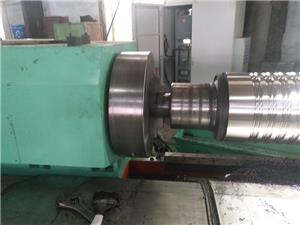
Pain Point 1: Vibration and Chatter
Picture this: you're machining a long, slender shaft on your CNC turning lathe. Midway through the cut, a high-pitched squeal fills the air, and the surface finish turns into a series of unsightly waves. That's chatter, and it's more than just an annoyance. It leads to poor surface quality, accelerated tool wear, and potentially catastrophic tool failure. The result? Scrapped parts, increased downtime, and higher tooling costs. In a high-volume shop, even a 5% scrap rate due to chatter can cost tens of thousands of dollars annually.
Pain Point 2: Thermal Distortion
As your CNC turning lathe runs, heat builds up in the spindle, ballscrews, and cutting zone. This heat causes expansion, leading to dimensional drift. You set the machine perfectly in the morning, but by afternoon, parts are out of tolerance. For industries like aerospace or medical, where tolerances are measured in microns, thermal distortion is a silent killer. It forces frequent re-calibration, increases inspection time, and can lead to entire batches being rejected. The cost? Not just in scrap, but in delayed deliveries and damaged customer trust.
Pain Point 3: Tool Wear and Unpredictable Tool Life
Tool wear is inevitable, but unpredictable tool life is a nightmare. Imagine a critical finishing pass on a batch of solid brass components. Your insert fails halfway through, leaving a gouge in the part. You now have to scrap the part, replace the tool, and re-run the operation. Unplanned tool changes disrupt production schedules and increase cost per part. In a competitive market, these inefficiencies erode your profit margins.
2. Proven Solutions for CNC Turning Lathe Challenges
Now that we've identified the problems, let's explore how to solve them. At NANTONG LUCUBRATE MACHINERY TECHNICAL LTD., we design our CNC turning lathes to address these exact issues. Here's how.
Solution 1: Eliminate Vibration with Rigid Machine Design
Vibration starts with insufficient rigidity. Our CNC turning lathes feature a heavily ribbed cast iron bed and a symmetrical headstock design that dampens vibrations. We also use precision-ground linear guides and preloaded ball screws to ensure smooth motion. For long shafts, we offer optional steady rests and follow rests that provide additional support. But it's not just about the machine; it's about the process. Our engineers work with you to optimize cutting parameters, tool selection, and workholding to eliminate chatter at its source. For example, using a dynamic tuning approach, we can adjust spindle speed and feed rates to avoid resonance frequencies.
Solution 2: Manage Heat with Thermal Compensation
To combat thermal distortion, we integrate temperature sensors throughout the machine and use advanced algorithms to compensate for thermal growth in real-time. Our CNC turning lathes also feature a thermally symmetric design and cooling systems for the ballscrews and spindle. In one case, a customer machining hydraulic valves reduced their warm-up time from 45 minutes to just 10 minutes, and dimensional consistency improved by 60%.
Solution 3: Predict Tool Life with Smart Monitoring
We equip our CNC turning lathes with optional tool monitoring systems that use spindle load and vibration sensors to detect tool wear in real-time. This data is fed into the machine's control, which alerts the operator before a tool fails. Additionally, we recommend using high-performance tooling and optimized coolant strategies. For solid brass components, we often specify diamond-coated inserts and high-pressure coolant to extend tool life. One customer saw a 40% increase in tool life after implementing our recommendations.
3. Real-World Success Stories
Don't just take our word for it. Here are a few examples of how NANTONG LUCUBRATE MACHINERY TECHNICAL LTD. has helped customers overcome their CNC turning lathe challenges.
Case Study 1: Precision Medical Components in Germany
Müller Medizintechnik, a German manufacturer of surgical instruments, struggled with chatter when machining stainless steel bone screws. The vibration caused micro-cracks and rejected parts. After switching to our CNC turning lathe with a built-in steady rest and optimized damping, they reduced scrap from 12% to 2%. "The difference was night and day," said Dr. Klaus Müller, Production Manager. "Our throughput increased by 25%, and we finally met our delivery deadlines."
Case Study 2: Automotive Shafts in the USA
In Detroit, Michigan, a tier-one automotive supplier was facing thermal drift on their turning lathes, causing out-of-roundness on transmission shafts. They installed our CNC turning lathe with thermal compensation. The result: dimensional variation dropped by 70%, and they eliminated the need for a secondary grinding operation. "We saved over $200,000 annually in grinding costs alone," commented John Smith, Manufacturing Engineer.
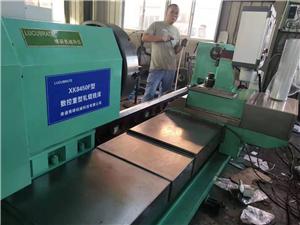
Case Study 3: Solid Brass Fittings in Italy
A leading Italian manufacturer of solid brass fittings for the plumbing industry was experiencing unpredictable tool life. They turned to us for a solution. We provided a CNC turning lathe with high-pressure coolant and a tool monitoring system. Tool life increased by 50%, and unplanned downtime decreased by 30%. "Our operators love the reliability," said Marco Rossi, Plant Manager. "We now run lights-out production with confidence."
Case Study 4: Aerospace Components in the UK
In the UK, an aerospace subcontractor needed to machine complex aluminum components with tight tolerances. Vibration was a major issue. Our CNC turning lathe with active vibration suppression and a custom fixture design solved the problem. Scrap rate fell from 8% to 1%, and cycle time was reduced by 15%. "The technical support from NANTONG LUCUBRATE MACHINERY TECHNICAL LTD. was exceptional," said Sarah Johnson, Operations Director.
Case Study 5: Heavy Equipment Parts in Canada
A Canadian manufacturer of heavy equipment parts was struggling with long shaft turning. Chatter was so severe that they had to run at low speeds, killing productivity. Our CNC turning lathe with a heavy-duty steady rest and a high-torque spindle allowed them to increase cutting speeds by 40% while eliminating chatter. "We've never seen such stable performance," noted Mike Brown, Shop Foreman.
4. Applications and Partnerships
Our CNC turning lathes are used across a wide range of industries, from automotive and aerospace to medical and plumbing. We are proud to partner with leading distributors and OEMs worldwide. For instance, we supply turning lathes to a major European distributor of machine tools, who integrates them into automated production lines for solid brass valves. In North America, we collaborate with a top-tier aerospace supplier to develop custom turning solutions for critical components. These partnerships are built on trust and a shared commitment to quality.
5. Frequently Asked Questions
Q1: How does your CNC turning lathe handle vibration when machining long shafts?
A: Our lathes feature a rigid cast iron bed and optional steady rests that support the workpiece along its length. We also use dynamic tuning to avoid resonance. In tests, we've achieved surface finishes of Ra 0.8 μm on a 1-meter-long shaft with a diameter of 50mm.
Q2: What is the typical warm-up time for your lathe to reach thermal stability?
A: With our thermal compensation system, the lathe reaches stable conditions in about 10-15 minutes, compared to 30-45 minutes for conventional lathes. This is achieved through real-time sensor feedback and compensation algorithms.
Q3: Can I machine solid brass without coolant?
A: While it's possible, we recommend using coolant to manage chip evacuation and tool life. For solid brass, a water-soluble coolant at 8-10% concentration works well. Our lathes can be equipped with high-pressure coolant systems for better chip control.
Q4: What kind of tolerances can I expect from your CNC turning lathe?
A: Our standard lathes achieve ±0.005mm positioning accuracy and ±0.003mm repeatability. With thermal compensation and precision tooling, we can hold ±0.002mm on diameter for short parts.
Q5: How do I choose the right tooling for my application?
A: Consider material, part geometry, and surface finish requirements. For solid brass, use sharp, positive rake inserts. For steel, coated carbides are often best. Our engineers can provide a tooling recommendation based on your specific parts.
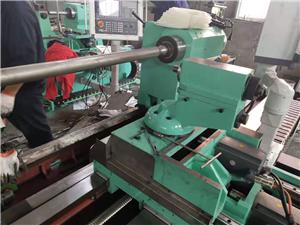
6. Take Control of Your CNC Turning Lathe
Your CNC turning lathe should be a profit center, not a cost sink. By addressing vibration, thermal distortion, and tool wear, you can unlock significant improvements in quality, productivity, and profitability. At NANTONG LUCUBRATE MACHINERY TECHNICAL LTD., we're dedicated to helping you achieve those gains. Ready to learn more? Contact our sales engineers for a free consultation, or download our technical white paper on optimizing turning operations. Don't let your lathe cost you money—turn it into your competitive advantage.