Is Your CNC Turning Machine Costing You More Than It Should?
It is 6:40 a.m. on a Tuesday in a machine shop outside Birmingham, and the night shift supervisor is staring at a scrap bin full of stainless steel fittings. The CNC turning machine that should have finished the batch two hours ago is still fighting a thermal drift problem, and the first-off inspection report shows three dimensions out of tolerance. That scene, repeated in thousands of shops every week, is the reason this question matters: is your CNC turning machine actually costing you more than it should? The short answer is yes, more often than most production managers realize, and the cost rarely appears as a line item on a quote. It hides in scrap, idle spindle time, secondary operations, and the slow erosion of customer confidence. This article breaks down where that money goes, how to stop it, and what a properly specified CNC turning machine should deliver.
Why CNC Turning Machine Costs Are Rarely What They Seem
When a purchasing team evaluates a CNC turning machine, the conversation usually centers on purchase price, spindle speed, axis count, and maybe the control brand. Those numbers matter, but they describe capability, not cost of ownership. The real cost of a CNC turning machine is the sum of purchase price, tooling consumption, energy use, maintenance, scrap rate, changeover time, and the labor required to keep it running at specification. A machine that is 15 percent cheaper upfront but runs 8 percent slower, scraps 2 percent more parts, and needs an extra setup hour per week can easily cost more over five years than a better-specified alternative.
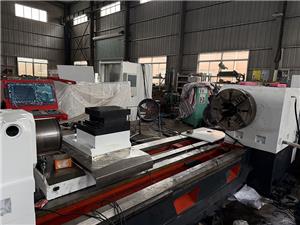
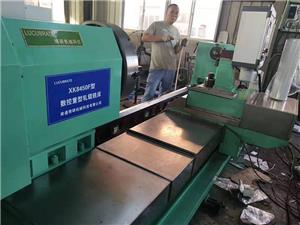
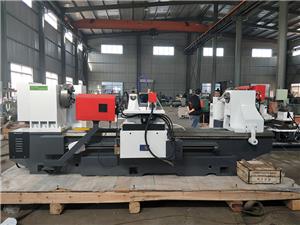
This is where the experience of a specialist builder matters. NANTONG LUCUBRATE MACHINERY TECHNICAL LTD. designs and builds CNC turning machines around the principle that total cost of ownership should be engineered, not discovered after installation. That means paying attention to structural rigidity, thermal stability, chip evacuation, and control integration from the first drawing, because those are the variables that decide whether a machine holds tolerance at hour eight of a shift, not just at hour one.
Pain Point One: Thermal Drift and Dimensional Scatter
Thermal drift is the quiet killer of turning accuracy. As the spindle and ballscrews heat up during a production run, the machine structure expands, and dimensions begin to walk. In a shop turning solid brass valve bodies on a high-volume line, a drift of even 10 microns can push a critical bore outside tolerance, and the operator compensates by tightening offsets, which introduces its own variation. The consequence is dimensional scatter across a batch, rework, and in regulated industries, a full lot rejection.
The cost is concrete. A mid-sized shop running 20,000 parts per month with a 1.5 percent scrap rate caused by thermal issues loses 300 parts monthly. At a conservative $8 per part in material and machining time, that is $2,400 per month, or nearly $29,000 per year, before counting the labor spent sorting and reworking. Add a customer corrective action and the number climbs fast.
The solution is not simply a temperature sensor. It is a machine architecture that manages heat at the source. On NANTONG LUCUBRATE MACHINERY TECHNICAL LTD. turning platforms, the spindle housing and ballscrew supports are designed with symmetric thermal mass, and the coolant and lubrication circuits are routed to stabilize temperature rather than concentrate it. Combined with in-process gauging and a control-level thermal compensation model, the machine holds tolerance across a full shift instead of drifting out of it. The practical result is a stable process window, fewer offset adjustments, and scrap rates that fall below 0.5 percent on typical brass and steel work.
Pain Point Two: Chip Control and Unplanned Downtime
Stringy chips are a turning shop cliché for a reason. In ductile materials, long chips wrap around the tool, scratch finished surfaces, and jam conveyors. Operators stop the cycle to clear them, which breaks the rhythm of lights-out production and adds minutes per part that never appear in the cycle time estimate. In the worst cases, a chip nest damages a tool holder or stalls the spindle, turning a routine job into a maintenance event.
Consider a job shop in Ohio running 4140 steel shafts on a two-shift schedule. Before upgrading its turning capability, the shop averaged 45 minutes of unplanned downtime per shift, mostly chip-related. Across 500 shifts per year, that is 375 hours of lost spindle time. At a shop rate of $95 per hour, the downtime costs roughly $35,600 annually, and that figure excludes late deliveries and expedited freight.
The fix combines tooling strategy, coolant delivery, and machine design. High-pressure coolant through the turret, correctly aimed at the cutting zone, breaks chips before they become a problem. A steeply sloped bed and a well-designed chip conveyor move material away from the work area instead of letting it accumulate. NANTONG LUCUBRATE MACHINERY TECHNICAL LTD. specifies coolant pressure and conveyor capacity as part of the machine configuration rather than as an afterthought, so the chip management system matches the material and cycle the customer actually runs. Shops that make this change commonly report downtime falling by more than half, and the recovered spindle hours go straight to billable work.
Pain Point Three: Changeover Time and Small-Batch Economics
High-mix, low-volume production is now the norm in Europe and North America, and it exposes a weakness in many turning setups: changeover. If swapping from one family of parts to another requires re-centering tools, re-probing workpieces, and re-verifying programs, a two-hour setup can consume the margin on a 50-piece order. The hidden cost is not just the setup labor, but the opportunity cost of a machine sitting idle while a qualified operator performs manual steps.
In a German contract manufacturer serving hydraulic component customers, changeovers previously averaged 110 minutes. With 12 changeovers per week, that is 22 hours of machine idle time weekly, or over 1,100 hours per year. At a fully burdened rate of €85 per hour, the annual cost exceeds €93,000, and the shop was turning away small orders because they could not be priced competitively.
The answer is to design changeover into the machine and the workflow. Preset tooling outside the machine, quick-change collet and jaw systems, and a control that stores and recalls complete setup data reduce the in-machine time to the physical swap. NANTONG LUCUBRATE MACHINERY TECHNICAL LTD. supports this with documented setup sheets and control macros that let operators recall a proven configuration rather than rebuild it. The German shop in this example cut changeover to 35 minutes, recovered more than 700 machine hours per year, and began quoting small batches profitably again.
What a Well-Specified CNC Turning Machine Actually Delivers
The contrast between a machine that is merely capable and one that is engineered for production is easiest to see side by side.
| Operating Factor | Commodity CNC Turning Machine | Production-Engineered CNC Turning Machine |
|---|---|---|
| Thermal behavior | Dimensions drift after 2–3 hours; frequent offset changes | Symmetric thermal design and compensation hold tolerance all shift |
| Chip management | Manual clearing; conveyor jams on stringy chips | High-pressure coolant and matched conveyor keep cutting zone clear |
| Changeover | 90–120 minutes with manual re-probing | 30–40 minutes with preset tooling and stored setup data |
| Scrap rate on brass and steel | 1.5–3 percent typical | Below 0.5 percent achievable |
| Spindle uptime | Interrupted by chip stops and offset checks | Stable for lights-out and unattended runs |
| Documentation | Generic manual | Setup sheets, maintenance schedule, and process guidance |
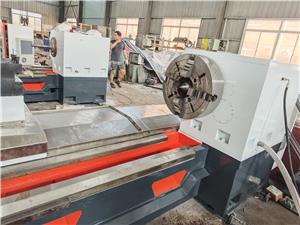
These differences are not marketing claims; they are the measurable outcome of specifying a CNC turning machine around the production reality of the customer. That is the design philosophy NANTONG LUCUBRATE MACHINERY TECHNICAL LTD. applies to every platform it builds.
Customer Results: Three Shops, Three Different Problems
Precision Flow Components, Birmingham, United Kingdom. This shop turns solid brass fittings for building services customers and was losing batches to thermal drift on a high-volume line. After moving to a thermally stable turning platform with in-process gauging, scrap fell from 1.8 percent to 0.4 percent, and first-pass yield rose to 99.1 percent. Production manager Daniel Whitfield said: “We stopped chasing offsets at lunchtime. The machine holds where we set it, and that changed how we plan the whole day.”
Midwest Shaft & Spindle, Columbus, Ohio, United States. Chip-related downtime was consuming nearly an hour per shift on 4140 steel work. With high-pressure coolant and a redesigned chip conveyor, unplanned stops dropped by 62 percent, recovering roughly 230 spindle hours per year. Owner Karen Malloy noted: “The conveyor used to be the weakest link in the cell. Now we forget it is there, which is exactly what we want.”
Rheinwerk Präzisionsteile, Düsseldorf, Germany. A hydraulic components manufacturer facing uncompetitive small-batch pricing. Preset tooling and stored setup data cut changeover from 110 to 35 minutes, and the shop recovered over 700 machine hours annually. Operations lead Stefan Krüger said: “We quote 40-piece orders now that we would have declined two years ago. The machine paid for the changeover project in under a year.”
Nordic Valve Tech, Gothenburg, Sweden. This manufacturer of solid brass valve bodies needed consistent bore geometry across a family of parts. A turning configuration with matched thermal behavior and a dedicated probing routine reduced bore variation by 55 percent and eliminated a secondary honing operation on two part numbers. Quality manager Elin Sandberg remarked: “Removing the honing step was not the goal, but it was the proof. The turning process is now capable on its own.”
Applications and the Partner Behind the Machine
CNC turning machines from NANTONG LUCUBRATE MACHINERY TECHNICAL LTD. are used across applications where repeatability and uptime decide profitability: solid brass plumbing and sanitary fittings, hydraulic valve bodies and manifolds, automotive shaft and bushing families, electrical connector housings, medical instrument components, and general precision turned parts in stainless steel, carbon steel, aluminum, and copper alloys. In each case, the machine is configured around the material, the tolerance band, and the production rhythm of the customer.
The company works closely with distributors and OEM procurement teams across Europe and North America, supporting them with application engineering, process documentation, and spare-parts planning. Repeat orders from these partners reflect a simple reality: when a turning platform is specified correctly, the buyer stops managing problems and starts managing capacity. That relationship is the foundation of the company’s approach, and it is why customers return for second and third machines rather than shopping the market each time.
Frequently Asked Questions from Engineers and Buyers
1. How do I verify thermal stability before I buy a CNC turning machine? Ask for a thermal drift test protocol, not just a specification sheet. A credible builder will run a spindle warm-up cycle and then measure a test workpiece over several hours, reporting dimensional change at defined intervals. Request the data at 1, 3, and 6 hours, and ask how compensation is applied. If the answer is only “the casting is heavy,” keep asking questions.
2. What coolant pressure do I actually need for chip control in ductile materials? For many steel and stainless turning operations, 70 to 100 bar through-tool coolant is a practical starting point, but the right number depends on insert geometry, depth of cut, and feed rate. The machine must be plumbed and rated for the pressure, including the turret and rotary unions. Specifying high pressure without matching the tooling and turret rating is a common and expensive mistake.
3. Can a turning machine hold sub-10-micron tolerance in production, or only in a lab? It can, but only when the whole system supports it: thermal design, machine rigidity, tooling repeatability, and a probing routine that verifies the process rather than the part. In production, the achievable tolerance is a function of process capability, not a single machine specification. Ask for Cp/Cpk data from a real production run in a comparable material.
4. How should I evaluate changeover time during a machine purchase? Request a live or recorded changeover demonstration on a part family similar to yours, and time it from last good part to first good part. Include tool presetting, program recall, and first-off inspection. A machine that changes over quickly in a demo but requires manual re-probing in your shop has not solved the problem.
5. What maintenance schedule keeps a CNC turning machine accurate over ten years? At minimum, track spindle runout, ballscrew backlash, and levelness on a defined interval, and log coolant concentration and way-lube consumption weekly. Thermal compensation models should be re-verified after any major service. A builder that supplies a maintenance schedule with measurable checkpoints, rather than a generic lubrication chart, is a builder that expects the machine to stay in tolerance.
The Bottom Line: Stop Paying for Problems You Can Engineer Out
A CNC turning machine is not a commodity purchase; it is a production asset whose real cost is written in scrap, downtime, and idle hours. Thermal drift, chip control, and changeover are not inevitable shop-floor annoyances. They are engineering variables that can be designed out when the machine is specified around the work it will actually do. The shops in this article did not find a miracle machine; they found a partner that treated total cost of ownership as a design requirement.
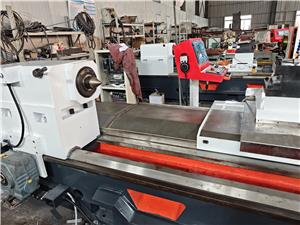
If you are evaluating a CNC turning machine and want to see the technical detail behind these claims, request the process capability and thermal stability white paper from NANTONG LUCUBRATE MACHINERY TECHNICAL LTD., or speak directly with a sales engineer about your material, tolerance band, and batch profile. Bring your scrap rate and your changeover time; those two numbers will tell you exactly how much your current turning process is costing you.