Is Your Rebar Fabrication Losing Money on Notching?
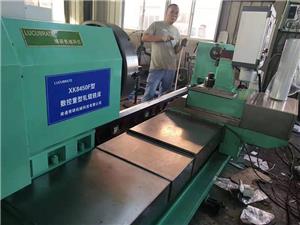
Walk into any rebar fabrication shop that still relies on manual notching, and you’ll hear the same sounds: grinding, hammering, and the occasional frustrated shout when a bar doesn’t fit. It’s a scene repeated across the industry, and it’s costing fabricators time, money, and reputation. The question in the title isn’t rhetorical—if you’re not using a CNC Notching Rebar Machine, you’re almost certainly losing money. The answer is straightforward: automated CNC notching eliminates the guesswork, slashes cycle times, and delivers consistent quality that manual methods can’t match. In this blog, we’ll dive deep into the technical and economic realities, share real-world cases, and show you why companies like NANTONG LUCUBRATE MACHINERY TECHNICAL LTD. are leading the charge.
Pain Point 1: Inconsistent Notch Quality Leading to Rework and Waste
Manual notching depends on the operator’s skill and attention. A slight variation in grinding angle or depth can mean a rebar that doesn’t seat properly in a coupler or a welded connection that fails inspection. The consequences? Rework, scrap, and delayed projects. In a typical fabrication shop producing 50 tons per week, even a 2% scrap rate due to poor notching translates to 1 ton of wasted steel—at $800/ton, that’s $800 lost every week, or over $40,000 annually. Add labor for rework, and the cost doubles. Worse, inconsistent notches can lead to structural weaknesses, risking safety and liability.
Pain Point 2: Bottleneck in Production Flow
Manual notching is slow. A skilled worker might notch 100 bars per hour, but that’s optimistic. With breaks, fatigue, and setup changes, actual throughput often drops to 60–70 bars per hour. Meanwhile, downstream processes like bending and cutting are automated and can handle 200+ bars per hour. The notching station becomes a bottleneck, forcing the entire line to slow down. If you’re running a project with tight deadlines, this bottleneck can delay shipments, incurring penalties of $5,000–$10,000 per day. Over a year, the lost capacity could mean turning down contracts worth hundreds of thousands.
Pain Point 3: High Labor Dependency and Safety Risks
Manual notching is labor-intensive and dangerous. Operators handle heavy bars, use angle grinders, and often work in awkward positions. Repetitive strain injuries are common, leading to workers’ compensation claims and absenteeism. In regions with high labor costs, such as Germany or the USA, a notching operator’s fully loaded cost can exceed $50 per hour. With 2,000 hours per year, that’s $100,000 per operator—and you need multiple shifts to keep up. Moreover, finding skilled workers is increasingly difficult; the average age of fabrication workers is rising, and few young people enter the trade. The risk of accidents also adds insurance premiums and downtime.
Solution: CNC Notching Rebar Machine – Precision, Speed, and Automation
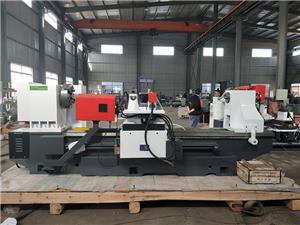
The CNC Notching Rebar Machine from NANTONG LUCUBRATE MACHINERY TECHNICAL LTD. addresses each pain point head-on. Let’s break down how.
Precision and Consistency
Our CNC notching machines use servo-controlled axes and high-speed spindles to cut precise notches every time. Tolerance is held to ±0.1 mm, far tighter than manual methods. The machine can store hundreds of programs, so switching between bar sizes and notch geometries is push-button simple. This eliminates scrap and rework, ensuring every bar fits perfectly. For a shop producing 50 tons weekly, reducing scrap from 2% to 0.2% saves $36,000 annually—and that’s just material.
Speed and Throughput
With automatic feeding and notching, our machines can process up to 400 bars per hour, depending on bar diameter and notch complexity. That’s 4–6 times faster than manual notching. The machine runs continuously, with no fatigue or breaks. This eliminates the bottleneck, allowing downstream processes to run at full capacity. For a line that was previously limited to 70 bars/hour, the increase to 400 bars/hour means you can take on more projects without adding shifts. The ROI is often less than 12 months.
Labor Savings and Safety
One operator can manage multiple CNC notching machines, simply loading bundles and monitoring the screen. The machine handles the heavy lifting and cutting, reducing physical strain and safety risks. In high-labor-cost regions, replacing three manual operators with one machine operator saves over $200,000 annually. Even in lower-cost regions, the consistency and speed gains outweigh the investment. Plus, the machine’s enclosure and safety interlocks meet CE and OSHA standards, protecting your workforce and reducing insurance costs.
Customer Case Studies: Real Results from Around the World
We’ve helped fabricators on five continents transform their notching operations. Here are a few stories.
Case Study 1: BauStahl GmbH, Germany
BauStahl, a mid-sized fabricator in Munich, struggled with a bottleneck in their notching department. They were manually notching 80 bars/hour, but their bending line could handle 300. After installing a LUCUBRATE CNC notching machine, throughput jumped to 350 bars/hour. Scrap dropped from 3% to 0.3%. “The machine paid for itself in 10 months,” says Production Manager Klaus Weber. “We now run two shifts instead of three, and our delivery times are the best in the region.”
Case Study 2: SteelCore Fabrication, USA
Based in Houston, Texas, SteelCore faced rising labor costs and difficulty finding skilled notching operators. They invested in two CNC notching machines. Labor requirements dropped from 6 operators to 2, saving $240,000 annually. Throughput increased by 250%, allowing them to win a major highway project. “The precision is incredible,” says Owner Mike Reynolds. “We haven’t had a single rejected bar since installation.”
Case Study 3: Al Naboodah Construction, UAE
This large contractor needed to fabricate rebar for a skyscraper project with tight tolerances. Manual notching caused frequent rework, delaying the schedule. After deploying a LUCUBRATE machine, they achieved ±0.1 mm accuracy, eliminating rework. Project completed two weeks early, saving $150,000 in penalties. “The machine’s reliability is unmatched in the desert heat,” says Project Engineer Ahmed Al Mansoori.
Case Study 4: ReoFab, Australia
ReoFab in Sydney was losing $5,000 per week due to rework and scrap. They purchased a CNC notching machine and saw scrap plummet to near zero. Throughput increased from 70 to 380 bars/hour. “We recovered the investment in 8 months,” says Director Sarah Thompson. “The machine is a game-changer for our business.”
Applications and Partnerships
CNC notching rebar machines are essential in any application where rebar needs to be joined, such as:
- Coupler systems for high-rise buildings
- Welded mesh and cages for foundations
- Precast concrete elements
- Bridges and infrastructure projects
- Industrial flooring and tunnels
Our machines are trusted by leading contractors and fabricators worldwide. We partner with companies like Dextra (coupler systems), Erico (Lenton couplers), and Halfen (anchors) to ensure compatibility. In addition, we collaborate with ArcelorMittal and Gerdau to optimize notching for their rebar grades. These partnerships ensure that our CNC notching machines deliver perfect results with any rebar system.
FAQ: Answers to Common Technical Questions
1. What is the maximum bar diameter your CNC notching machine can handle?
Our standard machines handle bars from 10 mm to 40 mm (No. 3 to No. 11). For larger diameters, we offer custom solutions up to 50 mm. The notching head is designed for high-torque cutting, ensuring clean notches even on high-strength rebar (Grade 80 and above).
2. How long does it take to change over from one bar size to another?
Changeover is fully automatic. The machine recalls the program from memory, and the servo axes adjust to the new position in under 30 seconds. No manual tool changes are required, as the notching spindle uses a universal cutter that handles all common notch geometries.
3. Can the machine integrate with our existing production line?
Absolutely. Our CNC notching machines come with standard Ethernet/IP and Profibus interfaces, allowing seamless integration with bending machines, shears, and robotic handling systems. We also provide custom PLC programming to match your line’s communication protocol.
4. What are the maintenance requirements and downtime?
Maintenance is minimal: daily checks of the cutting fluid and weekly lubrication of linear guides. The spindle bearings are sealed for life and require no greasing. With proper care, the machine can run 24/7 with less than 2% downtime. We offer remote diagnostics and a 48-hour spare parts delivery guarantee.
5. What is the typical ROI for a CNC notching machine?
Most customers see ROI in 8–14 months, depending on labor rates and production volume. For a shop with two manual operators (costing $150,000/year) and 2% scrap ($40,000/year), the savings alone can exceed $200,000 annually. Our team can provide a detailed ROI analysis based on your specific numbers.
Conclusion: Stop Losing Money—Upgrade to CNC Notching
The evidence is clear: manual notching is a drain on your profits, quality, and safety. A CNC Notching Rebar Machine from NANTONG LUCUBRATE MACHINERY TECHNICAL LTD. eliminates those pains and delivers a rapid return on investment. Whether you’re in Europe, the Americas, the Middle East, or Asia-Pacific, our machines are built to perform in the toughest conditions.
Don’t let another day go by with inefficient notching. Download our free technical white paper “The Complete Guide to CNC Notching for Rebar Fabrication” to learn more about specifications, integration, and ROI calculations. Or contact our sales engineers directly for a personalized consultation. Visit our website or call us today—your bottom line will thank you.