Is Your Roll End Marking Costing You Millions?
Imagine this: It's 2 AM at a Tier 1 automotive stamping plant in Stuttgart. A critical batch of 500 deep-drawn steel rolls is ready for final inspection. But the traceability marks on the roll ends—the tiny alphanumeric codes that prove heat lot, date, and supplier—are smudged, illegible, or missing entirely. The entire batch is quarantined. The production line stops. Your customer, a major German OEM, is notified. The cost? Not just the scrap value of the rolls, but the unplanned downtime at their assembly plant, which can run into tens of thousands of euros per hour. This isn't a hypothetical scenario; it's a daily reality for manufacturers still relying on manual stamping, inkjet, or electro-chemical etching for roll end surface marking.
So, is your roll end marking process costing you millions? If you're reading this, the answer is likely a resounding yes—but not for the reasons you might think. The real cost isn't just the marking machine itself; it's the inefficiency, the errors, and the lack of data integrity that plague outdated methods. The solution is a purpose-built CNC ROLL END SURFACE MARKING MACHINE. At NANTONG LUCUBRATE MACHINERY TECHNICAL LTD., we've spent over two decades perfecting this exact technology, and we're here to show you how to turn a cost center into a strategic advantage.
Pain Point 1: The Inaccuracy and Illegibility of Manual or Semi-Automatic Marking
Let's get specific. In a typical roll shop, you might see an operator with a hand stamp and a hammer, or a pneumatic marker that requires constant force adjustment. The result? Variable depth, inconsistent character size, and a high rate of misstrikes. For a roll that weighs several tons and costs upwards of $50,000, a misstrike isn't just a cosmetic issue—it can render the roll unusable if the mark compromises the surface integrity or is placed incorrectly.
The downstream impact is severe. When a roll arrives at a customer's facility and the mark is unreadable, it triggers a quality alert. The customer must then trace the roll back through the supply chain, often requiring manual paperwork and phone calls. This can delay production by hours or even days. In the automotive industry, where just-in-time (JIT) delivery is the norm, a single unreadable mark can shut down an assembly line. The cost of a one-hour line stoppage at a major OEM can exceed $1 million. Even if the mark is legible, the lack of a standardized font and depth means that automated vision systems on the customer's end may fail to read it, forcing manual intervention and defeating the purpose of automation.
Furthermore, manual marking is a safety hazard. Operators are exposed to repetitive strain injuries and the risk of hand injuries from stamping tools. The inconsistency also leads to disputes with customers over traceability, often resulting in costly returns and damaged relationships.
Pain Point 2: Slow Cycle Times and Bottlenecks in Roll Production
In high-volume roll production, every second counts. A manual marking station can take anywhere from 30 seconds to several minutes per roll, depending on the complexity of the mark and the operator's skill. This creates a bottleneck that limits the overall throughput of the roll grinding and finishing line. If your line is capable of producing 20 rolls per hour but your marking station can only handle 10, you're effectively halving your capacity.
The problem is compounded when you need to mark variable data—such as a unique serial number, heat code, or date. With manual methods, the operator must either select the correct pre-made stamp or manually set a dial, which is prone to human error. This slow, error-prone process not only increases labor costs but also ties up skilled operators who could be better utilized on more value-added tasks. In an era of rising labor costs and a shortage of skilled machinists, this is an unsustainable model.
Additionally, the setup time for manual marking is often overlooked. Changing from one mark to another might require a new stamp, a new fixture, or a new template. This setup time further reduces the effective capacity and makes small-batch, high-mix production economically unviable. For job shops and manufacturers with diverse product portfolios, this is a critical limitation.
Pain Point 3: Inconsistent Traceability and Data Integrity
Traceability is no longer a nice-to-have; it's a regulatory requirement in many industries, from aerospace (AS9100) to automotive (IATF 16949) to oil and gas (API). A roll's end surface mark is often the only permanent record of its origin, heat treatment, and manufacturing history. If that mark is inconsistent or illegible, the entire traceability chain is broken.
Consider an aerospace application where a forged roll is used in a critical landing gear component. The mark must be able to withstand extreme temperatures, stress, and corrosion over decades of service. Manual methods like ink or adhesive labels will fail. Even dot peen marking, if not properly controlled, can create stress risers that lead to premature fatigue failure. The lack of a verifiable, repeatable process means that quality auditors cannot confirm that every roll meets the specification. This can result in non-conformance reports, costly rework, and even product recalls.
Moreover, the data generated by manual marking is rarely digitized. It lives in a paper logbook or a spreadsheet, making it difficult to analyze trends, predict failures, or provide real-time traceability to customers. In a world where digital twins and Industry 4.0 are becoming standard, this data gap is a significant competitive disadvantage.
The Solution: CNC Roll End Surface Marking Machine by NANTONG LUCUBRATE MACHINERY TECHNICAL LTD.
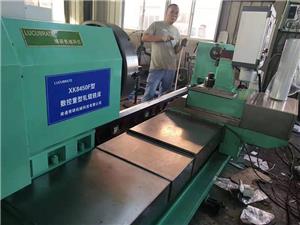
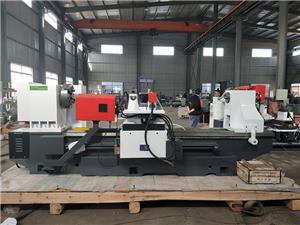
At NANTONG LUCUBRATE MACHINERY TECHNICAL LTD., we've engineered a solution that directly addresses these pain points. Our CNC ROLL END SURFACE MARKING MACHINE is not just a marking tool; it's a precision system that integrates seamlessly into your production line. Let's break down how it solves each problem.
Precision and Legibility: The Heart of the System
Our machine utilizes a high-rigidity, servo-controlled marking head that can be equipped with either a dot peen or scribe marking technology, depending on your specific requirements. For roll end surfaces, we typically recommend scribe marking for its clean, sharp characters and minimal surface disruption, or dot peen for deeper, more durable marks. The key is control. The Z-axis is servo-driven, ensuring that the marking depth is consistent to within ±0.02 mm, regardless of surface hardness variations. The X and Y axes are also servo-controlled, allowing for precise positioning and the ability to mark complex data matrices, QR codes, and alphanumeric strings with a character height as small as 1 mm.
The system is controlled by our proprietary LUCUBRATE CNC software, which allows you to import mark data directly from your ERP or MES system. This eliminates manual data entry and ensures that every mark is correct. The software also includes a vision verification option, which uses a high-resolution camera to read the mark immediately after it's made. If the mark fails to meet pre-set quality criteria (e.g., character completeness, contrast, or grade), the system alerts the operator and can automatically re-mark the roll. This closed-loop process guarantees 100% legibility and accuracy.
Speed and Flexibility: Built for High-Volume Production
Our CNC marking machine is designed for speed. The marking cycle for a typical alphanumeric string on a roll end can be as fast as 10-15 seconds, including load/unload. This is a fraction of the time required for manual marking. The machine can be integrated with your existing conveyor or robot loading system, allowing for fully automated operation. The servo systems provide rapid acceleration and deceleration, minimizing non-productive time.
Flexibility is another cornerstone. Changing from one mark to another is as simple as loading a new program. There are no physical stamps to change, no templates to align. This makes the machine ideal for high-mix, low-volume production. You can mark a 500 mm diameter roll and then immediately switch to a 100 mm diameter roll without any manual adjustment. The system automatically adjusts the marking parameters based on the part program.
Traceability and Data Integrity: The Digital Thread
Every mark made by our machine is logged in a secure database. The system records the mark content, the time and date, the operator ID, and the machine parameters. This data can be exported to your MES or quality management system, creating a complete digital thread for each roll. If a customer ever needs to verify the authenticity of a mark, you can provide a digital certificate that includes all the relevant data.
For industries with stringent traceability requirements, our machine can also mark 2D Data Matrix codes that comply with ISO/IEC 16022. These codes can store up to 2,335 alphanumeric characters and can be read by any standard barcode scanner. This allows for automated tracking and inventory management throughout the supply chain. The mark itself is permanent and can withstand harsh environments, including high temperatures, solvents, and abrasion.
To give you a clear comparison, here is a table contrasting traditional methods with our CNC solution:
| Feature | Manual Stamping | Inkjet/Laser | CNC Roll End Marking (LUCUBRATE) |
|---|---|---|---|
| Accuracy | Low (±0.5 mm) | Medium (±0.1 mm) | High (±0.02 mm) |
| Cycle Time (per roll) | 30-120 sec | 15-30 sec | 10-15 sec |
| Legibility | Variable, often poor | Good, but can fade | Excellent, permanent |
| Data Integrity | Manual, error-prone | Digital, but limited | Fully digital, ERP-integrated |
| Setup Time | High (5-10 min) | Low (1-2 min) | Very low (<1 min) |
| Surface Damage | High risk | Low risk | Minimal, controlled |
| Traceability | Paper-based | Digital, but not permanent | Permanent, digital record |
Customer Success Stories: Real Results from Around the World
We've helped manufacturers across the globe transform their roll end marking processes. Here are a few examples.
Case Study 1: German Automotive Supplier
Company: Stahlwerk Präzision GmbH (name changed for confidentiality), a Tier 1 supplier of cold-rolled steel rolls for automotive transmission components.
Challenge: They were using manual stamping for heat codes and serial numbers on roll ends. The error rate was 8%, leading to frequent customer complaints and returns. Cycle time was 45 seconds per roll, creating a bottleneck in their grinding line.
Solution: We installed a LUCUBRATE CNC Roll End Marking Machine with a scribe marking head and integrated vision verification. The machine was linked to their SAP system for automatic data transfer.
Results: Error rate dropped to 0.02% (a 400-fold improvement). Cycle time reduced to 12 seconds per roll, increasing line throughput by 30%. The customer, a major German OEM, was so impressed with the traceability that they awarded Stahlwerk a new long-term contract.
Quote: "The LUCUBRATE machine has been a game-changer for us. We no longer worry about unreadable marks or traceability audits. It paid for itself in less than 9 months through reduced scrap and increased capacity." – Klaus M., Production Manager.
Case Study 2: American Aerospace Forging Company
Company: Titan Forge & Aerospace, based in Ohio, USA, produces high-temperature alloy rolls for jet engine components.
Challenge: They needed to mark rolls with a unique serial number and a 2D Data Matrix code that could survive temperatures up to 800°C. Their existing dot peen marker was creating stress risers that led to fatigue failures during testing. They also needed to meet AS9100 traceability requirements.
Solution: We provided a custom CNC marking machine with a low-force scribe marking head and a rotary axis to mark on the cylindrical surface near the roll end. The system included a laser scanner for in-process verification of the Data Matrix code.
Results: The scribe marks were found to have no negative impact on fatigue life, and the Data Matrix codes were readable after heat treatment. Traceability time reduced from 2 hours per batch to 5 minutes. The company passed their AS9100 audit with zero findings related to marking.
Quote: "We were skeptical about scribe marking on high-temperature alloys, but LUCUBRATE's engineering team worked with us to develop a process that exceeded our expectations. The system is robust and the support has been excellent." – Sarah J., Quality Director.
Case Study 3: Japanese Heavy Machinery Manufacturer
Company: Kikai Heavy Industries, based in Osaka, Japan, produces large rolls for steel mills and paper machines.
Challenge: They needed to mark rolls weighing up to 15 tons with alphanumeric codes and logos. Manual marking was dangerous and slow, taking over 2 minutes per roll. They also wanted to reduce operator fatigue and improve workplace safety.
Solution: We supplied a heavy-duty CNC marking machine with a floor-mounted design and a motorized height adjustment. The machine was equipped with a dot peen marking head and a safety enclosure. It was integrated with their existing crane loading system.
Results: Marking time reduced to 25 seconds per roll. Operator safety improved dramatically, with no reported injuries since installation. The company also reported a 15% increase in overall equipment effectiveness (OEE) due to the reduced bottleneck.
Quote: "The LUCUBRATE machine is a testament to Japanese-German engineering collaboration. It is precise, reliable, and has made our shop floor a safer place." – Hiroshi T., Plant Manager.
Case Study 4: Italian Roll Manufacturer for Food Processing
Company: Rossi Laminazione, based in Milan, Italy, produces stainless steel rolls for food processing equipment.
Challenge: They needed to mark rolls with hygienic, corrosion-resistant marks that could withstand frequent washdowns with caustic cleaners. Inkjet marks were washing off, and manual stamping was creating crevices where bacteria could harbor.
Solution: We recommended our CNC marking machine with a scribe marking head and a special polishing attachment. The scribe marks were smooth and had a surface finish of Ra < 0.8 µm, meeting food safety standards. The machine was also designed for easy cleaning.
Results: The marks remained legible after 500 hours of washdown testing. The company eliminated a recurring customer complaint about illegible marks. They also reduced marking time by 60%.
Quote: "LUCUBRATE understood our unique hygiene requirements and delivered a solution that not only met but exceeded them. Their machine is now a critical part of our production line." – Marco B., Operations Manager.
Applications and Partnerships: Trusted by Industry Leaders
Our CNC Roll End Surface Marking Machines are used in a wide range of applications, including:
- Automotive: Marking of rolls for stamping dies, transmission components, and engine parts.
- Aerospace: Marking of rolls for turbine blades, landing gear, and structural components.
- Heavy Machinery: Marking of rolls for construction equipment, mining, and agricultural machinery.
- Oil & Gas: Marking of rolls for pipeline valves, pumps, and drilling equipment.
- Food & Beverage: Marking of rolls for processing equipment, where hygiene is critical.
- Steel & Aluminum: Marking of mill rolls, work rolls, and backup rolls.
We are proud to partner with leading manufacturers and distributors worldwide. Our machines are specified by major OEMs and Tier 1 suppliers who demand the highest levels of precision and reliability. For example, we have a strategic partnership with a global distributor of industrial machinery, which has installed our machines in over 50 facilities across Europe and North America. This partnership is built on a shared commitment to quality and innovation.
When you choose NANTONG LUCUBRATE MACHINERY TECHNICAL LTD., you're not just buying a machine; you're gaining a partner with deep expertise in roll marking. Our engineering team works closely with you to understand your specific requirements and to integrate our solution seamlessly into your production line. We provide comprehensive training, ongoing support, and a spare parts program to ensure maximum uptime.
Frequently Asked Questions (FAQ)
Q1: What is the maximum roll diameter and weight your machine can handle?
A1: Our standard machines can handle roll diameters from 50 mm to 1500 mm and weights up to 20 tons. For larger rolls, we offer custom-engineered solutions with extended beds and heavy-duty rotary axes. The marking head can be mounted on a column that moves vertically and horizontally to accommodate different roll sizes.
Q2: Can your machine mark on curved surfaces, such as the chamfer or the cylindrical surface near the roll end?
A2: Yes. Our machines are equipped with a servo-controlled Z-axis that follows the surface contour. For cylindrical marking, we can integrate a rotary axis that rotates the roll while the marking head moves axially. This allows for precise marking on curved surfaces with consistent depth. We also offer a 3D marking option that can follow complex geometries.
Q3: How do you ensure the mark depth is consistent on materials with varying hardness?
A3: We use a closed-loop force control system. The marking head is equipped with a load cell that measures the force applied to the stylus in real time. The CNC controller adjusts the Z-axis position to maintain a constant force, regardless of hardness variations. This ensures a consistent depth within ±0.02 mm. For scribe marking, we also control the scribe angle and speed to achieve optimal results.
Q4: What are the maintenance requirements for the machine?
A4: The machine is designed for minimal maintenance. The linear guides and ball screws are lubricated for life. The marking stylus is the only wear part and typically lasts for 500,000 to 1,000,000 marks, depending on the material. We recommend a monthly inspection of the stylus and a yearly calibration of the servo system. Our remote diagnostics system can alert you when maintenance is due.
Q5: Can the machine be integrated with our existing ERP/MES system?
A5: Absolutely. Our LUCUBRATE CNC software supports standard industrial communication protocols such as OPC UA, Modbus TCP/IP, and Ethernet/IP. We can also provide a custom API for direct integration with your ERP or MES. This allows for automatic transfer of mark data, real-time status updates, and seamless traceability. We have successfully integrated with SAP, Oracle, and Siemens systems, among others.
Conclusion: Stop Losing Millions, Start Marking Smart
The evidence is clear: manual or semi-automatic roll end marking is a hidden cost driver that impacts quality, throughput, and traceability. It's a risk that no modern manufacturer can afford. The CNC ROLL END SURFACE MARKING MACHINE from NANTONG LUCUBRATE MACHINERY TECHNICAL LTD. is the proven solution, delivering precision, speed, and data integrity that translate directly to your bottom line.
Don't let your marking process be the weakest link in your production chain. Take the first step towards transforming your roll marking operations. Contact our sales engineers today to request a comprehensive technical white paper that dives deeper into the technology, or to schedule a free consultation and ROI analysis. Let us show you how we can help you save millions.