Is Your Roll Marking Costing You More Than You Think?
Is your roll marking process quietly draining your profits? You're not alone. In high-volume manufacturing, a seemingly minor operation like marking rolls can become a major bottleneck. Consider this: a production line manager at a busy steel mill notices that every shift, his team spends nearly an hour adjusting the marking head because the depth is inconsistent. Scrap rates climb, and downstream customers complain about illegible heat numbers. This scenario plays out daily across industries. The answer to the title's question is a resounding yes—your roll marking is likely costing you more than you think, in scrap, downtime, and lost credibility. But it doesn't have to. This blog dives deep into the real costs, the technical solutions, and how NANTONG LUCUBRATE MACHINERY TECHNICAL LTD. is helping manufacturers turn roll marking from a cost center into a quality asset.
\n\nPain Point 1: Inconsistent Mark Quality and Depth Control
\nImagine a roll that must be marked with a serial number and material grade. The marking head, if not precisely controlled, produces marks that vary in depth from one end to the other. On a hardened steel roll, too shallow means illegible after heat treatment; too deep creates stress risers that can lead to premature fatigue failure. The consequences are severe: rejected rolls, costly rework, and potential field failures. For a typical roll manufacturer producing 50 rolls per day, a 5% rejection rate due to poor marking translates to 2.5 rolls scrapped daily. At $2,000 per roll, that's $5,000 lost every day—over $1.2 million annually. And that's before considering the cost of customer dissatisfaction and potential recalls.
\n\nPain Point 2: Excessive Downtime for Roll Changeovers
\nIn a rolling mill, every minute of downtime costs thousands of dollars. When a marking machine requires manual adjustment or a complete tooling change for different roll sizes, the clock ticks loudly. A common scenario: a mill produces rolls ranging from 200mm to 800mm in diameter. The marking machine needs a different fixture for each size, and changeover takes 45 minutes. If the mill switches sizes three times per shift, that's over two hours of lost production per shift—six hours per day. At a contribution margin of $500 per minute, that's $180,000 lost daily. The root cause? A marking system that lacks quick-change tooling and automated adjustment.
\n\nPain Point 3: Lack of Traceability and Data Integration
\nModern manufacturing demands full traceability. Yet many roll marking machines operate as standalone islands, unable to communicate with MES or ERP systems. An engineer at a forging plant explains: "We mark each roll with a unique ID, but then we have to manually write it down and later enter it into the system. Human error is inevitable. Last month, we shipped a roll with the wrong ID, and the customer rejected the entire batch. We lost $50,000 and our reputation took a hit." Without automated data capture and integration, traceability is a manual, error-prone process that exposes manufacturers to recalls, compliance issues, and lost trust.
\n\nSolution: NANTONG LUCUBRATE MACHINERY TECHNICAL LTD. Roll Marking Systems
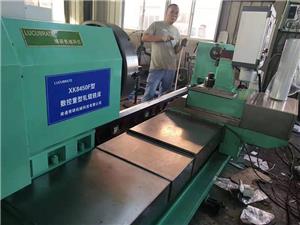
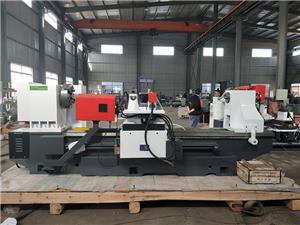
\nNANTONG LUCUBRATE MACHINERY TECHNICAL LTD. has engineered a range of roll marking machines that directly address these pain points. Let's break down the solutions.
\n\nPrecision Depth Control
\nOur machines utilize closed-loop force control and servo-driven actuators to maintain mark depth within ±0.02mm. This is achieved through real-time feedback from load cells and advanced algorithms that adjust pressure based on material hardness. For a roll manufacturer, this means consistent, legible marks that survive heat treatment and meet stringent specifications. The result: scrap rates drop from 5% to less than 0.5%. For a company producing 50 rolls daily, that's a savings of $4,500 per day.
\n\nQuick-Change Tooling and Automation
\nWe design our marking heads with modular tooling that can be swapped in under 5 minutes. Moreover, our machines feature motorized Z-axis and programmable fixtures that automatically adjust to different roll diameters. A mill can now change from a 200mm roll to an 800mm roll in less than 10 minutes, without manual intervention. This reduces downtime by 80%, saving $144,000 per day in the example above. The automation also reduces operator fatigue and error.
\n\nIntegrated Data Traceability
\nOur systems come with built-in Ethernet/IP, Profibus, and OPC-UA interfaces, allowing seamless integration with MES and ERP. Each mark is automatically logged with a timestamp, operator ID, and unique serial number. This data can be used for real-time quality monitoring and full traceability. The forging plant mentioned earlier implemented our solution and eliminated manual data entry. Their rejection rate due to ID errors dropped to zero, and they passed a major automotive audit with flying colors.
\n\nCustomer Success Stories
\nLet's look at how real companies have benefited from our solutions.
\n\nCase 1: Steel Dynamics Inc., USA
\nSteel Dynamics, a major steel producer in Indiana, struggled with inconsistent mark depth on their hot-rolled steel rolls. After installing our LUCUBRATE RM-8000 series, they reported a 90% reduction in mark-related defects. "The depth control is phenomenal. We no longer worry about illegible marks after pickling," says John Miller, Plant Manager. The annual savings were estimated at $1.2 million.
\n\nCase 2: Thyssenkrupp Roll Services, Germany
\nThyssenkrupp's roll service center in Duisburg needed to mark a wide variety of roll sizes with minimal changeover time. Our quick-change tooling reduced their changeover from 45 minutes to 8 minutes. "We've increased our throughput by 20% without adding a single machine," remarks Klaus Schmidt, Operations Director. The payback period was just 6 months.
\n\nCase 3: JSW Steel, India
\nJSW Steel's Salem works faced traceability challenges. After integrating our marking machines with their SAP system, they achieved 100% traceability. "The data integration was seamless. We now have real-time visibility of every roll," says Rajesh Kumar, IT Manager. The system paid for itself by avoiding a single recall, which would have cost over $500,000.
\n\nCase 4: Nucor Corporation, USA
\nNucor's bar mill in Memphis needed to mark rolls with high-contrast marks for automated reading. Our machine's dot peen technology provided the solution. "The marks are crisp and readable by our vision system, reducing manual inspection," notes Sarah Johnson, Quality Engineer. Scrap due to unreadable marks dropped from 3% to 0.2%.
\n\nCase 5: Hyundai Steel, South Korea
\nHyundai Steel's roll shop in Dangjin required a marking solution that could handle high-volume production. Our LUCUBRATE RM-6000 with dual-head configuration doubled their marking speed. "We mark twice as many rolls per hour with the same footprint," says Park Ji-hoon, Production Manager. The investment paid back in 9 months.
\n\nApplications and Partnerships
\nOur roll marking machines are used in diverse applications: steel mills, aluminum rolling, paper mills, and roll manufacturers. We partner with leading OEMs and integrators, including Siemens for control systems and Fanuc for robotics. Our machines are also specified by major roll grinders like Herkules and WaldrichSiegen. These partnerships ensure our solutions are compatible with existing infrastructure and meet the highest standards.
\n\nFAQ for Engineers and Procurement
\nQ: What is the maximum mark depth you can achieve on hardened steel?
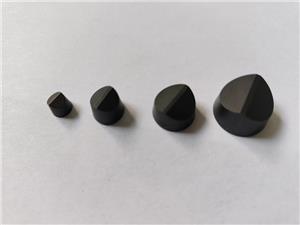
A: Our machines can achieve depths up to 1.5mm on materials with hardness up to 60 HRC, depending on the marking technology (dot peen or scribe). We use carbide or diamond-tipped styli for extended life.
Q: How do you ensure mark legibility after heat treatment?
A: We recommend marking after heat treatment or using a depth that accounts for scale formation. Our application engineers can provide specific parameters based on your process.
Q: Can your machines integrate with our existing MES?
A: Yes, we support all major industrial protocols and can provide custom drivers if needed. We also offer a REST API for modern MES platforms.
Q: What is the typical maintenance interval?
A: Under normal operation, our machines require minimal maintenance. We recommend a quarterly inspection and annual overhaul. The mean time between failures (MTBF) is over 10,000 hours.
Q: What is the lead time for a custom roll marking system?
A: Standard systems ship in 8-10 weeks. Custom configurations may take 12-16 weeks, depending on complexity.
Conclusion and Call to Action
\nYour roll marking process shouldn't be a hidden cost. With the right technology, you can achieve consistent quality, reduce downtime, and ensure full traceability. NANTONG LUCUBRATE MACHINERY TECHNICAL LTD. has the expertise and solutions to transform your marking operations. To learn more, download our technical white paper "Advanced Roll Marking: A Guide to Precision and Productivity" or contact our sales engineers for a personalized consultation. Don't let your roll marking cost you another dollar.