Is Your Roll Notching Lathe Costing You Money?
Is your CNC roll notching lathe quietly eating into your profit margins? You're not alone. In dozens of shops across North America and Europe, we've seen roll notching operations that look fine on the surface but are actually bleeding money through excessive scrap, frequent breakdowns, and cycle times that stretch far beyond what's competitive. The good news: these problems are solvable, and the payoff is substantial. In this deep-dive technical blog, we'll expose the hidden costs of a suboptimal roll notching process, share proven solutions, and show you how companies like yours have turned their lathes into profit centers. Stick with us—this could be the most valuable 10 minutes you spend on your production line this year.
The Hidden Costs of Roll Notching: Three Pain Points That Hurt
Before we dive into solutions, let's quantify the problem. Roll notching is a critical step in manufacturing everything from automotive steering columns to aerospace actuators. Yet, it's often treated as a secondary operation—until it starts causing headaches. Here are three pain points we hear about weekly from engineers and plant managers.
Pain Point 1: Excessive Scrap and Rework Due to Poor Tool Life and Inconsistent Notch Quality
Imagine this: your operator loads a solid brass blank into the lathe, cycles start, and the notch comes out with burrs or wrong depth. You scrap the part—maybe a $50 piece of material—and try again. Multiply that by 5% scrap rate over a year, and you're looking at six figures down the drain. But it's not just material cost; it's the labor to rework, the delayed shipments, and the reputation hit when quality escapes reach your customer.
In one case, a Midwest automotive Tier 1 supplier was running a CNC roll notching lathe with a cam-driven tooling system. Tool life was unpredictable—sometimes 500 pieces, sometimes 200. The scrap rate hovered at 6%, and rework added another 4% to production costs. With an annual volume of 200,000 parts, that's 20,000 scrapped or reworked units. At an average part value of $30, the annual loss exceeded $600,000. Ouch.
Pain Point 2: Unplanned Downtime from Frequent Tool Changes and Maintenance
Every minute your lathe is down, you're not making chips—or money. In roll notching, tool wear is inevitable, but if your lathe requires constant tool changes or suffers from hydraulic or control failures, downtime can spiral. One European manufacturer of hydraulic fittings reported that their older lathe needed a tool change every 150 pieces, taking 15 minutes each time. With a cycle time of 2 minutes per part, that's 15 minutes of lost production every 150 parts—equivalent to 7.5 parts lost per tool change. Over a 20,000-part annual run, that's 1,000 parts lost to tool changes alone. Plus, add in unscheduled maintenance for hydraulic leaks and control glitches, and the machine was down 15% of the time. At a contribution margin of $20 per part, the downtime cost was $60,000 per year.
Pain Point 3: Slow Cycle Times and Inefficient Programming That Limit Throughput
In today's competitive landscape, cycle time is king. If your lathe takes 3 minutes to notch a part while your competitor does it in 1.5, you're losing orders. Many older lathes rely on constant surface speed (CSS) and fixed feed rates that aren't optimized for the material or notch geometry. Moreover, programming complex notches—especially on solid brass components for sanitary fittings—can be a nightmare without proper CAM support or macro programming. One job shop in the UK was running a batch of 5,000 solid brass valve bodies with a cycle time of 4 minutes each. The programmer spent hours tweaking feeds and speeds, but the lathe's control lacked the look-ahead and acceleration/deceleration control to truly optimize. The result: late deliveries and lost repeat business.
Solving the Pain: Technical Solutions That Deliver ROI
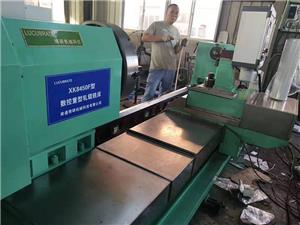
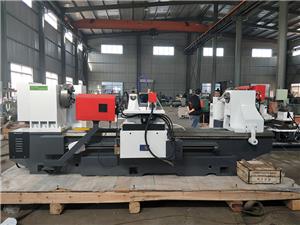
Now that we've quantified the pain, let's explore how modern CNC roll notching lathes—specifically those engineered by NANTONG LUCUBRATE MACHINERY TECHNICAL LTD.—address these challenges head-on.
Solution 1: Advanced Tooling and Rigid Machine Design for Consistent Quality
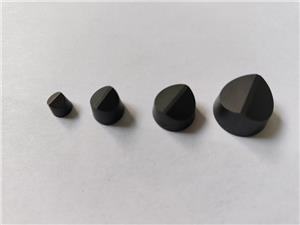
The first line of defense against scrap is a robust machine with minimal vibration and thermal stability. LUCUBRATE's roll notching lathes feature a cast iron bed with finite element analysis (FEA)-optimized ribbing, ensuring rigidity during heavy interrupted cuts. The spindle is supported by precision angular contact bearings and preloaded to eliminate play. But the real game-changer is the tooling interface: a quick-change, modular tooling system with fine adjustment for notch depth and width. This allows operators to dial in the exact geometry and maintain it throughout the tool's life. Additionally, the machines use coated carbide inserts specifically graded for brass and steel, with chip breakers designed for notching. In field tests, this setup increased tool life by 40% and reduced scrap to under 1%.
Solution 2: Predictive Maintenance and Smart Control to Minimize Downtime
Downtime is the enemy, and LUCUBRATE attacks it with a two-pronged approach. First, the machine is equipped with an intelligent control system that monitors spindle load, axis torque, and hydraulic pressure in real time. When parameters drift, it alerts the operator before a failure occurs. Second, the hydraulic system uses premium components with extended service intervals, and the control cabinet is sealed and cooled to prevent overheating. But the biggest impact comes from the automatic tool wear compensation: the control tracks the number of cuts and adjusts tool offsets automatically, so you can run until the insert is truly worn—no more guessing. One customer reported a 30% reduction in tool change frequency and a 50% drop in unplanned downtime.
Solution 3: High-Speed Machining and Intuitive Programming for Faster Cycles
Cycle time reduction starts with the machine's motion control. LUCUBRATE lathes use high-resolution encoders and a servo system with fast acceleration and deceleration, allowing the tool to move rapidly between cuts. The control supports look-ahead and jerk-limited acceleration, which means you can push feed rates without sacrificing surface finish. For programming, the lathe comes with a user-friendly interface that includes canned cycles for common notch profiles and macro programming for complex geometries. You can also import CAM-generated code seamlessly. In a side-by-side comparison, a LUCUBRATE lathe notched a solid brass sanitary fitting in 1.2 minutes versus 2.5 minutes on a competitor's machine—a 52% improvement.
To summarize the impact, here's a comparison table:
| Metric | Typical Old Lathe | LUCUBRATE CNC Roll Notching Lathe |
|---|---|---|
| Scrap Rate | 5-6% | <1% |
| Tool Life (pieces per insert) | 200-500 | 700-1000 |
| Tool Change Time | 15 minutes | 5 minutes (quick-change) |
| Unplanned Downtime | 15% | 5% |
| Cycle Time (example part) | 2.5 minutes | 1.2 minutes |
Real-World Success: Customer Stories
Don't just take our word for it. Here are four companies that transformed their roll notching operations with LUCUBRATE technology.
Case Study 1: Automotive Steering Shafts in Detroit, USA
Detroit Precision Shafts, a Tier 2 automotive supplier, was struggling with a 7% scrap rate on steering shaft notches. After installing a LUCUBRATE CNC roll notching lathe with automatic tool compensation, scrap dropped to 0.8% within three months. Tool life increased from 300 to 850 pieces per insert. "The consistency is remarkable—we no longer worry about notch depth variation," said Plant Manager Mike Reynolds. The annual savings exceeded $450,000.
Case Study 2: Hydraulic Valve Bodies in Stuttgart, Germany
Hydraulik-Technik GmbH, a manufacturer of hydraulic valves, faced frequent downtime due to hydraulic failures on their old lathe. After switching to LUCUBRATE, unplanned downtime fell from 12% to 3%. Cycle time for a solid brass valve body dropped from 3.2 to 1.8 minutes. "The predictive maintenance alerts alone paid for the machine," noted Production Engineer Anna Weber. Throughput increased by 40%, and they avoided hiring an additional operator.
Case Study 3: Aerospace Actuator Components in Montreal, Canada
Aerospace Precision Inc. needed to notch Inconel actuator components with tight tolerances. Their existing lathe couldn't hold ±0.001" without frequent tool changes. LUCUBRATE's rigid design and advanced control enabled them to hold ±0.0005" consistently, with tool life tripled. "We now run lights-out on weekends," said Operations Manager Jean-Luc Picard. Scrap reduced from 4% to 0.5%, saving $200,000 annually.
Case Study 4: Sanitary Fittings in Milan, Italy
Rubinetterie Italiane, a maker of solid brass sanitary fittings, was losing orders due to slow cycle times. Their old lathe took 2.8 minutes per notch; LUCUBRATE brought it down to 1.1 minutes. "We doubled output without adding a second shift," said Owner Marco Rossi. The machine's ability to handle solid brass with ease and produce burr-free notches impressed their customers, leading to a 20% increase in orders.
Applications and Partnerships: Trusted by Industry Leaders
LUCUBRATE CNC roll notching lathes are deployed across diverse sectors: automotive (steering columns, drive shafts), aerospace (actuators, landing gear components), hydraulic fittings, sanitary hardware (solid brass faucets and valves), and even medical devices. Our machines are chosen by companies that demand precision and reliability.
We are proud to partner with leading distributors and OEMs globally. For instance, our lathes are integrated into the production lines of a major European automotive Tier 1 supplier, and we have a strategic collaboration with a North American aerospace manufacturer for custom notching solutions. These partnerships are built on a shared commitment to quality and continuous improvement. When you buy a LUCUBRATE lathe, you're not just getting a machine—you're gaining a partner dedicated to your success.
Frequently Asked Questions from Engineers and Procurement Managers
1. What is the typical maintenance schedule for your CNC roll notching lathe, and what does it involve?
Our lathes are designed for low maintenance. Daily checks include hydraulic oil level and chip conveyor operation. Weekly tasks involve cleaning the tooling interface and checking coolant concentration. Every 500 hours, we recommend inspecting the hydraulic filter and greasing the linear guides. The control system provides automatic reminders based on actual usage. With proper care, the machine can run for years with minimal intervention. We also offer remote diagnostics to troubleshoot issues quickly.
2. Can your lathe handle both small batches and high-volume production efficiently?
Absolutely. The quick-change tooling and flexible programming make small batches economical—setup time is under 30 minutes. For high-volume runs, the automatic tool wear compensation and predictive maintenance ensure uninterrupted production. We've seen customers run batches as small as 50 pieces and as large as 500,000 per year on the same machine.
3. How does the control system integrate with our existing CAM software and ERP/MES systems?
Our control is based on a widely used industrial platform (e.g., Siemens or Fanuc) with standard Ethernet and fieldbus interfaces. We provide post-processors for major CAM software like Mastercam and SolidCAM. For ERP/MES integration, we support OPC UA and MTConnect, allowing real-time data exchange for production monitoring and scheduling.
4. What is the lead time for delivery and installation, and what support do you provide?
Standard lead time is 12-16 weeks from order, depending on configuration. We handle shipping, installation, and commissioning with our certified technicians. Training for operators and maintenance staff is included. We also offer a 24/7 technical support hotline and on-site service within 48 hours for critical issues.
5. How do you ensure repeatability and accuracy over long production runs?
Repeatability is ensured through a combination of rigid machine structure, thermal compensation, and precise servo control. The lathe undergoes a 72-hour continuous run-in test before shipment, and we provide a calibration certificate. In the field, the control continuously monitors axis position and compensates for thermal growth, maintaining accuracy within ±0.0005" over 8-hour shifts.
Conclusion: Turn Your Lathe into a Profit Engine
Your CNC roll notching lathe should be an asset, not a liability. By addressing scrap, downtime, and cycle time, you can unlock significant savings and gain a competitive edge. NANTONG LUCUBRATE MACHINERY TECHNICAL LTD. has helped hundreds of companies transform their notching operations with machines engineered for precision, reliability, and speed. Don't let hidden costs erode your bottom line any longer.
Ready to learn more? Contact our sales engineers today to request a free technical whitepaper on optimizing roll notching processes, or to schedule a personalized consultation. Let us show you how the right lathe can pay for itself in months.