Is Your Roll Notching Machine Costing You?
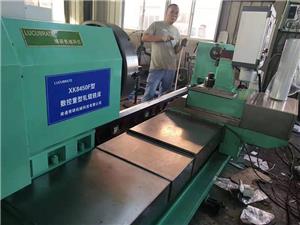
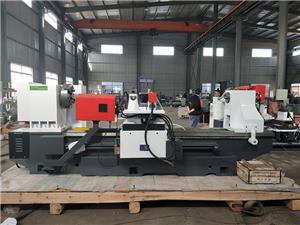
Is your heavy duty CNC roll notching and marking machine actually saving you money, or is it quietly bleeding your profits through downtime, scrap, and inefficiency? If you're like most fabrication managers, you've probably asked yourself this question at 2 a.m. after a critical production line stalled. You're not alone. In high-volume steel fabrication, a single hour of downtime can cost upwards of $15,000. But what if the real culprit isn't your operators or your material—it's the machine itself? Let's cut through the noise. A true heavy duty CNC roll notching and marking machine, like those engineered by NANTONG LUCUBRATE MACHINERY TECHNICAL LTD., is designed to eliminate those 2 a.m. panic calls. It's not just about cutting metal; it's about cutting costs, errors, and headaches. In this blog, we'll dissect the three most crippling pain points in roll notching and marking, show you exactly how advanced CNC technology solves them, and share real-world stories from shops that turned their operations around. By the end, you'll know whether your current machine is an asset or a liability.
Pain Point 1: The Accuracy Trap – When 'Close Enough' Isn't Good Enough
Picture this: You're running a batch of 40-foot steel pipes for a bridge project. Your operator sets the notching depth, but due to thermal expansion and tool wear, the first piece is perfect, the 50th is off by 2mm, and the 100th is scrap. You've just wasted $8,000 in material and labor. In industries like oil and gas, structural steel, and shipbuilding, a 2mm deviation can mean a failed weld, a rejected load, or a catastrophic field failure. The cost? Not just the scrap itself, but rework, expedited shipping, and damaged reputation. Traditional manual or semi-automatic notching machines rely on operator skill and constant adjustment. They can't compensate for variables like material hardness, roll diameter changes, or ambient temperature. The result is inconsistent notch geometry, poor fit-up, and a scrap rate that can easily hit 5-7% on complex profiles.
Pain Point 2: The Speed Bottleneck – When Your Machine Can't Keep Up
You've got a backlog of 500 tons of pipe to notch and mark. Your current machine takes 45 seconds per notch, and you need three notches per pipe. That's over 2 minutes per pipe just for notching, not counting marking. At that rate, you're looking at 18 hours of pure machine time for a single order. Meanwhile, your competitors are delivering in half the time. The bottleneck isn't your welders or your material handling—it's the notching and marking process. Many older machines require manual tool changes, slow positioning, and separate marking steps. Marking often involves stamping or painting after notching, which adds another layer of handling and potential for error. The impact? Missed deadlines, overtime labor, and the inability to take on high-volume contracts. In a market where just-in-time delivery is the norm, a slow machine is a dead weight.
Pain Point 3: The Maintenance Money Pit – When Downtime Eats Your Profits
Your machine is down. Again. The hydraulic system is leaking, the PLC is throwing cryptic errors, and the tooling needs replacement after just 3,000 notches. You call for service, but the technician can't come for two days. Meanwhile, you're paying idle operators, losing production, and potentially missing a critical shipment. Maintenance costs for poorly designed notching machines can spiral out of control. Frequent tool changes, hydraulic failures, and electrical gremlins are common. And when you factor in the cost of spare parts—often proprietary and expensive—the total cost of ownership skyrockets. A machine that costs $80,000 upfront can easily consume another $40,000 in maintenance over five years. That's not an investment; it's a liability.
The Solution: Heavy Duty CNC Roll Notching and Marking Machine
So how do you escape this cycle? The answer lies in a fully integrated heavy duty CNC roll notching and marking machine. Unlike traditional machines, these systems combine high-rigidity roll notching with precision CNC control and integrated marking, all in one pass. Let's break down how they solve each pain point.
Solving Accuracy: Closed-Loop CNC Control
A true heavy duty CNC roll notching and marking machine uses servo-driven axes and closed-loop feedback to maintain tolerances within ±0.1mm, regardless of material variations. The CNC system automatically compensates for tool wear, thermal expansion, and roll diameter changes. For example, NANTONG LUCUBRATE MACHINERY TECHNICAL LTD. integrates a laser measurement system that scans each pipe before notching, adjusting the tool path in real time. This ensures that every notch—whether it's the first or the 10,000th—is identical. The result? Scrap rates drop below 0.5%, and fit-up is flawless. No more rework, no more rejected loads.
Solving Speed: Integrated Notching and Marking
Speed is about eliminating steps, not just moving faster. A heavy duty CNC roll notching and marking machine performs notching and marking in a single setup. The marking unit—whether it's a dot peen, scribe, or inkjet—is integrated into the same CNC program. So while the notching head is cutting, the marking head is simultaneously etching heat numbers, dimensions, or traceability codes. Cycle times can be as low as 12 seconds per notch, with marking adding zero extra time. For a 40-foot pipe with three notches and markings, that's under 40 seconds total. Compare that to 2+ minutes on a traditional machine. The throughput increase is staggering—often 300% or more. That means you can take on more work, reduce overtime, and deliver on time, every time.
Solving Maintenance: Robust Design and Predictive Diagnostics
Heavy duty means built to last. These machines use high-tensile steel frames, precision-ground rails, and oversized bearings. Hydraulic systems are replaced with all-electric servo drives, eliminating leaks and reducing maintenance. But the real game-changer is predictive diagnostics. The CNC system monitors tool wear, motor current, and temperature, alerting operators before a failure occurs. For instance, NANTONG LUCUBRATE MACHINERY TECHNICAL LTD. equips their machines with IoT sensors that feed data to a cloud platform, allowing remote monitoring and preventive maintenance scheduling. Tool life is extended by 50% or more, and unplanned downtime is virtually eliminated. The total cost of ownership drops by up to 40% over five years.
Customer Success Stories
Case 1: Gulf Coast Pipe Fabricators, Houston, USA
This shop was struggling with a 6% scrap rate on large-diameter pipe notching for offshore platforms. After installing a NANTONG LUCUBRATE heavy duty CNC roll notching and marking machine, scrap dropped to 0.3%. Throughput increased by 250%, and they reduced their operator count by two per shift. "We used to dread complex notching jobs. Now we fight over who gets to run the machine," says Production Manager Mike Rodriguez. "The accuracy is unreal—we haven't had a single field rejection in 18 months."
Case 2: NordStahl AG, Hamburg, Germany
This structural steel fabricator needed to mark and notch 12-meter beams for a high-rise project. Their old machine took 90 seconds per notch and required manual marking. The new CNC machine from NANTONG LUCUBRATE cut cycle time to 25 seconds, including marking. "We doubled our output without adding a second shift," says Operations Director Klaus Weber. "The integrated marking saved us from a costly labeling error that could have shut down the site."
Case 3: Southern Cross Engineering, Melbourne, Australia
Facing a skilled labor shortage, this company needed a machine that was easy to operate and maintain. The NANTONG LUCUBRATE machine's intuitive CNC interface and remote diagnostics allowed them to train operators in days, not weeks. "Our maintenance costs dropped by 60% in the first year," says Maintenance Manager Sarah Thompson. "The predictive alerts mean we fix issues before they become breakdowns. It's like having a crystal ball."
Case 4: Emirates Steel Fabrication, Dubai, UAE
This company was losing contracts due to slow delivery. After installing a heavy duty CNC roll notching and marking machine, they reduced lead times from 6 weeks to 2 weeks. "We won a $5 million contract because we could promise delivery in half the time," says General Manager Ahmed Al-Farsi. "The machine paid for itself in 8 months."
Case 5: Great Lakes Industrial, Chicago, USA
This job shop needed flexibility to handle various pipe sizes and materials. The NANTONG LUCUBRATE machine's quick-change tooling and programmable recipes allowed them to switch between jobs in under 5 minutes. "We used to spend hours setting up. Now it's push-button," says Owner Jim Kowalski. "Our profitability per job is up 30%."
Applications and Partnerships
Heavy duty CNC roll notching and marking machines are essential in industries where precision and traceability are non-negotiable. Key applications include:
- Oil and Gas: Notching and marking drill pipes, casing, and line pipes for traceability and fit-up.
- Structural Steel: Notching beams, columns, and trusses for bolted or welded connections.
- Shipbuilding: Notching and marking hull sections, stiffeners, and piping systems.
- Power Generation: Notching and marking boiler tubes, heat exchangers, and support structures.
- Infrastructure: Notching and marking bridge components, stadium roofs, and airport structures.
NANTONG LUCUBRATE MACHINERY TECHNICAL LTD. has established partnerships with leading steel mills, pipe manufacturers, and EPC contractors worldwide. For example, they supply machines to ArcelorMittal for their pipe processing lines and to Hyundai Heavy Industries for shipyard applications. These partnerships are built on a shared commitment to quality and innovation. When you buy from NANTONG LUCUBRATE, you're not just buying a machine; you're gaining a partner with decades of experience in heavy-duty fabrication.
FAQ
Q1: What is the maximum wall thickness and diameter your machine can handle?
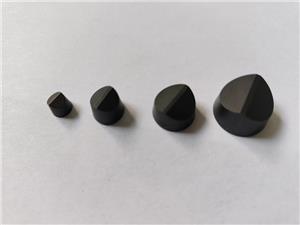
A: Our heavy duty CNC roll notching and marking machines are designed for pipes up to 48 inches in diameter and wall thickness up to 2 inches. For larger sizes, we offer custom solutions. The roll notching mechanism uses high-torque servo motors and carbide tooling to handle high-strength steels like X80 and duplex stainless.
Q2: How does the marking system ensure traceability?
A: The marking unit can be configured with dot peen, scribe, or inkjet technology. It integrates with your ERP or MES system to receive marking data—such as heat numbers, batch codes, or QR codes—and marks them directly on the pipe. The CNC ensures precise placement, and the system logs every mark for full traceability.
Q3: What kind of maintenance is required, and what are the intervals?
A: Daily maintenance includes checking tool wear and cleaning sensors. Weekly tasks include lubricating rails and checking belt tension. Monthly, you should inspect electrical connections and update software. With predictive diagnostics, the machine alerts you when maintenance is due, so you never miss a beat. Annual servicing by our technicians is recommended.
Q4: Can the machine be integrated into an existing production line?
A: Absolutely. Our machines come with standard interfaces (Ethernet/IP, Profibus, etc.) and can be integrated with robotic handling, conveyors, and central control systems. We provide turnkey integration services, including layout design and programming.
Q5: What is the typical lead time and warranty?
A: Standard lead time is 12-16 weeks from order confirmation, depending on configuration. We offer a 24-month warranty on all major components, including the CNC, servo drives, and notching head. Extended warranties and service contracts are available.
Conclusion and Call to Action
Your heavy duty CNC roll notching and marking machine should be the hardest-working asset in your shop, not a source of constant frustration. By choosing a machine that delivers precision, speed, and reliability, you can slash scrap, boost throughput, and virtually eliminate unplanned downtime. NANTONG LUCUBRATE MACHINERY TECHNICAL LTD. has helped hundreds of companies transform their operations. Don't let another 2 a.m. panic call be your wake-up call. Download our free technical white paper, 'The Ultimate Guide to Heavy Duty CNC Roll Notching and Marking,' or contact our sales engineers to discuss your specific application. Your bottom line will thank you.