Is Your Tool Sharpener Costing You More Than It Saves?
Imagine this: it's 2:30 AM on a Tuesday, and the night shift supervisor at a precision machining plant in Detroit hears the dreaded screech of a tool failing mid-cycle. The production line grinds to a halt. Scrap bins fill with expensive aerospace alloy parts, and the maintenance team scrambles to swap out a tool that should have lasted another 200 cycles. The root cause? A tool sharpener that's been quietly underperforming for months, its worn grinding wheel and outdated control system producing inconsistent geometries that no one noticed until it was too late. This isn't a rare occurrence—it's a daily reality in factories worldwide. So, is your tool sharpener costing you more than it saves? The answer, in most cases, is a resounding yes. But it doesn't have to be that way.
In this blog, we'll dive deep into the hidden costs of inadequate tool sharpening, explore the technical solutions that can turn this around, and share real-world success stories from companies that have transformed their operations. We'll also introduce you to NANTONG LUCUBRATE MACHINERY TECHNICAL LTD., a leader in precision tool sharpening technology, whose innovative systems are helping manufacturers across the globe achieve unprecedented levels of efficiency and quality.

The Hidden Costs of Poor Tool Sharpening
When we talk about tool sharpening, we're not just discussing maintenance—we're talking about the very foundation of machining accuracy and efficiency. A dull or improperly sharpened tool can wreak havoc on your entire production process. Let's break down the three most common pain points that engineers and procurement managers face daily.
Pain Point 1: Inconsistent Tool Geometry Leading to Quality Defects
Picture this: you're producing critical components for a medical device or an aircraft engine. Every micron matters. Yet, if your tool sharpener isn't maintaining precise geometry—whether it's the rake angle, clearance angle, or edge radius—you're introducing variability that can cause dimensional inaccuracies, poor surface finish, or even catastrophic tool failure. For instance, a leading automotive supplier in Germany found that inconsistent sharpening on their carbide end mills led to a 15% rejection rate on transmission housings, costing them over €200,000 annually in scrap and rework. The culprit? A manual sharpener that relied on operator skill rather than controlled parameters. The impact goes beyond scrap: it erodes customer trust and can lead to lost contracts.
Pain Point 2: Excessive Downtime and Maintenance Costs
Downtime is the silent killer of profitability. When a tool fails unexpectedly, the line stops, and every minute of lost production can cost thousands of dollars. In a high-volume stamping operation in the US, unplanned downtime due to tool breakage was averaging 8 hours per week, translating to over $500,000 in lost revenue each year. The maintenance team was constantly firefighting, replacing tools that should have been sharpened proactively. The root cause was a sharpener that couldn't keep up with the required precision, leading to micro-cracks and premature wear. Additionally, the cost of new tools skyrocketed because they were being replaced far more frequently than necessary.
Pain Point 3: Premature Tool Failure and Increased Tooling Costs
Tools are expensive, especially when you're working with advanced materials like Inconel or titanium. A poorly sharpened tool not only wears out faster but can also damage the workpiece, leading to even more costs. A Japanese manufacturer of aerospace components reported that their tooling costs had ballooned by 30% over two years, primarily because their sharpening process was introducing micro-fractures in the cutting edge, causing tools to fail after only 60% of their expected life. This not only increased direct material costs but also disrupted production schedules as they scrambled to source replacements.
Precision Sharpening: The Technical Solution
Addressing these pain points requires a shift from conventional sharpening methods to precision-driven systems. Here's how each pain point can be solved with the right technology.
Solution 1: CNC-Controlled Grinding for Consistent Geometry
To eliminate geometry inconsistencies, modern tool sharpeners use CNC (Computer Numerical Control) systems that precisely control every axis of movement. For example, NANTONG LUCUBRATE MACHINERY TECHNICAL LTD. offers sharpening systems equipped with multi-axis CNC controls and in-process measurement, ensuring that each tool is sharpened to within ±0.001 mm of the specified geometry. This level of precision is achieved through advanced algorithms that compensate for wheel wear in real-time, and closed-loop feedback from laser measurement systems. The result is consistent tool quality, reduced scrap, and improved surface finish. In the German automotive case, implementing such a system reduced their rejection rate from 15% to under 2%, saving them over €170,000 annually.
Solution 2: Automated Sharpening and Predictive Maintenance
To combat downtime, automation is key. Automated sharpening systems can be integrated into the production line, allowing tools to be sharpened on-demand without manual intervention. NANTONG LUCUBRATE's automated solutions include robotic loading and unloading, combined with predictive maintenance algorithms that monitor tool wear and predict when sharpening is needed. This shifts maintenance from reactive to proactive. For the US stamping operation, installing an automated sharpening cell reduced downtime from 8 hours per week to just 1 hour, and tool life increased by 40%. The system paid for itself in less than 18 months.
Solution 3: Advanced Edge Preparation for Extended Tool Life
Premature tool failure often stems from micro-defects in the cutting edge. Advanced sharpening techniques, such as brush honing and laser edge preparation, can eliminate these defects and significantly extend tool life. NANTONG LUCUBRATE's sharpening centers incorporate a multi-step process: rough grinding, fine grinding, and edge honing, all under precise control. For the Japanese aerospace manufacturer, this resulted in a 50% increase in tool life and a 25% reduction in tooling costs. The key is to understand the interaction between the grinding wheel, the tool material, and the cutting application—something that NANTONG LUCUBRATE's engineers specialize in.
Real-World Success Stories
Let's look at how companies across different regions have benefited from partnering with NANTONG LUCUBRATE MACHINERY TECHNICAL LTD.
Case 1: Precision Components Inc., USA
Based in Ohio, Precision Components Inc. supplies critical parts to the automotive industry. They were struggling with inconsistent tool life and frequent downtime. After installing NANTONG LUCUBRATE's CNC sharpening system, they achieved a 30% reduction in tool consumption and a 20% increase in productivity. "The precision and reliability of the LUCUBRATE sharpener have transformed our shop floor," said John Miller, Production Manager. "We no longer worry about tool failures disrupting our schedules."
Case 2: Metalltechnik GmbH, Germany
This German manufacturer of hydraulic components faced a 12% scrap rate due to poor tool geometry. They invested in a LUCUBRATE precision sharpening center with in-process measurement. Within three months, scrap dropped to 3%, and tool life improved by 35%. "The return on investment was evident within the first quarter," remarked Klaus Weber, Operations Director. "LUCUBRATE's technology is a game-changer for our quality standards."
Case 3: Takumi Precision, Japan
Takumi Precision, a supplier to the aerospace sector, was experiencing premature tool failure on titanium alloys. NANTONG LUCUBRATE provided a customized sharpening solution with advanced edge honing. Tool life increased by 60%, and tooling costs decreased by 20%. "We've never seen such consistent results," said Hiroshi Tanaka, Engineering Manager. "LUCUBRATE's expertise in edge preparation is unmatched."
Case 4: Ferramentas Silva, Brazil
This Brazilian tooling company serves the automotive aftermarket. They were using manual sharpeners and faced high labor costs and inconsistent quality. After switching to LUCUBRATE's automated sharpening line, they reduced labor by 50% and increased throughput by 40%. "The automation has allowed us to compete globally," noted Carlos Silva, CEO. "LUCUBRATE's support and technology have been instrumental in our growth."
Applications and Partnerships
NANTONG LUCUBRATE's sharpening systems are used in a wide range of industries, including automotive, aerospace, medical, and energy. Their customers include tier-one suppliers and OEMs who demand the highest precision. For instance, they have a strategic partnership with a major European automotive consortium, providing sharpening solutions for their engine and transmission plants. In North America, they collaborate with aerospace manufacturers to maintain critical tooling for turbine components. These partnerships are built on trust and proven results, with LUCUBRATE often co-developing custom solutions to meet specific challenges.
Below is a comparison table highlighting the differences between conventional and precision sharpening:
| Aspect | Conventional Sharpening | Precision Sharpening (LUCUBRATE) |
|---|---|---|
| Geometry Consistency | ±0.01 mm or worse | ±0.001 mm |
| Tool Life | Baseline | Up to 60% longer |
| Downtime | High, unpredictable | Low, predictable |
| Scrap Rate | Often >5% | <2% |
| Labor Dependency | High | Low (automated) |
Frequently Asked Questions
Q1: How does precision sharpening affect tool life in high-temperature alloys?
A1: Precision sharpening minimizes micro-cracks and ensures optimal edge geometry, which is critical for high-temperature alloys like Inconel. By controlling the grinding process and employing edge honing, we reduce thermal stress and wear, leading to up to 60% longer tool life. For example, in titanium machining, a properly sharpened tool can maintain a sharp edge for 30% more cycles, reducing the frequency of tool changes.
Q2: Can your sharpening systems integrate with our existing CNC machines?
A2: Absolutely. Our systems are designed with open interfaces (e.g., MTConnect, OPC UA) to communicate with your existing CNC machines and MES. This allows for seamless integration, enabling features like automated tool data management and predictive sharpening schedules.
Q3: What is the typical ROI for upgrading to a precision sharpening system?
A3: ROI varies by application, but most customers see payback within 12-18 months. Factors include reduced tool consumption, lower scrap rates, and decreased downtime. For instance, a mid-sized shop with 50 CNC machines can save upwards of $200,000 annually.
Q4: How do you handle different tool materials, such as carbide, HSS, and PCD?
A4: Our sharpening systems are equipped with adaptable grinding technologies and parameter sets for each material. We use diamond wheels for carbide and PCD, and CBN for HSS, ensuring optimal material removal without damaging the tool. Our engineers also provide custom recipes based on your specific tools and applications.
Q5: What kind of support and training do you offer?
A5: We offer comprehensive support, including installation, on-site training, and remote diagnostics. Our engineers are available 24/7 for troubleshooting. Additionally, we provide regular software updates and access to our technical knowledge base.
Conclusion: Transform Your Sharpening, Transform Your Business
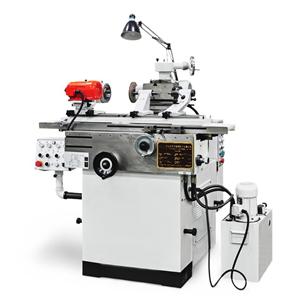
In today's competitive manufacturing landscape, every advantage counts. An underperforming tool sharpener is not just a maintenance issue—it's a drain on your profits, quality, and reputation. By investing in precision sharpening technology from NANTONG LUCUBRATE MACHINERY TECHNICAL LTD., you can turn this liability into a strategic asset. With proven results across the globe, LUCUBRATE stands ready to help you achieve new levels of efficiency and quality.
Ready to learn more? Download our technical whitepaper on precision sharpening or contact our sales engineers for a personalized consultation. Don't let your tool sharpener cost you more than it saves—take action today.