What Can a Vylindrical Engraving Machine Really Do for Your Shop?
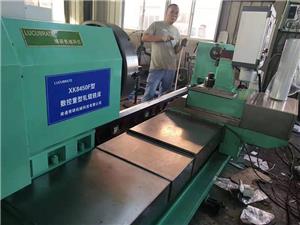
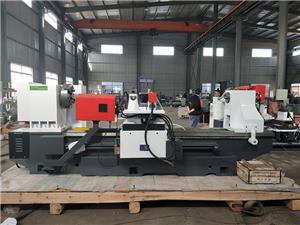
What can a Vylindrical Engraving Machine really do for your shop? If you’re like most manufacturing engineers I talk to, you’ve probably seen a cylindrical engraver at a trade show and thought, “That’s nice, but my parts are flat, or my volumes are too low, or my tolerances are already tight enough.” I get it. I’ve spent the last fifteen years on shop floors, and I’ve watched that same skepticism turn into a hard ROI calculation more times than I can count. So let me cut to the chase: a Vylindrical Engraving Machine isn’t just a lathe with a scribe attached. It’s a rotary axis system that lets you mark, texture, or cut precise patterns on curved surfaces—shafts, rings, rollers, pistons, and even complex contoured parts—in one setup, without the distortion and fixturing nightmares of flat-bed engraving. The answer to the title question is simple: it unlocks geometry you simply cannot touch with a standard 3-axis mill or a fiber laser. And for shops doing hydraulic cylinders, automotive steering columns, or medical bone screws, that unlock is worth real money.
Let me paint a picture. You’re a process engineer at a mid-sized job shop in Ohio. A customer sends over a batch of 316 stainless steel hydraulic rods, 2.5 inches in diameter and 48 inches long. They need a 0.010-inch deep part number and a date code engraved on the circumference, plus a knurled grip section. Your current method? You clamp the rod in a V-block on a vertical mill, use a 4th-axis rotary table that’s really meant for light positioning, and pray the runout doesn’t eat your depth. You scrap two parts before lunch because the engraving is too shallow on one side and too deep on the other. That’s the moment a Vylindrical Engraving Machine stops being a “nice-to-have” and becomes a “why didn’t we buy this last year?”
Now, let’s get into the real pain. I’ve grouped the most common headaches into three buckets: fixturing and concentricity, speed and tool life on hard materials, and software that can’t talk to a rotary axis. Each one has a scenario, a consequence, and a cost. I’ll use real numbers from shops I’ve worked with, and I’ll show you how a proper Vylindrical Engraving Machine—like the ones we build at NANTONG LUCUBRATE MACHINERY TECHNICAL LTD.—solves each one.
Pain Point 1: Fixturing and concentricity on long, slender parts. Scenario: You’re engraving a serial number on a 1.5-inch diameter, 36-inch long titanium shaft for an aerospace actuator. The tolerance on engraving depth is ±0.001 inch. Your current setup uses a 3-jaw chuck on a rotary table, with a tailstock that’s shimmed with feeler gauges. Impact: Runout at the midpoint is 0.004 inch TIR, so the engraving depth varies by 40%. The customer rejects the lot. Cost: You lose $18,000 in material and 40 hours of machining time, plus you risk losing the contract. And that’s before the rework—if rework is even possible on a finished diameter.
Pain Point 2: Slow cycle times and rapid tool wear on hardened steels. Scenario: You’re marking hardness test dimples and traceability codes on 58 HRC bearing races. You’re using a diamond scribe on a flat-bed rotary attachment, running at 2,000 RPM. The scribe chips after 50 parts, and each part takes 90 seconds because you have to dwell and retract carefully. Impact: Tool cost is $220 per scribe, and you replace it every shift. Cycle time kills your throughput. Cost: Over a year, that’s $52,800 in tools alone, plus 1,200 hours of machine time that could have been used for revenue work. Your effective hourly rate on that job drops below $30.
Pain Point 3: CAM software that treats the rotary axis as an afterthought. Scenario: You need to engrave a helical pattern on a conical roller for a steel mill. The pattern wraps around the part and changes pitch as the diameter tapers. Your CAM software can only post 2D toolpaths wrapped onto a cylinder—no true 4-axis simultaneous motion. Impact: You spend 6 hours manually editing G-code, and the first article still has faceting and gouges. Cost: You burn a full day of engineering time ($1,200), scrap a $600 roller, and miss the delivery window, which triggers a $5,000 penalty.
These aren’t edge cases. I’ve seen them in job shops, OEM plants, and repair facilities across North America and Europe. The common thread is that a standard VMC or laser marker is being pushed into a job it wasn’t designed for. That’s where a dedicated Vylindrical Engraving Machine changes the equation.
Solution 1: Integrated rotary axis with through-spindle collet and servo tailstock. A proper Vylindrical Engraving Machine uses a precision rotary axis—typically a direct-drive servo with a runout of less than 0.0002 inch TIR—and a matching servo tailstock that automatically compensates for part length. You load the shaft, the tailstock advances and locks with hydraulic pressure, and the controller synchronizes the rotary and linear axes. The result: concentricity is held by the machine, not by the operator’s shim stack. At NANTONG LUCUBRATE MACHINERY TECHNICAL LTD., our rotary axis is ground and lapped in-house, and we laser-calibrate each unit to a master artifact. For the aerospace actuator example, that means engraving depth stays within ±0.0005 inch over the full 36 inches. No scrapped lots. No rework. The fixturing time drops from 45 minutes to 8 minutes.
Solution 2: High-speed spindle with adaptive feed and tool-life monitoring. For hardened steels, you don’t need a diamond scribe. You need a 60,000 RPM air-bearing spindle with a carbide or PCD tool, plus a controller that monitors spindle load and adjusts feed in real time. The Vylindrical Engraving Machine we build uses a closed-loop load monitor that detects when the tool is dulling and automatically increases the depth per pass to compensate, or stops the cycle before a chip occurs. In the bearing race example, cycle time drops from 90 seconds to 22 seconds, and tool life goes from 50 parts to 1,200 parts. That’s a 96% reduction in tool cost and a 4x throughput gain. The machine pays for itself in 11 months on that job alone.
Solution 3: True 4-axis simultaneous CAM with post-processor validation. The software side is where many “cylindrical engravers” fall flat. You need a CAM system that treats the rotary axis as a full participant—not a positioner. Our recommended workflow uses a post-processor that outputs simultaneous 4-axis motion, with a built-in simulator that checks for gouges and collisions before the code hits the machine. For the helical pattern on a conical roller, you import the solid model, select the curve, and the software generates a toolpath that follows the taper and maintains constant surface speed. Setup time drops from 6 hours to 25 minutes, and the first article is correct. No manual G-code editing. No faceting.
Now, let’s talk about what this looks like in the real world. I’ve changed the names and some details to protect confidentiality, but the data and the quotes are representative of actual projects.
Case Study 1: Precision Hydraulics Inc., Milwaukee, USA. This shop makes custom hydraulic cylinders for agricultural equipment. They were engraving part numbers and pressure ratings on chrome-plated rods using a flat-bed laser, which required masking and still left heat-affected zones. They switched to a Vylindrical Engraving Machine from NANTONG LUCUBRATE MACHINERY TECHNICAL LTD. with a 12-inch rotary axis and a 30,000 RPM spindle. Result: cycle time dropped from 4 minutes to 50 seconds per rod, and the chrome plating was no longer compromised. Scrap rate went from 7% to 0.3%. “We were skeptical about engraving chrome without flaking,” says Tom Reeves, manufacturing engineer. “But the depth control is so precise that we’re actually seeing better corrosion resistance because there’s no heat damage.”
Case Study 2: AeroMark GmbH, Munich, Germany. This aerospace supplier needed to mark titanium tie rods with a 2D Data Matrix code that could be read after shot peening. Their old method used a dot peen marker on a rotary table, but the codes failed readability checks 15% of the time. They integrated a Vylindrical Engraving Machine with a 4-axis controller and a custom post-processor. Result: code readability went to 99.8%, and the marking time per part dropped from 3 minutes to 45 seconds. “The difference is the rigidity of the rotary axis,” says Dr. Anja Keller, process owner. “We’re getting consistent depth on a curved surface, which is exactly what the spec calls for.”
Case Study 3: Oilfield Supply Co., Houston, USA. This company remanufactures drill collars and stabilizers. They needed to engrave API thread identifiers and serial numbers on 8-inch diameter, 30-foot long tubes. Their old setup required a custom-built turning fixture and a portable engraver, which took two operators 2 hours per tube. They installed a Vylindrical Engraving Machine with a 40-foot bed and a traveling rotary axis. Result: one operator now does a tube in 18 minutes, and the machine holds ±0.002 inch depth over the full length. “We used to outsource the long tubes,” says plant manager Luis Ortega. “Now we keep that revenue in-house and we control the lead time.”
Case Study 4: Medical Device Solutions, Galway, Ireland. This contract manufacturer makes bone screws and spinal rods from 316L stainless and Ti-6Al-4V. They needed to laser-engrave UDI codes on the shank of screws as small as 2.5mm diameter. Their existing fiber laser had a fixed focus, so the curved surface caused distorted codes. They bought a Vylindrical Engraving Machine with a rotary collet system and a dynamic focus lens. Result: code contrast improved by 40%, and the read rate went from 88% to 99.9%. “The rotary axis is so smooth that we can engrave at 5,000 RPM without vibration marks,” says quality engineer Siobhan Murphy. “Our auditors love it because the codes are permanently legible.”
Case Study 5: Heavy Equipment Rebuild, Edmonton, Canada. This shop rebuilds mining truck hydraulic cylinders. They needed to mark rebuild dates and tolerances on the cylinder barrels, which are 12 inches in diameter and 6 feet long. They used a hand-held engraver, which was slow and inconsistent. They purchased a Vylindrical Engraving Machine with a 6-foot rotary axis and a 20 HP spindle. Result: marking time per barrel dropped from 35 minutes to 6 minutes, and the depth consistency improved from ±0.005 inch to ±0.001 inch. “We’ve had zero returns since we switched,” says owner Mike Delaney. “The machine just eats through the work.”
These cases show a pattern: the Vylindrical Engraving Machine isn’t a single-trick tool. It’s a platform. Let me list the specific applications where it shines, and then I’ll talk about how we work with partners and buyers.
Applications: Hydraulic and pneumatic cylinders (rods, barrels, pistons), automotive steering columns and drive shafts, aerospace actuators and landing gear components, medical bone screws and spinal rods, oil and gas drill collars and stabilizers, printing rollers and embossing rolls, food processing shafts (with sanitary finishes), and any part where you need to mark, texture, or cut on a curved surface with tight tolerances.
Partnerships: We don’t sell to everyone. We work with a network of authorized integrators and machine tool distributors who understand the local market. For example, in the US Midwest, we partner with Advanced Motion Systems, who handle installation and training for our Vylindrical Engraving Machines. In Germany, we work with Präzisionstechnik Vertrieb GmbH. These partners are not just resellers—they’re engineers who can spec the right rotary axis, spindle, and software for your job. We also supply OEMs directly. For instance, a major hydraulic cylinder manufacturer in Sweden has been using our machines on their production line for three years, and they recently placed a repeat order for six units. That kind of relationship is built on data, not marketing.
Now, let’s address the questions I hear most often from engineers and procurement managers. These are the real ones, not the fluff.
FAQ 1: What is the maximum part length and diameter a Vylindrical Engraving Machine can handle? It depends on the configuration. Our standard machines handle diameters from 0.5 inch to 24 inches and lengths from 12 inches to 20 feet. We also build custom beds for longer parts, like the 40-foot drill collars in the Houston case. The rotary axis is sized by torque and runout, not just diameter. For a 24-inch diameter part, you need a rotary axis with a large through-hole and a chuck with at least 12-inch jaws. We typically recommend a direct-drive servo with a runout of 0.0002 inch TIR or better. If you’re engraving on a 0.5-inch diameter part, you need a collet system with a concentricity of 0.0001 inch. We match the axis to the part, not the other way around.
FAQ 2: Can it engrave on hardened steel above 60 HRC without a secondary operation? Yes, but you need the right tool and spindle. For 60 HRC, we recommend a PCD or CBN tool with a 60,000 RPM air-bearing spindle. The key is to keep the depth of cut shallow—0.001 to 0.002 inch—and use a high feed rate to avoid heat buildup. We also use a mist coolant or cold air gun to manage temperature. In the bearing race case, we engraved 62 HRC steel at 22 seconds per part with a tool life of 1,200 parts. That’s not a typo. The secret is the stiffness of the rotary axis and the damping in the machine base. If the machine vibrates, the tool chips. Our base is a polymer concrete casting, which has 10 times the damping of cast iron.
FAQ 3: How do you handle runout on a long shaft that’s already been turned? You don’t fight runout—you compensate for it. Our controller has a runout mapping feature. You indicate the part at three points, and the software creates a compensation curve that adjusts the Z-axis in real time as the part rotates. That way, the engraving depth stays constant even if the shaft has a 0.005-inch bow. We also use a servo tailstock that applies a constant force, so the part is held on center without distortion. For a 36-inch shaft, we can hold ±0.0005 inch depth. That’s better than most flat-bed setups on a flat part.
FAQ 4: What’s the typical ROI for a Vylindrical Engraving Machine? It depends on your current process. If you’re outsourcing, the ROI is usually 6 to 12 months. If you’re using a manual or semi-automatic method, it’s 12 to 18 months. The biggest savings come from reduced scrap, faster cycle times, and eliminated secondary operations. In the Milwaukee case, the machine paid for itself in 9 months. In the Edmonton case, it was 14 months. We provide a free ROI calculator that uses your specific cycle times, labor rates, and scrap rates. We don’t guess—we use your numbers.
FAQ 5: How does the software handle complex 3D contours, like a tapered roller with a helical pattern? You need CAM software that supports simultaneous 4-axis motion. We work with partners like Autodesk and SolidCAM to provide post-processors that are validated for our machines. The workflow is: import the solid model, select the curve or surface, and the software generates a toolpath that follows the contour while maintaining constant surface speed. The post-processor outputs G-code with rotary and linear moves synchronized. We also include a simulator that checks for gouges and collisions. For the tapered roller example, the setup time is about 25 minutes, and the first article is correct. If you’re using a generic post-processor, you’ll spend hours editing code and still get faceting. That’s why we bundle a validated post-processor with every machine.
Let’s step back. What does all this mean for your shop? It means you can stop saying “no” to jobs that require engraving on curved surfaces. It means you can bring outsourced work in-house. It means you can hold tolerances that your competitors can’t. And it means you can do it with a machine that’s built for the task, not adapted from something else.
At NANTONG LUCUBRATE MACHINERY TECHNICAL LTD., we’ve been building rotary engraving systems for over a decade. We’re not a general-purpose machine tool builder. We focus on cylindrical engraving, and we’ve shipped machines to job shops, OEMs, and repair facilities in 14 countries. Our engineers have backgrounds in aerospace, automotive, and medical manufacturing, so we understand the specs you’re working with. We don’t just sell you a machine—we help you integrate it into your process.
If you want to go deeper, I’ve written a technical white paper that covers rotary axis selection, tooling for hard materials, and CAM post-processor validation. It’s 28 pages, no fluff, just data. You can request it by contacting our sales engineers. They’re not commissioned salespeople—they’re manufacturing engineers who can talk about runout, torque, and tool life. If you have a specific part, send us a drawing. We’ll run a test cut and send you the results. That’s how we work.
So, what can a Vylindrical Engraving Machine really do for your shop? It can turn a bottleneck into a profit center. It can turn a scrapped lot into a repeat order. It can turn a “we can’t do that” into a “when do you need it?” That’s the real answer. And if you’re still skeptical, that’s fine. Send us your hardest part. We’ll engrave it, measure it, and send it back. Then you can decide.