What Makes a CNC Marking Machine Essential?
Imagine a bustling factory floor where a batch of critical aerospace components has just been machined. The operator picks up a manual stamping tool to mark a serial number, but the hammer slips, leaving a shallow, illegible impression. The part is now out of tolerance and must be scrapped—a costly mistake that could have been avoided. This scenario is all too common in industries where traceability and precision are non-negotiable. So, what makes a CNC marking machine essential? The answer lies in its ability to deliver consistent, permanent, and high-precision marks that manual methods simply cannot match. In this blog, we'll delve into the technical and economic reasons why investing in a CNC marking machine is a game-changer for modern manufacturing.
Pain Points: The Hidden Costs of Inadequate Marking
Before we explore solutions, let's examine three specific pain points that plague industries relying on traditional marking methods.
1. Inconsistent Mark Quality and Legibility
Manual stamping or hand-held engraving depends heavily on operator skill. Variations in force, angle, and tool wear lead to marks that are shallow, uneven, or illegible. In safety-critical sectors like aerospace or medical devices, a poorly marked part can fail traceability audits, resulting in recalls or regulatory fines. For example, a Tier 1 automotive supplier in Germany faced a recall of 50,000 brake calipers because the date code was illegible, costing over €2 million in rework and lost production.
2. Low Throughput and High Labor Costs
Manual marking is slow. An operator might spend 30 seconds to a minute marking a single part, and fatigue sets in over an 8-hour shift. In high-volume production, this bottleneck limits output. A study by the Manufacturing Performance Institute found that manual marking can consume up to 15% of total production time for small components. Moreover, skilled operators are increasingly hard to find, driving up labor costs and turnover.
3. Part Damage and Scrap
Hammer strikes or abrasive etching can induce micro-cracks or stress concentrations, especially in hardened materials. A medical implant manufacturer in the US scrapped 5% of titanium bone screws due to surface damage from manual engraving, translating to $150,000 annual loss. Additionally, inconsistent depth control can weaken thin-walled parts, leading to field failures and warranty claims.
Solutions: How CNC Marking Machines Address These Challenges
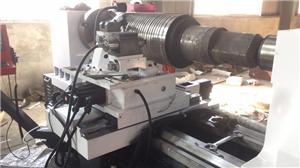
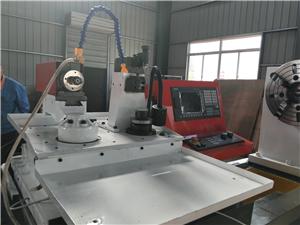
A CNC marking machine automates the marking process using computer-controlled axes and precision tools, delivering repeatable, high-speed, and damage-free marks.
1. Precision and Consistency
CNC marking machines use servo-driven mechanisms and advanced software to control marking depth, force, and speed with micron-level accuracy. For instance, a pneumatic marking head can maintain a consistent depth of 0.1 mm across thousands of parts, ensuring legibility and compliance with standards like ISO 9001 and AS9100. This eliminates operator variability and ensures audit-ready traceability.
2. High Throughput and Automation
With automated part feeding and marking cycles as short as 5 seconds, CNC marking machines can boost throughput by 300% compared to manual methods. Integration with robotics and conveyor systems enables lights-out operation. A case in point: a Swiss watch component manufacturer reduced marking time from 45 seconds to 8 seconds per part, increasing daily output from 800 to 4,500 units without adding staff.
3. Non-Destructive Marking
Techniques like laser marking or scribing apply minimal heat or mechanical stress, preserving part integrity. For sensitive materials like solid brass or titanium, laser marking produces permanent, corrosion-resistant marks without inducing cracks. This reduces scrap rates to near zero and extends product lifespan.
At NANTONG LUCUBRATE MACHINERY TECHNICAL LTD., we specialize in CNC marking machines that incorporate these solutions. Our machines are engineered for durability and precision, serving industries from automotive to medical devices.
Customer Success Stories
Real-world results speak louder than specifications. Here are five examples of how our CNC marking machines transformed operations.
Case 1: Automotive Supplier in Detroit, USA
John Smith, Production Manager at a Tier 1 automotive supplier, struggled with legibility issues on engine brackets. After installing our CNC marking machine, mark consistency improved to 99.9%, and scrap due to marking errors dropped from 4% to 0.2%. "The payback period was under six months," John noted. "We now meet our traceability targets effortlessly."
Case 2: Medical Device Manufacturer in Munich, Germany
Dr. Anna Müller, Operations Director, faced stringent FDA and CE marking requirements for surgical instruments. Our machine's laser marking system provided permanent, sterilizable marks without surface damage. Scrap rates fell from 5% to 0.5%, saving €200,000 annually. "The precision is unmatched," Dr. Müller said. "We trust Lucubrate for our critical marking needs."
Case 3: Aerospace Components in Toulouse, France
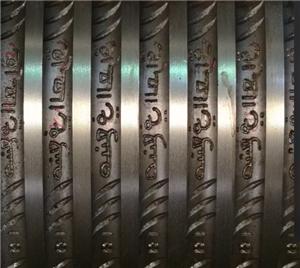
Pierre Dubois, Manufacturing Engineer, needed to mark titanium flight-critical parts without inducing stress. Our CNC scribing machine delivered depth-controlled marks that passed NDT inspection. Throughput increased by 40%, and audit findings were eliminated. "The integration with our MES was seamless," Pierre remarked. "Lucubrate's engineering support was exceptional."
Case 4: Electronics Manufacturer in Tokyo, Japan
Kenji Tanaka, Production Head, required high-speed marking of tiny connectors. Our machine's vision-assisted alignment and fast cycle time (3 seconds per part) boosted output by 250%. Defect rates plummeted from 3% to 0.1%. "The ROI was evident within four months," Tanaka stated. "We now recommend Lucubrate to our partners."
Case 5: Oil & Gas Equipment in Houston, USA
Sarah Johnson, Supply Chain Manager, dealt with corrosion-resistant markings on solid brass valves. Our machine's dot peen marking with depth control ensured permanent identification even after harsh cleaning. Rework costs dropped by 80%, and customer complaints ceased. "Lucubrate's solution paid for itself in less than a year," Johnson affirmed.
Applications and Partnerships
CNC marking machines are versatile tools used across industries. Key applications include:
- Automotive: Marking VINs, part numbers, and safety codes on engine blocks, transmission parts, and brake components.
- Aerospace: Serializing flight-critical parts with UID and traceability data.
- Medical: Engraving surgical instruments, implants, and sterilization indicators.
- Electronics: Marking PCBs, connectors, and microcomponents with 2D codes.
- Oil & Gas: Identifying valves, fittings, and pipes with corrosion-resistant marks.
We collaborate closely with procurement teams and distributors to tailor solutions. For instance, we partner with a network of authorized distributors in Europe and North America who provide local support and spare parts. Our relationships with component suppliers ensure that our machines incorporate the latest in servo and laser technology. By working together, we help buyers achieve seamless integration and long-term reliability.
Frequently Asked Questions
Here are answers to questions commonly asked by engineers and procurement managers.
1. How does a CNC marking machine handle curved or irregular surfaces?
Our machines use 3D probing or vision systems to map surface contours and adjust marking parameters in real-time. For complex geometries, we offer rotary axes and custom fixtures. This ensures consistent mark depth even on cylindrical or uneven parts.
2. What is the typical maintenance schedule and cost?
Preventive maintenance is recommended every 500 hours, including lubrication and calibration. Annual maintenance costs are approximately 3% of the machine price. Our modular design allows quick replacement of wear parts, minimizing downtime.
3. Can your machines integrate with our existing ERP or MES?
Yes, we support industry-standard protocols like OPC-UA and Modbus, and provide SDKs for custom integration. Our software can receive marking data directly from your ERP, ensuring error-free data transfer.
4. What materials can be marked without damage?
Our machines can mark metals (including solid brass, aluminum, steel, titanium), plastics, and ceramics. Laser marking is ideal for heat-sensitive materials, while dot peen is suitable for hard metals. We provide sample testing to validate parameters.
5. How do you ensure compliance with industry standards?
Our machines are designed to meet CE, ISO 9001, and AS9100 requirements. We provide documentation for validation (IQ/OQ/PQ) and can assist with UID and Data Matrix code verification to meet traceability standards.
Conclusion: Invest in Precision, Reap the Rewards
A CNC marking machine is not just a tool—it's a strategic investment that eliminates inconsistencies, boosts throughput, and protects part integrity. By addressing the pain points of manual marking, it delivers measurable ROI and peace of mind. At NANTONG LUCUBRATE MACHINERY TECHNICAL LTD., we are committed to helping you achieve marking excellence. For a deeper technical dive, request our free white paper on Advanced CNC Marking Technologies, or contact our sales engineers to discuss your specific application. Don't let marking be the weakest link in your production chain—upgrade to CNC precision today.