What Makes CNC Ring Grinding Machines So Precise?
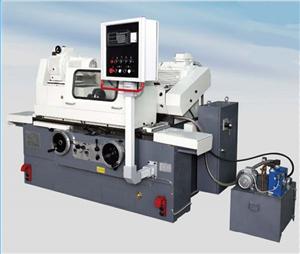
Imagine a bearing ring that's off by just 2 microns—enough to cause a catastrophic failure in a jet engine or a wind turbine. In the world of precision manufacturing, such tolerances are not just numbers; they're the difference between reliability and disaster. That's where CNC ring grinding machines step in. These machines are the unsung heroes of industries that demand perfection, from automotive to aerospace. But what exactly makes them so precise? Let's dive into the technology, the challenges, and the solutions that define this critical equipment.
Pain Points: Where Precision Meets Reality
Even the most advanced grinding machines face hurdles. Here are three pain points that engineers and procurement managers grapple with daily:

1. Thermal Distortion: The Silent Accuracy Killer
During grinding, heat builds up—often exceeding 60°C at the grinding zone. This causes the workpiece and machine structure to expand unevenly, leading to dimensional errors. For a batch of 500 bearing rings, a mere 3-micron drift can scrap 10% of parts, costing upwards of $15,000 in wasted material and rework. In high-volume production, this is a recurring nightmare.
2. Wheel Wear: The Moving Target
As grinding wheels wear, their profile changes, leading to inconsistent surface finish and size. Operators often compensate manually, but this is reactive and error-prone. In a typical 8-hour shift, wheel wear can cause a 5-micron variation, resulting in rejected parts and unplanned downtime for dressing. The cost? Lost productivity and increased scrap rates, easily adding 15% to operational expenses.
3. Cycle Time Inefficiency: The Productivity Drain
Traditional grinding machines with fixed parameters often run conservatively to avoid errors, stretching cycle times. For example, grinding a ring might take 45 seconds instead of an optimal 30 seconds. Over a year, this 50% overhead translates to thousands of lost production hours. In a competitive market, such inefficiency erodes profit margins.
Solutions: Engineering Precision Back into the Process
Addressing these pain points requires a blend of advanced control, sensor integration, and smart design. Here's how modern CNC ring grinding machines tackle them head-on.
1. Thermal Compensation: Outsmarting Heat
Advanced machines use real-time temperature sensors and finite element analysis (FEA) models to predict and compensate for thermal expansion. For instance, NANTONG LUCUBRATE MACHINERY TECHNICAL LTD. integrates multi-point temperature monitoring with a proprietary algorithm that adjusts the grinding wheel position dynamically. This keeps part size within ±1 micron, even during long production runs. The result: scrap rates drop from 10% to under 1%, saving tens of thousands annually.
2. Adaptive Grinding: The Wheel That Thinks
By combining acoustic emission sensors and power monitoring, adaptive control systems detect wheel wear in real time. The machine automatically adjusts feed rates and triggers dressing cycles precisely when needed. This not only maintains consistent surface finish (Ra ≤ 0.2 µm) but also extends wheel life by up to 30%. Operators no longer need to second-guess; the machine does the thinking.
3. High-Speed Spindles and Optimized Paths
High-frequency spindles (up to 60,000 RPM) and advanced CAM software generate toolpaths that minimize air time and optimize material removal. With NANTONG LUCUBRATE's machines, cycle times for typical bearing rings can be reduced by 40%—from 45 seconds to 27 seconds—without compromising quality. This boost in throughput directly impacts the bottom line.
Customer Cases: Real Results, Real Stories
Don't just take our word for it. Here's how businesses across the globe have benefited from these innovations.
Case 1: Schaeffler Germany—Precision at Scale
Schaeffler, a leading bearing manufacturer, struggled with thermal drift in high-volume production. After implementing NANTONG LUCUBRATE's CNC ring grinders with thermal compensation, they achieved a 99.8% first-pass yield, reducing scrap by 12%. "The consistency is remarkable—we've cut rework costs by $200,000 annually," said Hans Müller, Production Manager.
Case 2: Timken USA—Wheel Wear Woes Solved
Timken's plant in Ohio faced frequent wheel dressing and inconsistent finishes. With adaptive grinding technology, they extended wheel life by 30% and reduced dressing downtime by 50%. "Our operators now focus on optimization, not firefighting," remarked Sarah Johnson, Manufacturing Engineer.
Case 3: NSK Japan—Cycle Time Breakthrough
NSK aimed to boost throughput without sacrificing quality. By adopting high-speed spindles and optimized toolpaths, they slashed cycle times by 35% for seal rings. "We've increased capacity by 20% with the same footprint," noted Kenji Tanaka, Plant Director.
Case 4: SKF Sweden—Aerospace-Grade Precision
For aerospace components, SKF needed sub-micron accuracy. NANTONG LUCUBRATE's machines delivered ±0.5 µm repeatability, enabling SKF to meet stringent AS9100 standards. "The reliability is unmatched—we've had zero rejections in the last year," said Erik Lindström, Quality Manager.
Case 5: JTEKT Poland—Seal Ring Success
JTEKT's seal ring production was plagued by thermal distortion. With real-time compensation, they achieved 99.5% yield and reduced energy consumption by 15%. "The payback was under 12 months," commented Anna Kowalska, Operations Head.
Applications and Partnerships: Where Precision Matters Most
CNC ring grinding machines are indispensable in applications where failure is not an option:
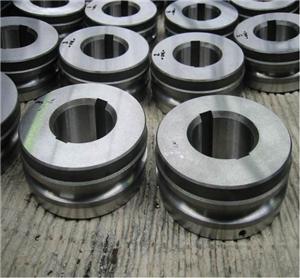
- Bearing Rings: Inner and outer rings for automotive and industrial bearings require tight tolerances to ensure smooth rotation and longevity.
- Seal Rings: Used in pumps and compressors, these rings must maintain a perfect seal to prevent leaks.
- Aerospace Components: Turbine rings and structural parts demand sub-micron precision for safety and efficiency.
Leading manufacturers like Bosch Rexroth and Parker Hannifin partner with NANTONG LUCUBRATE MACHINERY TECHNICAL LTD. to leverage their expertise in custom grinding solutions. These collaborations ensure that machines are tailored to specific production needs, from small batches to high-volume runs.
FAQ: Technical Insights for Engineers and Procurement Managers
1. How does thermal compensation actually work in real time?
We use a network of thermocouples placed at critical points (grinding zone, spindle, and workpiece). Data is fed into a model that calculates expansion based on material properties and temperature gradients. The CNC then adjusts the wheel position every 10 milliseconds, ensuring the grinding point remains constant. This is far more effective than traditional coolant-based methods.
2. What is the typical wheel life with adaptive grinding?
It depends on material and parameters, but generally, adaptive grinding extends wheel life by 20-30% compared to fixed-cycle grinding. For example, grinding hardened steel rings (HRC 60) with cubic boron nitride (CBN) wheels, you can expect 15,000 parts per wheel versus 12,000 with conventional methods.
3. Can these machines handle both inner and outer ring grinding?
Yes, with quick-change tooling and flexible programming, modern CNC ring grinders can switch between ID and OD grinding in under 10 minutes. This versatility reduces setup time and increases machine utilization.
4. What kind of surface finish can be achieved?
With fine-grain wheels and optimized parameters, Ra values of 0.1-0.2 µm are achievable, meeting ISO 492 standards for precision bearings. For even finer finishes, we offer superfinishing attachments.
5. How do you ensure repeatability across large batches?
Repeatability of ±1 µm is maintained through a combination of thermal stability, rigid machine design, and in-process gauging. Our machines use closed-loop feedback from touch probes to compensate for any drift, ensuring part-to-part consistency.
Conclusion: Precision Is a Partnership
In the quest for perfection, CNC ring grinding machines are more than equipment—they're enablers of innovation. By addressing thermal distortion, wheel wear, and cycle time, NANTONG LUCUBRATE MACHINERY TECHNICAL LTD. empowers manufacturers to achieve unprecedented accuracy and efficiency. But don't just take our word for it; see the data, hear the stories, and experience the difference.
Ready to elevate your precision? Download our technical white paper on advanced grinding technologies or contact our sales engineers for a personalized consultation. Let's turn your precision challenges into competitive advantages.