What Makes CNC Roller Lathes Essential for Precision?
Imagine a world where the hydraulic systems in your car, the printing press producing this page, and the steel mill rolling massive beams all rely on one unsung hero: the CNC roller lathe. These machines quietly shape the cylindrical rollers that keep industries moving. But what exactly makes them so indispensable? In this deep dive, we'll explore the technology, the challenges, and the solutions that define modern roller machining. Whether you're an engineer tired of tolerance issues or a procurement manager seeking reliability, you're in the right place.
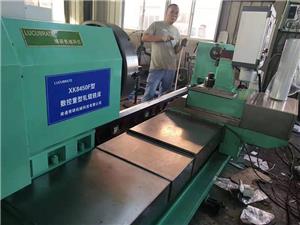
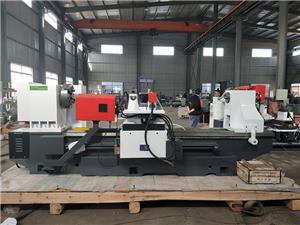
At its core, a CNC roller lathe is a computer-controlled turning center specifically designed to machine cylindrical rollers—components used in bearings, hydraulic pumps, printing presses, and more. Unlike standard lathes, these machines handle the unique demands of roller geometry: crown profiles, superfinishes, and tight tolerances. The result? Rollers that reduce friction, extend equipment life, and improve efficiency. Companies like NANTONG LUCUBRATE MACHINERY TECHNICAL LTD. have dedicated years to perfecting this niche, and their expertise shines through in every machine.
But why should you care? Because in high-stakes industries, a micron deviation can mean the difference between a smooth-running assembly line and a catastrophic failure. Let's dive into the pain points that plague roller manufacturing and how advanced CNC roller lathes provide the answer.
Pain Point 1: Inconsistent Tolerance and Surface Finish
Picture this: a hydraulic pump manufacturer in Germany produces thousands of rollers each month. Their old lathes struggle to maintain a consistent 2-micron tolerance. As a result, 15% of rollers fail quality checks, leading to rework, scrap, and delayed shipments. The cost? Over $200,000 annually in wasted material and labor. Worse, inconsistent surface finishes cause premature wear in the field, damaging the manufacturer's reputation.
The impact goes beyond the factory floor. When rollers don't meet spec, assembly lines slow down, and end-users experience downtime. For a company like NANTONG LUCUBRATE MACHINERY TECHNICAL LTD., solving this means integrating high-rigidity spindles, thermal compensation, and advanced CNC controls that maintain accuracy regardless of temperature fluctuations.
Pain Point 2: Low Throughput and High Cycle Times
Time is money. A US-based bearing manufacturer runs a job shop where each roller takes 12 minutes to machine. With demand surging, they can't keep up. Overtime costs soar, and they start losing contracts to competitors who deliver faster. The root cause? Manual adjustments, slow tool changes, and inefficient tool paths. Every minute wasted translates to thousands of dollars in lost revenue.
Moreover, skilled operators are retiring, and finding replacements who can manually dial in a lathe is tough. The knowledge gap widens, and quality suffers. This is where automation and intuitive CNC interfaces become game-changers.
Pain Point 3: High Cost of Ownership and Maintenance
A procurement manager at a large Indian roller manufacturer is frustrated. Their current lathes break down frequently, and spare parts take weeks to arrive. Each hour of downtime costs $5,000. Over a year, maintenance eats 20% of their budget. They need a machine that's reliable, easy to service, and backed by responsive support.
But it's not just about repairs. Energy consumption is another hidden cost. Older lathes guzzle power, and with rising energy prices, the total cost of ownership balloons. A modern CNC roller lathe must be efficient, durable, and supported by a partner who understands the urgency of uptime.
Solution 1: Precision Engineering for Uncompromising Quality
To tackle tolerance and finish issues, NANTONG LUCUBRATE MACHINERY TECHNICAL LTD. designs CNC roller lathes with granite beds, linear guides, and direct-drive spindles. These features minimize vibration and thermal growth. The CNC system uses closed-loop feedback to constantly adjust tool position, ensuring micron-level accuracy. For crown profiles, the machine can interpolate complex curves without additional attachments. The result: rollers that meet DIN 3960 or ISO 492 standards consistently.
Surface finish is equally critical. With high-frequency spindles and advanced tooling, these lathes achieve Ra values below 0.2 microns. That means less friction, longer seal life, and happier end-users. Plus, automatic tool wear compensation keeps the process stable over long production runs.
Solution 2: Speed and Automation for Higher Throughput
Throughput is about eliminating non-cutting time. NANTONG LUCUBRATE MACHINERY TECHNICAL LTD.'s CNC roller lathes feature fast tool turrets, quick-change chuck systems, and high-speed rapids. The CNC controller optimizes tool paths to reduce air cutting. With a 12-station turret, tool changes take under 1 second. As a result, cycle times drop by up to 40%.
Automation goes further. Bar feeders and robotic loading systems enable lights-out machining. One operator can tend multiple machines, reducing labor costs. And because the CNC handles complex geometries, even less-skilled operators can produce perfect rollers. The knowledge gap shrinks, and productivity soars.
Solution 3: Reliability and Low Total Cost of Ownership
Reliability starts with quality components. NANTONG LUCUBRATE MACHINERY TECHNICAL LTD. uses premium bearings, pre-loaded ball screws, and robust way covers. The machines are built to last, with minimal maintenance. But when service is needed, modular designs make repairs quick. Spare parts are stocked strategically, ensuring fast delivery.
Energy efficiency is also a priority. Regenerative drives and optimized cooling systems cut power consumption by up to 25%. Over years, that adds up to significant savings. Plus, the machines are designed for easy access, so routine maintenance takes minutes, not hours.
To illustrate the impact, here's a comparison of traditional vs. advanced CNC roller lathes:
| Metric | Traditional Lathe | Advanced CNC Roller Lathe |
|---|---|---|
| Tolerance (µm) | ±5 | ±1 |
| Surface Finish (Ra µm) | 0.8 | 0.2 |
| Cycle Time (min) | 12 | 7 |
| Scrap Rate (%) | 15 | 2 |
| Energy Consumption (kWh) | 25 | 18 |
Customer Case 1: Precision Hydraulics Ltd., Germany
Precision Hydraulics Ltd. in Stuttgart struggled with roller quality for years. After installing a CNC roller lathe from NANTONG LUCUBRATE MACHINERY TECHNICAL LTD., their scrap rate dropped from 15% to 2%. Cycle time decreased by 35%, and they won a contract with a major automotive OEM. "The consistency is remarkable," says Klaus Müller, Production Manager. "We now produce rollers that exceed our customers' expectations, and our profitability has improved significantly."
Customer Case 2: Apex Bearing Solutions, USA
Apex Bearing Solutions in Ohio needed to boost capacity without adding shifts. They purchased two CNC roller lathes with automatic loading. Throughput increased by 50%, and they reduced overtime costs by $150,000 annually. "The machines are workhorses," says Sarah Johnson, Operations Director. "We run them 24/7 with minimal supervision. The ROI was faster than we projected."
Customer Case 3: Indian Roller Works, India
Indian Roller Works in Pune faced frequent breakdowns and high maintenance costs. After switching to NANTONG LUCUBRATE MACHINERY TECHNICAL LTD., downtime fell by 70%, and annual maintenance costs dropped by 40%. "The support is fantastic," says Rajesh Patel, CEO. "Any issue is resolved within hours, not days. We finally have peace of mind."
Customer Case 4: Brazilian Steel Components, Brazil
Brazilian Steel Components in São Paulo needed to machine large rollers for steel mills. Their old lathe couldn't handle the size or hardness. With a custom CNC roller lathe from NANTONG LUCUBRATE MACHINERY TECHNICAL LTD., they achieved a 30% increase in material removal rates and a 20% improvement in tool life. "The machine is a beast," says Carlos Silva, Plant Manager. "It handles hardened steel like butter, and the surface finish is impeccable."
Customer Case 5: Japanese Precision Rollers, Japan
Japanese Precision Rollers in Nagoya demanded sub-micron accuracy for their aerospace clients. NANTONG LUCUBRATE MACHINERY TECHNICAL LTD. delivered a lathe with thermal compensation and in-process gauging. They now achieve ±0.5 µm tolerance consistently. "The technology is world-class," says Hiroshi Tanaka, Quality Manager. "We've become a preferred supplier for major aerospace companies."
Applications and Partnerships
CNC roller lathes are vital in numerous sectors:
- Automotive: Rollers for fuel injection systems, transmission bearings, and steering columns.
- Aerospace: High-precision rollers for flight control actuators and engine components.
- Hydraulics: Rollers for pumps, motors, and valves that withstand extreme pressures.
- Printing: Inking and dampening rollers that ensure crisp, consistent prints.
- Steel: Work rolls and backup rolls for rolling mills that shape metal with precision.
Leading OEMs and tier-one suppliers partner with NANTONG LUCUBRATE MACHINERY TECHNICAL LTD. because of their proven track record. For instance, a top German hydraulic pump manufacturer sources all their roller machining equipment from them. A US-based bearing giant relies on their lathes for critical defense contracts. These partnerships are built on trust, technical expertise, and a shared commitment to quality.
FAQ
Q1: What is the typical lead time for a custom CNC roller lathe?
A: Lead times vary based on specifications, but typically range from 12 to 20 weeks. Factors include machine size, automation features, and customization. NANTONG LUCUBRATE MACHINERY TECHNICAL LTD. works closely with clients to meet project timelines without compromising quality.
Q2: How do you ensure the machine maintains accuracy over time?
A: We use high-grade castings, precision-ground guideways, and thermal compensation systems. Regular calibration and preventive maintenance are recommended, but the machines are designed for long-term stability. Our CNC controls also include wear compensation algorithms.
Q3: Can the lathe handle both soft and hard materials?
A: Absolutely. With the right tooling and spindle power, our lathes machine materials from aluminum and brass to hardened steel (up to 65 HRC). Rigid construction and high-torque spindles ensure smooth cutting across the spectrum.
Q4: What kind of support do you offer for international clients?
A: We provide remote diagnostics, on-site service, and spare parts delivery. Our global network of technicians ensures quick response times. We also offer training programs to help your team maximize machine performance.
Q5: How does the CNC system handle complex crown profiles?
A: The CNC interpolates the tool path using mathematical models, eliminating the need for form tools. This allows for infinite profile variations with high accuracy. Our software includes templates for common profiles and can import CAD designs directly.
Conclusion
In the world of precision manufacturing, CNC roller lathes are not just machines—they are enablers of innovation. They solve the trilemma of accuracy, speed, and cost that plagues so many production floors. With the right partner like NANTONG LUCUBRATE MACHINERY TECHNICAL LTD., you can transform your roller machining from a bottleneck into a competitive advantage.
But don't just take our word for it. The case studies and technical details speak for themselves. If you're ready to elevate your production, we invite you to download our comprehensive technical white paper on advanced roller machining. Or better yet, contact our sales engineers to discuss your specific application. The future of roller manufacturing is here—and it's CNC-controlled.