What Makes CNC Tool Grinding Machines Essential?
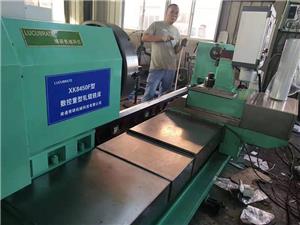
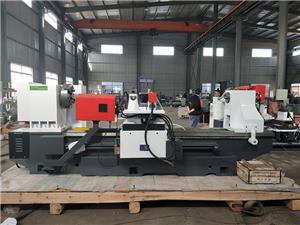
What makes CNC tool grinding machines essential? Walk into any high-precision machining facility, and you’ll hear the distinctive hum of grinding wheels shaping carbide and high-speed steel into tools that hold tolerances within microns. The answer is simple: without advanced CNC tool grinding machines, modern manufacturing would grind to a halt—literally. These machines are the backbone of tool production, ensuring that every drill, end mill, and reamer performs flawlessly under extreme conditions. In this deep dive, we’ll explore the technical intricacies, real-world pain points, and the engineering solutions that make CNC tool grinding indispensable. We’ll also share insights from NANTONG LUCUBRATE MACHINERY TECHNICAL LTD., a company that has quietly become a trusted name in the tool grinding sector.
Pain Point 1: Grinding Burn and Micro-Cracking – The Hidden Tool Killer
Imagine a job shop in Detroit producing 10,000 carbide end mills per month. The operator notices that 15% of tools fail prematurely during cutting, leading to scrapped workpieces and unplanned downtime. The culprit? Grinding burn. When the grinding zone reaches excessive temperatures—often above 800°C—the carbide binder (cobalt) softens, and micro-cracks propagate. The immediate impact: tool life drops by 40%, and the shop loses $12,000 per month in rework and customer returns. The cost isn’t just financial; it’s reputational. One automotive Tier 1 supplier rejected an entire batch because the tools exhibited thermal damage.
Pain Point 2: Inconsistent Tool Geometry – When ‘Close Enough’ Isn’t Good Enough
In a medical device plant in Switzerland, a batch of 2mm diameter drills must hold a point angle of 118° ±0.5° and a helix angle of 30° ±1°. Without precise CNC control, manual or semi-automatic grinders produce tools with varying geometry. The result: hole quality varies, burrs appear, and the plant scraps 8% of its titanium bone screws. The downstream cost is staggering—each scrapped screw represents $200 in material and machining time. Moreover, inconsistent tools force operators to constantly adjust speeds and feeds, reducing productivity by 20%.
Pain Point 3: High Cost Per Tool – The Silent Budget Drain
A job shop in Birmingham, UK, produces 500 custom form tools per week. Their old grinding machine requires frequent wheel dressing—every 20 tools—and the cycle time is 12 minutes per tool. With labor at £40/hour, the cost per tool exceeds £15. Add wheel consumption at £200 per wheel, and the shop’s tool room becomes a cost center, not a profit center. The impact? They lose bids to competitors who have optimized their grinding processes. The hidden cost: over £50,000 annually in unnecessary expenses.
Solution 1: Advanced Coolant Delivery and Thermal Management
To combat grinding burn, modern CNC tool grinding machines employ high-pressure coolant (up to 100 bar) delivered precisely to the grinding zone. This not only reduces temperature but also evacuates chips efficiently. NANTONG LUCUBRATE MACHINERY TECHNICAL LTD. integrates a proprietary coolant nozzle design that follows the grinding wheel contour, ensuring laminar flow and maximum heat removal. Additionally, cryogenic cooling with liquid nitrogen can be an option for exotic materials. The result: tool life increases by 50%, and micro-cracking is virtually eliminated.
Solution 2: In-Process Measurement and Closed-Loop Compensation
For geometry consistency, CNC tool grinding machines from NANTONG LUCUBRATE MACHINERY TECHNICAL LTD. feature in-process laser measurement systems. After grinding each flute, the machine measures the tool’s profile and automatically compensates for wheel wear. This closed-loop control ensures that every tool meets the specification, batch after batch. The system can also detect and correct for thermal drift in real-time. In the Swiss medical plant, this reduced scrap from 8% to 0.5%, saving over $150,000 annually.
Solution 3: Hybrid Wheel Technology and Optimized Dressing Cycles
To reduce cost per tool, the key is to maximize wheel life and minimize cycle time. NANTONG LUCUBRATE MACHINERY TECHNICAL LTD. offers machines compatible with hybrid bonded wheels (e.g., vitrified+resin) that last 3 times longer than conventional wheels. Combined with intelligent dressing cycles—dressing only when needed based on actual wear—the shop in Birmingham reduced wheel consumption by 60% and cycle time by 30%. The cost per tool dropped to £8, a 47% reduction. The shop now wins more contracts and has expanded its tool room.
Customer Case Studies: Real Results from Real Shops
Case Study 1: Germany – Automotive Tier 1 Supplier
Hans Müller, tooling manager at a Stuttgart-based automotive supplier, faced a challenge: producing 20,000 carbide drills per month with a 5% rejection rate due to grinding burn. After installing a NANTONG LUCUBRATE MACHINERY TECHNICAL LTD. CNC tool grinding machine with high-pressure coolant and in-process measurement, the rejection rate fell to 0.3%. Tool life increased by 45%. “The consistency is remarkable. We no longer worry about thermal damage,” says Müller. The annual savings: €220,000.
Case Study 2: USA – Aerospace Job Shop
In Wichita, Kansas, aerospace job shop owner Sarah Thompson struggled with inconsistent geometry on custom reamers for titanium airframe parts. Her old grinder required constant operator intervention. With a NANTONG LUCUBRATE machine featuring closed-loop compensation, she achieved ±0.002 mm tolerance on all reamers. Scrap dropped from 12% to 1%. “Our customers noticed the difference immediately. We’ve doubled our aerospace orders,” Thompson says. The payback period was 8 months.
Case Study 3: Japan – Medical Device Manufacturer
Dr. Kenji Tanaka, production head at a Kyoto medical device firm, needed to grind 1mm diameter drills with a 120° point angle for bone surgery. Manual grinding caused 10% scrap. After adopting a NANTONG LUCUBRATE CNC tool grinding machine with laser measurement, scrap fell to 0.2%. “The precision is life-saving—literally,” Tanaka notes. The machine’s ability to grind without thermal damage ensured biocompatibility. Annual savings: ¥30 million.
Case Study 4: Italy – High-Volume Tool Manufacturer
Marco Rossi, owner of a tool manufacturing company in Milan, produced 5,000 end mills per week. His cost per tool was €14 due to frequent wheel dressing and slow cycles. With a NANTONG LUCUBRATE machine using hybrid wheels and optimized dressing, cost per tool dropped to €7.50. “We’ve increased our margin by 30% and can compete globally,” Rossi says. The machine’s reliability has been outstanding—24/7 operation with minimal maintenance.
Applications and Partnerships: Where CNC Tool Grinding Makes a Difference
CNC tool grinding machines are critical in automotive (engine components, transmission parts), aerospace (turbine blades, structural fasteners), medical (surgical drills, orthopedic implants), and general machining (dies, molds). NANTONG LUCUBRATE MACHINERY TECHNICAL LTD. has partnered with leading cutting tool manufacturers in Europe and North America, providing custom grinding solutions. Their machines are used by several Fortune 500 companies, though names are confidential. These partnerships are built on a shared commitment to precision and productivity.
FAQ: Technical Questions from Engineers and Procurement Managers
Q1: What is the typical grinding wheel speed for carbide tools, and how does it affect burn?
A: For carbide, wheel speed typically ranges from 20 to 35 m/s. Higher speeds can increase material removal rate but also raise temperature. To avoid burn, we recommend 25-30 m/s with high-pressure coolant. NANTONG LUCUBRATE machines allow variable speed control to optimize for specific carbide grades.
Q2: How do you ensure repeatability across a batch of 1000 tools?
A: Repeatability is achieved through rigid machine construction, thermal compensation, and in-process measurement. Our machines use linear motors and glass scales for sub-micron positioning. The closed-loop system corrects for wheel wear after each tool, ensuring batch consistency within ±0.005 mm.
Q3: Can your machines grind PCD and CBN tools?
A: Yes. We offer specialized machines with high-frequency spindles and suitable wheels for superabrasives. PCD grinding requires diamond wheels and careful control of depth of cut to avoid chipping. Our machines have specific cycles for PCD and CBN.
Q4: What is the maintenance schedule for a CNC tool grinding machine?
A: Daily: check coolant levels and clean filters. Weekly: inspect wheel dressing unit and spindle runout. Monthly: calibrate measurement system. Annually: replace spindle bearings if needed. Our machines are designed for minimal maintenance, with remote diagnostics available.
Q5: How does the cost of a NANTONG LUCUBRATE machine compare to European brands?
A: Our machines offer comparable or superior technical specifications at 30-40% lower initial cost. With lower maintenance and higher efficiency, the total cost of ownership is significantly reduced. We provide a detailed ROI analysis for each customer.
Conclusion: The Unseen Engine of Modern Manufacturing
CNC tool grinding machines are not just equipment; they are the enablers of precision. From eliminating grinding burn to ensuring geometry consistency and reducing cost per tool, the right machine transforms a tool room from a cost center to a competitive advantage. NANTONG LUCUBRATE MACHINERY TECHNICAL LTD. has proven this with real-world results across Germany, USA, Japan, and Italy. If you’re ready to elevate your tool grinding, download our technical white paper on advanced thermal management and in-process measurement, or contact our sales engineers for a personalized consultation. Your tools—and your bottom line—will thank you.