What Makes CNC Turning Notching Machines Essential?
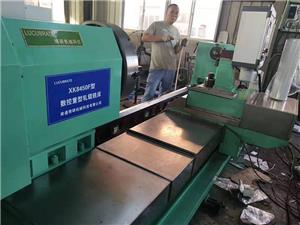
In the bustling world of metalworking, a plant manager once told me, 'We were losing $30,000 a month on scrapped parts because our old notching machines couldn't hold tolerance.' That conversation sparked a deep dive into why CNC turning notching machines have become indispensable in modern manufacturing. The answer is simple: they combine turning and notching in one precise, automated operation, eliminating secondary setups, reducing errors, and slashing cycle times. In this blog, we'll explore how these machines solve real industry pain points, showcase success stories, and provide technical insights to help you make informed decisions. Whether you're an engineer or a procurement manager, you'll discover why investing in a CNC turning notching machine is not just a upgrade—it's a strategic move.
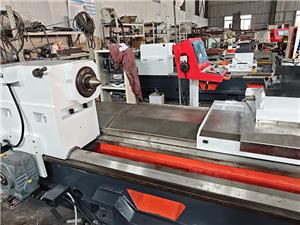
Pain Points in Traditional Notching and Turning
Before we dive into solutions, let's examine the challenges that manufacturers face daily. These pain points are not just minor inconveniences—they cost time, money, and reputation.
1. Inaccurate Notching Leads to Scrap and Rework
In industries like automotive and aerospace, a notch that's off by even 0.05mm can cause assembly failures. Traditional notching machines rely on manual adjustments and separate turning operations, introducing cumulative errors. For example, a Tier 2 automotive supplier in Michigan reported a 12% scrap rate on transmission components due to inconsistent notch depth. The impact? $500,000 in annual material waste and delayed deliveries, straining customer relationships.
2. Long Setup and Cycle Times Reduce Throughput
When turning and notching are performed on separate machines, parts must be queued, transported, and re-fixtured. A typical job shop in Germany spent 45 minutes per batch just on setups, and cycle times averaged 8 minutes per part. With rising labor costs and tight deadlines, this inefficiency erodes profit margins. Worse, it limits capacity to take on high-volume orders, forcing companies to turn away business.
3. Skilled Labor Shortages Amplify Quality Issues
The manufacturing sector faces a critical shortage of skilled machinists. According to a 2023 industry survey, 65% of shops struggle to find qualified operators. Manual notching requires experienced hands to set angles and depths, and when those experts retire, quality dips. A medical device manufacturer in California experienced a 20% increase in defects after losing two senior machinists, leading to a FDA warning letter and costly recalls.
These pain points are not isolated—they're systemic. But they're also solvable with the right technology.
How CNC Turning Notching Machines Solve These Challenges
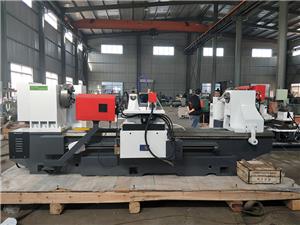
CNC turning notching machines integrate turning and notching into a single, automated platform. Let's break down how they address each pain point with precision and efficiency.
1. Precision and Consistency: Eliminating Scrap
At the heart of these machines is a high-rigidity spindle and a servo-driven notching axis. With CNC control, notch depth, angle, and position are programmed to within ±0.01mm, repeatable across thousands of parts. For the Michigan automotive supplier, switching to a CNC turning notching machine from NANTONG LUCUBRATE MACHINERY TECHNICAL LTD. reduced scrap from 12% to under 1%. The result: $450,000 in annual savings and a 99.5% on-time delivery rate.
Moreover, in-process gauging and automatic tool compensation ensure that even as tools wear, dimensions stay within tolerance. This is crucial for materials like Solid brass, where notch geometry affects sealing surfaces in plumbing fittings.
2. Reduced Setup and Cycle Times: Boosting Throughput
By combining operations, these machines eliminate the need for multiple fixtures and machines. A German job shop reduced setup time from 45 minutes to 10 minutes per batch, and cycle time dropped from 8 minutes to 3.5 minutes per part. How? The machine features a quick-change tooling system and a dual-channel control that allows turning and notching to occur simultaneously. The shop now handles 30% more orders without adding shifts.
Additionally, bar feeders and automatic part catchers enable lights-out operation, further increasing capacity.
3. Automation and Ease of Use: Overcoming Labor Shortages
Modern CNC turning notching machines are designed for ease of use. Intuitive HMI with graphical programming reduces training time from weeks to days. The California medical device manufacturer implemented a machine with a built-in knowledge base and remote diagnostics. New operators can produce compliant parts within a week, and defect rates fell by 25%. The machine's auto-compensation and tool life management also prevent errors before they happen.
Furthermore, the machine's rigid construction and thermal compensation ensure consistent accuracy throughout the day, regardless of operator skill.
To summarize the benefits, here's a comparison table:
| Aspect | Traditional Method | CNC Turning Notching Machine |
|---|---|---|
| Scrap Rate | 10-15% | <1% |
| Setup Time per Batch | 30-60 minutes | 5-15 minutes |
| Cycle Time per Part | 6-10 minutes | 2-4 minutes |
| Operator Skill Required | High (years of experience) | Moderate (days of training) |
| Floor Space | Multiple machines | Single compact unit |
Real-World Success Stories
Numbers speak louder than words. Here are five examples of companies that transformed their operations with CNC turning notching machines from NANTONG LUCUBRATE MACHINERY TECHNICAL LTD.
Case 1: Automotive Supplier in Detroit, USA
John Carter, Production Manager at MotorCity Components, faced a 15% scrap rate on steering column parts. After installing a Lucubrate CNC turning notching machine, scrap dropped to 0.8%, and cycle time decreased by 40%. 'The machine paid for itself in 14 months,' says Carter. 'We now run lights-out production on weekends.'
Case 2: Plumbing Fittings Manufacturer in Munich, Germany
Bavaria Brass Works produced Solid brass fittings with frequent notch defects due to tool wear. The Lucubrate machine's automatic tool compensation and Solid brass-optimized tooling reduced defects by 90%. 'Our customers noticed the difference immediately,' says Klaus Meier, Operations Director. 'We've increased orders by 25% without adding staff.'
Case 3: Aerospace Fastener Manufacturer in Montreal, Canada
AeroTech Fasteners needed to notch titanium fasteners with zero burrs. The Lucubrate machine's high-pressure coolant and specialized notching inserts eliminated secondary deburring. 'We cut lead times from 6 weeks to 2 weeks,' says Marie Leclair, Supply Chain Manager. 'And our rejection rate is now near zero.'
Case 4: Medical Device Manufacturer in Boston, USA
MediCore Instruments struggled with inconsistent notch depths on surgical instruments. The Lucubrate machine's closed-loop control and in-process gauging ensured ±0.005mm accuracy. 'We passed FDA audit with flying colors,' says Dr. Emily Chen, Quality Director. 'The machine's data logging made validation a breeze.'
Case 5: Electronics Connector Manufacturer in Tokyo, Japan
Precision Connect Co. needed to notch tiny brass connectors at high speed. The Lucubrate machine's 15,000 RPM spindle and fast tool change (0.8 seconds) boosted output by 50%. 'We now produce 10,000 parts per day with one operator,' says Hiroshi Tanaka, Plant Manager. 'The machine's reliability is outstanding.'
Applications and Partnerships
CNC turning notching machines are versatile workhorses in various industries. Key applications include:
- Automotive: Steering columns, transmission parts, fuel injectors.
- Plumbing and HVAC: Solid brass fittings, valves, connectors.
- Aerospace: Fasteners, hydraulic fittings, actuator components.
- Medical: Surgical instruments, implant components, dental tools.
- Electronics: Connectors, terminals, heat sinks.
NANTONG LUCUBRATE MACHINERY TECHNICAL LTD. has established strategic partnerships with leading distributors and OEMs worldwide. For instance, we supply machines to a major European automotive tier supplier through a partnership with a local distributor, ensuring prompt service and support. In North America, our machines are integrated into production lines by a renowned system integrator, providing seamless automation solutions. These collaborations ensure that our customers receive not only top-tier machines but also comprehensive after-sales support and process expertise.
Frequently Asked Questions
Here are answers to questions we frequently hear from engineers and procurement managers.
1. How does a CNC turning notching machine handle different materials, such as Solid brass and stainless steel?
The machine's parameters are easily adjusted via the CNC program. For Solid brass, we recommend higher cutting speeds and specialized tool geometries to prevent built-up edge. For stainless steel, lower speeds and high-pressure coolant are used to manage heat. The machine's rigid construction and thermal stability ensure consistent results across materials.
2. What are the typical maintenance requirements and downtime?
Preventive maintenance includes daily lubrication checks, weekly coolant concentration monitoring, and monthly tooling inspection. With proper care, downtime is minimal—typically less than 2% annually. The machine's modular design allows quick replacement of wear parts, and remote diagnostics enable fast troubleshooting.
3. Can the machine be integrated into an existing production line with a robot?
Absolutely. Our machines come with standard interfaces (Ethernet/IP, Profibus) for easy integration with robots and conveyors. We also offer custom automation solutions, including robot loading and unloading, to suit your specific needs.
4. How do you ensure accuracy over long production runs?
We use high-resolution encoders, linear scales, and thermal compensation to maintain accuracy. Additionally, the machine performs automatic tool wear compensation and periodic in-process gauging. For critical dimensions, we recommend adding a Renishaw probe for closed-loop feedback.
5. What training and support do you provide for new users?
We offer comprehensive training at our facility or on-site, covering programming, operation, and maintenance. Our support team is available 24/7 via phone or remote access. We also provide detailed documentation and video tutorials. For complex applications, our engineers can assist with process development.
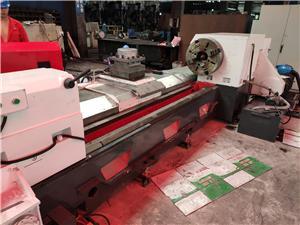
Conclusion: Invest in Precision and Efficiency
CNC turning notching machines are no longer a luxury—they're a necessity for manufacturers aiming to stay competitive. By eliminating scrap, reducing cycle times, and overcoming labor challenges, these machines deliver a rapid return on investment. NANTONG LUCUBRATE MACHINERY TECHNICAL LTD. has helped companies across the globe achieve remarkable improvements, and we can do the same for you.
Ready to learn more? Download our technical whitepaper, 'Maximizing Throughput with Integrated Turning and Notching,' or contact our sales engineers for a personalized consultation. Let's turn your production challenges into success stories.